War Criminal story

JohnC6

Suspended / Banned
Messages
11,799
Name
John
Edit My Images
Yes
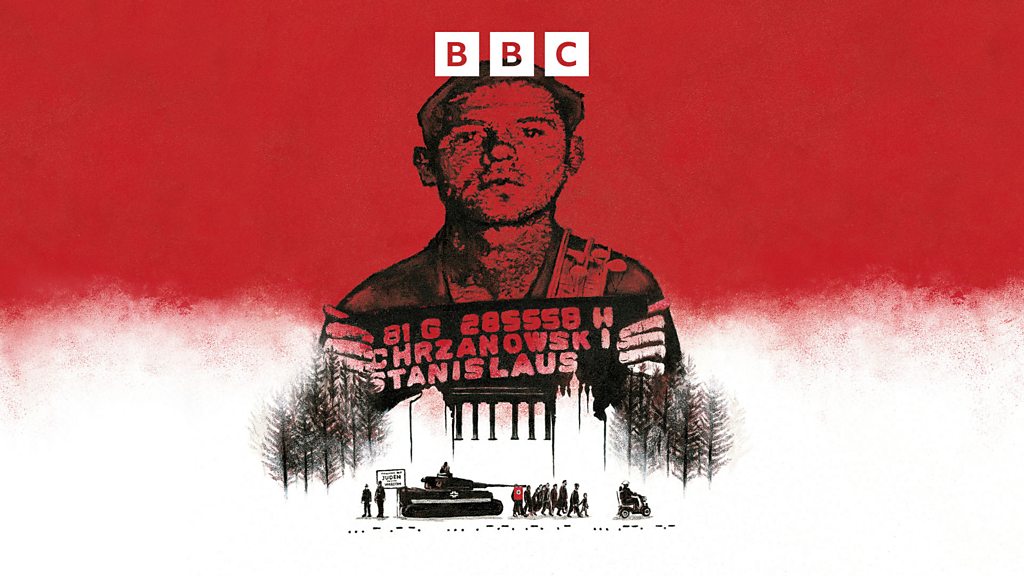
This seemed the only forum I could post this in but it was such an interesting listen (Radio4) earlier this evening that I thought it was worth sharing especially for those with an interest in WW2 history. Basically, the murky world of Nazi war criminals and post-war espionage. This involved a WW2 Belarusian who came to England at the end of the war and who had lived in Belarus and kept secret his role as a Nazi war criminal until his suspicious stepson discovered truth. He and a reporter went to Belarus to get first hand information from those who knew his past. Turns out he belonged to this group. Auxiliary Police https://en.wikipedia.org/wiki/Byelorussian_Auxiliary_Police
 
Last edited:
I think it's only right that people who have committed (or actively facilitated) atrocities are pursued and brought to justice, no matter how old they are. To be forever looking over their shoulder is a part of the price they must pay for their crimes until they finally face judgement, be that in a court of law or beyond the grave.
 
I think it's only right that people who have committed (or actively facilitated) atrocities are pursued and brought to justice, no matter how old they are. To be forever looking over their shoulder is a part of the price they must pay for their crimes until they finally face judgement, be that in a court of law or beyond the grave.

Do not agree - for a soldier to refuse an order would have been a death sentence for them - if you were posted as a prison guard to a camp, would you have refused knowing it would be a bullet in the head?
 
Do not agree - for a soldier to refuse an order would have been a death sentence for them - if you were posted as a prison guard to a camp, would you have refused knowing it would be a bullet in the head?
This is one of those questions that I think shouldn't be reduced to individual cases in a general discussion.

Over the last seventy five years, laws have evolved to resolve the conflict between military discipline and acceptable behaviour. We now have a general concensus that obeying a criminal order makes you a criminal and that it is up to the individual to decide what to do when given one. Whether an 18 year old is in a position to make such a decision is something that war crimes judges have to take into account in every such prosecution.
 
Do not agree - for a soldier to refuse an order would have been a death sentence for them - if you were posted as a prison guard to a camp, would you have refused knowing it would be a bullet in the head?
Lets be honest, nobody would refuse and take a bullet :thinking:
 
Lets be honest, nobody would refuse and take a bullet :thinking:
And that's where a fair trial and justice comes in; to work out whether or not the accused acted under duress, or relished the task and willingly chose to make it their own.
 
Do not agree - for a soldier to refuse an order would have been a death sentence for them - if you were posted as a prison guard to a camp, would you have refused knowing it would be a bullet in the head?

Do you have sources for this?

There are a number of theories that try to explain why ordinary men and women were prepared to commit mass murder, by one means or another, and I can recommend 'Ordinary Men: Reserve Police Battalion 101 and the Final Solution in Poland' (Christopher Browning), and 'Hitler's Willing Executioners, Ordinary Germans and the Holocaust' (Daniel Goldhagen). Goldhagen's book is a rebuttal of Browning's thesis, but both focus on the same unit and the authors agree on some significant points. These include the observation that members of Battalion 101 could avoid active participation in 'special actions' without penalty and suggest that there is no evidence of German soldiers being seriously punished for refusing to kill Jews.
 
Do you have sources for this?

There are a number of theories that try to explain why ordinary men and women were prepared to commit mass murder, by one means or another, and I can recommend 'Ordinary Men: Reserve Police Battalion 101 and the Final Solution in Poland' (Christopher Browning), and 'Hitler's Willing Executioners, Ordinary Germans and the Holocaust' (Daniel Goldhagen). Goldhagen's book is a rebuttal of Browning's thesis, but both focus on the same unit and the authors agree on some significant points. These include the observation that members of Battalion 101 could avoid active participation in 'special actions' without penalty and suggest that there is no evidence of German soldiers being seriously punished for refusing to kill Jews.

I was quoting the "actively facilitated" part, by being a camp guard you are facilitating in the death of people.
 
I was quoting the "actively facilitated" part, by being a camp guard you are facilitating in the death of people.
This is the case.

While there have been many apologists for the "innocent" Nazis the simple truth is that it was an ideology of hate and the majority of Germans were part of it. The good thing is that most modern Germans are appalled by the actions of their grandparents and parents. The bad thing is that there are some who still worship at the altar of fascism.
 
Last edited:
I was quoting the "actively facilitated" part, by being a camp guard you are facilitating in the death of people.

Yes, no-one is disputing that, but do you have sources to support the contention that 'for a soldier to refuse an order would have been a death sentence for them - if you were posted as a prison guard to a camp, would you have refused knowing it would be a bullet in the head?' If that is actually the case, it might be used as mitigation.
 
To clarify who Martyn is responding to:

I was quoting the "actively facilitated" part, by being a camp guard you are facilitating in the death of people.


Yes, no-one is disputing that, but do you have sources to support the contention that 'for a soldier to refuse an order would have been a death sentence for them - if you were posted as a prison guard to a camp, would you have refused knowing it would be a bullet in the head?' If that is actually the case, it might be used as mitigation.


I can't quite recall what tv programme I was watching but it was the story of an individual soldier who belonged to a group that was about to go into a village and murder the occupants. The commander addressed the group and outlined what was to happen and if any of them felt that they were unable to take part they were free to withdraw without penalty.

From wiki

Befehlsnotstand (English: Necessity to obey orders) is a German legal term that refers to a situation in which a certain action is ordered that violates law, but where the refusal to carry out such an order would lead to drastic consequences, specifically danger to life or body, for the person refusing to carry out the order.

The concept of Befehlsnotstand was successfully used as a defence in World War II-related war crimes trials in Germany in the 1950s and 1960s[2] but research into the subject since has proven that Befehlsnotstand as such did not exist, meaning German soldiers of the Wehrmacht or SS did not actually face drastic consequences if refusing such an order during the war.] Refusing a lawful order did however result in consequences, with 23,000 German soldiers executed for refusing orders.


Another source. I was unable to do a normal copy/paste but it has copied ok.

1616676717528.png
 
For discussions of this nature, it seems to me that there is little benefit to be gained from quoting secondary sources. The only relevant facts would be gained from contemporaneous documents or trustworthy translations thereof. "Even Homer nods" and modern historians have been known to do much worse (such as Hugh Trevor-Roper, who was clearly asleep at the wheel in the case of the "Hitler Diaries").
 
The programme I posted about this is being discussed now on Radio 5 Live with the man's step-son. It's just started at 11.05
 
This guy would hardly be a unique case, you only have to look at the USA with Operation Paperclip to see thousands of ex-Nazis had their pasts ignored because of the start of the Cold War.
 
you only have to look at the USA with Operation Paperclip to see thousands of ex-Nazis had their pasts ignored because of the start of the Cold War.
Indeed: "They're Nazi swine but they're our Nazi Swine!". :banghead:
 
Last edited:
Last year, a monument to a Nazi SS cenotaphwas vandalised in a Canadian cemetary.
The inscription on it said - "To those who died for the freedom of Ukraine".
Who on earth thought it was appropriate to be honouring Nazis in this day and age.

 
Do you have sources for this?

There are a number of theories that try to explain why ordinary men and women were prepared to commit mass murder, by one means or another, and I can recommend 'Ordinary Men: Reserve Police Battalion 101 and the Final Solution in Poland' (Christopher Browning), and 'Hitler's Willing Executioners, Ordinary Germans and the Holocaust' (Daniel Goldhagen). Goldhagen's book is a rebuttal of Browning's thesis, but both focus on the same unit and the authors agree on some significant points. These include the observation that members of Battalion 101 could avoid active participation in 'special actions' without penalty and suggest that there is no evidence of German soldiers being seriously punished for refusing to kill Jews.

I have read those books (and also the story of the Warsaw uprising and the destruction of that city/extermination of the population). Utterly sickening events (almost beyond belief) with a variety of people involved and, as you say, many men were excused or refused to take part.
 
Back
Top