Viewfinder View?

Riversley

Suspended / Banned
Messages
36
Name
Chris
Edit My Images
Yes
Major Noob question here. When you look through the viewfinder can i expect to see a good representation of what the image will be.

I ask because I enjoy images with a sharp in focus image in the foreground and a blurry background. I am trying to do this using the aperture setting.

Is that referred to as depth of focus?

I have been playing with my dads old film slr and didn't know what i was supposed to be seeing. :bonk:
 
On my old film camera there was a preview lever next to the lens on the front of the camera. You had to press this lever to see the image with the aperture you had selected.

Before you pressed the lever you got the image at maximum aperture. (i.e. maximum blur for out of focus areas).

Don't know if this helps. :thinking:
 
The viewfinder will show the view through the lens, not the finsihed outcome. To get a rough idea you would need a DOF button, which stops the lens down to the selected aperture so you get more of an idea of what it would look like. The aperture on the lens only stops down as you press the shutter, so just looking through the viewfinder shows the view with the aperture wide open.
 
Major Noob question here. When you look through the viewfinder can i expect to see a good representation of what the image will be.

I ask because I enjoy images with a sharp in focus image in the foreground and a blurry background. I am trying to do this using the aperture setting.

Is that referred to as depth of focus?

That's referred to as depth of field.

Depth of focus refers to the tolerance of focus (in front of and behind) on the image plane (the sensor or film-plane )
 
On Nikon cameras you can set a button on the camera to preview what the shot will look like but I don't think it work or I'm using it wrong lol, why would you want to preview it before taking the shot? That's why were in the digital age and we have lcd's on our cameras.

If your using film then I don't have a clue lol
 
it is refered to as depth of focus. On SLRs (and DSLRs) the aperture of the lens is as wide open as possible when looking through the viewfinder. This is to make the viewfinder as bright as possible, and to aid your AF system which works best with most light. When you press the shutter one of the many things that happen is that the camera closes the apperture to your selected f stop prior to taking the photo.


This means that the DoF you get through the viewfinder will not always be the same as your final image. Either press the DoF preview button on your camera for a true representation though the viewfinder or chimp afterwards. Overtime you will learn what the expect with each f stop and focal length you use
 
On Nikon cameras you can set a button on the camera to preview what the shot will look like but I don't think it work or I'm using it wrong lol,

The finish of the standard focus screens in DSLR's give a very wide depth of focus so even at maximum aperture the depth of field (not focus) seems large and the desired focal plane of the scene is hard to judge. They are like this to ensure a nice bright viewfinder, and to give the AF more light to work with, with the now widespread slower lenses common with DSLRs.

To make manual focus easier, or to give a better representation of the stopped down DoF (when DoF preview is selected), a precision focus screen is required. Many mid-range and above DSLRs have the option of changing the focus screen now and provide this option. While facilitating what the OP wants to achieve, they do dim the viewfinder markedly and hence are best used only with fast lenses (>f/2.8). Also, the camera's settings need to be adjusted so that the metering system compensates accordingly.
 
Last edited:
they do dim the viewfinder markedly and hence are best used only with fast lenses (>f/2.8)

This is an important point for a noob (as the OP puts it); the DoF preview button lets you see through the lens at the specified aperture (f...). As aperture not only alters the depth of field but also the amount of light entering the lens the preview will be consdierably darker the higher your f stop (e.g. darker for f8 than f4).

With the typical kit lens being what is described as "slow" (smallest f stop number is 3.5 / 4.5 etc.), the DoF preview will normally just show a very dark image and it's hard to see what the depth of field actually is.

Frustrating that you might find this, it's an important lesson; higher f stop = less light. Which means to get the right amount of light through the lens, the shutter needs to open longer; so a slower shutter speed.

Hope I haven't confused things!
 
Thanks all. I will be looking to get a DSLR at some point so will have to keep any eye out for this feature. I was looking at the Nikon D5000 or D90 does anyone know if these feature this magic DOF button?

d90 has it, not sure about the d5000. Remember you can always chimp too.
 
i think all modern SLRs have this feature i know all canon ones do and its located just under the lens mount ring.
 
it is refered to as depth of focus. On SLRs (and DSLRs) the aperture of the lens is as wide open as possible when looking through the viewfinder. This is to make the viewfinder as bright as possible, and to aid your AF system which works best with most light. When you press the shutter one of the many things that happen is that the camera closes the apperture to your selected f stop prior to taking the photo.


This means that the DoF you get through the viewfinder will not always be the same as your final image. Either press the DoF preview button on your camera for a true representation though the viewfinder or chimp afterwards. Overtime you will learn what the expect with each f stop and focal length you use

The OP is referring to depth of field, not depth of focus. They are two different things.
 
Over time and with a bit of usage you will figure out just how to set your aperture correctly on your film slr. It has taken me a few films but i have got it sussed now. My best advice would be, shoot, experiment, enjoy!
 
There are some fairly confusing answers in this thread, including contradictions, but I'm glad that a couple of people know the difference between depth of field (which the OP is referring to) and depth of focus (which he is not).

The bottom line is that you cannot accurately see what your depth of field is going to be through the viewfinder of any SLR, with or without the so-called depth of field/lens stop-dwon button. You will only get an approximation, unless you use live view on a DSLR with the stop-down button applied.

Through the viewfinder, only a special focusing screen will show accurate DoF at low f/numbers and at high f/numbers the viewfinder is too dark to see much of anything at all.
 
There are some fairly confusing answers in this thread, including contradictions, but I'm glad that a couple of people know the difference between depth of field (which the OP is referring to) and depth of focus (which he is not).

It's an often made mistake to confuse/interchange the Depth of Field/Depth of Focus concepts. (I even accidentally did it in the second line of post - now corrected).
 
Last edited:
Riversley another term you'll come across & is relevant is Bokeh. - http://en.wikipedia.org/wiki/Bokeh It wont take long to get used to DOF. Different lenses have differing characteristics. Wide angles offer greater, telephotos less DOF. You are quite correct the aperture is the way to control it, minimum aperture (highest number) - maximum DOF & vice versa. If you look at the scales on most SLR lenses there is an indication of the DOF.
 
Riversley another term you'll come across & is relevant is Bokeh. - http://en.wikipedia.org/wiki/Bokeh It wont take long to get used to DOF. Different lenses have differing characteristics. Wide angles offer greater, telephotos less DOF. You are quite correct the aperture is the way to control it, minimum aperture (highest number) - maximum DOF & vice versa. If you look at the scales on most SLR lenses there is an indication of the DOF.

That's a good point Stuart. I think that the OP is indeed talking about the whole business of bokeh, which is quite a lot more than just a depth of field thing.

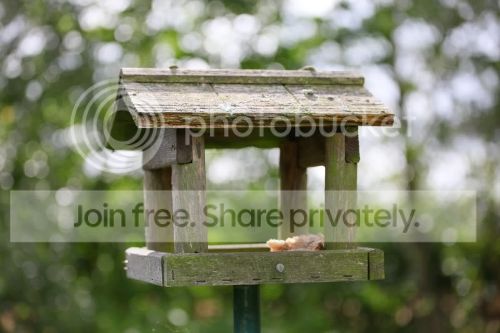
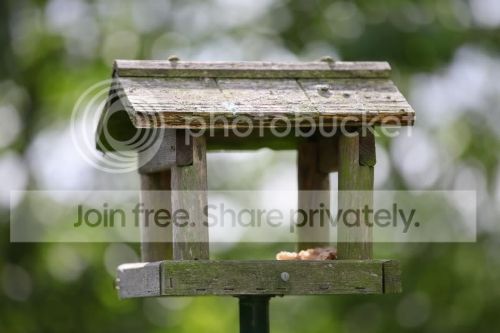
Obviously DoF is a big part of it, and stuff like shape of the aperture blades, but one thing that often gets overlooked is field of view. There was a thread about it recently and I took a couple of snaps to illustrate.

When you use a longer lens, field of view is reduced and the background becomes relatively larger. Which makes background objects bigger, the shapes more simple and less cluttered, which usually makes the background less distracting so the subject stands out more. Here are two snaps at 70mm and 200mm, both at f/4 on full frame Canon 5D2.

70mm f/4, 5D2
IMG_3410.jpg


200mm f/4, 5D2
IMG_3411.jpg
 
Last edited:
Thanks all. I will be looking to get a DSLR at some point so will have to keep any eye out for this feature. I was looking at the Nikon D5000 or D90 does anyone know if these feature this magic DOF button?

D5000 doesn't have it - chimping is the only way. I've only once used a camera with a DoF button ('60s Mamiya) and foudn the viewfinder went so dark it was useless...
 
Back
Top