UV Photography

troutfisher

Suspended / Banned
Messages
2,981
Name
Chris
Edit My Images
Yes
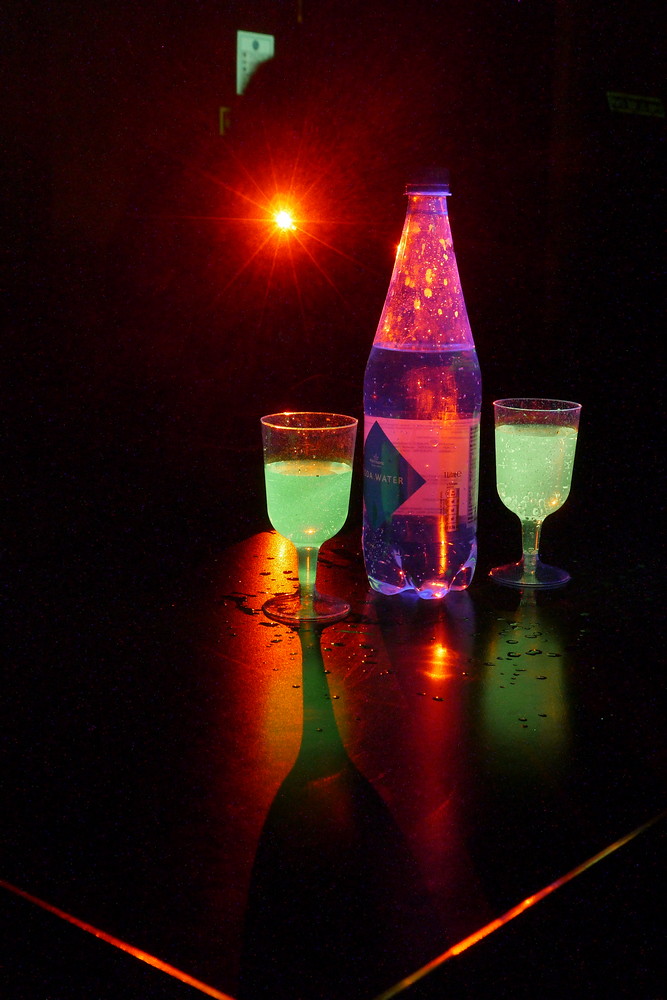
I have been looking at pictures of flowers taken under UV light and they look rather interesting.
Does anyone have any experience of this and if so what type of light source is needed, will a simple UV torch suffice or does it need a proper UV black light
 
When you say 'UV' be aware that the image won't be capturing what the flower looks like from reflected UV - as the sensitivity of digital camera sensors drops off rapidly below 390nm (which is the far violet end of the visible spectrum) and effectively won't be recording the UV 'light' itself. Additionally, most of the glass in the lenses will absorb the UV too (fluorite and ED glasses excepted to some extent).
Rather, in the case of flowers, what you will capture is the visible light fluorescence from the flower (i.e. the UV causes the flower to emit visible light that the camera can 'see').
BUT you will need to do this in, effectively, a totally dark room and still need log exposures.
 
When you say 'UV' be aware that the image won't be capturing what the flower looks like from reflected UV - as the sensitivity of digital camera sensors drops off rapidly below 390nm (which is the far violet end of the visible spectrum) and effectively won't be recording the UV 'light' itself. Additionally, most of the glass in the lenses will absorb the UV too (fluorite and ED glasses excepted to some extent).
Rather, in the case of flowers, what you will capture is the visible light fluorescence from the flower (i.e. the UV causes the flower to emit visible light that the camera can 'see').
BUT you will need to do this in, effectively, a totally dark room and still need log exposures.
UV induced fluorescence is quite easy to do with digital cameras, as above it needs to be in near complete darkness, with a UV only light source.
A UV torch would work but a more powerful UV light is better - I used a modified flash through a ZWB2 filter for mine
UVIF + focus light small by Mike Kanssen, on Flickr

Shot during a workshop session where one photographer had a focus assist light giving the red...

Reflected UV is much more difficult. It can be done with a modified digital camera, but my full spectrum cameras are too sensitive to IR leakage (seen through all the affordable UV pass filters) to work well. careful choice of lenses, as well as filters & the modified camera is needed. So far my results have no more than hints of UV character.

It might be easier to record reflected UV with film - exposures are certainly tricky but IR leakage shouldn't be an issue. Film is inherently sensitive to UV, but some films have UV blocking built in.
 
Also be aware some UV lights are harmfull, I'd suggest UV resistant glasses.
UVA as used in nightclubs is supposed to be safe, shorter wavelengths are more dangerous. IMO Sensible precautions should be used even with UVA...
 
My first approach to DIY UV lighting was something similar. The bulb holder I had didn't have a suitable reflector/shade so I made one from a cut down milk bottle & lined it with tin foil.
You used to be able to buy metal foil painted black on one side (thin tin?) for stage lights, I had a few sheets in my old studio. You could cut it with a sissors and bend it into any shape, it was heat resistant too. I used if for the background lights to mask them. Worked a treat. No idea if it's still made.
Actually thinking about foil oven trays painted on one side would be very similar.
 
With regard to a UV light source, have you considered an entomology lamp? something like this?
https://www.angleps.com/shop-all/p/20w-compact-actinic-bulb
Don't they also give out large amounts of visible light? something you need to avoid for UVIF

In the shots I've seen of them they generally look like white lights, and the only spectral distribution I've found for one shows more visual than UV (though certainly much more UV than normal lights).
 
Last edited:
  • Like
Reactions: mex
Back
Top