You are using an out of date browser. It may not display this or other websites correctly.
You should upgrade or use an alternative browser.
You should upgrade or use an alternative browser.
UV filter or not UV filter
- Thread starter PeterM69
- Start date


Trig's
Suspended / Banned
- Messages
- 4,367
- Name
- Steve
- Edit My Images
- Yes
buy the hood
& the filter - you know you really want too

Its a question that gets asked many atime on here - to be honest just do a search & you'll see the opinions of many a member regarding filters.... The filter will prob cost just as much as the lens - so it could work out cheaper just to replace the lens if anythinng happened to the front of it...
Last edited:

SpikeK6
Suspended / Banned
- Messages
- 3,543
- Name
- Spike
- Edit My Images
- Yes
I never use filters, all my lens get used with a hood so are protected that way. I never really find myself in a position that the lens would get damaged, ok I drop it no filter in the world is going to save the lens, many threads on here about this and I think its really boils down to personal choice, you either use them or you do not.
spike
spike

HoppyUK
Suspended / Banned
- Messages
- 23,200
- Name
- Richard
- Edit My Images
- No
Always use a hood, for protection as much as anything, and don't use any filters unless you actually need them for an effect or to protect against imminent danger, like sea spray.
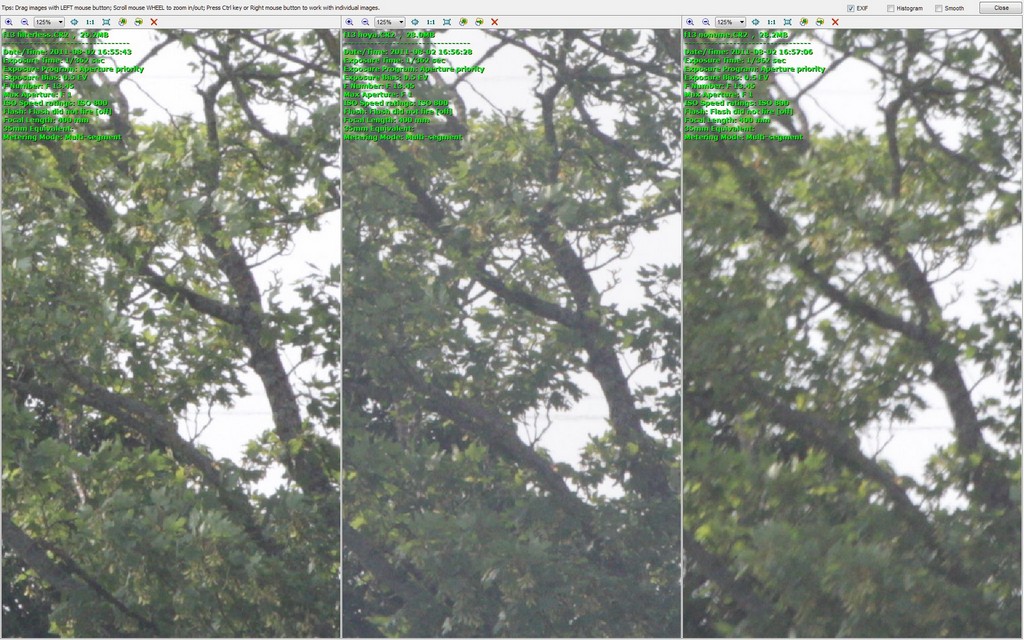
Lots of threads on this, including this current one with comparison pics http://www.talkphotography.co.uk/forums/showthread.php?t=347340 All filters do this in certain circumstances - the best are multi-coated glass, and the least resistant to flare are uncoated resin/acrylic, so-called 'organic glass' (ie plastic).
Lots of threads on this, including this current one with comparison pics http://www.talkphotography.co.uk/forums/showthread.php?t=347340 All filters do this in certain circumstances - the best are multi-coated glass, and the least resistant to flare are uncoated resin/acrylic, so-called 'organic glass' (ie plastic).

strobemonkey
Suspended / Banned
- Messages
- 2,029
- Name
- call me anyhting u want
- Edit My Images
- Yes
Get both a hood and a high quality filter like B+W. If I go shooting at the beach, shoot very close to animals like dogs and cats, or when it's drizzling, I put on both hood and filter otherwise its just the hood that's attached.
strobemonkey
Suspended / Banned
- Messages
- 2,029
- Name
- call me anyhting u want
- Edit My Images
- Yes
Hiya, forgot to ask if its a canon nifty, if it is, forget the hood
Thanks everyone, scanned the site and read some very interesting posts. I think unless the lens is in imminent danger, i.e beach shots, bad weather etc, I'm going to use just the hood and see how it goes.
Fair enough, that's pretty much my own policy and I've never found any reason to change it. FWIW, UV filters were developed for film. They don't serve any useful purpose as filters on a digital camera, and you can just as well use a clear protection filter for protection if you want to. Six of one and............I suppose.

scottthehat
Suspended / Banned
- Messages
- 6,290
- Name
- scott
- Edit My Images
- Yes
i used to use them thinking it would help untill i saw one that was cracked which had gone inwards and scratched the lens and was jamed on so caused more probs, also they can leave horrible out of focus areas and sotfen pictures, i dont use them know just the lens hood,
OP

PeterM69
Suspended / Banned
- Messages
- 632
- Name
- Pete
- Edit My Images
- Yes
Hiya, forgot to ask if its a canon nifty, if it is, forget the hood
Nope, a Nikon

strobemonkey
Suspended / Banned
- Messages
- 2,029
- Name
- call me anyhting u want
- Edit My Images
- Yes
Nope, a Nikon
Don't know about nikon but if the front of the lens is where you attach the hood, and if the front extends in and out with the hood, its better without it if protection is what you're after.
You can not protect a lens with a hood!
The filter stops all the rubbish from dfust to crud going on the lens, what would you rather damage and replace, a filter or a lens.
When I am shooting on boat trips I often clean my filter with my T shirt (not good for hoya pro filters I know) but I have never had to clean the lens, and don't forget that a UV filter is there to reduce UV!
Remember as with everything cheap filter cheap results, Hoya, Kood, A+B etc you get what you pay for.
The filter stops all the rubbish from dfust to crud going on the lens, what would you rather damage and replace, a filter or a lens.
When I am shooting on boat trips I often clean my filter with my T shirt (not good for hoya pro filters I know) but I have never had to clean the lens, and don't forget that a UV filter is there to reduce UV!
Remember as with everything cheap filter cheap results, Hoya, Kood, A+B etc you get what you pay for.
Last edited:
You can not protect a lens with a hood!
The filter stops all the rubbish from dfust to crud going on the lens, what would you rather damage and replace, a filter or a lens.
When I am shooting on boat trips I often clean my filter with my T shirt (not good for hoya pro filters I know) but I have never had to clean the lens, and don't forget that a UV filter is there to reduce UV!
Remember as with everything cheap filter cheap results, Hoya, Kood, A+B etc you get what you pay for.
Yes, of course you can protect the lens with a hood. Lot's of photographers do just that. Read the previous threads on this, or any other forums.
I'm not particularly worried about dust on my lenses - it doesn't usually matter very much anyway - and I don't get "crud" on my lenses in the sort of photography I generally do. I do use filters in very hostile conditions, if I remember to take them with me, but I don't have a problem with cleaning lenses either. They don't melt.
UV filters were designed for film cameras. Digital cameras don't require them, so they're completely pointless for this purpose.

AndyB1976
Suspended / Banned
- Messages
- 2,377
- Name
- Andy
- Edit My Images
- Yes

DazJW
Suspended / Banned
- Messages
- 782
- Edit My Images
- No
Yes you can. If you bang a lens with a plastic twist lock lens hood on something the hood will flex or break off, this dissipates the energy from the impact. It also means things have to be coming straight at you for them to reach the front element and things have to be small enough to fit down the lens hood in order for them to reach the front element - except with those really short hoods for very short focal lengths.You can not protect a lens with a hood!
Hoods also benefit images by reducing flare while filters do the opposite. And they're cheaper than a good filter.
On the front element perhaps but it doesn't stop it getting in all the other gaps in your lens and camera.The filter stops all the rubbish from dfust to crud going on the lens
The idea that it's a case of what would you rather replace is false, you can break filters very easily while breaking a lens is much less likely.what would you rather damage and replace, a filter or a lens.
See this video.
Digital cameras aren't sensitive to UV.don't forget that a UV filter is there to reduce UV!
If someone works in circumstances like yours where you're highly prone to getting rubbish on the front element and it getting in the way of your photography then a clear/UV filter can be justified by them being easier to thoroughly clean but the rest of your reasoning is simply wrong.
Yes you can. If you bang a lens with a plastic twist lock lens hood on something the hood will flex or break off, this dissipates the energy from the impact. It also means things have to be coming straight at you for them to reach the front element and things have to be small enough to fit down the lens hood in order for them to reach the front element - except with those really short hoods for very short focal lengths.
Hoods also benefit images by reducing flare while filters do the opposite. And they're cheaper than a good filter.
On the front element perhaps but it doesn't stop it getting in all the other gaps in your lens and camera.
The idea that it's a case of what would you rather replace is false, you can break filters very easily while breaking a lens is much less likely.
See this video.
Digital cameras aren't sensitive to UV.
If someone works in circumstances like yours where you're highly prone to getting rubbish on the front element and it getting in the way of your photography then a clear/UV filter can be justified by them being easier to thoroughly clean but the rest of your reasoning is simply wrong.
I have no intention of getting into a debate on a matter that the majority of people agree is a good thing, a filter on a lens.
I also didn't refer to digital cameras and UV, some like me still used film as well hence the UV, we are talking protection.
As far as I know the majority of people use hoods anyway, and as any 40+ year photographer will tell you it is easier to clean a filter than a front element.
I have also been to more rallies than I can remember, I have thrown away many scratched filters afterward but have never thrown away a scratched lens as I have never had one.
When out in snow, light rain, fog etc the filter gets cleaned not the element.
It is a personal choice but I have yet to see a person in the know who does not use them except in controlled environs such as a studio.
Last edited:

DuncanDisorderly
Suspended / Banned
- Messages
- 4,016
- Name
- Duncan
- Edit My Images
- Yes
Agree it is a personal choice - but the rest of that statement is prejudiced...It is a personal choice but I have yet to see a person in the know who does not use them except in controlled environs such as a studio.
This was taken last weekend on a TP meet - with no filter - 5DII & 24mm TSE II - and yes, I believe I do know my stuff.

Been doing this sort of thing for years, and I've never had a scratched lens either....
I have no intention of getting into a debate on a matter that the majority of people agree is a good thing, a filter on a lens ....................................
It is a personal choice but I have yet to see a person in the know who does not use them except in controlled environs such as a studio.
Why post provocatively if you're not interested in debating the question, or do you simply expect everyone else to agree with you?
Where is the support, the evidence, for your assertion that the majority of people agree that a filter on a lens is a good thing? What people? What type of filter? Under what circumstances?
Of course it's a personal choice. That's about the only thing we all agree on about protection filters, and we've been debating it for years, without acrimony. One more point, most people on these forums do use digital, or post in the Film and Conventional forum if they want to discuss film and film gear.
Why post provocatively if you're not interested in debating the question, or do you simply expect everyone else to agree with you?
Where is the support, the evidence, for your assertion that the majority of people agree that a filter on a lens is a good thing? What people? What type of filter? Under what circumstances?
Of course it's a personal choice. That's about the only thing we all agree on about protection filters, and we've been debating it for years, without acrimony. One more point, most people on these forums do use digital, or post in the Film and Conventional forum if they want to discuss film and film gear.
Why SHOULD I post in another forum I use digital, people still disagree with banning smoking, and have amazing views on car phones, cycle helmets, seat belts etc, remember as I do this is a free country, thank god we can disagree.
Last edited:
HoppyUK
Suspended / Banned
- Messages
- 23,200
- Name
- Richard
- Edit My Images
- No
Calm down guys! You'll wear yourselves out on this one 
I've been banging the anti-filter drum for decades and gave up any hope of winning long ago. If I was in Jeremy's situation I'd probably use a protection filter, but I'm not, so I don't - and neither are most other people.
I'll leave you with this thought. Most people who use a protection filter do so because a salesperson lied to them
I've been banging the anti-filter drum for decades and gave up any hope of winning long ago. If I was in Jeremy's situation I'd probably use a protection filter, but I'm not, so I don't - and neither are most other people.
I'll leave you with this thought. Most people who use a protection filter do so because a salesperson lied to them
Calm down guys! You'll wear yourselves out on this one
I've been banging the anti-filter drum for decades and gave up any hope of winning long ago. If I was in Jeremy's situation I'd probably use a protection filter, but I'm not, so I don't - and neither are most other people.
I'll leave you with this thought. Most people who use a protection filter do so because a salesperson lied to them
Or in the majority of cases like mine through age, experience and education


ozzieuk
Suspended / Banned
- Messages
- 12
- Name
- Wayne
- Edit My Images
- Yes
I'll leave you with this thought. Most people who use a protection filter do so because a salesperson lied to them
So true ! I

So true ! I
Who here stated
Where is the support, the evidence, for your assertion that the majority of people agree that a filter on a lens is a good thing
I challenge you and Hoppy Uk to do the same with this statement
(Hoppy Uk"I'll leave you with this thought. Most people who use a protection filter do so because a salesperson lied to them")
no, you can not so it looks like we both win/lose.
To quote MartynK
"Why post provocatively if you're not interested in debating the question, or do you simply expect everyone else to agree with you"
I assume your comments apply equally as they have made the same "majority/un supprted" statement if not then it must have been personal to me. I have broad sholders.
Now I will let you have the last word on this as I am bored with it.
Last edited:
DazJW
Suspended / Banned
- Messages
- 782
- Edit My Images
- No
I challenge you and Hoppy Uk to do the same with this statement
(Hoppy Uk"I'll leave you with this thought. Most people who use a protection filter do so because a salesperson lied to them")
- It's well known that margins on accessories like filters are larger than on expensive items like DSLRs and lenses, so there's the motive.
- It's been shown by numerous people in this thread and elsewhere on the internet both in written anecdotal style and with video and photo evidence that the reasons given for a UV filter being a worthwhile purchase (protection, etcetera) are false except in extreme circumstances.
- Filters negatively impact your images and can damage the lenses they're supposed to be protecting, so the opposite of the claimed image benefits and protection is true.
- This effectively eliminates informed choice being a factor in choosing to purchase a UV filter, leaving a perceived need as a result of misinformation (by a salesperson or otherwise) as the most likely factor for purchasing one.
If you're thinking about winning and losing you're on the forum for the wrong reasons. We should all be here to help people who know less than us and to learn from people who know more than us, not to try and prove how big and clever we are by making false or flawed claims (as discussed in my previous post), refusing to back them up other than by claiming we're more experienced and knowledgeable (which aren't the same thing by the way) and then claiming we've "won".no, you can not so it looks like we both win/lose.
Last edited:

- Messages
- 16,666
- Name
- Ade
- Edit My Images
- Yes
For goodness sake.
Read this forum or just about any other photographic forum, some like them, some don`t. Some give reasons for and against.
Just make your own mind up and do what you want................
Read this forum or just about any other photographic forum, some like them, some don`t. Some give reasons for and against.
Just make your own mind up and do what you want................
OP
PeterM69
Suspended / Banned
- Messages
- 632
- Name
- Pete
- Edit My Images
- Yes
Saleman:shake: Most make my skin crawl. You very rarely get a good salesman whos ultimate aim isn't to try and push as many sales through the till as possible without really giving a hoot as to what you really need as a customer. When I bought my lens the salesman, before I stopped him in his tracks, said " right, thats a 58mm thread so you'll.........." No thanks, already got one I told him, with which he looked dumbfounded. My point is, he never once asked what I'd be using it for, type of conditions etc, he just automatically assumed I'd be buying a protection filter, hence the reason why I asked here 
Last edited:
DazJW
Suspended / Banned
- Messages
- 782
- Edit My Images
- No
You very rarely get a good salesman whos ultimate aim isn't to try and push as many sales through the till as possible without really giving a hoot as to what you really need as a customer.
Unfortunately shops seem to be responding to their falling popularity in the way that game publishers and film companies respond to piracy. Screw everything you can out of your customers and don't care if you're providing a worse service than your competition (be that online retail or piracy).
They need to try and do things that online can't (like hire staff who can provide good advice) but sadly I don't think they'll realise this in time to save their businesses.

Roy C
Suspended / Banned
- Messages
- 3,383
- Edit My Images
- No
When I first got a 400/5.6 lens I was on the point of returning it as a lemon but then someone suggested I take the filter off if I had one on - the difference was staggering. I did not use a filter on the lens again. A few years later I bought a 17-40/4 lens and a good quality Hoya pro digital UV filter which was the same size that fitted the 400 so I once again tried it with this filter. In controlled tests taken on a tripod with remote release with and without the filter there was no doubt whatsoever that the filter was degrading the IQ.
Strange thing was that similar test with the very same filter on/off of the 17-40 lens did not seem to show a lot of difference. After several more test I have come to the conclusion that filters seem to degrade IQ much more on telephotos.
Another thing of course is that with the big whites super teles you cannot stick a filter on the front even if you wanted to.
What I would say to anyone who uses a filter on a long lens is to at least try some test shots with the filter on and off using good support, the same settings and a remote release (or timer) and then judge for yourself. If you honestly cannot see any difference then that is great but I think a lot of filter users could be surprised at the degradation a filter can cause, especially if it is a cheap one.
In my experience I would say that the vast majority of GOOD bird photographers do not use a filter.
Strange thing was that similar test with the very same filter on/off of the 17-40 lens did not seem to show a lot of difference. After several more test I have come to the conclusion that filters seem to degrade IQ much more on telephotos.
Another thing of course is that with the big whites super teles you cannot stick a filter on the front even if you wanted to.
What I would say to anyone who uses a filter on a long lens is to at least try some test shots with the filter on and off using good support, the same settings and a remote release (or timer) and then judge for yourself. If you honestly cannot see any difference then that is great but I think a lot of filter users could be surprised at the degradation a filter can cause, especially if it is a cheap one.
In my experience I would say that the vast majority of GOOD bird photographers do not use a filter.
Last edited:
HoppyUK
Suspended / Banned
- Messages
- 23,200
- Name
- Richard
- Edit My Images
- No
When I first got a 400/5.6 lens I was on the point of returning it as a lemon but then someone suggested I take the filter off if I had one on - the difference was staggering. I did not use a filter on the lens again. A few years later I bought a 17-40/4 lens and a good quality Hoya pro digital UV filter which was the same size that fitted the 400 so I once again tried it with this filter. In controlled tests taken on a tripod with remote release with and without the filter there was no doubt whatsoever that the filter was degrading the IQ.
Strange thing was that similar test with the very same filter on/off of the 17-40 lens did not seem to show a lot of difference. After several more test I have come to the conclusion that filters seem to degrade IQ much more on telephotos.
Another thing of course is that with the big whites super teles you cannot stick a filter on the front even if you wanted to.
They already have one on Roy. The front element is a (relatively inexpensive) protection glass, because they are large and vulnerable and you can't fit an aftermarket one.
The big difference is they are not flat, so the mirror/ghosting issue is virtually zeroed.
What I would say to anyone who uses a filter on a long lens is to at least try some test shots with the filter on and off using good support, the same settings and a remote release (or timer) and then judge for yourself. If you honestly cannot see any difference then that is great but I think a lot of filter users could be surprised at the degradation a filter can cause, especially if it is a cheap one.
In my experience I would say that the vast majority of GOOD bird photographers do not use a filter.
It sounds like you're looking for a reduction in sharpness. Sure that can be an issue, mostly with longer lenses as they magnify filter imperfections, but the main problem is flare and ghosting off the sensor as light is reflected back from the rear of the filter.
Try a bright light against a dark background - street lights, a sunset, car headlights. That will show it up big time, though you can't see it through the viewfinder as it's a sensor generated effect.
Roy C
Suspended / Banned
- Messages
- 3,383
- Edit My Images
- No
Yep, I did know about the protective glass Hoppy, I had it on my 300/2.8.They already have one on Roy. The front element is a (relatively inexpensive) protection glass, because they are large and vulnerable and you can't fit an aftermarket one.
The big difference is they are not flat, so the mirror/ghosting issue is virtually zeroed.
It sounds like you're looking for a reduction in sharpness. Sure that can be an issue, mostly with longer lenses as they magnify filter imperfections, but the main problem is flare and ghosting off the sensor as light is reflected back from the rear of the filter.
Try a bright light against a dark background - street lights, a sunset, car headlights. That will show it up big time, though you can't see it through the viewfinder as it's a sensor generated effect.
One of the things that I also found when using a UV filter with the 400/5.6 was sometimes you had very weird bokeh.
Last edited:
HoppyUK
Suspended / Banned
- Messages
- 23,200
- Name
- Richard
- Edit My Images
- No
Yep, I did know about the protective glass Hoppy, I had it on my 300/2.8.
One of the things that I also found when using a UV filter with the 400/5.6 was sometimes you had very weird bokeh.
Always use a filter on a lens if you don't intend to keep it, it's easier to sell if you say it's had a filter on since new 
Myself, I use them on my 10-22, 17-55 and 24-105 because the hoods are useless. On my primes and 70-200 never unless there is sand or water flying.
Myself, I use them on my 10-22, 17-55 and 24-105 because the hoods are useless. On my primes and 70-200 never unless there is sand or water flying.

- Messages
- 9,208
- Name
- Jim
- Edit My Images
- Yes
I've been photographing for about 20 years now.
Never have I used a UV or protection filter, as they offer no protection to a front lens element. And never will I. It's like putting a Morris Minor in front of a tank, to protect the tank. Anything hard enough to damage the front element will simply destroy the filter en route to the element.
Whilst it's sat there providing zero protection, it'll get bored and cause you flare, glare and loss of contrast, while keeping smiles on the faces of many a sweaty saleman, happy that he's lining his pockets with cash from decent people who don't need a filter...
I'm actually surprised so many people still buy these.
Oh, and all my front elements are still in perfect condition.
Never have I used a UV or protection filter, as they offer no protection to a front lens element. And never will I. It's like putting a Morris Minor in front of a tank, to protect the tank. Anything hard enough to damage the front element will simply destroy the filter en route to the element.
Whilst it's sat there providing zero protection, it'll get bored and cause you flare, glare and loss of contrast, while keeping smiles on the faces of many a sweaty saleman, happy that he's lining his pockets with cash from decent people who don't need a filter...
I'm actually surprised so many people still buy these.
Oh, and all my front elements are still in perfect condition.
Last edited: