Use of flash outdoors?

lionofjudah

Suspended / Banned
Messages
204
Edit My Images
No
Hi guys
I was wondering if you ever use a flash outdoors and if so what situations may you use it?
Thanks
 
A very common reason for using flash outside is for 'fill flash'.

If the sun is behind your subject then they will look very dark, whilst the background looks bright as you would want it to. a bit of flash can counter this, as it only really lights up your subject and not the background. I'm sure someone will come and post a before and after example of using fill flash which may explain it better.
 
Also enables you to underexpose the background whilst retaining correctly exposed subjects. This allows the you to isolate the subject and if you so wish even give a completely black studio style to an outdoor shot.
 
ACW said:
A very common reason for using flash outside is for 'fill flash'.

If the sun is behind your subject then they will look very dark, whilst the background looks bright as you would want it to. a bit of flash can counter this, as it only really lights up your subject and not the background. I'm sure someone will come and post a before and after example of using fill flash which may explain it better.

And I take it this in done with on camera flash with the subject within range of flash?
Would you ever use off camera outdoors?
 
yes, loads.
if you have something setup, you can always remote or off camera flash to get the lighting right.
i've seen some lovely wedding shots from 2tone photography I think
they used two off camera flashes to get the tyne bridge in luxurious colour and then hit the couple from the side and one behind the bride, almost like a hair light for her dress :P) worked a treat I think.
they were already booked up for on my wedding date...booo :(
 
A very common reason for using flash outside is for 'fill flash'.

If the sun is behind your subject then they will look very dark, whilst the background looks bright as you would want it to. a bit of flash can counter this, as it only really lights up your subject and not the background. I'm sure someone will come and post a before and after example of using fill flash which may explain it better.


Here you go:

NCTJ-Flash.jpg
 
For the last 40 years I have used off camera flash out doors. To lift shadows on sunny days. Toadd modeling on flat light days. As fill in for back lit subjects. And all calculated manualy. Its only in the last 2 years since having a dslr. That I have had on Camera Flash.
 
Flash is pretty much an integral part of my outdoors shooting - in fact, I'd be lost without it, especially in high summer sun
 
When it's dark and I need light?

haha thanks. but to emphasise I meant apart from portrait pictures within flash range, would you use flash at any other time at night or would you just take long exposures?
 
haha thanks. but to emphasise I meant apart from portrait pictures within flash range, would you use flash at any other time at night or would you just take long exposures?

You clearly understand the limitations that flash has, it's great for portraits.

I'll turn the question round, what are you thinking of using it for? Or what problem do you have that you think flash could solve?
 
I saw in a magazine once they set camera up on tripod and set it to a long exposure in a church yard as an example. They then took the speedlite around the yard firing the flash with the test button behind headstones and at the church walls. Bit like light painting but painting in the subject with the flash instead of the light being the subject.
 
Phil V said:
You clearly understand the limitations that flash has, it's great for portraits.

I'll turn the question round, what are you thinking of using it for? Or what problem do you have that you think flash could solve?

I'm not thinking of using flash outdoors at night. Well I've used inbuilt flash in past for tourist style pictures before I started to understand concepts of photography and thought results were generally rubbish as most photos I was taking were outside flash range.
Now i am learning and generally have taken to doing long exposures and was thinking if anyone actually uses flash at night for any other reason.
 
I'm not thinking of using flash outdoors at night. Well I've used inbuilt flash in past for tourist style pictures before I started to understand concepts of photography and thought results were generally rubbish as most photos I was taking were outside flash range.
Now i am learning and generally have taken to doing long exposures and was thinking if anyone actually uses flash at night for any other reason.

You understand that flash is very dependant on distance from subject and power?

Given that flash power is fairly fixed, if you were photographing anything of a large size or any great distance, then flash is obviously the wrong tool for the job.

There are some uses of the technology, working within the limitations, commonly; using a flash to do 'light painting' of a small scene can create interesting pictures. Then there's the option of a lot of high quality lighting like on a film set (but powered by flash), there are pro's using this technique, but I can't find a link atm.

Again though, your question is very open, it's obvious to you what the limitations of flash outside are, so you should be able to see uses within those limitations, and likewise be able to work out what can't be done.
 
See Gregory Crewdson, who may actually use continuous lighting but you'll get the drift? oops!
 
Phil V said:
Again though, your question is very open, it's obvious to you what the limitations of flash outside are, so you should be able to see uses within those limitations, and likewise be able to work out what can't be done.

thanks. I think I just needed telling that I've understood limitations and am not missing any other uses of flash outdoors at night bar the light painting ones.
 
thanks. I think I just needed telling that I've understood limitations and am not missing any other uses of flash outdoors at night bar the light painting ones.

Great, it's working within those limitations and stretching them that makes work that's interesting. Check out Simon Revills (spxxxx) flash lit outdoor wedding portraits for instance.
 
Dan_H said:
I saw in a magazine once they set camera up on tripod and set it to a long exposure in a church yard as an example. They then took the speedlite around the yard firing the flash with the test button behind headstones and at the church walls. Bit like light painting but painting in the subject with the flash instead of the light being the subject.

This sound really interesting. I can't wait to get my flash so I can try it.
 
remember the use of flash outdoors is very limited. Think about "inverse square law" when in a studio, moving the flash back twice the distance you only get a 1/4 the light. Reminds me of a post a long time ago when a poster asked "what power light will I require will I require when shooting the moon."
 
This has helped. I never thought about using a flash outside..Given me some good ideas. Thanks :)
 
Use a light meter and take from shadow. Then kick in the flash to match ambient light...

If you use TTL check what the camera is is metering..... spot.matrix etc..... On some clothing or light and dark it can over or under... TTL is never 100% but takes the faffing about out of the shot.


I always do groups and weddings eill on manual. Much more control.....

CHIMP CHIMP?

But if it's a hobby stuff play with the camera and you'll get there.

We used to do the multi flash on long exposure in Scenes of Crime. Set flash to manual and run around with the flash set to approx distance from subject. Practice in a carpark with your car at night.

Keep a low ISO and that will notg give you any light burn from street lights and building lights etc...... Just play with long exposures and have fun doing it
Or use multi flash guns wireless........ All on tripod.
 
Last edited:
williams359 said:
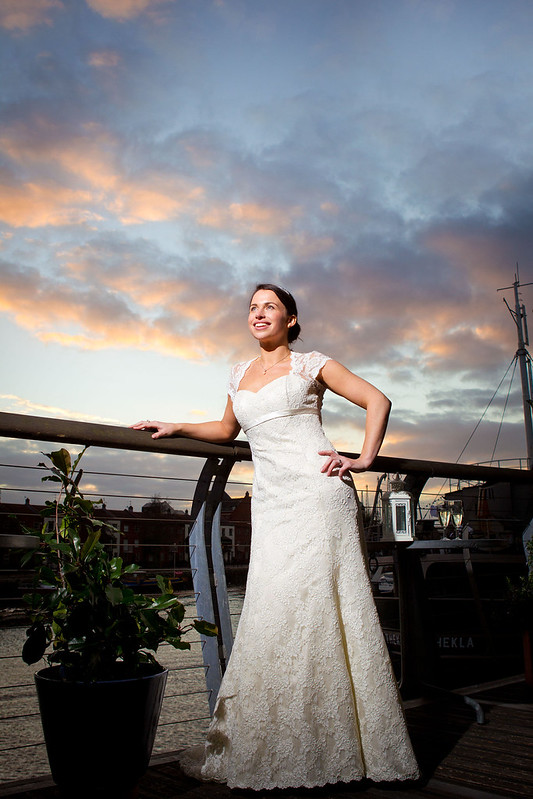
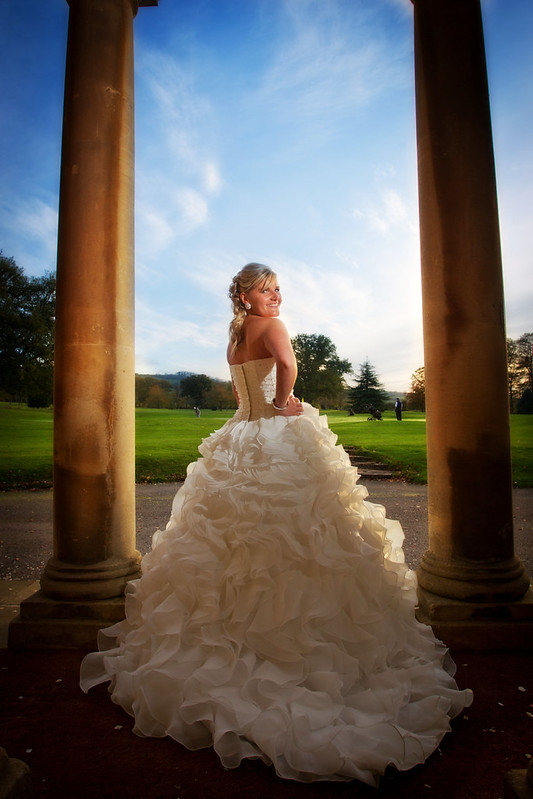
Both of these were lit with flash to keep the detail in the sky. with out the flash the sky would look washed out.

http://www.flickr.com/photos/81231878@N05/7731604046/
SWS-100 by williams359, on Flickr

http://www.flickr.com/photos/81231878@N05/7731604842/
SWS-097 by williams359, on Flickr

I really like the first shot. How did you isolate the flash to be just on her. It looks tricky and I noticed that she is lit nicely but the plant right next to her is not lit. I'm really getting excited about trying a flash.
 
I really like the first shot. How did you isolate the flash to be just on her. It looks tricky and I noticed that she is lit nicely but the plant right next to her is not lit. I'm really getting excited about trying a flash.

I'll let Nick answer fully about the type of modifier (if used) and tech details.

But for Shayne, if you look at the shadow direction and light fall off on the dress, this is an easy example to use to be able to 'read' a lighting setup. This is something that might take a little practice with your own lighting - I can't remember at what point I started to 'get it'.

The flash is high, camera left - directed at the bride, (direction of shadow from the chin) there's a little light on that plant, we can't see much of it (leaf shadows on the dress). I'd guess no modifier - if there was one it was small - judging from the definition of the shadows.

Nice shot Nick.:thumbs:
 
Daryl said:
Use a light meter and take from shadow. Then kick in the flash to match ambient light...

If you use TTL check what the camera is is metering..... spot.matrix etc..... On some clothing or light and dark it can over or under... TTL is never 100% but takes the faffing about out of the shot.

I always do groups and weddings eill on manual. Much more control.....

CHIMP CHIMP?

But if it's a hobby stuff play with the camera and you'll get there.

We used to do the multi flash on long exposure in Scenes of Crime. Set flash to manual and run around with the flash set to approx distance from subject. Practice in a carpark with your car at night.

Keep a low ISO and that will notg give you any light burn from street lights and building lights etc...... Just play with long exposures and have fun doing it
Or use multi flash guns wireless........ All on tripod.

Um, yes, a light meter will help, but if you know your camera you can chimp and still produce professional results.
 
I'll let Nick answer fully about the type of modifier (if used) and tech details.

But for Shayne, if you look at the shadow direction and light fall off on the dress, this is an easy example to use to be able to 'read' a lighting setup. This is something that might take a little practice with your own lighting - I can't remember at what point I started to 'get it'.

The flash is high, camera left - directed at the bride, (direction of shadow from the chin) there's a little light on that plant, we can't see much of it (leaf shadows on the dress). I'd guess no modifier - if there was one it was small - judging from the definition of the shadows.

Nice shot Nick.:thumbs:

Nice shot indeed Nick, one of my favorites.

Phil, I see the direction now. When you say the flash is high are you saying that it is on some sort of extender above the camera? I don't know anything about this (yet) but that's what it looks like to me. Almost as if the light is coming down a bit.

Forgive me but what are you referring to when you say modifier? Like a diffuser?
 
Nice shot indeed Nick, one of my favorites.

Phil, I see the direction now. When you say the flash is high are you saying that it is on some sort of extender above the camera? I don't know anything about this (yet) but that's what it looks like to me. Almost as if the light is coming down a bit.

Forgive me but what are you referring to when you say modifier? Like a diffuser?

Most likely on a light stand next to the photographer, as you can see the light isn't coming from the same direction as the camera.

A modifier is just that, anything that modifies the light from the flash. So, a softbox, umbrella, snoot, beauty dish, etc.
 
Most likely on a light stand next to the photographer, as you can see the light isn't coming from the same direction as the camera.

A modifier is just that, anything that modifies the light from the flash. So, a softbox, umbrella, snoot, beauty dish, etc.

Thanks James. It all makes sense now. Sense I don't have a flash yet I have been playing with any and every type of artificial light I can find, even made a soft box (needs a little work). lol. I also have been playing with flash lights or torches as you call them to fill and highlight. What I have learned is that the angle of lighting is so important. When I saw Nicks shot it stood out to me but I couldn't put my finger on why. Now that Phil pointed it out I see it was the angle in which he shot the light that makes the difference.

Thanks to everyone explanations and input I'm starting to see the very basics of flash/lighting work.

Much appreciated...:thumbs:
 
Thanks James. It all makes sense now. Sense I don't have a flash yet I have been playing with any and every type of artificial light I can find, even made a soft box (needs a little work). lol. I also have been playing with flash lights or torches as you call them to fill and highlight. What I have learned is that the angle of lighting is so important. When I saw Nicks shot it stood out to me but I couldn't put my finger on why. Now that Phil pointed it out I see it was the angle in which he shot the light that makes the difference.

Thanks to everyone explanations and input I'm starting to see the very basics of flash/lighting work.

Much appreciated...:thumbs:

At first photography is all about exposure - working out how to collect the right amount of light to make a picture.

But there's a point at which you realise just how important the light is - not the quantity of light though (which we fixate on at first) but the Quality.

Whether we're shooting people, landscapes, sport or whatever; what separates the great photo's apart is the quality and direction of the light.

Putting a flashgun on your camera and shooting with it on Auto will give pictures with the right quantity of light - but they're boring with nasty little hints at shadows. Taking the flash off the camera and making it into a bigger softer light creates modelling via soft edged shadows.
 
Here is a simple guide:

Does it move?
Yes --- Flash
No --- Long Exposure

Of course, this is not true for everything or everyone, but if you can get away without a flash I'd rather have a naturaly lit photograph or at least one that is painted.

I've not really played with flash but you can destroy photo's very easily with it.
 
Last edited:
Here is a simple guide:

Does it move?
Yes --- Flash
No --- Long Exposure

Of course, this is not true for everything or everyone, but if you can get away without a flash I'd rather have a naturaly lit photograph or at least one that is painted.

I've not really played with flash but you can destroy photo's very easily with it.
add. what is the dynamic range of the scene & how is the subject lit compared to the rest of the scene

a long exposure is great, but if the primary subject is flatly lit with poor quality lighting, you will just have a dull shot, that is to be frank just plain boring
 
[QUOTE="Pegasus2"


I've not really played with flash but you can destroy photo's very easily with it.

And you can create a jaw dropping brilliant photo as well. One that would never be as good without flash help.
 
Here is a simple guide:

Does it move?
Yes --- Flash
No --- Long Exposure

Of course, this is not true for everything or everyone, but if you can get away without a flash I'd rather have a naturaly lit photograph or at least one that is painted.

I've not really played with flash but you can destroy photo's very easily with it.

Of course thats a great rule if you only care about...
At first photography is all about exposure - working out how to collect the right amount of light to make a picture.
But if you want to make great photographs, correct exposure isnt 'enough'

But there's a point at which you realise just how important the light is - not the quantity of light though (which we fixate on at first) but the Quality.

Whether we're shooting people, landscapes, sport or whatever; what separates the great photo's apart is the quality and direction of the light.

I'd rather have a well lit photograph, whether thats sunlight, streetlight, moonlight or flash. And if you're ruining any photo's by using flash - is it the fault of the flash?:thinking:
 
Seeing all the flashes going off in the crowd last night at Olympic stadium when Bolt was introduced made me wonder:
How many people actually captured him perfectly?
 
Back
Top