

Unsual flare on Traffic Light Trail pics

30psi

Suspended / Banned
Messages
610
Name
Martin
Edit My Images
Yes
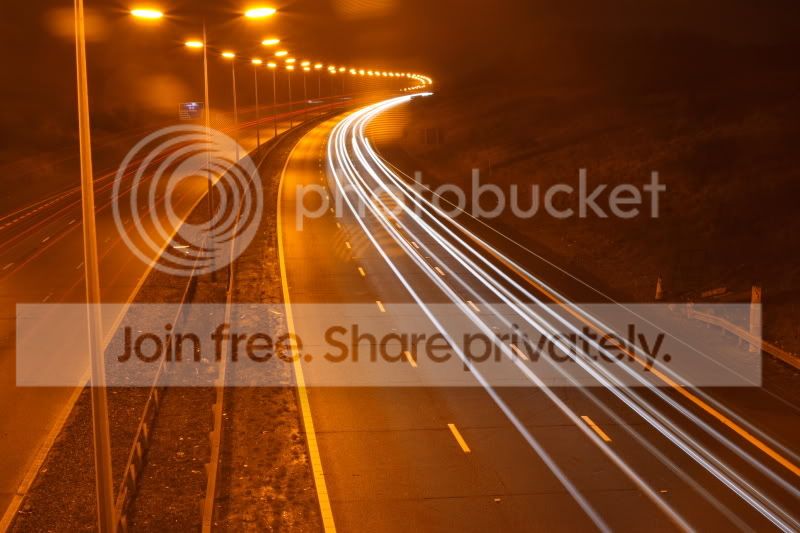
Thought I'd pop out to a motorway and take my first light trail pics seeing as it was now dry.

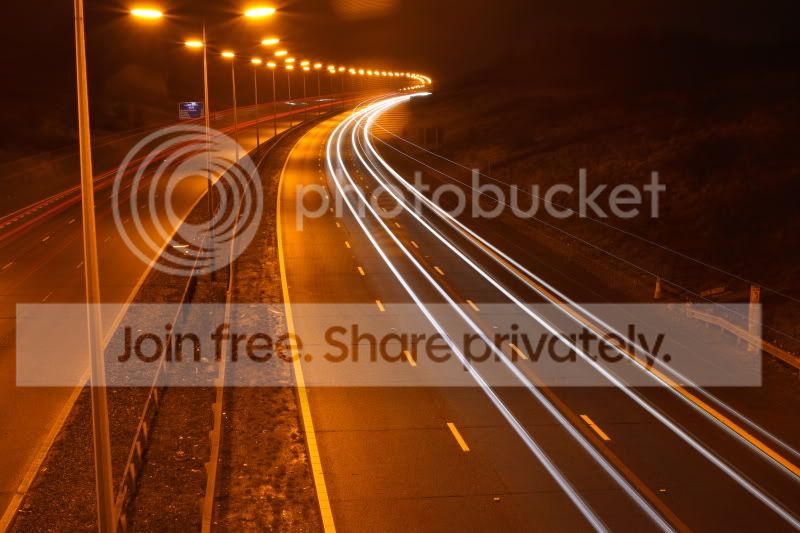
I realised once up there the yellow lights will cause an issue. Below are 2 shots. The 2nd shot I used my hand to try to shield the lens a little with my hand.

However what concerns me the most is the circular thumbprints that are most noticeable on the flares but also exist on the whole picture. Ended up with useless photos as a result.

The camera is a 400d with a 28-105 USM lens with a Jessops UV filter. Due to the sparse traffic I used a tiny aperature of F16, ISO100 to achieve a long 25 sec exposure.

I'm wondering whats causing this, whether its the small aperature, the UV filter or maybe just the lens, but any advice will be definitely useful.
IMG_0787.jpg


IMG_0788.jpg
 
I'd have to suspect thumb prints on that UV filter or on the lens itself. Eliminate that possibility first. :)
 
Anything on the lens/filter would be far more OOF than that. I think it's just a series of flares from all the lights offset from each other.
 
Yep - they are too circular and uniform (see the 2nd image) to be fingerprints. The "epicentres" are also in line with the 2 lens flares starting at 11 and 12 o'clock.

PXL8 -Would a lens hood have eliminated the flares?
 
Yeah I was gonna say the circles are perfectly uniform, increasing in radius from the centre of the image.

What would a polarising filter do to the image?
 
Is your filter multi-coated or just a single coating?

Similar patterns can occur due to reflection from the sensor onto the back of the filter. Traditional film was quite good in not reflecting light back up the lens (only a very small percentage) but sensors can reflect upto 50% back. A good quality multi-coated will usually stop this being seen on the final image.

It is quite often seen as a ghosting around the higher contrast boundaries on normal daylight shots in bright light but could occur with any strong source point. On your images it looks like the possible reflections are of the amber lights.

Just a thought...

Bob
 
Not sure if its single or multi coating.

Its a jessops filter with a factor of 1.0. I can try a HOYA filter which has a factor of 0.75.

What does this factor mean though?
 
Why use a filter? Try it without the filter - give the lens a clean with a lens cloth (no harm) and try in an area where you won't suffer from street light saturation! The darker the better for these lines.
 
Moving this to Talk P. section as it is about technical problems and not image critique.
 
Another thing to try is covering the viewfinder during these longer exposures. I dont think it would stop those flares, but will reduce the maount of light seeping into camera while sensor is exposed. A wise man once told me, carry a piece of A4 card in your camera bag folded in half if necessary, whenever doing long exposure stuff, makes a great shield against some flare, [as you round out using your hand] and can be manouvred round more than a lens hood. ;)
 
Another thing to try is covering the viewfinder during these longer exposures.

Light bleed back through the eyepiece sounds like a possible to me now you mention it. Ground glass screen patterns projected and reflected around? (assuming the mirror does not completely cover the screen)
 
Don't forget you have the little rubber blanking plate on the camera strap for just this occasion ;)
 
Removing the UV filter will help eliminate flare. Make sure the lens glass is clean. If you're shooting at light sources for long exposure you're bound to get some flare whatever you do, so you'll have to try some carful cloning in PS later :)
 
Not sure if its single or multi coating.

Its a jessops filter with a factor of 1.0. I can try a HOYA filter which has a factor of 0.75.

What does this factor mean though?

The filter factor indicates the amount by which you need to increase exposure due to loss of light by the filter. It's sometimes called the filter's coefficient number, but it means the same thing.

It best to think of the number as a multiplier 1X, 2X etc.

Anything multiplied by 1 remains the same, so your Hoya UV needs no exposure increase.

A filter factor of 1.5 would indicate a half stop increase.

A filter factor of 2 would indicate one whole stop increase.

The factor of 0.75 on your other filter doesn't sound right as it seems to admit more light. :)

If you're using a TTL metering camera (as you are) you don't need to worry about these adjustments as the system makes the adjustment anyway, but if you were using an older none-TTL camera, you'd need to meter the exposure then make the filter factor adjustment yourself.
 
Well many thanks for all your inputs, its given me more to think about.

I remember reading in the instructions why that piece of rubber is on the strap. Am surprised light coming in from the viewfinder could effect it, obviously it does, but I'd have thought the uplifted mirror would block any light entering.

Am tempted to go to the same spot again, try it with the viewfinder covered up and with the filter removed to see if there is any change.

Out of interest, what type of cloth should I use to clean a lens with?
 
Perhaps people could tell me how the red trails managed to get in the hard shoulder?

bridgesmall.jpg
 
Perhaps people could tell me how the red trails managed to get in the hard shoulder?

bridgesmall.jpg


Easy, they are the lights from the top of an artic truck and they would have been covering your view of the hard shoulder as it passed you ;)
 
I have another one from yesterday where one of the red lines changes from red to amber a few times as the chap indicates from a slip lane to the motorway. Unfortunately the shot is littered with flare
 
I remember reading in the instructions why that piece of rubber is on the strap. Am surprised light coming in from the viewfinder could effect it, obviously it does, but I'd have thought the uplifted mirror would block any light entering.
Well it shows you're thinking about it and you are right actually -any light coming through the viewfinder wont be responsible for your flare - at the time of exposure the mirror is up blocking all light to the viewfinder.

The reason you have that little rubber cover is to cover the viewfinder when your eye isn't actually at the viewfinder blocking any light - usually a longish exposure on a tripod.

You only need it though in any Auto Mode - AV, TV P etc, as the light through the viewfinder can actually alter the set exposure to compensate. If you look through the viewfinder with a strongish light behind you, you can see the exposure indicator change as you take your eye away from the viewfinder and as you move it back. Since it's indicating more light than there is the result is under-exposure. it can be quite a significant amount if the sun is behind you.

If you shoot in Manual Mode, even though the indicator will still move (as you move your head) -it has no effect on exposure as you set absolute values for aperture and shutter speed which the camera doesn't (can't) change so you don't need the rubber cover.
 
Have to say it looks to me like the UV filter is causing the "thumbprint" its far to regular to be anything else. This is what lens hoods are designed to help stop, so light doesnt hit the front element or filter directly causing flares etc.


(I may be talking bummocks though ;))
 
Easy, they are the lights from the top of an artic truck and they would have been covering your view of the hard shoulder as it passed you ;)

Oh yeah - I'm an idiot.
 
Back
Top