You have to bear in mind that the textbook example of having the background two stops brighter than the subject, and evenly lit harks from film days - when jobs like this had to be nailed in-camera. It's a good rule to know, but with all the potential hassle of many lights there's little wrong with the post processing method you've used on the above shots.
A few tips :
Keep all the shots simple & constant. Shots like the third one in post #55 are ace if pulled off well, but very, very easy to get wrong.
Really, really bear in mind that these people are solicitors. Work as best you can to avoid showing any imperfections. In the stuff you've shot the lady has slightly imperfect teeth. She might not be phased by them. The client may not be phased by them... But if either is, while it may not land you in trouble it will lead to a generally less happy client. In this instance keep the mouth shut.
Stick to 3/4 or full body shots.
Have eye contact in all the shots. It's a very simple way of making the subject at least of an equal standing to the viewer, and more likely of superior standing. Just what you want with solicitors.
Shadows are both your enemy and your best friend - don't just eliminate them completely, flat images are boring. Keep them subtle to be on the safe side.
Play with whatever studio equipment you're using prior to shooting anyone. Use a bear or whatever, but what's important is that you can control & adjust your gear confidently.
If time allows, do experiment. Start to do stuff that's tighter cropped, in odd positions etc. - but do this after you've got a good couple of safe, sure shots following your set formula.
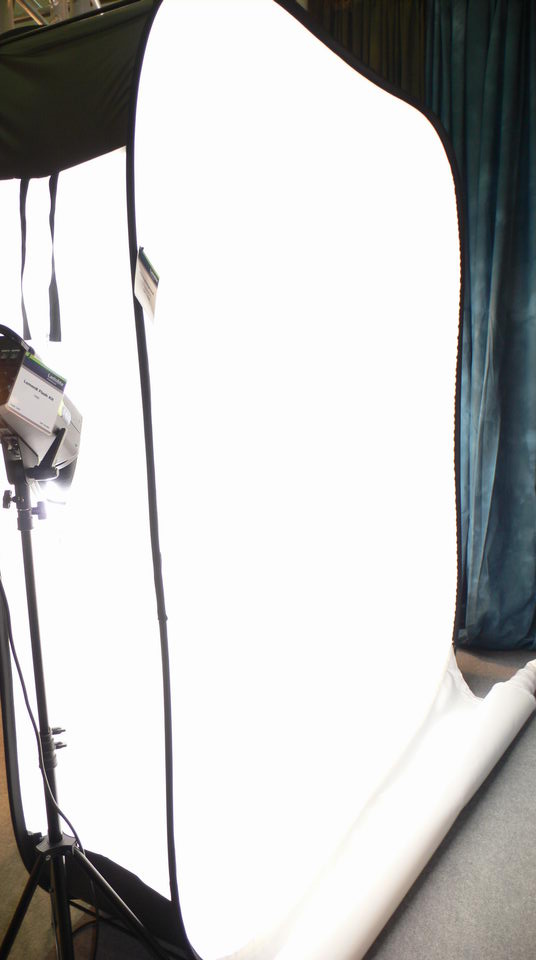
How I would shoot, given two lamps & a strobe is to use just one to backlight the backdrop. The lighting will likely not be even, with some potentially sharp falloff - but this is easy to 'shop afterwards. This leaves you two lights to work with on the subject.
edit : Unless you've shot with similar studio gear to whatever you're renting, I'd go as far as to say rent it a day or two in advance of requirements. That way you can do the aforementioned testing, but also ask niggling little questions somewhere like here. Small things like knowing if you need to dump a light after deciding you don't need it will make the whole process a lot smoother.
Also forgot to say ~ This is a challenge, undoubtedly. It's gonna be stressful, it'll probably go wrong in at least one way, and it sure as damnit aint going to line your pockets... But I think the fact that it's such a challenge is reason enough alone to jump straight at it - I think you'll get a lot from it.




 You'll be fine mate