threesixfive Challenge 2011

Jord

Suspended / Banned
Messages
131
Name
Jordan
Edit My Images
Yes
So I tried to do one of these back in 2009 and got to day 35-ish before running out of steam. I got lazy with my shooting last year but have found the love again so its time to challenge myself with another 365! I'll accompany each photo with a brief story/fact/inspiration for each shot, to keep it interesting.

C&C always welcome :)


Day #1 by Jordan Butters, on Flickr

Day #1

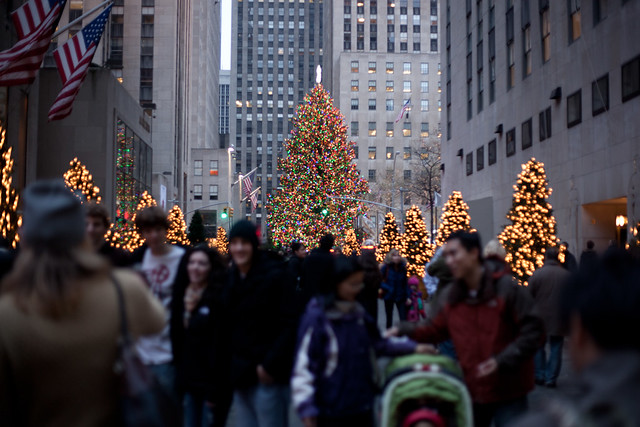
01/01/2011 - The Rockefeller Centre Christmas Tree

Although the official Christmas tree tradition at Rockefeller Center began in 1933 (the year the 30 Rockefeller Plaza opened), the unofficial tradition began during the Depression-era construction of Rockefeller Center, when workers decorated a smaller 20 foot balsam fir tree with "strings of cranberries, garlands of paper, and even a few tin cans" on Christmas Eve (December 24, 1931), as recounted by Daniel Okrent in his history of Rockefeller Center. Some accounts have the tree decorated with the tin foil ends of blasting caps. There was no Rockefeller Center Christmas tree in 1932.

The decorated Christmas tree remains lit at Rockefeller Center until the week after New Year's Day, when it is removed and recycled for a variety of uses. In 2007, the tree went "green," employing LED lights. After being taken down, the tree was used to furnish lumber for Habitat for Humanity house construction.
 
Last edited:
Day #2 by Jordan Butters, on Flickr

Day #2

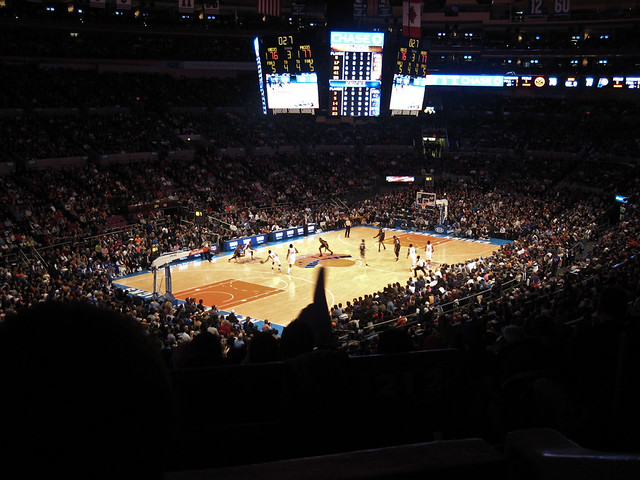
02/01/2011 - Knickerbockers @ Madison Square Garden

The New York Knickerbockers, known familiarly as the Knicks, are a professional National Basketball Association team based in New York City. The organization was a founding member of the Basketball Association of America in 1946 and would join the NBA after the BAA and National Basketball League merged.

The Knicks are one of only two teams of the original National Basketball Association still located in its original city (the other being the Boston Celtics). The "Knickerbocker" name comes from the pseudonym used by Washington Irving for his A History of New York, which name became applied to the descendants of the original Dutch settlers of what later became New York, and later, by extension, to New Yorkers in general.
 

Day #3 by Jordan Butters, on Flickr

Day #3

03/01/2011 - Good News

Walked into Central Park with my girlfriend, walked out with my fiance! I proposed at the Chess & Checkers House under the pergola and here she is phoning home the news! :)
 

Day #4 by Jordan Butters, on Flickr

Day #4

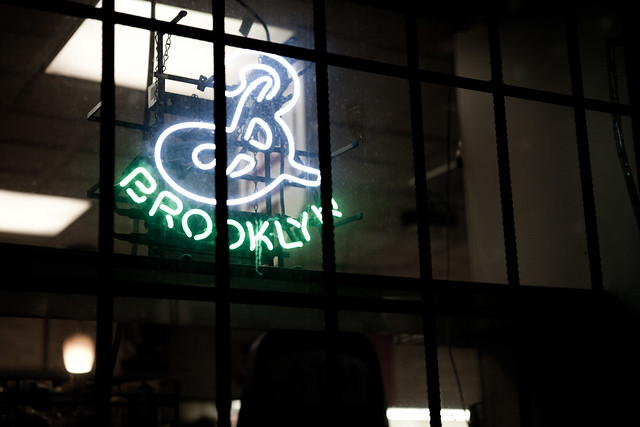
04/01/2011 - Neon

Neon signs are made using electrified, luminous tube lights that contain rarefied neon or other gases. They are the most common use for neon lighting, which was first demonstrated in a modern form in December, 1910 by Georges Claude at the Paris Motor Show. While they are used worldwide, neon signs were extremely popular in the United States from about 1920-1960. The installations in Times Square were famed, and there were nearly 2000 small shops producing neon signs by 1940. In addition to signage, neon lighting is now used frequently by artists and architects, and (in a modified form) in plasma display panels and televisions. The signage industry has declined in the past several decades, and cities are now concerned with preserving and restoring their antique neon signs.
 

Day #5 by Jordan Butters, on Flickr

Day #5

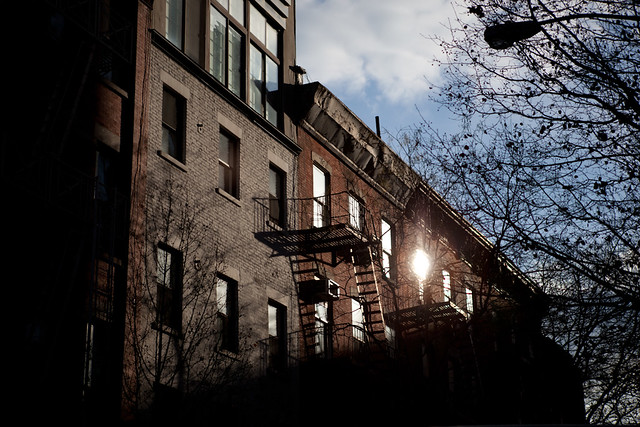
05/01/2011 - An Escape

One of the first fire escapes of any type was invented in 18th-century England. In 1784, Daniel Maseres, of England, invented a machine called a fire escape, which, being fastened to the window, would enable anyone to descend to the street without injury. Anna Connelly patented the first fire escape in 1887, which was designed with an exterior staircase. By 1888 the US had granted 1,099 patents on fire escapes of “many forms, and of every possible material”.
 

Day #6 by Jordan Butters, on Flickr

Day #6

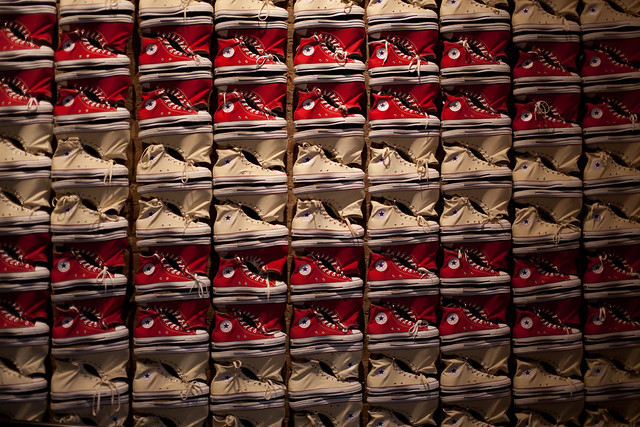
06/01/2011 - Chucks

The Converse All Stars were the first mass production basketball shoe in America. As a high school basketball player in Indiana, Chuck Taylor began to wear Converse All Stars and became very fond of them. The shoes were not particularly popular until Chuck Taylor adopted them as his preferred shoe. He was impressed with the design so he became the shoe’s leading salesman. After Chuck Taylor was hired by the Converse Corporation, he suggested new ways to sew the shoe together providing more support but also flexibility. He also suggested adding the patch for the brand name. When Chuck’s suggestions proved themselves adequate, the shoe got its current name and Chuck Taylor’s signature on its ankle All Stars patch.
 

Day #7 by Jordan Butters, on Flickr

Day #7

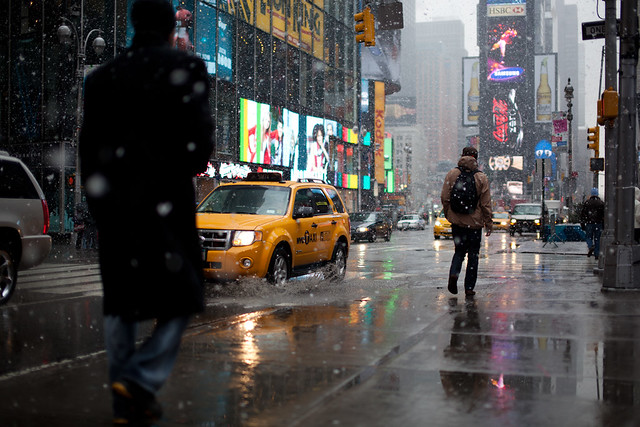
07/01/2011 - Splash

Times Square is a major commercial intersection in the borough of Manhattan in New York City, at the junction of Broadway and Seventh Avenue and stretching from West 42nd to West 47th Streets. The extended Times Square area, also called the Theatre District, consists of the blocks between Sixth and Eighth Avenues from east to west, and West 40th and West 53rd Streets from south to north, making up the western part of the commercial area of Midtown Manhattan.

Formerly named Longacre Square, Times Square was renamed in April 1904 after The New York Times moved its headquarters to the newly erected Times Building, which is now called One Times Square and is the site of the annual ball drop on New Year’s Eve. Times Square, nicknamed “The Crossroads of the World” and “The Great White Way,” has achieved the status of an iconic world landmark and is a symbol of New York City and the United States.
 

Day #8 by Jordan Butters, on Flickr

Day #8

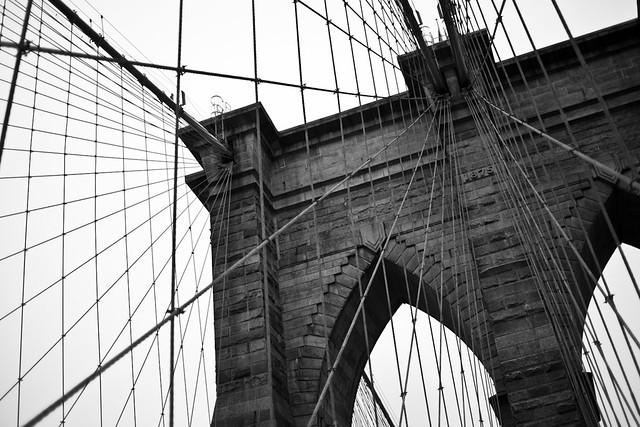
08/01/2011 - Suspense

The Brooklyn Bridge is one of the oldest suspension bridges in the United States. Completed in 1883, it connects the New York City boroughs of Manhattan and Brooklyn by spanning the East River. With a main span of 1,595.5 feet (486.3 m), it was the longest suspension bridge in the world from its opening until 1903, and the first steel-wire suspension bridge.

Originally referred to as the New York and Brooklyn Bridge, it was dubbed the Brooklyn Bridge in a January 25, 1867 letter to the editor of the Brooklyn Daily Eagle, and formally so named by the city government in 1915. Since its opening, it has become an iconic part of the New York skyline. It was designated a National Historic Landmark in 1964 and a National Historic Civil Engineering Landmark in 1972.
 

Day #9 by Jordan Butters, on Flickr

Day #9

09/01/2011 - Jetlag Cure?

Lea & Perrins is a United Kingdom based food division of the H.J. Heinz Company, originating in Worcester, England, with a subsidiary in the United States which manufactures Lea & Perrins in New Jersey. Lea & Perrins was part of the HP Foods company that was bought by Heinz from previous owner Danone in 2005.

It is best known as the maker of Lea & Perrins brand of Worcestershire sauce, which was first sold in 1838 by John Wheeley Lea and William Henry Perrins, dispensing chemists from Broad Street, Worcester.
 

Day #10 by Jordan Butters, on Flickr

Day #10

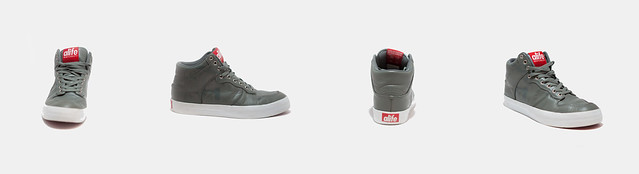
10/01/2011 - Alife

Alife’s original location was on Orchard Street in New York City, founded in 1999. Alife now commercially exists both as a retail store (158 Rivington St) and a James Bond-style gentleman’s club sneaker boutique (the kind where you need to be buzzed in and ostrich skin lines the walls), the Alife Rivington Club (next door, same address). The Alife Rivington Club is considered by some to have started the “lifestyle” boutique and sneaker shop phenomena, widespread in so many cities and towns today. Alife opened their famed Rivington Club in 2001. The Alife Rivington Club strives to provide a private and intimate shopping destination, and, of course, only the most exclusive and coveted sneakers.

But Alife is not just a posh boutique selling rare Nikes and Adidas. Alife also designs, produces, and sells its own brand of sneakers, jeans, shirts, hats, and jewelry. All of their work is done in-house; they do not outsource to design agencies or contractors.
 

Day #11 by Jordan Butters, on Flickr

Day #11

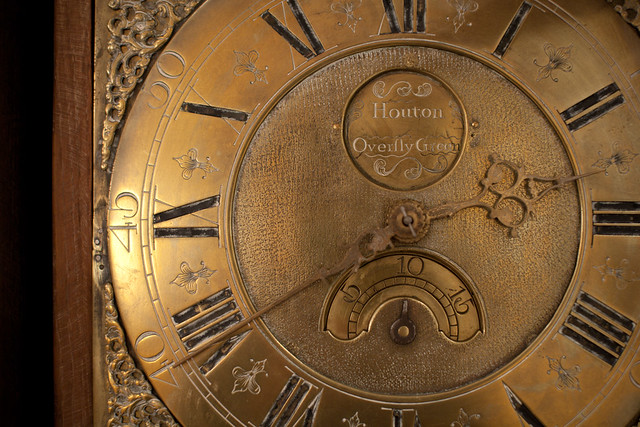
11/01/2011 - Do you have the time?


Richard Houton (sometimes 'Houghton') was born in Salford Priors in 1696 and is erroneously said to have been apprenticed to Thomas Tompion. He married into the Woodful family of Oversley and set up a foundry there on Oversley Green (I have no idea why this clock appears to say 'Overfly Green'?). He died in 1771.

Richard Houton and son (also Richard) maintained the church clocks at Salford and Alcester and perhaps elsewhere: Richard Snr.'s long-case clocks keep coming to light in various parts of England, as do those of the Alcester makers who kept the craft going.
 

Day #12 by Jordan Butters, on Flickr

Day #12

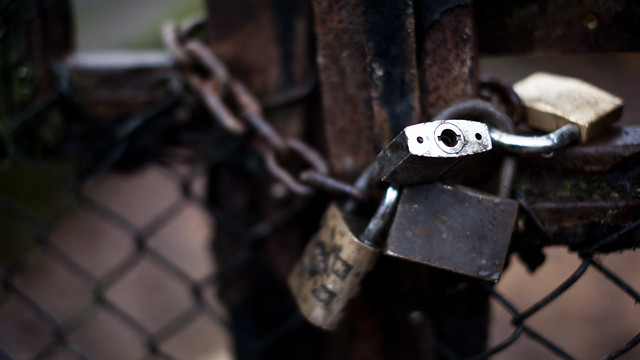
12/01/2011 - (Anti) Social Security

Padlocks are portable locks used to protect against theft, vandalism, sabotage, unauthorized use, and harm. They are designed to protect against some degree of forced and surreptitious entry. A padlock is composed of a body, shackle, and a locking mechanism. The typical shackle is a “U” shaped loop of metal (round or square in cross-section) that encompasses what is being secured by the padlock (i.e., chain link or hasp). Generally, most padlock shackles either swing away (typical of older padlocks) or slide out of the padlock body when in the unlocked position. Unusually designed padlocks may include a straight, circular, or flexible (cable) shackles. Some shackles split apart and come together to lock and unlock.

The earliest positive evidence of padlocks comes from the Roman Era, 500 BC–300 AD.
 
Thanks :D Glad I'm not the only one reading this :D
 
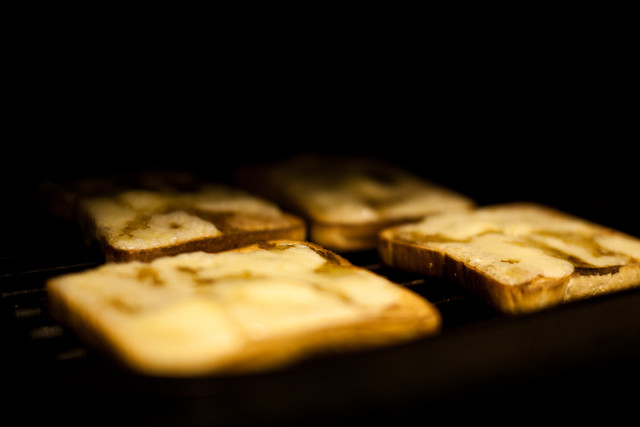
I too love the Times Square shot....& the cheese on toast one - makes my mouth
water :-)
 
Last edited:
A bit behind in updating this, I have been away snowboarding (look out for the upcoming theme) but I still managed to shoot a shot every day.


Day #13 by Jordan Butters, on Flickr

Day #13

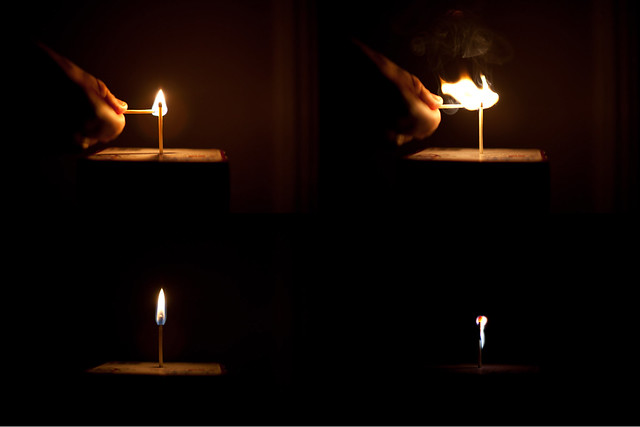
13/01/2011 - Relight my fire.

Sulfur matches were apparently mentioned by Martial in ancient Rome (sulphurata).

A predecessor of the match, small sticks of pinewood impregnated with sulfur, were invented in China in AD 577 by Northern Qi court ladies desperately out of tinder and looking for a means to start fires for cooking and heating while military forces of Northern Zhou and Chen besieged their city from outside. Matches also appeared in Europe by about 1530, yet the first modern, self-igniting match was invented in 1805 by K. Chancel, assistant to Professor Louis Jacques Thénard of Paris. The head of the match consisted of a mixture of potassium chlorate, sulfur, sugar, and rubber. They were ignited by dipping the tip of the match in a small asbestos bottle filled with sulfuric acid. This kind of match was quite expensive and its usage was dangerous, so Chancel's matches never gained much popularity.

The first "friction match" was invented by English chemist John Walker in 1826.
 

Day #14 by Jordan Butters, on Flickr

Day #14

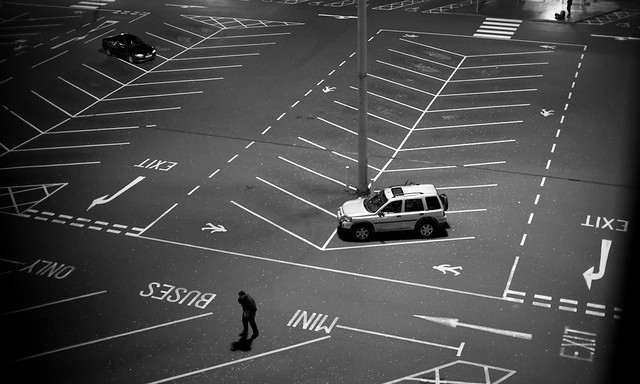
14/01/2011 - I can't find a space.

This is the amazing view from our room at the Novotel, Birmingham Airport. That's all I can say of interest really. Oh apart from the EXIF data on this photo is wrong, the time on my camera was wrong and I did take this just before midnight!
 

Day #15 by Jordan Butters, on Flickr

Day #15


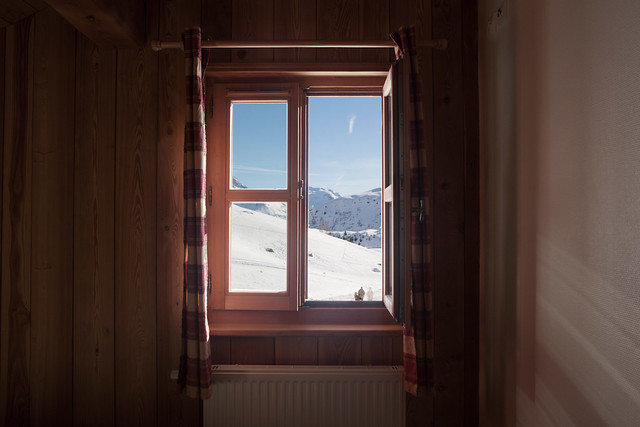
15/01/2011 - A room with a view. (In contrast to Day #14)


Alpe d'Huez is one of Europe's premier skiing venues. The site of the Pomagalski's first surface lift in the mid thirties, the resort gained popularity when it hosted the bobsleigh events of the 1968 Winter Olympics. At that time the resort was seen as a competitor to Courchevel as France's most upmarket purpose built resort but the development of Les Trois Vallées, Val d'Isère, Tignes, La Plagne and Les Arcs saw Alpe D'Huez fall from favour in the 1970s and early 1980s.

With 249 km of piste and 84 ski lifts, the resort is now one of the world's largest. Extensive snowmaking facilities helped combat the ski area's largely south-facing orientation and helped Alpe d'Huez appeal to beginner skiers, with very easy slopes. The expansion of the skiing above the linked resorts of Vaujany, Oz-en-Oisans, Villard Reculas and Auris boosted the quantity and quality of intermediate grade slopes but the resort is mostly known for freeskiing, drawing many steep skiing enthusiasts to its high altitude terrain

The view above is from one of the first floor bedrooms in Neilson's Edelweiss Chalet in Alpe d'Huez.
 
Last edited:

Day #16 by Jordan Butters, on Flickr

Day #16

16/01/2011 - Rentals

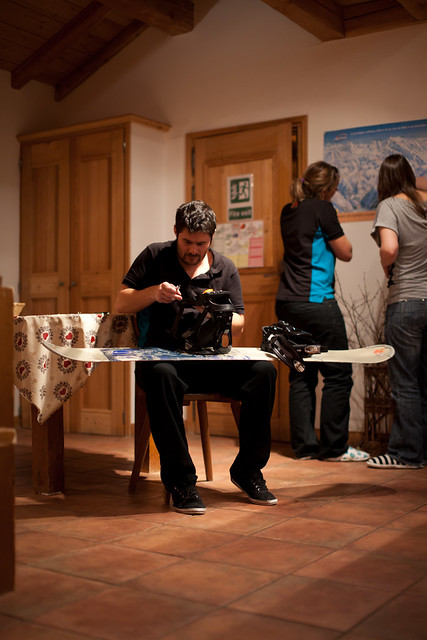
Equipment from rental shops sucks. Mr Bonner makes mean food and fixes crap rental equipment.
 

Day #17 by Jordan Butters, on Flickr

Day #17

17/01/2010 - Cold Night

Moonlight is the light that reaches Earth from the the Moon. This light does not originate from the Moon, but from sunlight. The Moon does not, however, reflect sunlight like a mirror, but it reflects light from those portions of its surface which the Sun's light strikes.

The intensity of moonlight varies greatly depending on the lunar cycle but even the full moon typically provides only about 0.2 lux illumination, so the full moon is about 500,000 times fainter than the sun. When the moon is viewed at high altitude at tropical latitudes, the illuminance can reach 1 lux. The color of moonlight, particularly near full moon, appears bluish to the human eye compared to most artificial light sources. The Moon's albedo is 0.136, meaning only 13.6% of sunlight incident on the Moon is reflected.
 
Last edited:

Day #18 by Jordan Butters, on Flickr

Day #18

18/01/2011 - Snow

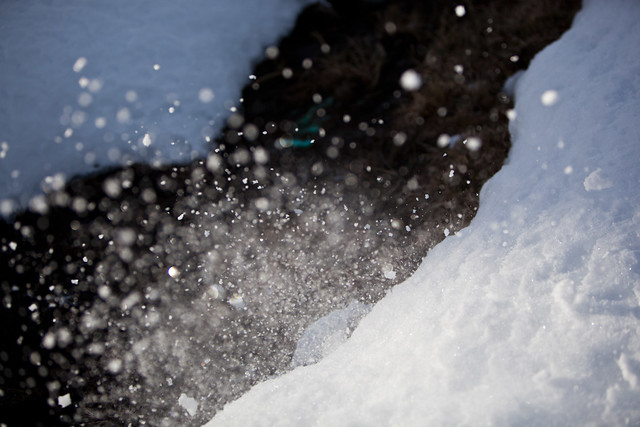
Once on the ground, snow can be categorized as powdery when fluffy, granular when it begins the cycle of melting and refreezing, and eventually ice once it packs down, after multiple melting and refreezing cycles, into a dense mass called snow pack. When powdery, snow moves with the wind from the location where it originally landed, forming deposits called snowdrifts which may have a depth of several meters. After attaching to hillsides, blown snow can evolve into a snow slab, which is an avalanche hazard on steep slopes. The existence of a snowpack keeps temperatures colder than they would be otherwise, as the whiteness of the snow reflects most sunlight, and the absorbed heat goes into melting the snow rather than increasing its temperature.
 
Last edited:

Day #19 by Jordan Butters, on Flickr

Day #19

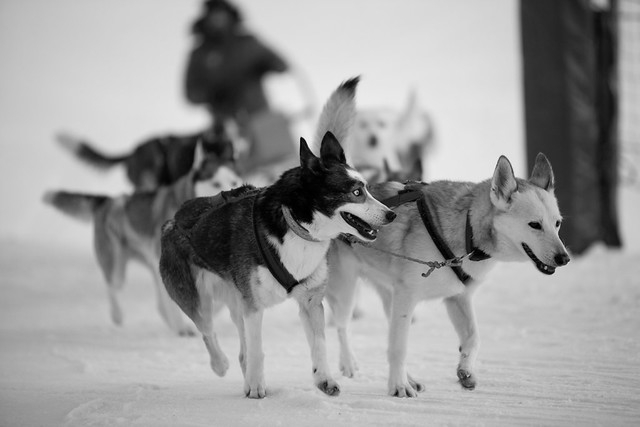
19/01/2011 - Husky

Huskies were originally used as sled dogs in northern regions but are now also kept as pets. The word "husky" is a corruption of the derogative term "Eskie", also given to the Esquimaux tribes that came into contact with Europeans who made early expeditions into their lands. The most common huskies are the Siberian Husky and the Alaskan Husky.
Huskies are known for commonly having different colored eyes, known as heterochromia. The most common eye colors they have are brown and light blue. Huskies have thick fur to protect them from the harsh, cold weather, but it protects them against heat as well,[citation needed] although they like cold weather most.
 
Last edited:

Day #20 by Jordan Butters, on Flickr

Day #20

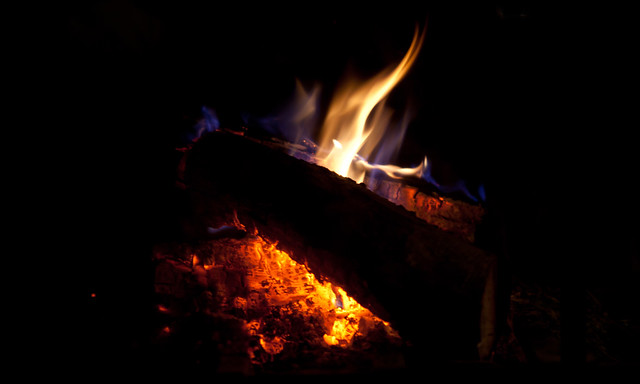
20/01/2011 - Fire

Fire is the rapid oxidation of a material in the chemical process of combustion, releasing heat, light, and various reaction products. Slower oxidative processes like rusting or digestion are not included by this definition.

The flame is the visible portion of the fire and consists of glowing hot gases. If hot enough, the gases may become ionized to produce plasma. Depending on the substances alight, and any impurities outside, the color of the flame and the fire's intensity might vary.
 
Last edited:

Day #21 by Jordan Butters, on Flickr

Day #21

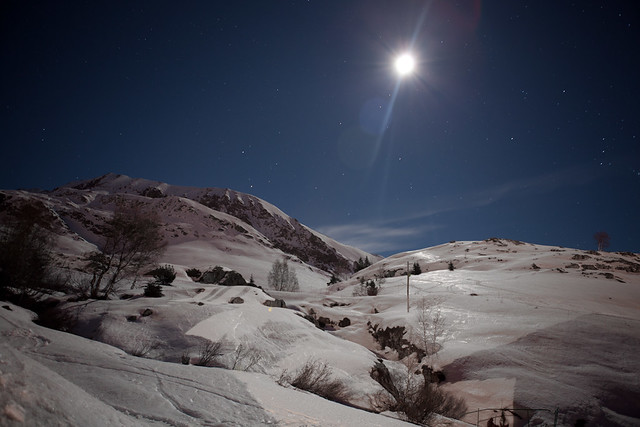
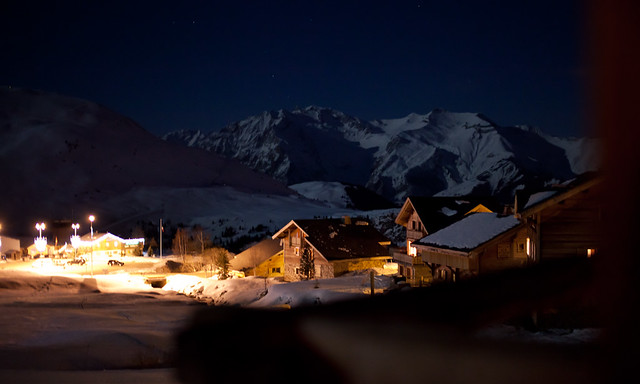
21/01/2011 - The Alps by night.

Wooden chalets and moonlight bouncing off the mountains. A pretty amazing view.
 
Last edited:

Day #21 by Jordan Butters, on Flickr

Day #22


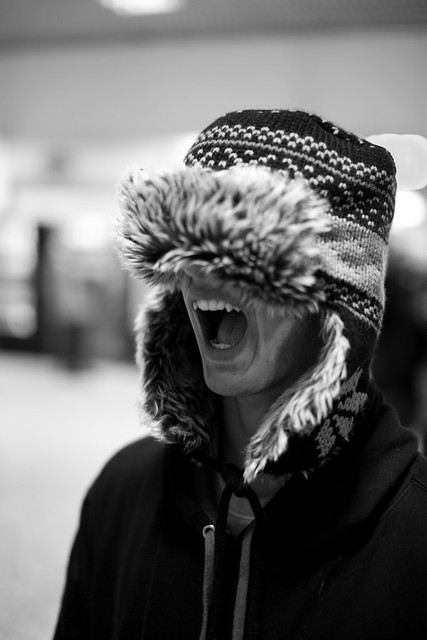
22/01/2011 - Fangs.

Vampires are mythological or folkloric beings who subsist by feeding on the life essence (generally in the form of blood) of living creatures, regardless of whether they are undead or a living person. Although vampiric entities have been recorded in many cultures and in spite of speculation by literary historian Brian Frost that the "belief in vampires and bloodsucking demons is as old as man himself", and may go back to "prehistoric times", the term vampire was not popularized until the early 18th century, after an influx of vampire superstition into Western Europe from areas where vampire legends were frequent, such as the Balkans and Eastern Europe, although local variants were also known by different names, such as vrykolakas in Greece and strigoi in Romania. This increased level of vampire superstition in Europe led to mass hysteria and in some cases resulted in corpses actually being staked and people being accused of vampirism.

This specimen was spotted hiding from sunlight in Birmingham Airport.
 

Day #23 by Jordan Butters, on Flickr

Day #23

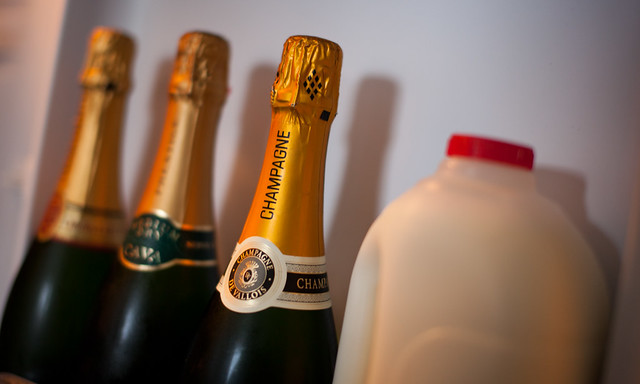
23/01/2011 - What to have on my cereal....

Champagne is a sparkling wine produced by inducing the in-bottle secondary fermentation of the wine to effect carbonation. It is produced exclusively within the Champagne region of France, from which it takes its name.

Get engaged and people buy you lots of Champagne!
 

Day #24 by Jordan Butters, on Flickr

Day #24

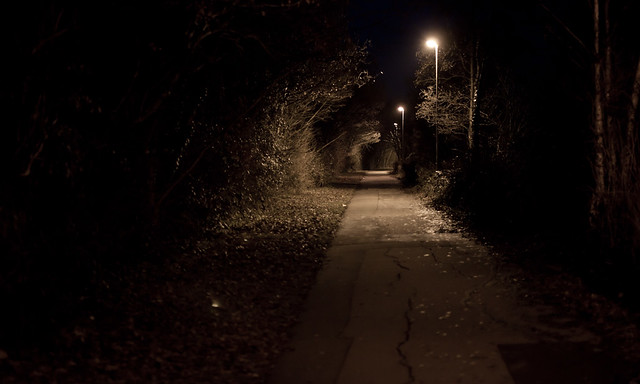
24/01/2011 - A lonely walk.


Winter sucks. Now I remember why the start of a 365 is so difficult. You go to work when it's dark, come home when it's dark, walk the dog when it's dark, hope you don't get mugged for your camera because it's dark whilst walking the dog, do the dreaded Tescos shop, it's still dark, come home and go to bed as it's too dark and late to do anything else.

Roll on Spring.
 
Eye-catching and informative. Have you been reading Wikipedia?
I think some of your photos here are excellent. They're all proper sharp, even in challenging low light conditions. Shame more people haven't seen them.

And congratulations.
 
Eye-catching and informative. Have you been reading Wikipedia?
I think some of your photos here are excellent. They're all proper sharp, even in challenging low light conditions. Shame more people haven't seen them.

And congratulations.
 
Thank you!


Day #25 by Jordan Butters, on Flickr

Day #25

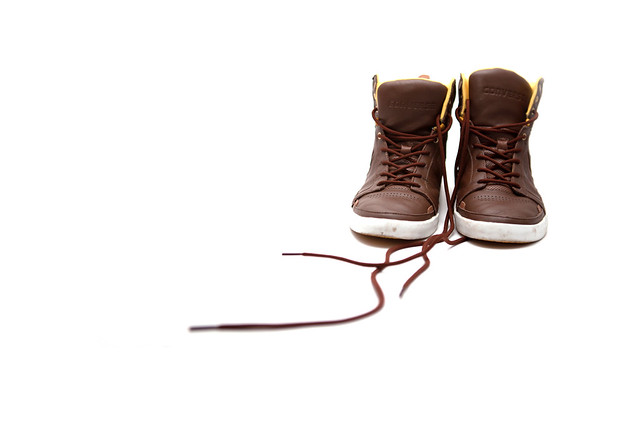
25/01/2011 - Laced Up

Yes I know I already did a Converse shot and I already did a 'sneaker in a studio shot' but what can I say. I left it late and I REALLY LIKE SHOES.

Sue me.
 

Day #26 by Jordan Butters, on Flickr

Day #26

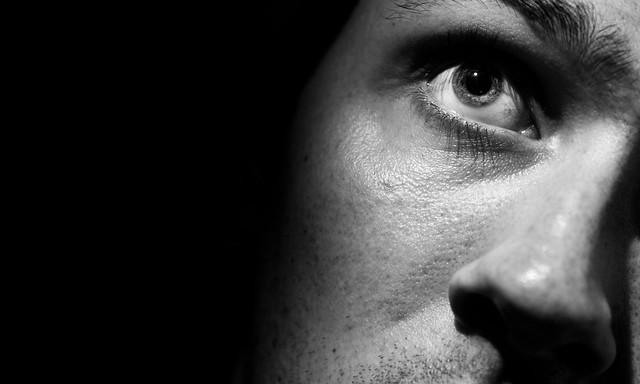
26/01/2011 - I'm Afraid of the Dark

Oh dear, self portrait. I've done well to go 26 days without one. I tried to make this a bit cinematic or movie poster-like I guess.

I'm impressed I'm 26 days in and I've not resorted to pictures of our dog yet.

Day 27........our dog.......
 

Day #27 - Letters by Jordan Butters, on Flickr

Day #27

27/01/2011 - Letters

The Macintosh, or Mac, is a series of several lines of personal computers designed, developed, and marketed by Apple Inc. The first Macintosh was introduced on January 24, 1984; it was the first commercially successful personal computer to feature a mouse and a graphical user interface rather than a command-line interface. The company continued to have success through the second half of the 1980s, only to see it dissipate in the 1990s as the personal computer market shifted toward the "Wintel" platform: IBM PC compatible machines running MS-DOS and Microsoft Windows.

Years later, Apple consolidated its multiple consumer-level desktop models into the 1998 iMac all-in-one. This proved to be a sales success and saw the Macintosh brand revitalized, albeit not to the market share level it once had. Current Mac systems are mainly targeted at the home, education, and creative professional markets. They are: the descendants of the original iMac and the entry-level Mac mini desktop models, the Mac Pro tower graphics workstation, the MacBook, MacBook Air and MacBook Pro laptops.
 
Hi Jordan. Just started looking about in the photo52 threads and fell over your pics.

Love the self portrait and the photo of Rockerfella centre. The tree lights really stand out in the dusk. The lighting angle on your self portrait gives just the right amount of mystery!

You have a good eye. Look forward to seeing you later pics and having a go at the Photo52 myself.
 
Thanks Wendy. I kinda wish I'd done a 52 rather than a 365 to be honest!

Well, a 52 for when I'm at home in the UK and a 365 when I am elsewhere in the world!
 

Day #28 by Jordan Butters, on Flickr

Day #28

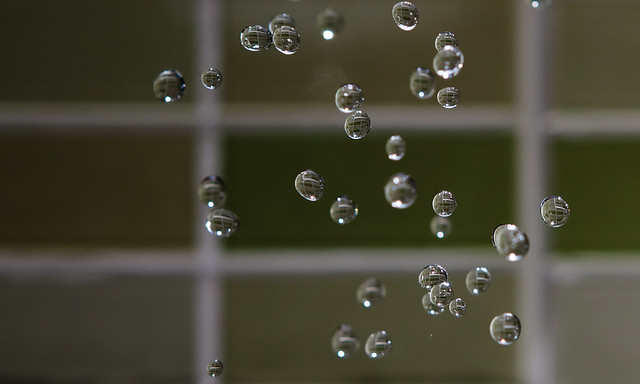
28/01/2011 - Beads

Water, H2O, you know. I don't really need to do a Wikipedia copy'n'paste for water.
 
Thankyou!

The water one was taken with the shower running very slightly so the drops dripped out. Shot at 1/200 F6.3 ISO100 with a flash bottom left firing up at the showerhead at 1/32 power. Its a tight crop on a bigger picture.

I really wanted not to be able to see the tiles behind but the light was bouncing around the bathroom too much and I couldn't avoid it.
 
Back
Top