This sounds very fishy

MacroMania

Suspended / Banned
Messages
155
Name
Rob
Edit My Images
No
I was at the Sealife centre in Birmingham last week. They allow photography, but not flash as it (they claim) "disturbs the fish". My experience is that most animals are not at all bothered by flash - horses, dogs, cats, birds, they don't even seem to register it.

So, fish?
 
Same situation in the brilliant Aquarium at Ciutat de les Arts i les Ciències in Valencia. Makes it difficult to get very many good shots, especially shooting handheld.

Might even post a few of my better pics from recent trip if I can get them sorted out soon enough...

As for whether its a genuine problem for the fish or not - hard to say I guess but they're the experts so sadly have to go with it.
 
Surley using flash on a glass sided tank would give you a blinding light right down your lens?

Maybe it magnifies the flash inside the the fishtanks and harms the fishes eyes?

Dunno. :shrug:
 
surely any on camera flash will look **** cos of the water reflecting, even if you have everything flush so no glass issues
 
Surley using flash on a glass sided tank would give you a blinding light right down your lens?

Maybe it magnifies the flash inside the the fishtanks and harms the fishes eyes?

Dunno. :shrug:

fish can't blink which might also affect it
 
Surley using flash on a glass sided tank would give you a blinding light right down your lens?

Maybe it magnifies the flash inside the the fishtanks and harms the fishes eyes?

Dunno. :shrug:

not if the end of the lens in flat aginst the glass or you use a rubber lens hood ;)

as for disturbing the fish, my experiences are similar, I dont remember a single animal ever reacting to it, but I am prepared to accept that it may upset some so if they say no, its no - mind you in places like that, how many compact users know HOW to turn the flash off? :naughty:
 
surely any on camera flash will look **** cos of the water reflecting, even if you have everything flush so no glass issues

depends on the water - biggest problem is usually the crap floating around in it gets lit up as well as the fish, rather than any reflections
 
considering proffesional underwater photographers almost always use flash... and not just small ones, where talking big strobes... i hardly think its that much of a problem... as for the reflections of the particals in the water... this can be avoided mostly with the correct positioning of the lights...:)
 
Hmmm... perhaps humans are wary of flash because we know it's going to flash and think it might irritate our eyes, but animals aren't aware of what flash is?

Too deep, Rob, keep it simple (slap, slap)
 
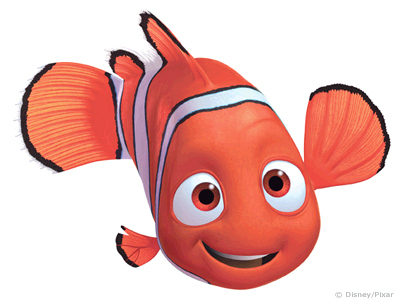
Who's Nemo? And don't say 'no one' I've heard that one before.

nemo.jpg
 
As a fishkeeper, I'm afraid I'd have to agree with the no flash rule.
It's not so much about damaging the fish's eyes as about disorienting and distressing them.

It varies by species, but fish are very sensitive to light (particularly changes in light) for a number of reasons :

- Some species that have evolved to live in moderately deep oceans or murky rivers are naturally more photosensitive than others.

- Lighting plays an important part in orientating fish in the water. In the wild light = up. Multiple flashes coming from the side of a tank can easily disorientate them.

- Light and colour play an important part in communication, particularly among shoaling fish. Species evolved for dark conditions often have fluorescent scales. The play of light on these scales is used to communicate breeding and danger signals throughout the shoal - so sudden changes in lighting can disorientate them and trigger "incorrect panic signals".

Even in a home aquarium the change in lighting conditions from just turning the tank lights on in a dim room is enough to freak some fish out. They'll dash around the tank in a panic bashing themselves against the glass sides.

And remember in a public aquarium, you're not talking about a few flashes from a single source. On a busy day there could be dozens of visitors around a single tank all flashing away from different angles.
 
As a fishkeeper, I'm afraid I'd have to agree with the no flash rule.
It's not so much about damaging the fish's eyes as about disorienting and distressing them.

It varies by species, but fish are very sensitive to light (particularly changes in light) for a number of reasons :

- Some species that have evolved to live in moderately deep oceans or murky rivers are naturally more photosensitive than others.

- Lighting plays an important part in orientating fish in the water. In the wild light = up. Multiple flashes coming from the side of a tank can easily disorientate them.

- Light and colour play an important part in communication, particularly among shoaling fish. Species evolved for dark conditions often have fluorescent scales. The play of light on these scales is used to communicate breeding and danger signals throughout the shoal - so sudden changes in lighting can disorientate them and trigger "incorrect panic signals".

Even in a home aquarium the change in lighting conditions from just turning the tank lights on in a dim room is enough to freak some fish out. They'll dash around the tank in a panic bashing themselves against the glass sides.

And remember in a public aquarium, you're not talking about a few flashes from a single source. On a busy day there could be dozens of visitors around a single tank all flashing away from different angles.


I think that's the most sensible/intelligent reply I've ever seen on this forum (seriously). Thank you, Sarah.
:thumbs:
 
Sounds like a decent explanation to me too.

Good photo-opportunity or not due to flash limitations I'd definitely recommend a day out at l'oceanografic in Valencia - was a brilliant day out despite it seeming a bit like the kind of thing you'd normally take kids to!

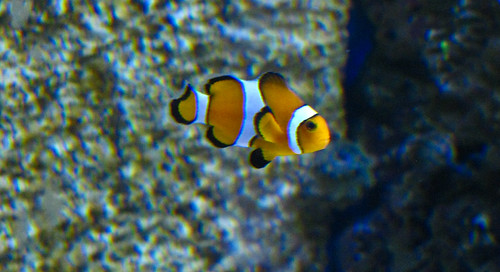
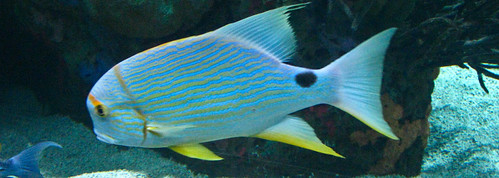
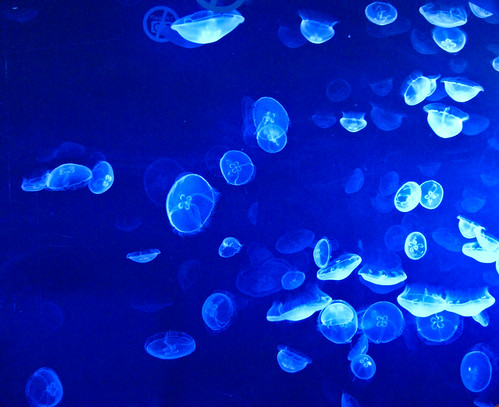
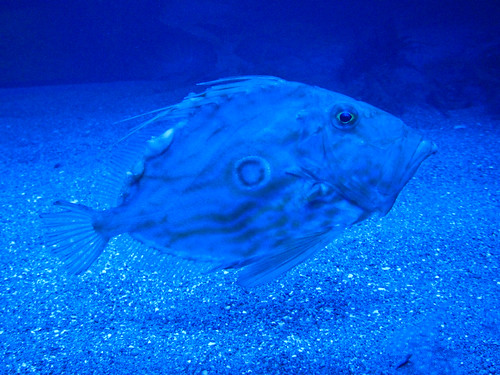
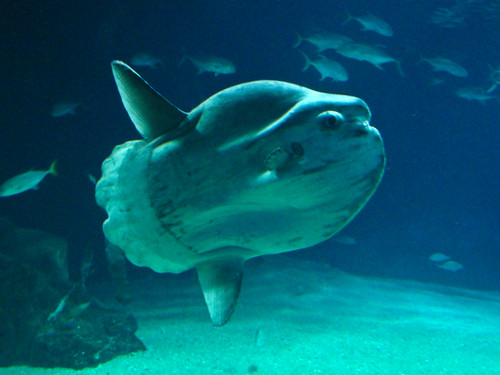
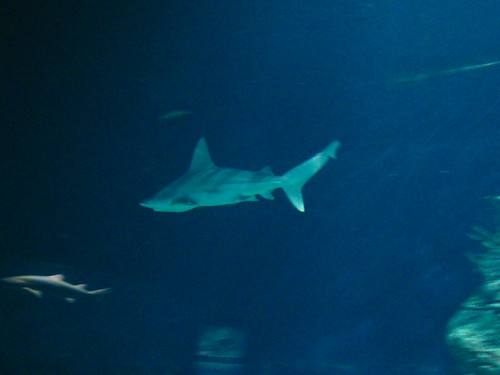
Whilst we're here a few of my recent attempts at the aquarium in Valencia sans flash with my SX110. Realize these aren't brilliant - do people think they would've turned out better using a tripod to cope with the low light or that it would really need a flash? One challenge is that some of the little blighters move pretty rapidly so I think always likely to be hard to focus on them in that sort of light without a flash.

1. Nemo


2. Stripy Fella


3. Cool Jellyfish


4. Miserable John Dory


5. Ugly Sod


6. Shark
 
Pretty good shots, Chris, given the conditions. You're right, they do move pretty quick. I tried a few on ISO3200 but they didn't come out too well. Thanks for posting.

I like the ugly sod.
 
I think that's the most sensible/intelligent reply I've ever seen on this forum (seriously). Thank you, Sarah.
:thumbs:

Oh Dear . . . sensible and intelligent!
I'd better go and post something stupid quickly before I get a reputation ;) :p

(Seriously, hope it helped)

Whilst we're here a few of my recent attempts at the aquarium in Valencia sans flash with my SX110. Realize these aren't brilliant - do people think they would've turned out better using a tripod to cope with the low light or that it would really need a flash? One challenge is that some of the little blighters move pretty rapidly so I think always likely to be hard to focus on them in that sort of light without a flash.

Given the limitations some of those have come out very well Chris.
Really like the Clownfish pic.

You're right about them moving fast.
Wanting to get some decent shots of my fish is what inspired me to start taking photography a bit more seriously . . . I've still failed to get anything decent though :(
 
As a fishkeeper, I'm afraid I'd have to agree with the no flash rule.
It's not so much about damaging the fish's eyes as about disorienting and distressing them.

It varies by species, but fish are very sensitive to light (particularly changes in light) for a number of reasons :

- Some species that have evolved to live in moderately deep oceans or murky rivers are naturally more photosensitive than others.

- Lighting plays an important part in orientating fish in the water. In the wild light = up. Multiple flashes coming from the side of a tank can easily disorientate them.

- Light and colour play an important part in communication, particularly among shoaling fish. Species evolved for dark conditions often have fluorescent scales. The play of light on these scales is used to communicate breeding and danger signals throughout the shoal - so sudden changes in lighting can disorientate them and trigger "incorrect panic signals".

Even in a home aquarium the change in lighting conditions from just turning the tank lights on in a dim room is enough to freak some fish out. They'll dash around the tank in a panic bashing themselves against the glass sides.

And remember in a public aquarium, you're not talking about a few flashes from a single source. On a busy day there could be dozens of visitors around a single tank all flashing away from different angles.

A great reply.

I use flash in aquarium photography on my own tank, but usually only from above which is not going to be an option for most public aquaria.

The response really does vary with species, in an informal survey on a fishkeeping forum the majority of species were reported as ok but for those species that were particularly sensitive (guppies are an example) the reaction is so severe that injuries were reported to the fish due to their startle reactions.

When I'm shooting an aquarium I build-up slowly from low power to accustom the fish and I know when to leave them alone. In a public aquarium there would be no easy way to "ration" the use of flash and prevent over-disturbing the fish.


Flash definitely does have a place in aquarium photography, but only in a controlled environment. When used carefully the results can be very satisfying.
 
I can fully understand the use of flash not being allowed in aquariums because of what it can do to the fish.
But has anyone been up to the Orkneys and visited Maes How? They do not allow photography inside at all. The reasons being that the flash may disturb and interefer with the delicate enviroment inside! When I said I wouldnt use flash anyway, I was then told there would be other poeople there and it may upset them, and anyway they will get in the way of my shots! But when you actually do get inside there is electric lighting, a torch being used by the guide and up to about 10 people all breathing. So much for a flash upsetting anything other than their post card sales.

Strange though that the other chambers I went in side of never had a problem with cameras, flashes or me breathing.

Some restictions to flash are sensible and understandable, but some others....well !

Brian
 
Yes I know its their premises and their rules, It was the lame excuses they gave I was pointing out.
Sorry I mentioned it then.
 
Brian, I've come across several places that restrict photography with rather lame excuses.. it would be better if they were more honest about why this was the case. It is primarily protecting the revenue from official postcard sales that helps fund the venue being open in the first place. But in a confined access area with limited capacity to get paying boots through the door the venues do not want people hanging around and disrupting their tours.

If a tour party of 12 takes 20 minutes to see a site.. then some of these are photographers and take an extra 10 minutes.. the revenue capacity of the site has now dropped by a third (now getting 2 tours/hour compared to 3). Indirectly this is interfering with the delicate environment - it's reducing the revenue generation available to pay for maintaining the fabric.

The photographer market is a trick many venues are currently missing. There is an opportunity to charge higher rates for "premium" photographic access (longer periods of access for smaller groups) to a large number of heritage locations - the hobby is large enough to support this. I know several venues I would pay for better access to photograph.
 
Brian, I've come across several places that restrict photography with rather lame excuses.. it would be better if they were more honest about why this was the case. It is primarily protecting the revenue from official postcard sales that helps fund the venue being open in the first place. But in a confined access area with limited capacity to get paying boots through the door the venues do not want people hanging around and disrupting their tours.

If a tour party of 12 takes 20 minutes to see a site.. then some of these are photographers and take an extra 10 minutes.. the revenue capacity of the site has now dropped by a third (now getting 2 tours/hour compared to 3). Indirectly this is interfering with the delicate environment - it's reducing the revenue generation available to pay for maintaining the fabric.

The photographer market is a trick many venues are currently missing. There is an opportunity to charge higher rates for "premium" photographic access (longer periods of access for smaller groups) to a large number of heritage locations - the hobby is large enough to support this. I know several venues I would pay for better access to photograph.

The National Trust (UK) have recently relaxed the rules on photography, but seem to have left it to the discretion of each property. Have been to several in recent weeks, and while some do now allow photography, they are still restricting the use of flash. They say it's to protect the 'fragile environment'. I'm not sure what effect flash might have on furniture and fabrics, but as it's their property I guess they can make the rules.
 
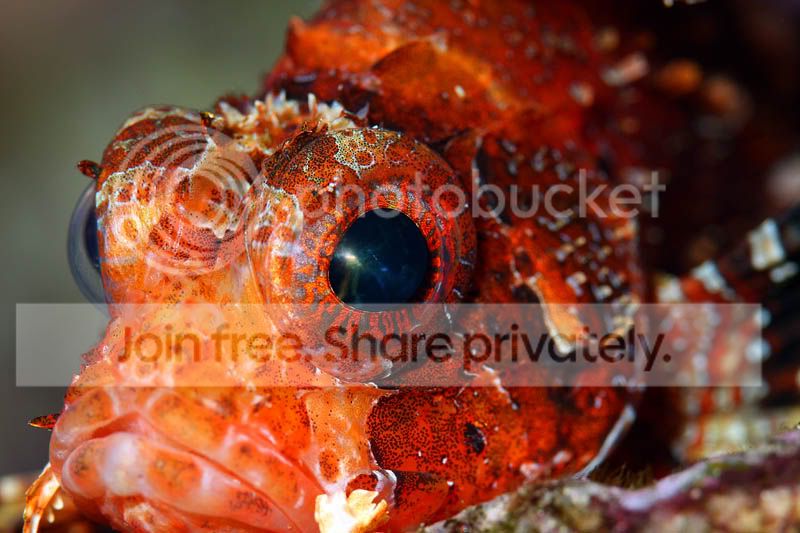
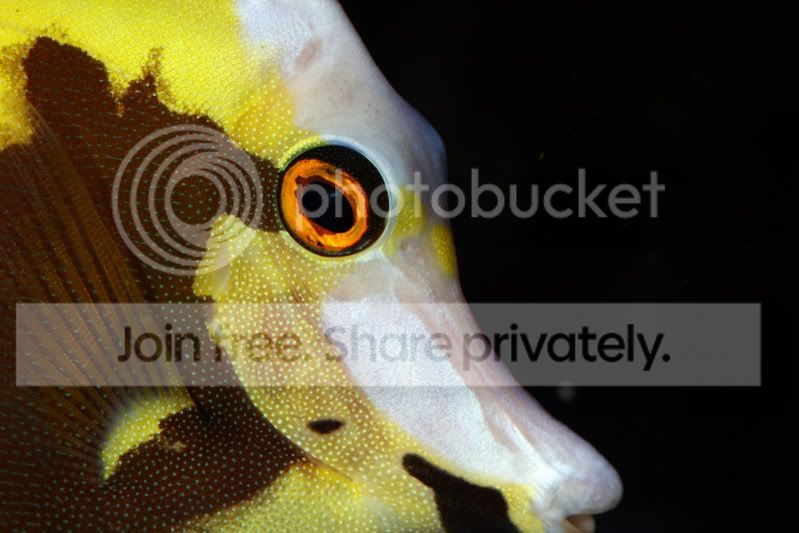
As per Alastair with regards to flash photography and fish, most reef crest fishes don't seem to mind, i have taken more than my fair share of reef fishes with flash whilst in aquariums.Freshwater or deep water species may well react erratically and can understand why a blanket ban on flash maybe needed.

A few of my shots taken with flash.

junelion.jpg


tang.jpg
 
As a fishkeeper, I'm afraid I'd have to agree with the no flash rule.

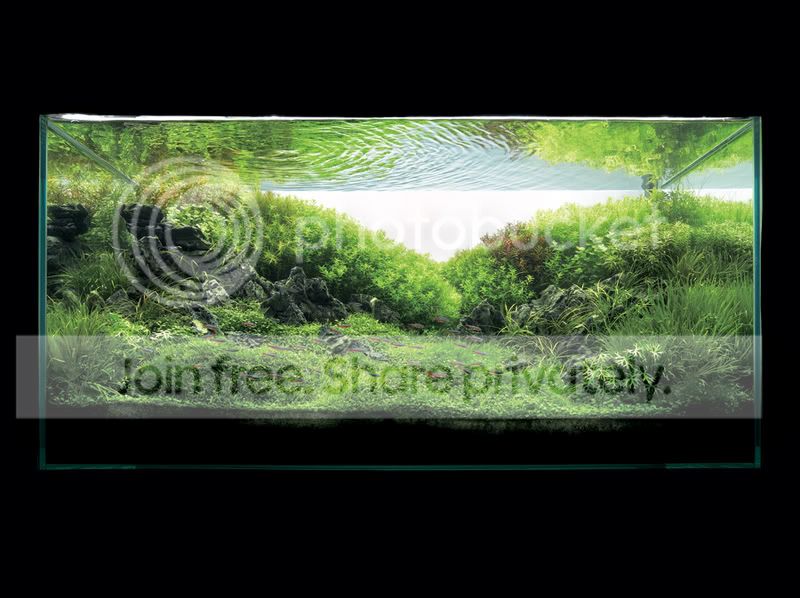
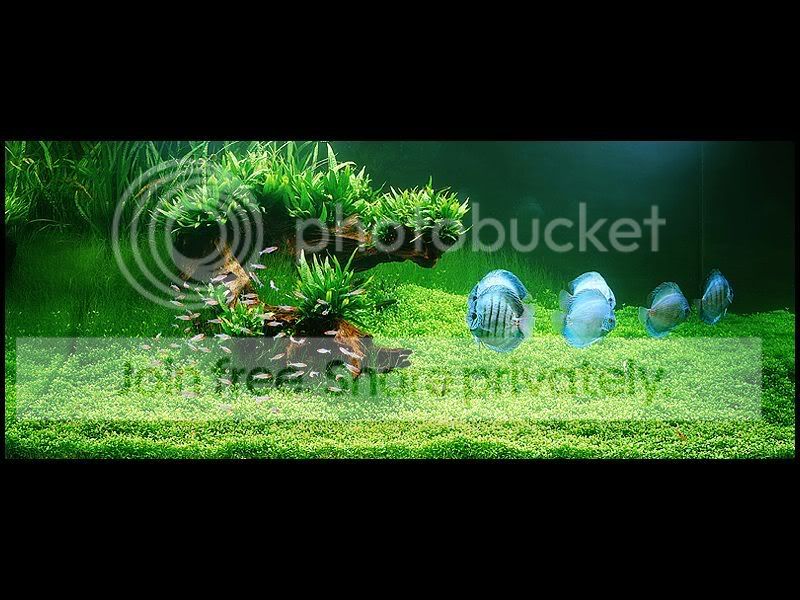
As a fellow aquarist, I am going to have to disgree with this Sarah. Have you heard of Takashi Amano? You should see the lighting he uses. Visit Aquatic Photography and UKAPS, too. Some of the photography is technically excellent.

The images you see below (none of them are mine) will have been taken with multiple over head flash guns, with strong back lighting for the white background. The tank lights will have been left on too.

Dave.

2007-contest5_original.jpg


2007-contest3_original.jpg


foto01a_108.jpg
 
Visually they are absolutely stunning :)

Although Amano is a fairly controversial figure. His pieces tend to be all about the aquascape rather than the fish and are set up as display tanks with a limited lifespan . . . as opposed to sustainable biotopes that mimic the fish's natural environment.
Anyway, that's a whole different debate ;)

For the purpose of this thread, I'm not too sure that you are disagreeing with me.
There's a world of difference between a controlled photo shoot in a display tank to dozens of visitors flashing away from multiple angles day after day in a public aquarium.
 
... There's a world of difference between a controlled photo shoot in a display tank to dozens of visitors flashing away from multiple angles day after day in a public aquarium.

I'm wondering if at least part of the reason for the ban is the effect on people. These places are quite dark, so your pupils must be quite dilated after a few minutes, and lots of flash going off would be really irritating, especially as some of the tanks are multi-sided for viewing.
 
I'm wondering if at least part of the reason for the ban is the effect on people. These places are quite dark, so your pupils must be quite dilated after a few minutes, and lots of flash going off would be really irritating, especially as some of the tanks are multi-sided for viewing.

:lol: :lol: :lol:
I can see why having half blind people stumbling around big glass boxes full of water might not be such a great idea!!!
 
Visually they are absolutely stunning :)

Although Amano is a fairly controversial figure. His pieces tend to be all about the aquascape rather than the fish and are set up as display tanks with a limited lifespan . . . .

Sorry to disagree, but some of his scapes last years. And who says tanks have to be self sustainable? If you want natural, don`t get them scooped out of the Amazon etc. in the first place (tank bred balloney won`t wash, either). Do we get an "off on a tangent of the year" award?

Dave.
 
Sorry to disagree, but some of his scapes last years.

Don't be sorry for having your own opinion :)
I suppose I should have qualified that by saying "practically sustainable".
(For most people taking nail scissors weekly to Riccia and Glosso like mowing the lawn isn't a practical way of keeping a tank)

And who says tanks have to be self sustainable? If you want natural, don`t get them scooped out of the Amazon etc. in the first place (tank bred balloney won`t wash, either).

Nope - no tank bred balloney from me.
But I do believe that if you're going to keep fish, you have a responsibility to keep them in the best conditions possible.
Of course there will always be maintenance to do in a tank, particularly a planted one - but for me "sustainable" means a scape planted for the long term and with the fish's welfare in mind rather than just for the pretty factor.

Do we get an "off on a tangent of the year" award?

:lol: :lol: :lol:
Quite possibly.

I'm going to zip it now and let Rob get back to his lighting discussion.
 
OK. Here's another aspect. Is it possible that organisations, National Trust, for example, think that anyone with a flash-gun is a professional? And therefore may be about to take professional shots which they will sell, and make money? And, as the unstated, but real aim of said organisations is to make lots of £££ they aim to stop you.

I went to a museum last week, where photography is allowed. The guy in front of me had a Canon 450D around his neck (you know what I mean, don't you) and he just marched through. As soon as I went to the desk, and before I had even said anything, the guy got a disclaimer form out and asked me to sign it. I had a 5D in my hand, which had a flashgun on it. It was if a little flag came up in his brain that said "This little s** is going to rip us for some professional postcards"

I sometimes hate the world and wish I were a fish.
 
Macromania, I've had mixed results with fish and flash - sometimes they freak out, sometimes they don't. Them being out of water and being held by some sweaty angler obviously doesn't help matters though....

I have used it on fish feeding the margins (carp, chub etc) and more than anything, movement freaks them. That said, that's natural surroundings in more coloured water where they've got an escape route; I expect in a gin-clear aquarium with very little to act as a filter for the light they aren't too keen on flashes going off left, right and centre.
 
Macromania, I've had mixed results with fish and flash - sometimes they freak out, sometimes they don't. Them being out of water and being held by some sweaty angler obviously doesn't help matters though....

I have used it on fish feeding the margins (carp, chub etc) and more than anything, movement freaks them. That said, that's natural surroundings in more coloured water where they've got an escape route; I expect in a gin-clear aquarium with very little to act as a filter for the light they aren't too keen on flashes going off left, right and centre.

Yes, I think I can see the logic and sense of all this now. It's just that I had noticed that most animals seem quite unfazed by flash, even the frisky horse I shot the other day. But I can see now that fish may have a problem.

Sorry fish!
 
Back
Top