Things you learn late in photography...but are obvious to everyone else.

We did a good practical exercise in class this week. Setting Aperture priority and the widest setting (f1.8 in my case), and setting Shutter to 1/125, take 3 shots with ISO set to Auto in (a) well lit classroom, (b) dim corridor, and (c) darkroom under red light, and note the ISO that was used in each case to obtain a passable image. It was quite a good demo of both the usefulness of variable ISO setting but also the noise/grain that comes with it. We did a similar thing with each aspect of the exposure triangle to demonstrate the effects of each element. Nothing new for me, but a good reminder and fun exercise.

What was the upper ISO limit -- if any?
 
I was using my Nikon D500, on which the max ISO was 51200, although at that level (with a fixed 1.8 aperture) the highest shutter speed of 1/8000 was still too slow in one test.
 
No upper limit just get a photo right.

It's all about getting the image, so the first week was all about dof, this week shutter.

Both occasions, the task was to get a image based on the lecturer's criteria.

Some of them are getting it and passing a rubber ball back and forth and blurring it or a freeze frame.

Quite enjoying it and producing an image to a spec.

I have, couldn't help myself, helped a couple of students sitting next to me as the didnt understand.
 
There is a great sub reddit called photoclass20XX ( sub in the year) that do a beginners course every year

For me it’s how long it took to use and love flash, low light performance is important for where you cant use flash else bounce that flash baby
 
I recall one student turned around and said, "Hold on, if increasing the shutter speed also reduces the light, and the lower the aperture number the more light gets in", "How do you know which to change".

Ah ha... that's why we're here.
 
That's right - the exercise we did on my course handled that quite well. Aperture = more light but narrower DoF, Shutter = more light but blur/shake, ISO = less light necessary but more noise. All practically demonstrated in the exercise.
 
Perhaps one problem with doing a course on photography is that it may narrow options for the newcomer.

If the course leader is of the technical persuasion, the learner will be led towards concentrating on getting the exposure right, regardless of circumstances. On the other hand, in the unlikely event of the course leader being an intuitive photographer, the learner will learn much about anticipation and quick reaction but may learn too little about judging light because "that is the camera's job".

I do not believe there is right or wrong here but a learner needs to be provided with a clear understanding of what is on offer and the limitations of the course, before commiting themselves - which is not to say that a learner with a bias to intuitive photography cannot take benefit from a leader biased to the technical side of photography - or vice versa.
 
Well, I wish that my local course was being run by @Harlequin565 of this parish, as his course material and workbooks were really high quality and covered many bases. But I'm content with what is happening on my course, it seems a decent mix of content and style.
 
Last edited:
I can see where you're coming from @AndrewFlannigan, but on the course he was already talking about composition. Getting them to understand that, in the tutor's own words, "Getting the photo you want shouldn't be limited by you not knowing how to get a good photo. With practice you will not need to worry about shutters, apertures or ISO. They will be second nature to get the photo you want".
 
his course material and workbooks were really high quality and covered many bases.
Thanks Lindsay.

It's been interesting to read this (and other) threads on the topic of "courses", and it's one topic that seems to have a multitude of opinions. Everyone learns differently, and face to face courses with groups of people aren't for everyone. However they really are for people that like them. I had quite a few people on my courses that were just doing photography as they worked their way through the syllabus. Previous term it was guitars, next term it's Spanish. They loved learning that way so much that what they were learning became a secondary thing.

If the course leader is of the technical persuasion, the learner will be led towards concentrating on getting the exposure right, regardless of circumstances. On the other hand, in the unlikely event of the course leader being an intuitive photographer, the learner will learn much about anticipation and quick reaction but may learn too little about judging light because "that is the camera's job".
If the lecturer is a good teacher, they will focus on technical and creativity equally, regardless of their persuasion. It was the hardest bit of my courses to write - covering the "why" of taking pictures. The "how" was dead easy.
 
We have a guy like that on our course, a nurse working in a local A&E here, who said he is not actually a photography hobbyist, but takes a different course each year or term as a way of unwinding from his job; last year it was learning to play piano, now its photography. He does seem to have an eyre for composition though, so he may stick with it perhaps.
 
@lindsay - have you any 'field trips' planned? Wednesday next week we are going to a local church.

Later on, on one Saturday, we will go to the National Arboretum or Calke Abbey.
 
@Jungli It was mentioned in the course intro session, but I'm not sure. We did go over the road from college to a small park/theme park place in the second week for part of the session, but I seem to recall there was mention of going somewhere else.
 
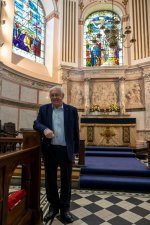
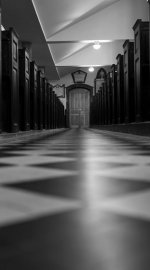
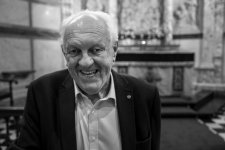
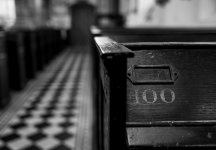
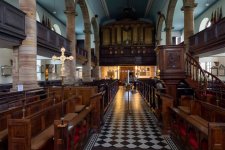
We did our first excursion on Wednesday last week. At the local church near the college 5 mins walk away.

The tutor gave everyone, who had a camera from college to use, a tripod as the venue was low light levels.

Everyone was running around taking photos.

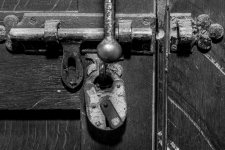
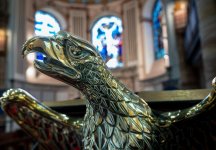
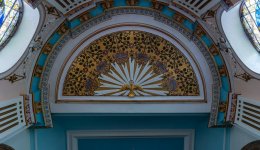
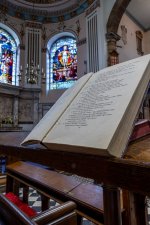
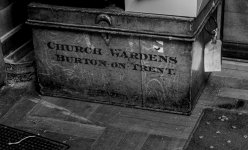
Anyway here are my efforts, feedback appreciated.
 

Attachments

  • IMG-20230520-WA0010.jpg
    IMG-20230520-WA0010.jpg
    163.8 KB · Views: 25
  • IMG-20230520-WA0008.jpg
    IMG-20230520-WA0008.jpg
    52.6 KB · Views: 23
  • IMG-20230520-WA0009.jpg
    IMG-20230520-WA0009.jpg
    70.8 KB · Views: 23
  • IMG-20230520-WA0007.jpg
    IMG-20230520-WA0007.jpg
    76.6 KB · Views: 24
  • IMG-20230520-WA0005.jpg
    IMG-20230520-WA0005.jpg
    183.3 KB · Views: 24
  • IMG-20230520-WA0006.jpg
    IMG-20230520-WA0006.jpg
    79.1 KB · Views: 25
And the others
 

Attachments

  • IMG-20230520-WA0004.jpg
    IMG-20230520-WA0004.jpg
    125.7 KB · Views: 14
  • IMG-20230520-WA0002.jpg
    IMG-20230520-WA0002.jpg
    149.3 KB · Views: 14
  • IMG-20230520-WA0003.jpg
    IMG-20230520-WA0003.jpg
    140.1 KB · Views: 14
  • IMG-20230520-WA0000.jpg
    IMG-20230520-WA0000.jpg
    153.9 KB · Views: 14
  • IMG-20230520-WA0001.jpg
    IMG-20230520-WA0001.jpg
    152.2 KB · Views: 14
  • Like
Reactions: zx9
We did our first excursion on Wednesday last week. At the local church near the college 5 mins walk away.

The tutor gave everyone, who had a camera from college to use, a tripod as the venue was low light levels.

Everyone was running around taking photos.

Anyway here are my efforts, feedback appreciated.

And the others

These are good (y)
 
Just look at the positive side - the well exposed JPEGs will save you loads of PP time that correcting raw files would take you... ;)
 
@Jungli It was mentioned in the course intro session, but I'm not sure. We did go over the road from college to a small park/theme park place in the second week for part of the session, but I seem to recall there was mention of going somewhere else.
How much was the cost of the 8 week course please ?
 
Anyway here are my efforts, feedback appreciated.
I found these interesting to look at. I can relate to the nature of your attention - your 'seeing'. Going in close and differential focus - good! You will realise yourself over time which are the strongest ones. ;-)
 
Over several decades, I've come to the conclusion that there are two fundamental groups of "serious" photographers: intuitives and "technicals". The two groups aren't exclusive, so far as I can see and most people fit somewhere along a line between two extremes.

The intuitive photographers seem to be at their happiest with totally automatic cameras and in the absence of such, will learn to use the minimum of controls to achieve their aims. These are the people who make good press photographers and photojournalists - the image itself being a tool to tell their story. A class or any other form of structure is not for them, they'd rather get out and do it. When things go wrong they learn quickly from the mistakes and try again.

The technical photographer appears to seek the sharpest image and the minimum distortion. Such photographers often concentrate on architecture or advertising photography and measures the light to within a quarter of a stop. The image may well have another purpose but can also be an end in itself. These are the people who will benefit the most from classes and seminars- and will in time end up teaching others. If you're at the technical end of the spectrum, you'll get pleasure from both the learning and sociality of a class, which is a good reason for you to go for it.
That's an interesting concept. Although I don't see it as quite so 'linear'; surely it's the intuition and technical skill that makes a great photographer? But I definitely think that there are those who are 'technicians' and those who are 'artists'. There are photographers who are technically brilliant, who are very successful in commercial photography, but who just don't do anything genuinely individually expressive or creative. And there are artists who have little more than the very basic technical skills. But now and then, you get someone with all of it. And those are the great photographers.
 
I found these interesting to look at. I can relate to the nature of your attention - your 'seeing'. Going in close and differential focus - good! You will realise yourself over time which are the strongest ones. ;-)
Thanks appreciated.
 
How much was the cost of the 8 week course please ?
Mine is 10 weeks, but this week is half term. So 9 weeks. £165 for the one term.
 
Last edited:
  • Like
Reactions: TG.
Mine is 10 weeks, but this week is half term. So 9 weeks. £165 for the one term.

That sounds very reasonable, where are you doing it, and what is the course called please.
 
Juist catching up: @TG. my 8 week course cost £120. We are following on in the autumn with the Intermediate course (these are not certificated courses so no external moderation to be concerned about, which keeps it cheaper). I think the faculty are able to re-use a lot of material as they offer HNC, HND and degree courses in photography too.
 
That sounds very reasonable, where are you doing it, and what is the course called please.

It's at my local college.

Have a look around at your local college offering.
 
  • Like
Reactions: TG.
I went straight from shooting in Auto to full manual mode, it wasn't until recently that I found how useful shutter and aperture priority modes are.
 
Juist catching up: @TG. my 8 week course cost £120. We are following on in the autumn with the Intermediate course (these are not certificated courses so no external moderation to be concerned about, which keeps it cheaper). I think the faculty are able to re-use a lot of material as they offer HNC, HND and degree courses in photography too.

Wow that seems very cheap, I can't seem to find anything in my area, where their concessions of any sort in that price ?
 
Wow that seems very cheap, I can't seem to find anything in my area, where their concessions of any sort in that price ?
I paid full price. But that is for one term. These are evening classes.
 
Last edited:
@TG. as @Jungli said, although we are doing different courses at different colleges. Mine is just 8 weeks, would have been better if 10 I think, to give a bit more time to subjects, but yes it is cheap. However I think that's because it doesn't have any certificate or external validation.
 
If I could start all over again, I'd never buy a new camera ever, the hype and gas really gets you when you start out and it takes a loooong time to shake it.
 
but yes it is cheap. However I think that's because it doesn't have any certificate or external validation.
So what type of course is it, if there is no certificate or validation, I mean what is it called ?
 
If I could start all over again, I'd never buy a new camera ever, the hype and gas really gets you when you start out and it takes a loooong time to shake it.


Nice idea BUT the advances in technology since the first (affordable) DSLRs have made new bodies so much more capable, especially at higher ISOs that upgrades were well worth it. However, if I was starting from scratch NOW, I'd try to choose wisely and not need upgrades, although new cameras to take more lenses might be bought!!!
 
So what type of course is it, if there is no certificate or validation, I mean what is it called ?
It's just called Digital Photography - An Introduction
There are Intermediate and then Advanced courses that follow on, but none are certificated or externally validated. They are evening courses to introduce and develop generic photography knowledge and skills with no pretension to being relevant to career or job, just for interest. However the college/faculty does teach HNC, HND and degree courses, and maybe one or two people might go on or over to those, but most of the students on my course at least are mature, not looking for a new career or even to make any side money out of it, just to develop their hobby. That's one of the nice things about it, because there's no pressure to deliver particular course or home work for any assessment.
 
Back
Top