


sk66
Suspended / Banned
- Messages
- 9,557
- Name
- Steven
- Edit My Images
- Yes
Nikon Z9’s dual card backup penalty.
I have been seeing a lot of questions about using XQD cards in the Z9, some for using them in the second slot for jpeg backups. And seeing as I have always set up my Nikons for raw + jpeg to separate cards, I thought I would do some tests… and I found some things that were rather surprising to me.
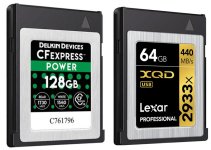
For the tests I used these cards.
Delkin Power 128GB CFE-B with sustained write speed of 1320 MB/s (among the fastest available).
Lexar Professional 64GB XQD 2933x with max write speed of 400 MB/s (the fastest XQD available).
For the exposure I placed the camera into manual mode at a shutter speed of 1/2000 with no lens and the body cap installed (eliminates exposure/color processing variables). It shouldn’t matter, but the firmware was at V2.1.
What follows are the averaged results of three sustained 20fps bursts until the buffer reached full and the shutter started to stutter (plus reaction time); listed in decreasing order.
___________________________
HE* raw files to one CFE (second card in overflow mode)- I gave up after 2+ minutes and over 2500 images. I did a second test at 2 minutes and 2402 images, I didn’t bother with additional tests… good thing this camera doesn’t have a physical shutter!
Next was the first surprise to me… as soon as the camera was set to backup the buffer dropped dramatically.
HE* to two CFE- 115 images.
Next was Lossless compressed to a single CFE; about as expected based on other tests I had seen. But note that HE* in backup mode is slightly better- 101 images.
Next was HE* + Jpeg fine* (flat profile) to two CFE. This was the next surprise as I expected the smaller jpegs to be less of a load; but obviously the additional processing has a cost compared to HE* in backup mode- 86 images.
This is the mode I’ve used since getting the Z9 the beginning of the year, and I have not had an issue with running out of buffer for photographing wildlife/action; even at 30fps (46MP jpegs) and 120fps (11MP jpegs), also running in backup mode. But it *IS* notably restricted compared to the previous options.
Firmware V1.10 increased the buffer to 8 seconds in mixed recording mode, but that required HE* + Jpeg basic (large); with those settings I did much better at about 15 seconds and 300 images before the first hint of stutter, and it was clearing very fast. Using jpeg normal dropped the buffer back down to 120 images; about the same as recording raw HE* to both cards.
Next was the lossless compressed backup options. No real surprise here, and they are nearly the same. Apparently the additional processing to create the jpegs is about the same as the transfer load of the larger raw file.
Lossless compressed + Jpeg fine* to two CFE - 55 images.
Lossless compressed to two CFE- 50 images.
And finally the XQD tests. The surprising thing here is that these results (other than the first) are nearly the same as the previous lossless compressed to dual CFE results.
HE* to CFE + Jpeg basic (large) to XQD- 157 images.
HE* to single XQD- 56 images.
HE* to CFE + XQD in backup mode- 46 images.
HE* to CFE + Jpeg fine* to XQD- 45 images.
Lossless compressed to CFE + Jpeg fine* to XQD- 43 images.
Lossless compressed to single XQD- 41 images.
_______________________________________
I think the big takeaway is that even the slowest test gave at least 2 seconds at 20fps, and that’s really quite a long time for most situations. There’s really no reason why you shouldn’t use a fast XQD card in the Z9 for photography.
The next thing I got from this is that if you are using the second card for emergency backup you should probably consider recording Jpeg basic to the second card… even using an XQD for backup gives a very generous buffer of 150+ images. Writing to dual CFE the buffer is nearly limitless; and it would make the backup drive/card able to hold several main card’s worth of raw images (i.e. one backup card for an entire event/safari).
It's been a very long time since I last had to use backup images; and even then it was my fault... but still, having an emergency backup of some sort should not be underestimated for a working professional.
If you are a raw shooter your next best option for backup is to record HE* to dual CFE cards (115).
If you are a jpeg shooter (i.e. direct wire sports/news/etc) then none of this should affect you. Although I didn't test it, recording Jpeg fine (large) + Jpeg basic (small) should be quite manageable; even to dual XQD's.
And if you insist on recording lossless compressed raw files then it doesn’t much matter what you do here, you’ll get somewhere around 50 images in the buffer (which should still be plenty). You’ll just have larger files, and go through more cards; for no notable benefit unless your editing software doesn’t work with HE* files (I’ve been using Adobe with no real issues).
(***Note that I did not do any tests to dual XQD cards… but the results suggest you can expect about 50% of the single XQD results; ~ 1second/20 images recording raw files)
I have been seeing a lot of questions about using XQD cards in the Z9, some for using them in the second slot for jpeg backups. And seeing as I have always set up my Nikons for raw + jpeg to separate cards, I thought I would do some tests… and I found some things that were rather surprising to me.
For the tests I used these cards.
Delkin Power 128GB CFE-B with sustained write speed of 1320 MB/s (among the fastest available).
Lexar Professional 64GB XQD 2933x with max write speed of 400 MB/s (the fastest XQD available).
For the exposure I placed the camera into manual mode at a shutter speed of 1/2000 with no lens and the body cap installed (eliminates exposure/color processing variables). It shouldn’t matter, but the firmware was at V2.1.
What follows are the averaged results of three sustained 20fps bursts until the buffer reached full and the shutter started to stutter (plus reaction time); listed in decreasing order.
___________________________
HE* raw files to one CFE (second card in overflow mode)- I gave up after 2+ minutes and over 2500 images. I did a second test at 2 minutes and 2402 images, I didn’t bother with additional tests… good thing this camera doesn’t have a physical shutter!
Next was the first surprise to me… as soon as the camera was set to backup the buffer dropped dramatically.
HE* to two CFE- 115 images.
Next was Lossless compressed to a single CFE; about as expected based on other tests I had seen. But note that HE* in backup mode is slightly better- 101 images.
Next was HE* + Jpeg fine* (flat profile) to two CFE. This was the next surprise as I expected the smaller jpegs to be less of a load; but obviously the additional processing has a cost compared to HE* in backup mode- 86 images.
This is the mode I’ve used since getting the Z9 the beginning of the year, and I have not had an issue with running out of buffer for photographing wildlife/action; even at 30fps (46MP jpegs) and 120fps (11MP jpegs), also running in backup mode. But it *IS* notably restricted compared to the previous options.
Firmware V1.10 increased the buffer to 8 seconds in mixed recording mode, but that required HE* + Jpeg basic (large); with those settings I did much better at about 15 seconds and 300 images before the first hint of stutter, and it was clearing very fast. Using jpeg normal dropped the buffer back down to 120 images; about the same as recording raw HE* to both cards.
Next was the lossless compressed backup options. No real surprise here, and they are nearly the same. Apparently the additional processing to create the jpegs is about the same as the transfer load of the larger raw file.
Lossless compressed + Jpeg fine* to two CFE - 55 images.
Lossless compressed to two CFE- 50 images.
And finally the XQD tests. The surprising thing here is that these results (other than the first) are nearly the same as the previous lossless compressed to dual CFE results.
HE* to CFE + Jpeg basic (large) to XQD- 157 images.
HE* to single XQD- 56 images.
HE* to CFE + XQD in backup mode- 46 images.
HE* to CFE + Jpeg fine* to XQD- 45 images.
Lossless compressed to CFE + Jpeg fine* to XQD- 43 images.
Lossless compressed to single XQD- 41 images.
_______________________________________
I think the big takeaway is that even the slowest test gave at least 2 seconds at 20fps, and that’s really quite a long time for most situations. There’s really no reason why you shouldn’t use a fast XQD card in the Z9 for photography.
The next thing I got from this is that if you are using the second card for emergency backup you should probably consider recording Jpeg basic to the second card… even using an XQD for backup gives a very generous buffer of 150+ images. Writing to dual CFE the buffer is nearly limitless; and it would make the backup drive/card able to hold several main card’s worth of raw images (i.e. one backup card for an entire event/safari).
It's been a very long time since I last had to use backup images; and even then it was my fault... but still, having an emergency backup of some sort should not be underestimated for a working professional.
If you are a raw shooter your next best option for backup is to record HE* to dual CFE cards (115).
If you are a jpeg shooter (i.e. direct wire sports/news/etc) then none of this should affect you. Although I didn't test it, recording Jpeg fine (large) + Jpeg basic (small) should be quite manageable; even to dual XQD's.
And if you insist on recording lossless compressed raw files then it doesn’t much matter what you do here, you’ll get somewhere around 50 images in the buffer (which should still be plenty). You’ll just have larger files, and go through more cards; for no notable benefit unless your editing software doesn’t work with HE* files (I’ve been using Adobe with no real issues).
(***Note that I did not do any tests to dual XQD cards… but the results suggest you can expect about 50% of the single XQD results; ~ 1second/20 images recording raw files)
Last edited: