The old crop vs FF sensor question

PatrickO

Suspended / Banned
Messages
2,808
Name
Patrick
Edit My Images
Yes
I realise this has been discussed before, but despite much reading I'm still undecided.

I've recently started doing wildlife/bird photography. I'm using a Nikon D7200 with a Nikon 200-500mm f/5.6 lens. It's a relatively inexpensive and lightweight combination.
I often push the ISO up to 3200 or higher and then crop the image. The resulting images are pleasing to me , but are a lot more noisy than I'm happy with (e.g. This Image).

I'm wondering if spending extra for a used FF camera would help. E.g £100 more on a D610 or £300 more on a D750? Obviously I'd end up cropping more, but would the final image be better?
 
Yes less noise at the same aperture. I would 100% recommend the D800 36mp instead of those 24mp ones because you can crop the hell out of it and still have a nice image.
 
Everyone will have a differing opinion on this, but to keep it general, then yes, a recent full frame camera will provide better low ISO performance than your D7200.

However......

If you're already doing significant crops with your current gear, then unless you go to a D850 you mat struggle to get enough pixels on your subject with a FF. If you're pretty much filling the frame with the dx camera, then the fx camera will give you a better result despite the extra crop needed there (it gets technical really quickly, but the fx will start with a shaper file which often negates the 'crop factor')

Key to getting great high ISO images with the dx cameras is to expose as far to the right as possible, shooting RAW, fill the frame as much as you can, then learn some basic PP techniques. Your D7200 is capable of good results if used similar to the above manner.

I'll ask @Phil-D to chime in here - I think he had this camera and doing similar to what I suggested above has some great results at ISOs higher than yours

Mike
 
The D610 AF isn't great, D800 is okay, D750 much better.

At high ISO downsampling the D800 image to D750 resolution theres a 2/3 stop disadvantage.
 
I realise this has been discussed before, but despite much reading I'm still undecided.

I've recently started doing wildlife/bird photography. I'm using a Nikon D7200 with a Nikon 200-500mm f/5.6 lens. It's a relatively inexpensive and lightweight combination.
I often push the ISO up to 3200 or higher and then crop the image. The resulting images are pleasing to me , but are a lot more noisy than I'm happy with (e.g. This Image).

I'm wondering if spending extra for a used FF camera would help. E.g £100 more on a D610 or £300 more on a D750? Obviously I'd end up cropping more, but would the final image be better?

I think that D7200/200-500 f5.6 is a very capable combination for wildlife, your Reed Bunting is a little noisy but then it looks like what I would call an 'extreme' crop, it doesn't need to be so full on IMO. Again, IMO, the D750 wouldn't give you any great advantage unless you really get the subject well in the frame, in which case you would be likely to see less noise. A D8xx would give you more options but especially a D850, not only cropping but using it in DX Mode with around 21MP but it's a price hike.

I now use a D7500 with the 200-500 f5.6 and am generally happy with the results, always enhancing with processing ... I very rarely use my D750 for wildlife as I don't get much opportunity to get really close.
 
I changed from a D7100 and Sigma 150 - 600 to a D810 with the same lens and the difference is night and day. There is no way I could ever go back to a crop sensor after using FF.

Next year, I shall treat myself to a D850 so that the D810 becomes the backup instead of the D7100.
 
I realise this has been discussed before, but despite much reading I'm still undecided.

I've recently started doing wildlife/bird photography. I'm using a Nikon D7200 with a Nikon 200-500mm f/5.6 lens. It's a relatively inexpensive and lightweight combination.
I often push the ISO up to 3200 or higher and then crop the image. The resulting images are pleasing to me , but are a lot more noisy than I'm happy with (e.g. This Image).

I'm wondering if spending extra for a used FF camera would help. E.g £100 more on a D610 or £300 more on a D750? Obviously I'd end up cropping more, but would the final image be better?
Ok so FF will give you better noise handling however you will have to crop more which could highlight the noise more and you end up with just as noisy image but with lower resolution.
The 200-500mm on the D7200 gives you 750mm effective reach/fov. On the D750 you have to crop the image 1.5x to give you the same effective reach meaning you end up with a 10mp image which from what you’ve said you’ll have to crop more. The more you crop the more you accentuate/‘zoom’ in on the noise.
 
I don't know, I've seen some surprisingly noisey examples even at ISO 800 shot using FF. Getting the exposure right when shooting helps a lot
 
Key to getting great high ISO images with the dx cameras is to expose as far to the right as possible, shooting RAW, fill the frame as much as you can, then learn some basic PP techniques. Your D7200 is capable of good results if used similar to the above manner.

^^^^^^ This

As Mike has said above, get the exposure right and learn some basic pp'ing to 'clean' high ISO shots

This was shot at 10,000 ISO and is cropped to around 75% of original. I tend to work 2 raw files, one for the back ground, one for the subject, create a layer mask and blend the two, sounds complicated but takes just a few minutes.

I've shot a lot of owls in low light, some as high as 25,000 ISO with the D7200, its quite capable of handling high ISO, some I've even had printed at A3.

Long-eared owl by Phil D, on Flickr

Here's another example, again 25% cropped so around 75% of original frame, this is ISO 12,800

Long-eared owl by Phil D, on Flickr
 
Last edited:
It's possible to do similar in LR. Bump the NR and use the adjustment brush to reduce it on the subject. With practice this only takes a minute or 2 also. Another tip for LR is to mask your sharpening, sharpening enhances any noise - you don't want any sharpening on your backdrops so use alt+masking and reduce sharpness down to your subject [it'll show in B&W where white is where sharpening is affecting]
 
I'd have thought you would be better investing in a lower noise modern sensor - D500 for example - that an older Fx camera.
 
Just on the ETTR thing.

I think it's fair to say that this technique used to get the best results for both noise and DR but with newer sensors that are or are near ISO invariant ETTR may not be required. What works best can I suppose be found out reasonably quickly by taking test shots, ETTR and not, to see which technique gives the best result.
 
Toni has hit the nail on the head, if you are sticking with DX and want the top IQ then you need to get the D500 this way you can still use your lenses and have the extra reach they give for cropping and the D500s noise handling will do the rest for you
 
I used a D7200 for over 2 years, bought a D500 in June this year because I 'needed' one :rolleyes:

Its got a couple of advantages over the D7200 but there's little or no difference in ISO capabilities IMO.

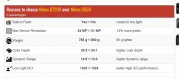
Edit- a quick Google and the first comparison site seems to confirm the above

D500 vs D7200.JPG
 
Last edited:
I'd have thought you would be better investing in a lower noise modern sensor - D500 for example - that an older Fx camera.
Toni has hit the nail on the head, if you are sticking with DX and want the top IQ then you need to get the D500 this way you can still use your lenses and have the extra reach they give for cropping and the D500s noise handling will do the rest for you

The D500 is an excellent DX camera with AF second to none, but there is a much cheaper alternative sensor-wise:-
Both the D7500 and the Nikon D500 use the same sensor and processor combination. That means you get a 20.9 million pixel APS-C (DX format) sensor with an EXPEED 5 processor in either camera. For this reason, image quality should be pretty much the same, no matter which you choose.

AP
 
Just on the ETTR thing.

I think it's fair to say that this technique used to get the best results for both noise and DR but with newer sensors that are or are near ISO invariant ETTR may not be required. What works best can I suppose be found out reasonably quickly by taking test shots, ETTR and not, to see which technique gives the best result.

Sorry Alan, but the best way to expose for minimal noise remains to expose to the right. I'm fortunate to know quite a few exceptional photographers and every one to a man uses the ETTR system. For all the hype, cameras still perform their best when underexposure is avoided at high ISOs, and when in depth testing is done, we're yet to arrive at a point where ISO invariance is useful to wildlife photographers.

By all means experiment, but if IQ remains a priority - ETTR is the way to go

Mike
 
I used a D7200 for over 2 years, bought a D500 in June this year because I 'needed' one :rolleyes:

Its got a couple of advantages over the D7200 but there's little or no difference in ISO capabilities IMO.

Edit- a quick Google and the first comparison site seems to confirm the above

View attachment 261042
From my experience noise levels were similar but the D500 noise was finer and easier to clean up without ‘smearing’.
 
Sorry Alan, but the best way to expose for minimal noise remains to expose to the right. I'm fortunate to know quite a few exceptional photographers and every one to a man uses the ETTR system. For all the hype, cameras still perform their best when underexposure is avoided at high ISOs, and when in depth testing is done, we're yet to arrive at a point where ISO invariance is useful to wildlife photographers.

By all means experiment, but if IQ remains a priority - ETTR is the way to go

Mike

Who said anything about underexposing? That should be avoided especially if you have a camera that lags behind the curve, a few Canons might spring to mind and I suppose much depends on what cameras your mates use. A few minutes Googling should give some info on the ETTR v not for ISO invariance. It's not something I've made up to dazzle forumers.
 
Who said anything about underexposing? That should be avoided especially if you have a camera that lags behind the curve, a few Canons might spring to mind and I suppose much depends on what cameras your mates use. A few minutes Googling should give some info on the ETTR v not for ISO invariance. It's not something I've made up to dazzle forumers.
My experience is that Nikon don’t gain from ETTR and neither do modern Olympus, although the latter is contested in the Olly thread ;)
 
Who said anything about underexposing? That should be avoided especially if you have a camera that lags behind the curve, a few Canons might spring to mind and I suppose much depends on what cameras your mates use. A few minutes Googling should give some info on the ETTR v not for ISO invariance. It's not something I've made up to dazzle forumers.

Using ISO invariance is about pulling up details from the extremes of dynamic range and the general concensus is to attempt to use as low an ISO setting as possible and raise the exposure without a noise penalty. It has been shown countless times not to work in reality. We'll get there - but not yet, and certainly not on a mid range dx camera

My experience is that Nikon don’t gain from ETTR and neither do modern Olympus, although the latter is contested in the Olly thread ;)

Not sure where you get the idea from that Nikons don't benefit from ETTR, it's a basic technique in the world of wildlife photography across manufacturers who care about the best possible IQ at high ISOs.


All told - you use what you're happy with, but the facts from the respected photographers in this genre are clear at this present time - at high ISOs in particular, get the histogram over to the right without blowing any details, use proper PP techniques, and you're in with a shout of getting a decent IQ. A quick google may find others telling you different - but I'm yet to discover one of these who are able to back their opinions up with high IQ work in difficult lighting situations

Mike
 
I have never been able to understand ETTR. To the right of what? The key to normal exposure with a digital camera is surely protection of the highlights - just as we do with slide film - and all else will follow from that. This is irrespective of file format, light levels, iso, and anything else.

Highlights rule! Lose 'em & they're gone for ever. Even a raw file has a limit to its headroom. The middle part of the histogram has to look after itself.
 
I have never been able to understand ETTR. To the right of what? The key to normal exposure with a digital camera is surely protection of the highlights - just as we do with slide film - and all else will follow from that. This is irrespective of file format, light levels, iso, and anything else.

Highlights rule! Lose 'em & they're gone for ever. Even a raw file has a limit to its headroom. The middle part of the histogram has to look after itself.

Basics of ETTR is to overexpose the image as much as possible WITHOUT blowing any highlights (or none that matter as part of the image anyway), then recover the details from the RAW file in PP. Reasoning being, the upper tonal range area of the histogram contains the most useable data, and it provides as much light as possible into the shadow areas, thus avoiding the build up of noise

Mike
 
I use canon myself, having full frame and Cropped...

My 7dmk 2 is teamed up with a Sigma 150-600mm sport, 100-400mm F4 L, and a 70-200mm 2.8 L also have a 1.4 extender for the canon glass. These lenses will also fit my 5Ds and R (with an adaptor for the R)

Problem with wildlife photography is generally you're going to have to crop your image, it's rare that you will get close enough to fill the frame, the more you crop any noise is going to increase. reduce the noise in PP then you have issues with losing fine detail.

I have tried the 5Ds, did well with the cropping side when at full 50mp, but problem with frame rates being slower, and some buffer issues with transferring the very large files over to the CF card. But editing wise kept the IQ far in PP. Downside is a images do need cropping and more cropping than the crop camera.

You could had in an extender to create more reach, but the problem with extenders they cut the light, reducing the ability to open up the lens wide, a F5.6 would be near 8, and auto focus stops around F11. So only really practical in very good light (which we don't often get here)

Using the 7dMk2, means I don't have to crop an image as much, and I also have the frame speed and no issues with buffering when the image is transferring over to the CF card (but you do have to have a fast read/write) .

Yes Noise can be an issue in low light, Sometimes you can limit the effect by using ETTR or resolve in PP, there again sometimes you can use the noise to your advantage in a photograph, very depending what sort of out come you want.

If you want to reduce issues with noise level, I'd be looking at an F4 lens to get as much light in as possible.
 
From my experience noise levels were similar but the D500 noise was finer and easier to clean up without ‘smearing’.

Interesting, I've not noticed but will dig a couple of raw, high ISO shots out taken with both bodies and compare them (y)
 
The latest Nikon cameras have extra noise reduction built in. At above something like ISO 1600 there is as step change in the noise graph that is worth about a stop. D7200/D750 don't have it but D7500/D500 do. I guess that unless this was done with hardware on the sensor, you could get the same effect with good post processing.

The D7200's sensor is still up there with any other DX camera sensor.
 
I think the real question is more wether you'll benifit in the long run. Yes full frame is generally better at high iso, but if you have to crop in a fair bit more to get the same image you may loose any gain from the full frame.
I would suggest you beg, borrow, or errrr.. obtain a FF of your choice and do a side by side comparrison of a bird sized object at your tyipical working range and iso. Then you can see if your getting any advantage in forking out your hard earned.
 
Using ISO invariance is about pulling up details from the extremes of dynamic range and the general concensus is to attempt to use as low an ISO setting as possible and raise the exposure without a noise penalty. It has been shown countless times not to work in reality. We'll get there - but not yet, and certainly not on a mid range dx camera


Not sure where you get the idea from that Nikons don't benefit from ETTR, it's a basic technique in the world of wildlife photography across manufacturers who care about the best possible IQ at high ISOs.


All told - you use what you're happy with, but the facts from the respected photographers in this genre are clear at this present time - at high ISOs in particular, get the histogram over to the right without blowing any details, use proper PP techniques, and you're in with a shout of getting a decent IQ. A quick google may find others telling you different - but I'm yet to discover one of these who are able to back their opinions up with high IQ work in difficult lighting situations

Mike
I’ve tried ETTR and have never found a benefit most of the time. Others might which is great, but for me ETTR usually requires an increase in ISO which introduces noise and reduces DR. Now if we’re talking shooting at base ISO then that’s where I can see ETTR being an advantage, but it’s rare shooting wildlife that you’ll be at base ISO, especially in the UK.

I’d rather preserve DR and have less noise though hence why I try to expose ‘correctly’. In fact with FF Nikon you can get away with 1/3-2/3 under exposure without really experiencing noise penalties in post from my experience. I wouldn’t do this with my Olympus though, it doesn’t like exposure bumps in post too much.
 
I’ve tried ETTR and have never found a benefit most of the time. Others might which is great, but for me ETTR usually requires an increase in ISO which introduces noise and reduces DR. Now if we’re talking shooting at base ISO then that’s where I can see ETTR being an advantage, but it’s rare shooting wildlife that you’ll be at base ISO, especially in the UK.

I’d rather preserve DR and have less noise though hence why I try to expose ‘correctly’. In fact with FF Nikon you can get away with 1/3-2/3 under exposure without really experiencing noise penalties in post from my experience. I wouldn’t do this with my Olympus though, it doesn’t like exposure bumps in post too much.

Like I say, at the end of the day, if you're happy then that's all that matters, but keeping your options open is always worthwhile
 
Like I say, at the end of the day, if you're happy then that's all that matters, but keeping your options open is always worthwhile
Yep, and I always try other options before making my own mind up (y)
 
ETTR is always beneficial regardless of what camera is used, it's capabilities, and how (raw/jpeg). But it seems ETTR is largely misunderstood; what it is and why it's beneficial.
ETTR is intentional overexposure by collecting more light using SS/Ap. I.e. if your subject is all midtones/darks you use a larger Ap/slower SS to push the histogram right of where it should be. This maximizes the amount of light the sensor receives, and the amount/accuracy of the data it generates (it has very little to do with "bit accuracy").
That may actually result in something blowing out like the sky/BG; that's the part of "placing the brightest thing I care about at the right side"... in that case I care about the subject, not the BG. With wildlife, ETTR is often not really an option... long lenses tend to be slower and the situation usually requires a higher SS; you don't often have the option of collecting more light.
What most call ETTR these days is usually either just a "normal/correct" exposure (whites at the right side) or underexposure of the subject/ETTL (i.e. to save the BG).

ISO does not cause noise; if anything ISO increases the relative SNR. That is why using the correct ISO is better than recovery in post with a non-invariant camera... and currently all cameras are non-invariant, at least for the first couple stops of ISO... although for some it is very minimal/negligible.
The noise is due to a lack of light (photon shot noise). You can actually use a higher ISO in a bright light situation and have no more noise than having used a lower ISO in a dark situation... maybe even less.

Sensor size and pixel size is largely irrelevant... what matters is light per image area. In a "same image/composition" comparison the larger format wins because it actually collects/receives more light. But that is only true if the resulting image is not cropped. If I use the same lens (FL) and exposure settings on a FF and crop the result to DX size I might as well have used a DX sensor to start with; because I have discarded all of the extra image area/light... i.e. a DX crop of a D850 image is essentially identical to a D500 image (same final composition).
The light per image area is simply divided among the pixels used to record/recreate it...

The first option which always helps is getting closer... enabling using shorter lenses that have wider apertures available, or results in less cropping (discarding of light).
But with wildlife/long lenses you quickly get stuck in what I call "the equivalence circle" and no choice is really any better than another. In the OP's particular case, if you can't get closer the only answer that is going to provide a significant gain is a much more expensive lens (big/fast prime). Or, you could add light if you're not opposed to using flash.
 
Last edited:
and when in depth testing is done, we're yet to arrive at a point where ISO invariance is useful to wildlife photographers.
I highly disagree... but I think most misunderstand what ISO invariance actually is/means.
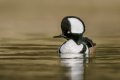
I exploited ISO invariance for this image by "underexposing" the scene by ~ 4stops (ETTL) in order to retain detail in the highlights. I did this by reducing the ISO; which does not change the amount of light the sensor receives, and makes little/no difference within the invariance range of the camera used. In this case using a lower ISO prevents the amplification from causing the ADC to clip the data in the written file. And it expands the resulting dynamic range recorded; because the amount/accuracy of the data available in the darker regions remains unchanged... ISO is not "exposure" with digital.

_SGK7331-Edit.jpg
 
Last edited:
I highly disagree... but I think most misunderstand what ISO invariance actually is/means.
I exploited ISO invariance for this image by "underexposing" the scene by ~ 4stops (ETTL) in order to retain detail in the highlights. I did this by reducing the ISO; which does not change the amount of light the sensor receives, and makes little/no difference within the invariance range of the camera used. In this case using a lower ISO prevents the amplification from causing the ADC to clip the data in the written file. And it expands the resulting dynamic range recorded; because the amount/accuracy of the data available in the darker regions remains unchanged... ISO is not "exposure" with digital.

View attachment 261095

I remember this frame well Steve - you sent to to me to have a look at.

You didn't expose to the left, you went as far to the right as possible without blowing the highlights, and its the non-blowing that is the key to getting a useable file. You then used the modern abilities of the sensor to be able to recover shadow detail.

This doesn't display ISO invariance, it shows shadow recovery ability, and it shows it well.

So, even with a tough frame like this, the best result has been gained by getting the exposure over as far to the right as possible, its just that in this circumstance with the light and the tones of the bird, most of the data would be further left than a more 'regular' frame.

What people need to avoid is not knowing when to expose in a certain way, and the point of this thread is getting the best out of high ISO requirements, which is all too often over this side of the pond. Too many people think that underexposing at ISO 800 will give a better file than shooting the same frame ETTR at ISO 3200, and its this thinking that folk need to get away from.

After all, most modern sensors at moderate ISO levels have a highly useable DR and can be substantially recovered with little penalty. What er'er on about here is the best way of noise reduction at ISO 3200 plus - and there is absolutely no doubt whatsoever that in 99.9% of cases, at these ISOs then ETTR with no blowing gives the best possible file

Mike
 
You didn't expose to the left, you went as far to the right as possible without blowing the highlights, and its the non-blowing that is the key to getting a useable file.
That's the problem with the current understanding of ETTR; having a histogram touching the right side means nothing in itself... what matters is where it is in relation to where a normal/proper exposure would place it. The benefit of ETTR is in collecting more light for more accurate sensor generated signal/data. Because this exposure placed the scene, and more importantly the birds face, into a very dark range it is underexposed/ETTL... where a "normal/correct" exposure would have clipped the whites. I .e. I shifted the histogram left of where it would have been. In terms of the scene/subject's face I did the opposite of maximizing the usability of the file. Had I done the same with a Canon 7D or even my Nikon D5 the results would not have been good.


You then used the modern abilities of the sensor to be able to recover shadow detail.
This doesn't display ISO invariance, it shows shadow recovery ability, and it shows it well.
That is exactly what ISO invariance is. It's where the camera has very low backend noise to where there is no benefit to raising the ISO in order to increase the relative SNR.
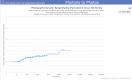
This is the D810 which I used for that image (from PhotonsToPhotos.net, used with permission).

Screen Shot 2019-11-23 at 5.18.20 PM.png

Less than .5 EV improvement on that chart is visually negligible... verging on being indiscernible. Above ISO 200 the curve is virtually flat, which means that using a higher ISO provides near zero benefit. In fact, with the D810 I could always leave the ISO at minimum and never pay more than that negligible .5EV penalty no matter how dark the resulting image looked. That's because ISO is not "exposure" with digital, and the D810 is very nearly completely ISO invariant. What matters is how much light is collected... that's what always matters; photography is about light.

It should be noted that the chart does not show relative ISO performance; it can't be used to compare between cameras. The gains charted are relative to it's own base performance... so you are correct in the sense that my results were also dependent on it being a modern sensor that is ISO invariant.
 
That's the problem with the current understanding of ETTR; having a histogram touching the right side means nothing in itself... what matters is where it is in relation to where a normal/proper exposure would place it.
But therein lies another issue, what governs a ‘normal/proper’ exposure? This will of course depend on the metering, which in itself has a lot of variants such as the user, camera model etc etc. I’ve noticed that my later Nikons have generally underexposed compared to older ones. Does that mean if I’m using say +2/3 exp comp that I’m exposing to the right, or that I’m now exposing correctly?

The point I’m making is that the camera meter alone is not an accurate tool to judge ‘correct’ exposure, especially when a number of cameras have weighting towards the AF point (useful for portraits, not always good for landscape). Even using the histogram isn’t entirely accurate as it’s showing jpeg data and not raw, but at least if you’re not clipping with jpeg you won’t be with raw either.
 
But therein lies another issue, what governs a ‘normal/proper’ exposure?
A "normal exposure" means that midtones are placed in the middle where they belong. Where darks and lights fall depends on the dynamic range of the scene and the exposure latitude of the sensor/film being used to record it. Or, you could say that a "proper exposure" of your subject requires no edits to correct for... i.e. your artistic intent is not for a normal exposure.
ETTR, ETTL, and normal exposure could all result in the histogram touching the right side of the scale. But the different exposures have different purposes, and decidedly different impacts on the data/results... especially depending on how/why they are done. ETTR/ETTL are intentional exposure shifts away from a normal exposure and require selective edits in order to benefit from.
And that's the problem with the current understanding of ETTR... everything is ETTR and it's always a good thing (no highlight clipping). When in fact it could be a decidedly bad thing depending on the camera used and how/why it is accomplished. One thing you almost never hear/read about is pushing the exposure far right when there are no highlights/whites in the scene... but that is exactly what ETTR is, and when ETTR will benefit you the most.

Of course you are correct about the metering/histogram not being perfect; they never were and never will be. When I underexposed the merganser by 4 stops the histogram was not touching the right side and showed massive shadow clipping... but it didn't really matter. That's because I didn't increase the amount of sensor underexposure (light), I simply did not boost the brightness in the recorded file (I used a lower ISO w/ a nearly invariant camera).
 
Last edited:
ISO-invariant sensors can do amazing things but are not relevant to the OP. ETTR could well be though (Expose To The Right - of the histogram). Loads of articles and debate on both these things on't web.

Bottom line - to reduce noise, you must increase exposure. That is, put more light/photons on the image area. Strictly speaking, 'exposure' is shutter speed and lens aperture only (or a larger effective sensor area to collect more light). ISO does not increase actual light/photon capture, it merely applies gain to increase effective brightness (which also makes noise more visible).

ps Or, for the image linked in the first post, local noise reduction on the background would sort it pretty well in a few secs ;)
 
Last edited:
While ETTR (Expose To The Right - of the histogram) and ISO-invariance can both be used to improve shadow rendition, they are not the same thing at all and are applied differently.

ETTR means shadow detail is enhanced and noise is reduced, but at the risk of highlights blowing out - a subjective decision and every situation is different. Another downside is ETTR often ends up with longer shutter speeds.

An ISO-invariant sensor means that shadows can be brightened in post-processing just as well as they can be by raising the ISO in-camera, without any additional noise penalty. In practise, this allows the exposure to be adjusted at the taking stage so that all highlight detail is preserved, then shadows lifted in post for maximum dynamic range. In effect though, it's important to remember that you're still under-exposing the shadows significantly and this carries the same noise penalty as if they'd been correctly exposed in the first place by raising ISO (but highlight detail is retained).

In practise, exploiting ISO-invariance could also be termed Expose To The Left, and in that case there's another potential upside in faster shutter speeds.
 
In practise, exploiting ISO-invariance could also be termed Expose To The Left, and in that case there's another potential upside in faster shutter speeds.
The norm is typically for the sensor to be underexposed; particularly with wildlife photography. I.e. not at base ISO with at least some pixels reaching saturation... More underexposure is never better in terms of technical image quality, but if you need the SS then you do what you have to.
 
Back
Top