

You are using an out of date browser. It may not display this or other websites correctly.
You should upgrade or use an alternative browser.
You should upgrade or use an alternative browser.
the moon
- Thread starter wallyboy
- Start date

 ) on other threads. Worth doing a search.
realspeed
Suspended / Banned
- Messages
- 8,827
- Name
- Bazza
- Edit My Images
- No

This was taken with a lens as in the link below with a 2x TC attached
http://photography.shop.ebay.co.uk/...5197.m570.l1313&_nkw=650-1300+lens&_sacat=625
Apologise to those more professional and have better gear than me but that is all I could afford at the time.
Walter
Obviously you will be able to get photos of the moon with a 300mm lens and good ones at that, but don't be dissapointed if you don't get many moon details as a 300mm lens just isn't powerful enough. You may find it worth a punt with that lens in the link for around the £250 mark.
The biggest problems working at that magnification is focusing and more unusual without thinking about it is tracking the moon across the sky. The moon really "flies" across the heavens when working that close and I had to guess the moons track and wait for it to come into view.
No wonder there is gear out there to compensate for this movement
Realspeed
Last edited:
OP

wallyboy
Suspended / Banned
- Messages
- 2,805
- Name
- walter
- Edit My Images
- Yes
Walter
Obviously you will be able to get photos of the moon with a 300mm lens and good ones at that, but don't be dissapointed if you don't get many moon details as a 30mm lens just isn't powerful enough. You may find it worth a punt with that lens for around the £250 mark
Realspeed
cheers realspeed will give it a go, that is a nice pic of moon
Obviously you will be able to get photos of the moon with a 300mm lens and good ones at that, but don't be dissapointed if you don't get many moon details as a 30mm lens just isn't powerful enough. You may find it worth a punt with that lens for around the £250 mark
Realspeed
cheers realspeed will give it a go, that is a nice pic of moon

LauraJ23
Suspended / Banned
- Messages
- 14,759
- Name
- Laura
- Edit My Images
- No
To give you an idea of exposure this was 1/100th sec @ iso200 in manual mode, taken through a telescope and an 850mm f10.4 photo attachment.
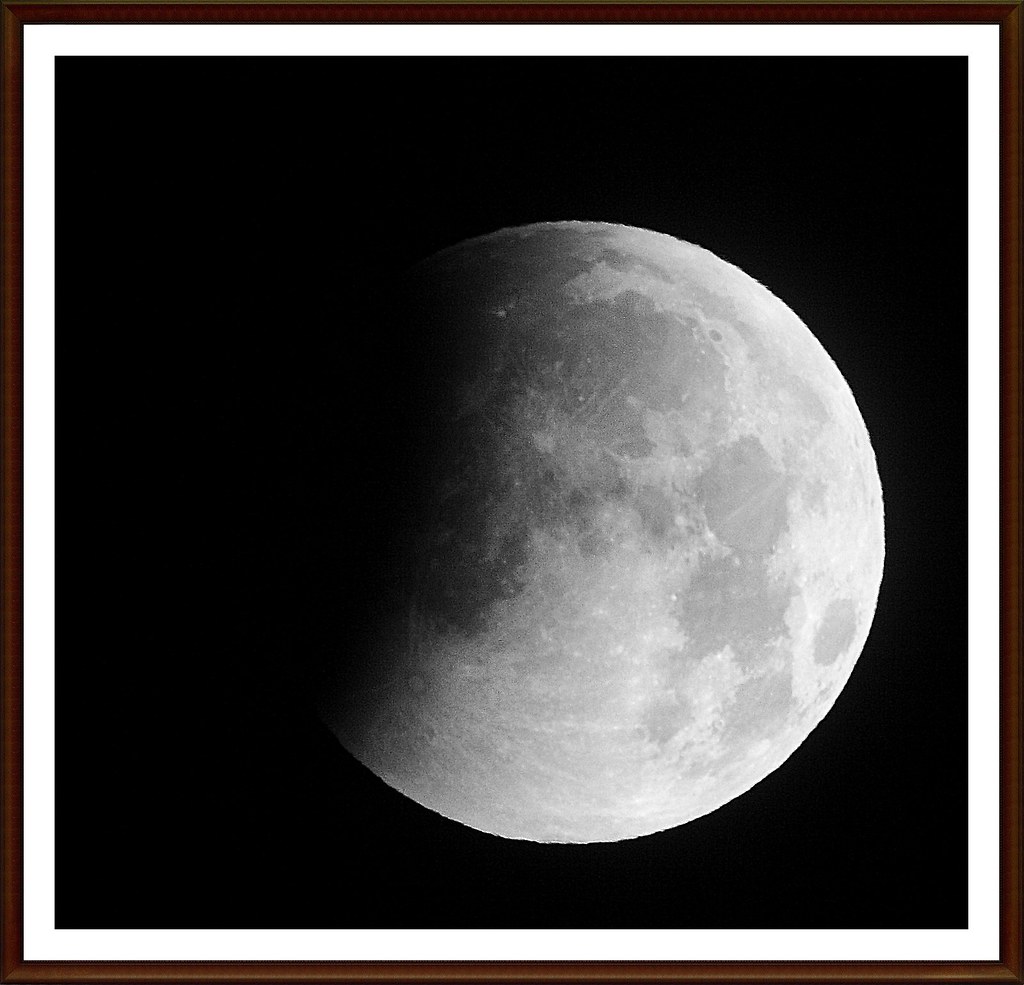
_MG_7436 by scilly puffin, on Flickr
_MG_7436 by scilly puffin, on Flickr
Last edited:
realspeed
Suspended / Banned
- Messages
- 8,827
- Name
- Bazza
- Edit My Images
- No
Michael
did you have any problems with shimmering from the atmosphere? there are so many things to consider when trying to get a picture of the moon without astronomical photographic lenses.
Some of the ones I can across was
1 =cloud cover/haze
2 = focus
3 =tracking the moon
4= camera settings as its all manual with the lens I used
5= getting the right section of the moon to show up the craters
6 = camera shake or should I really say lens movement
7 = wired remote control still produced movement so used wireless instead
8= And finally wind, the slightest breeze had terrible lens movement
9= Cold, as the clearest time is usually mid winter late at night
That unedited photo I put up was at 2600mm and hours of waiting on several different days.
What atmospheric conditions can produce (unedited photo)

Realspeed
did you have any problems with shimmering from the atmosphere? there are so many things to consider when trying to get a picture of the moon without astronomical photographic lenses.
Some of the ones I can across was
1 =cloud cover/haze
2 = focus
3 =tracking the moon
4= camera settings as its all manual with the lens I used
5= getting the right section of the moon to show up the craters
6 = camera shake or should I really say lens movement
7 = wired remote control still produced movement so used wireless instead
8= And finally wind, the slightest breeze had terrible lens movement
9= Cold, as the clearest time is usually mid winter late at night
That unedited photo I put up was at 2600mm and hours of waiting on several different days.
What atmospheric conditions can produce (unedited photo)
Realspeed
Last edited:

Redpaul
Suspended / Banned
- Messages
- 623
- Name
- Paul
- Edit My Images
- Yes
The full moon isn't the best time to photograph it due to lack of shadows. Much better to photograph the waning or waxing crescent 
This was handheld at 400mm, 1/200th and F8.
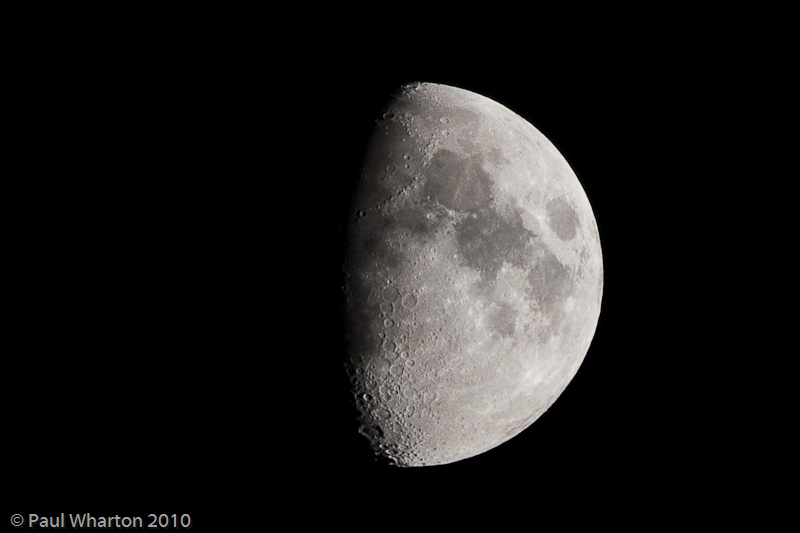
The Moon-2 by Paul S Wharton, on Flickr
Paul
This was handheld at 400mm, 1/200th and F8.
The Moon-2 by Paul S Wharton, on Flickr
Paul
Last edited:
The full moon isn't the best time to photograph it due to lack of shadows. Much better to photograph the waning or waxing crescent
This was handheld at 400mm, 1/200th and F8.
The Moon-2 by Paul S Wharton, on Flickr
Paul
What ISO did you use Paul???
Redpaul
Suspended / Banned
- Messages
- 623
- Name
- Paul
- Edit My Images
- Yes
PDS said:What ISO did you use Paul???
Just checked the exif on Flickr. ISO 800.
Paul
If you got the time then manual mode is better, otherwise spot meter mode is probably best.
I got this one with my Tokina 800mm + 2x TC, which is about 2400mm equivalent on my D5000, it filled the entire frame top to bottom. The back was black anyway so i cut and pasted the moon onto a big black background so i could crop it how i wanted.

Full Moon by Morinaka_2010, on Flickr
I got this one with my Tokina 800mm + 2x TC, which is about 2400mm equivalent on my D5000, it filled the entire frame top to bottom. The back was black anyway so i cut and pasted the moon onto a big black background so i could crop it how i wanted.
Full Moon by Morinaka_2010, on Flickr

hollis_f
Suspended / Banned
- Messages
- 3,696
- Name
- Frank
- Edit My Images
- Yes
The full moon isn't the best time to photograph it due to lack of shadows. Much better to photograph the waning or waxing crescent
If you got the time then manual mode is better, otherwise spot meter mode is probably best.
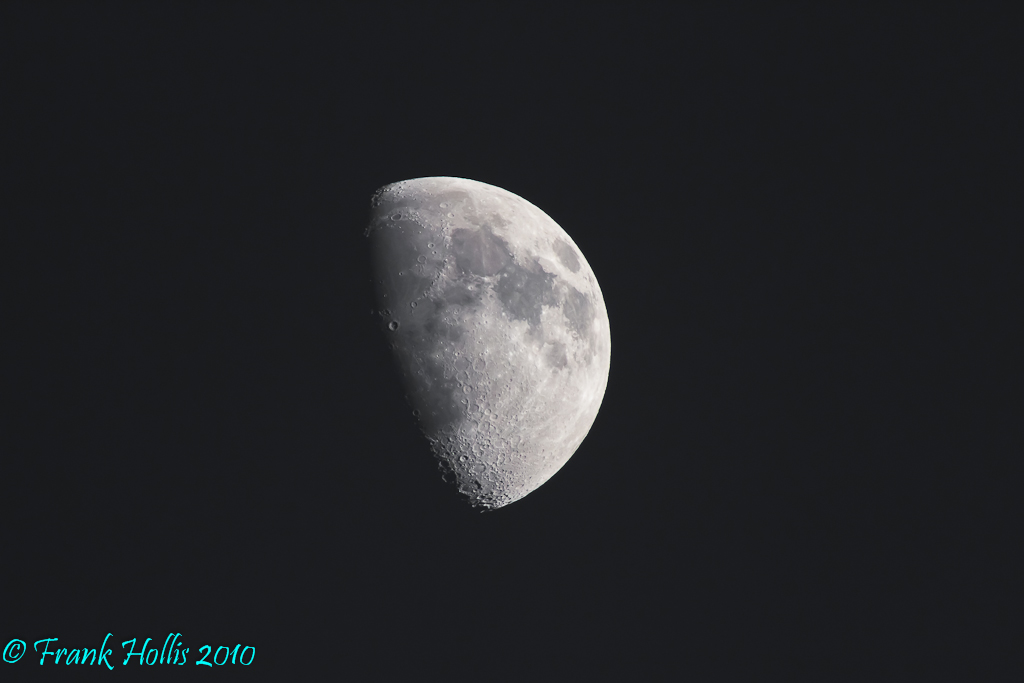
Two bits of very good advice. And you really can't beat long lenses. This is uncropped - on a 7D at 840mm! 1/500s, f8, ISO800

swavis
Suspended / Banned
- Messages
- 69
- Name
- Gavin
- Edit My Images
- Yes
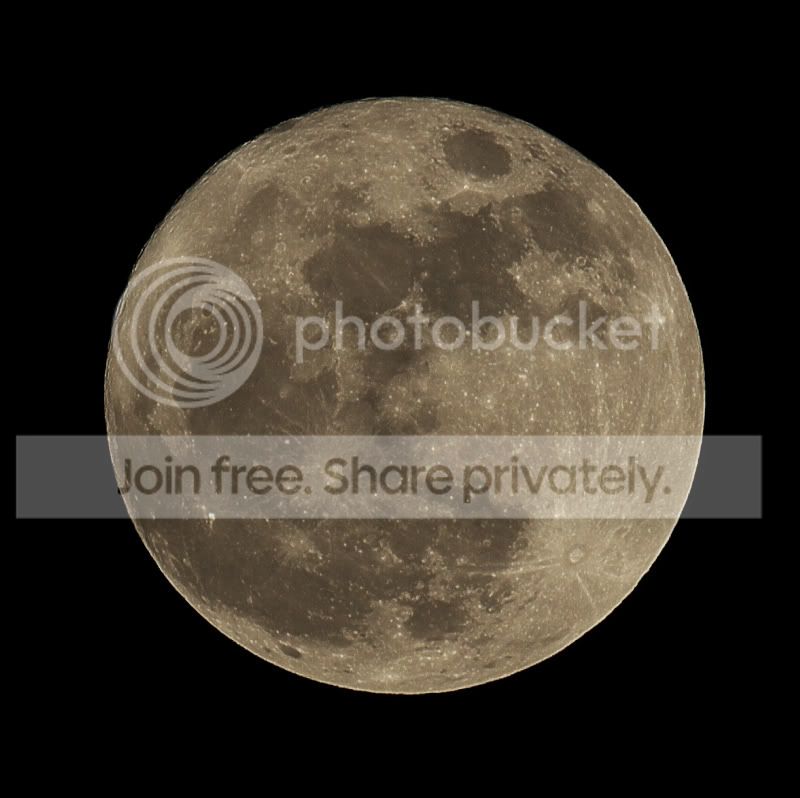
I managed to get this back in Jan '09. Cropped quite a bit but I thought it was ok-ish...
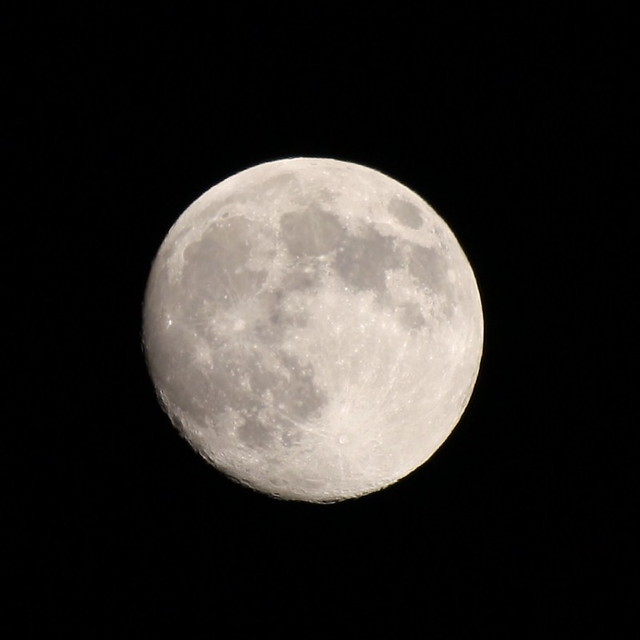
IMG_0406_Moon by GavinBelton, on Flickr
Eos 1000D with a Sigma 70-300 on a tripod, 300mm, f5.6, 1/250, ISO-100
IMG_0406_Moon by GavinBelton, on Flickr
Eos 1000D with a Sigma 70-300 on a tripod, 300mm, f5.6, 1/250, ISO-100
Redpaul
Suspended / Banned
- Messages
- 623
- Name
- Paul
- Edit My Images
- Yes
going by what you guys have posted as pics, wont get nowhere near your quality, only have 300mm lens, still have a go tho all part of learning curve,
i'll be taking pics about 10 to-night, thanks for input guys
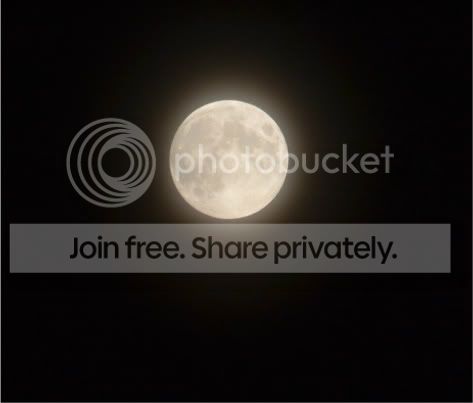
You can still get a decent shot with a 300mm lens.
This was taken with my old Sigma 70-300mm lens.

The Moon by Paul S Wharton, on Flickr
Paul


OP
wallyboy
Suspended / Banned
- Messages
- 2,805
- Name
- walter
- Edit My Images
- Yes
Please don't think I'm being mean but it looks a little over exposed
no worry's i'm here to learn

rocafreestyler
Suspended / Banned
- Messages
- 86
- Edit My Images
- Yes
Some great moon shots on here.
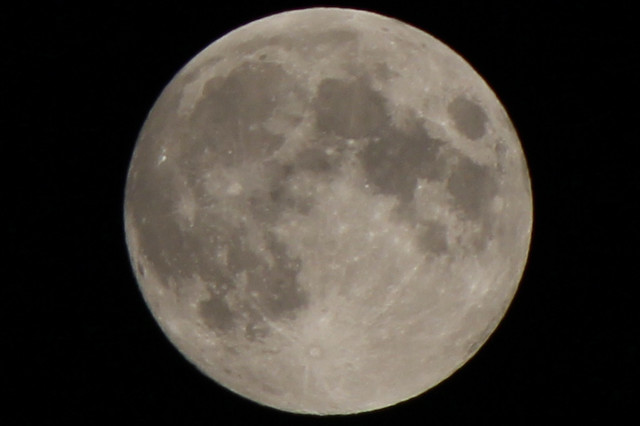
My first attempt at a moon shot taken about 20 mins ago.
Is there any post processing tips I could use to give the picture some added va va vooom!
The Moon 2 by rocafreestyler, on Flickr
Exposure 0.004 sec (1/250)
Aperture f/5.6
Focal Length 250 mm
ISO Speed 100
My first attempt at a moon shot taken about 20 mins ago.
Is there any post processing tips I could use to give the picture some added va va vooom!
The Moon 2 by rocafreestyler, on Flickr
Exposure 0.004 sec (1/250)
Aperture f/5.6
Focal Length 250 mm
ISO Speed 100
Last edited:
This is my first attempt at shooting the moon..
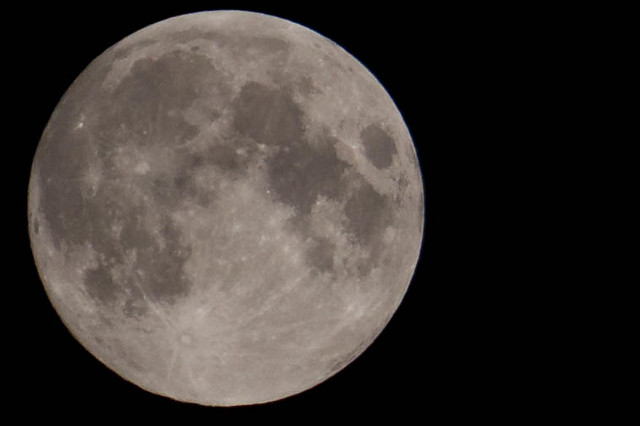
Canon 500D, 55-250mm lens. 1/800 @ F5.6, ISO 200, and a MASSIVE crop. 250mm is way too short to capture any real detail, although I think this looks ok for my first attempt Feedback gratefully received!
IMG-2677.jpg by R1ch85, on Flickr
Canon 500D, 55-250mm lens. 1/800 @ F5.6, ISO 200, and a MASSIVE crop. 250mm is way too short to capture any real detail, although I think this looks ok for my first attempt
Feedback gratefully received!IMG-2677.jpg by R1ch85, on Flickr
Last edited:

LauraJ23
Suspended / Banned
- Messages
- 14,759
- Name
- Laura
- Edit My Images
- No
This is my first attempt at shooting the moon..
Canon 500D, 55-250mm lens. 1/800 @ F5.6, ISO 200, and a MASSIVE crop. 250mm is way too short to capture any real detail, although I think this looks ok for my first attempt

IMG-2677.jpg by R1ch85, on Flickr
Considering it's a massive crop, you have done very well indeed and for a first attempt,
Rocafreestyler, Yours looks pretty good too, usually I only alter contrast and do a bit of a sharpen.
Last edited:
hollis_f
Suspended / Banned
- Messages
- 3,696
- Name
- Frank
- Edit My Images
- Yes
This is my first attempt at shooting the moon..
Canon 500D, 55-250mm lens. 1/800 @ F5.6, ISO 200, and a MASSIVE crop. 250mm is way too short to capture any real detail, although I think this looks ok for my first attempt
It's likely that the 55-250 will be sharper at f8 than f5.6 (almost all lenses are sharper when stopped down a bit, sometimes spectacularly so). I'd try with the same shutter speed, but f8 and ISO 400. I'd probably also try f11 and ISO800.
LauraJ23
Suspended / Banned
- Messages
- 14,759
- Name
- Laura
- Edit My Images
- No
I only really take pictures of the moon when there is very little haze and cloud although some cloud going across the moon can give you a great atmospheric photo, although I haven't captured one like that myself. Focus is really critical even on something as bright as the moon. I always find myself adjusting focus numerous times and taking quite a few shots, not every one of them is usable. I only notice shimmering in the atmosphere in the optics, it doesn't appear to transfer to the image.
Michael
did you have any problems with shimmering from the atmosphere? there are so many things to consider when trying to get a picture of the moon without astronomical photographic lenses. I have my camera and scope mounted on my tripod, but to be honest I would prefer a much sturdier head, but what I have does the job. As has been stated, the full moon is not the best of times to photograph due to lack of shadows. But to get some really good detail you take a fair few pics and then stack them in a programme such as registax I have not done this myself yet but do will do at some point. Another important factor as well is let your equipment acclimatize to the outside temperatures before taking your pics. I don't use a remote as I don't have one, sometimes I use the 2sec self timer instead to reduce shake.
Some of the ones I can across was
1 =cloud cover/haze
2 = focus
3 =tracking the moon
4= camera settings as its all manual with the lens I used
5= getting the right section of the moon to show up the craters
6 = camera shake or should I really say lens movement
7 = wired remote control still produced movement so used wireless instead
8= And finally wind, the slightest breeze had terrible lens movement
9= Cold, as the clearest time is usually mid winter late at night
That unedited photo I put up was at 2600mm and hours of waiting on several different days.
What atmospheric conditions can produce (unedited photo)
Realspeed

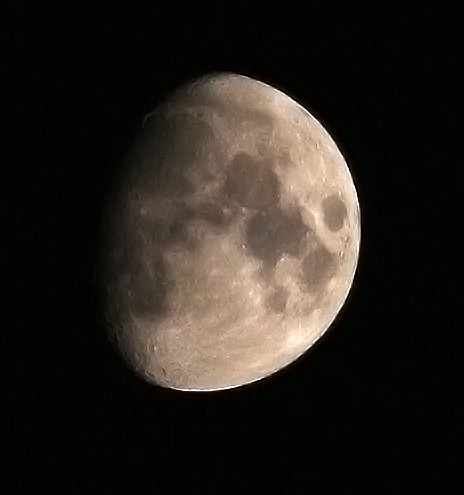
Considering it's a massive crop, you have done very well indeed and for a first attempt,
Thanks
the crop really was large, if you put a rule of thirds grid on the original, the moon doesn't even fill one of the rectangles!It's likely that the 55-250 will be sharper at f8 than f5.6 (almost all lenses are sharper when stopped down a bit, sometimes spectacularly so). I'd try with the same shutter speed, but f8 and ISO 400. I'd probably also try f11 and ISO800.
I do have a couple of shots at F8, but I was at 1/200 and ISO 100 and they came out a little blurred. I opened the aperture to get a faster shutter speed instead of the upping the ISO :bonk:
Thanks for the feedback
I shall bear that in mind next time I shoot. Doesn't look like it'll be tonight though, loads of unbroken cloud cover! 

scottthehat
Suspended / Banned
- Messages
- 6,290
- Name
- scott
- Edit My Images
- Yes
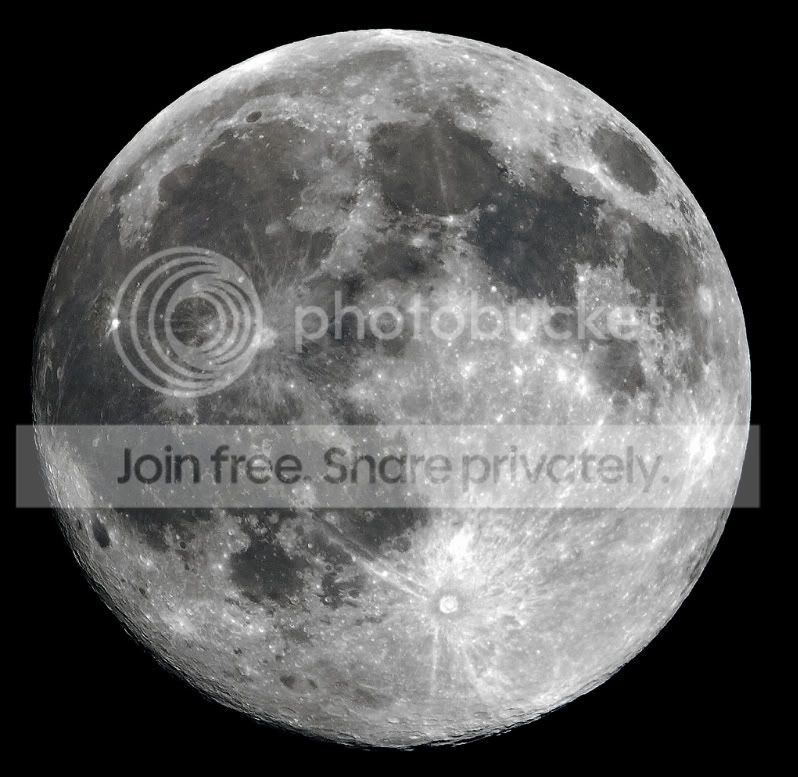
one from me.
OP
wallyboy
Suspended / Banned
- Messages
- 2,805
- Name
- walter
- Edit My Images
- Yes
one from me.
wow... thats pretty cool, some cracking shots been posted, its not as easy as it looks or me anyway, i'll get there in the end

As others have said, I still think that full moon is not the best time to shoot as you don't get to see the detail of the craters brought out when they are casting shadows and the rims are in sunlight.
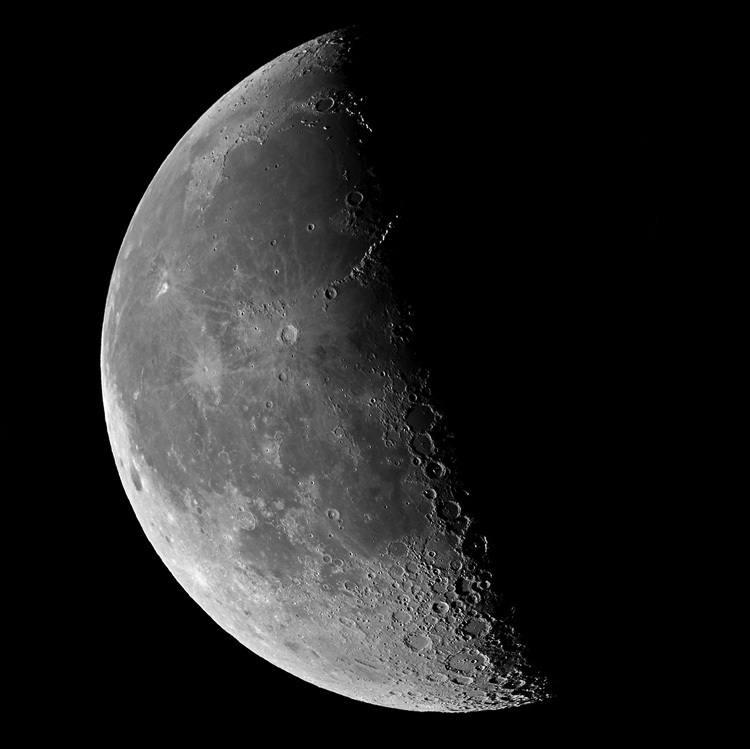
Wow, that is an awesome shot!


My first attempt at a moon shot the other night, i was quite pleased with it considering i only had 200mm FL
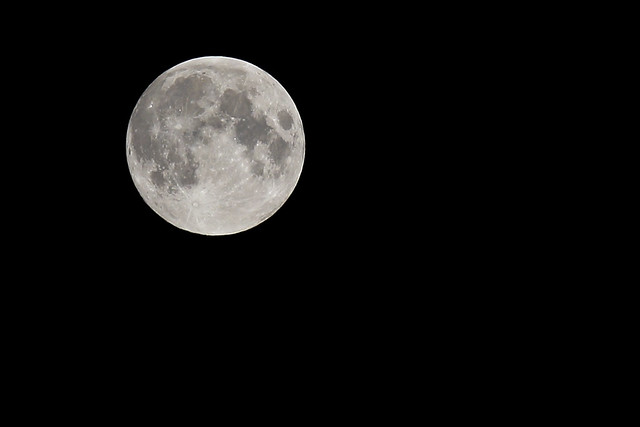
Moon by Carlos6868, on Flickr
Moon by Carlos6868, on Flickr
buster321c
Suspended / Banned
- Messages
- 73
- Name
- Craig
- Edit My Images
- Yes
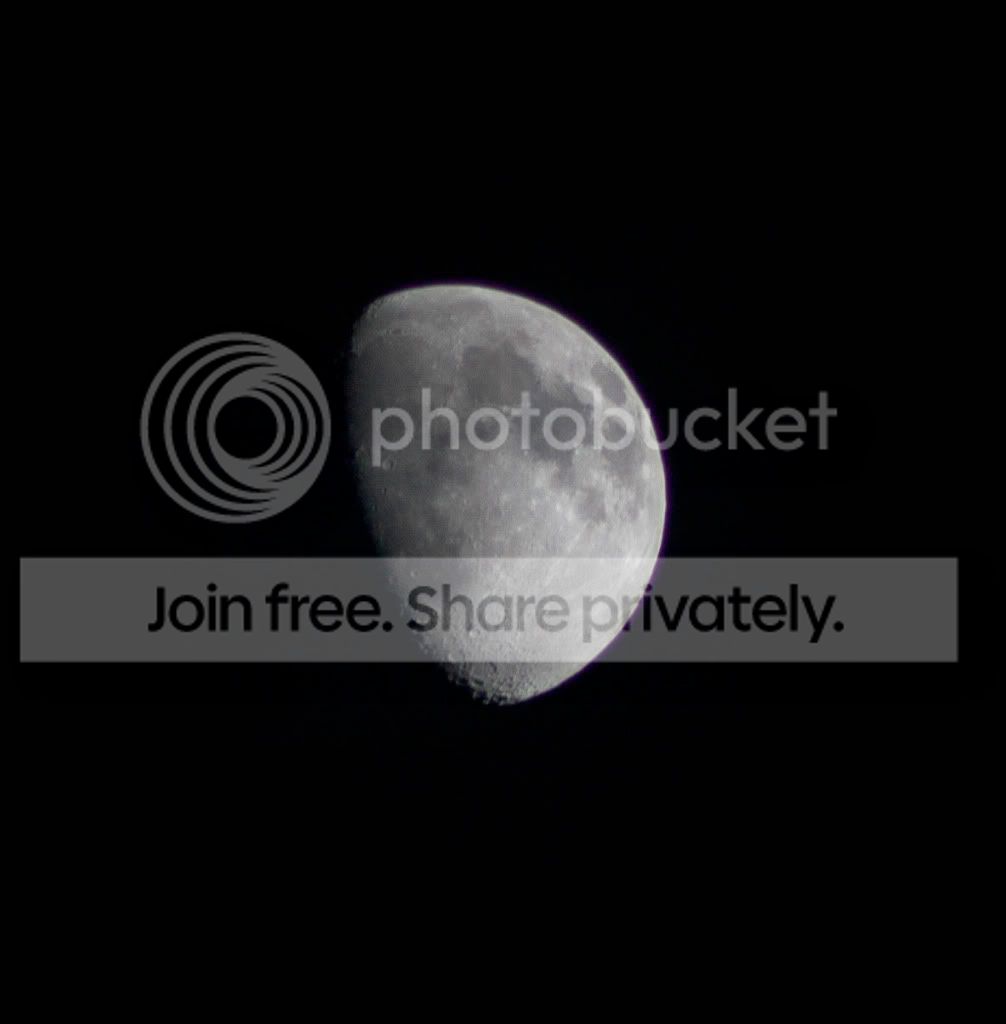
I struggled with this also , after many attempts -
hollis_f
Suspended / Banned
- Messages
- 3,696
- Name
- Frank
- Edit My Images
- Yes
I struggled with this also , after many attempts
Buster, I don't know what lens this was shot with, but I do know it was at f5.7, 1/100s ISO200. Most of the Canon lenses that can do 300mm have a max. aoperture of f5.6. Bu they are a lot sharper when stopped down a bit. Trying again with f8 and ISO400 may well give a better image.

Oggy
Suspended / Banned
- Messages
- 1,240
- Name
- Roger
- Edit My Images
- Yes
Buster, I don't know what lens this was shot with, but I do know it was at f5.7, 1/100s ISO200. Most of the Canon lenses that can do 300mm have a max. aoperture of f5.6. Bu they are a lot sharper when stopped down a bit. Trying again with f8 and ISO400 may well give a better image.
That was my thought too.
buster321c
Suspended / Banned
- Messages
- 73
- Name
- Craig
- Edit My Images
- Yes
Thanks for the advise , i will definatly try it .
Is there any post processing tips I could use to give the picture some added va va vooom!
Yeah shoot RAW then sharpen the heck out of the JPG. The RAW for my shot was soft but a 400% strength, 4.0 radius unsharp mask took care of that.