The infatuation with 'sharpness'

I do sharpen but do so judiciously.

....And that, ladies and gentlemen, is the crux of the matter. Everything judiciously and in moderation and it goes without saying that there are instances where the creator of the picture wants to lean on the sharpness lever.
 
Sharpening doesn't focus an image. the only button for that is the on the says 'AF-ON' on your camera.


True but an out of focus image will be soft compared to an in focus one. Never used to have such a thing as AF back then! Getting things as close to perfectly in focus was the only control we had over sharpness (well, some films and developers gave finer grain structure but still depended on a good, sharp latent image being present!)
 
Johan, I have just briefly checked out your extreme-macro web site and it's the perfect example of what I don't like in general insect macro (not micro) photography. In my opinion the examples appear over sharpened to a point where any sense of atmosphere and reality is greatly reduced or even lost completely.

Please, please understand that this is only my individual opinion, means diddlysquat, and is not meant in any way as an attack on your undoubted skills which I greatly respect. Furthermore, I have bookmarked your site and know that there will be much to learn and enjoy as a result.

I hope you understand what I'm saying and the spirit in which it's intended :)
 
Last edited:
True but an out of focus image will be soft compared to an in focus one.
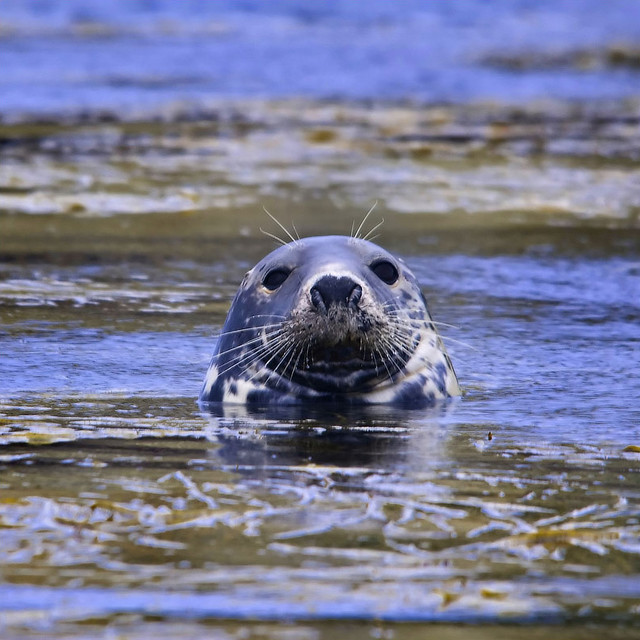
Nowadays, even that is slightly open to question. For example I've used "restoration by deconvolution" to rescue out of focus material, it the whiskers on top on this guy were blurred in the original:
5530405080_6514f8b561_z.jpg
 
I spent the first few years of my photography life learning rules, do's, don'ts, what people like, what people don't.

Since then I have done what I wanted to do.

Sharpness, doesn't always make a great image but sometimes does. I do a fair bit of headshot photography, sharpness is key but then in some of my more creative shoots, sharpness isn't always what you need.

Focus and sharpness are very different.
 
pretty much every digital photo will benefit from being correctly (not over) sharpened.

I'd say 90% of images from my 5D2 have no 'extra' sharpening applied whatsoever beyond that standard amount of 25 applied when I open the RAW file in ACR (which is probably similar to what would be applied if I shot JPEG anyway). I'm on the confused by excessive sharpening side of this discussion. Looking back at my early edits from my old 350D and 30D I can see I was sharpening way more than I do now, when I bought my 7D I tried easing off on the sharpening and realised the images looked way better for it and now with my 5D2 I hardly ever sharpen at all. When I go back and re-edit old 350D/30D RAW files they too look infinitely better with hardly any sharpening.

I think sharpening becomes more of a habit for some people rather than something that's considered on an individual image basis.
 
I'd say 90% of images from my 5D2 have no 'extra' sharpening applied whatsoever beyond that standard amount of 25 applied when I open the RAW file in ACR (which is probably similar to what would be applied if I shot JPEG anyway). I'm on the confused by excessive sharpening side of this discussion. Looking back at my early edits from my old 350D and 30D I can see I was sharpening way more than I do now, when I bought my 7D I tried easing off on the sharpening and realised the images looked way better for it and now with my 5D2 I hardly ever sharpen at all. When I go back and re-edit old 350D/30D RAW files they too look infinitely better with hardly any sharpening.

I think sharpening becomes more of a habit for some people rather than something that's considered on an individual image basis.

You'll note nowhere have I advocated anything else. I'm surprised your images don't benefit. The 5dii has a fairly aggressive aa filter
 
Nowadays, even that is slightly open to question. For example I've used "restoration by deconvolution" to rescue out of focus material, it the whiskers on top on this guy were blurred in the original:
5530405080_6514f8b561_z.jpg

I hate to sound blunt here but they still look blurred, they're now also jaggy from the sharpness that's been applied to try fix them. The results of trying to sharpen out blur almost always end up looking worse than the blur itself.
 
I'm conversely very surprised you'd think 5D2 images would need sharpening, for the most part they start to look rubbish to my eyes with even modest sharpening applied.


Cool, I have to admit my surprise is abased purely on what my second hav done with them.
 
I'm surprised too, even my old 5D which has a weak AA filter benefits from a tweak here and there

Guess its all very subjective and as ever no right or wrong answer, think we all agree oversharpening is grim in the same way overblown HDR is
 
I'm conversely very surprised you'd think 5D2 images would need sharpening, for the most part they start to look rubbish to my eyes with even modest sharpening applied.

For me images from the MkII look very soft without sharpening, especially at web size after they've been shrunk. Maybe some genres of image benefit slightly from that softness, but to my eyes it usually wrong for the things that I shoot.

I'd love to say perhaps my lenses are a bit crap or something, but I mostly shoot with the 100mm macro which is one of the sharpest lenses Canon make.

But at the end of the day it's all just personal preference. I like my images to really leap off the page/screen and sharpening is one way of achieving that.
 
interesting topic :)
I think part of the obsession is particularly for equipment snobs that hope to differentiate between a snap photo on a phone and that taken with a proper camera.
great glass can be the game changer there with a sharp photo providing a clarity that you just can't achieve with a phone snap.
so part snobbery, and partly about clarity. Just to get any photo in old film days was great, because the sharpness couldn't be really conveyed as it was so dependent upon the finishing and printing process.
 
I could be way off the mark here but thinking back to photography at College / Uni in the 80s and early 90s ‘sharpness’ (as a word) seldom cropped up.

I'm not entirely sure that is true. 'Sharpness' was certainly a term that was used extensively in Kodak's marketing materials.

For example, taking a cue from an earlier poster campaign for the 35mm version, the announcement of Ektar 25 becoming available in 120 format in September 1990 was accompanied by the headline "World's Sharpest Colour Film Gets Bigger"

http://www.jackandsue.com/magazines/photographic/pdf/1990 9 120_Size Kodak Ektar 25.pdf

Kodacolour VR was launched in 1982 with "improved grain, sharpness, and contrast" [CS Monitor report]

Kodak Royal Gold 400 provided "a unique balance of fine grain, sharpness, color reproduction, and contrast to yield results with excellent clarity and enlargement capability" in 1999.

If you take a look at Kodak's At A Glance Film Selector, for their Royal Gold range, Sharpness is up there with Film Speed, Lighting Conditions, Grain and Process as one of the primary criteria for selecting your film. That puts it pretty high on the list of things to look out for.

Now, this is perhaps more in the consumer/enthusiast space; personally, I always found Kodak Gold way too saturated for my tastes, but it was aimed squarely at the mass market. If you were studying in the 80s and 90s, perhaps you were looking for other things because you were in a different environment. The thing is that the consumer/enthusiast space is what occupies most of the web these days.

 
I'm surprised too, even my old 5D which has a weak AA filter benefits from a tweak here and there

Guess its all very subjective and as ever no right or wrong answer, think we all agree oversharpening is grim in the same way overblown HDR is

I'm not against tweaks; I still tweak images from my 5D2 occasionally, it's just that for the most part I don't feel it's necessary. It does puzzle me somewhat though when I hear comments from people saying images straight out of the 5D2 are "very soft", I understand we all have very different standards for sharpness but for an image to come straight out of a 5D2 being described as very soft does make me wonder if something's gone slightly wrong somewhere!
 
Quoting nass,
Nowadays, even that is slightly open to question. For example I've used "restoration by deconvolution" to rescue out of focus material, it the whiskers on top on this guy were blurred in the original:

As someone above the quoted post said, it's impossible to judge sharpness on a small screen and as someone said below the quoted post, it still doesn't look that good. Possibly better than the original but still not up to printing.
 
If I am honest one of the reasons I don't post pictures on here often is because I am certain the first comment will be "it's a bit soft"
 
strange this question should be asked. when the first question we ask when buying a new lens is how SHARP is it wide open? or if second hand can i see a photo at 2.8 at 100% crop.its the most common question asked on any second hand lens. check the for sale threads!!!! cheers mike
 
Does all this really matter, people are allowed to do what they want with their images and so be it, what may or may not seem over sharpened to one individual may or may not to another
 
I can categorically tell you that you will get a 'better' web image from a 5DMkII than a 5DMkI. Having more pixels to work with allows you to do more with them. If they're not there, you can't create them out of nothing.
If you need to manipulate an image before resizing it for web, it is better to have more pixels to work with than less. For example if you are isolating a jumper from a white background and dropping in a blind neck to make an invisible mannequin, then having more pixels to play with at full resolution will mean you get a better result. Just one example from my own experience.

More pixels to work with during processing means a better result when shrunk down in most cases, in my experience. I find it harder to work with images from my old 6MP camera than from my newer 18-something camera (or whatever it is, I don't know).


That's not getting a sharper image for web from a 5D Mkii than a 5D MkI though... that's just a demonstration of how it's easier to make a detailed composite image with a higher resolutionone than a lower resolution one. I can take a 80mp image from one camera, and a 16mp image from another... reduce them both to 800 pixels across for a web page, and there will be no appreciable difference between them (all other things such as colour/contrast etc being equal). All you are saying is that it's easier to manipulate a higher res image than a lower one... which is true.


For me images from the MkII look very soft without sharpening, especially at web size after they've been shrunk.

I'm failing to see how that is possible. Do you mean they look sharper by applying sharpening AFTER you've shrunk them? If so... of course they will... even though I think it looks false.. but that is a personal choice. I can only ever express a personal opinion. If though... you are suggesting that applying sharpening before resizing makes them look sharper once they are, then you must simply be imagining it. Whatever edge contrast detailing you applied during sharpening at 24MP will simply not be apparent when reducing down to a few hundred pixels across (unless it was massively OTT).

If you meant the former rather than the latter.. then ignore the latter :)


Does all this really matter, people are allowed to do what they want with their images and so be it, what may or may not seem over sharpened to one individual may or may not to another

No... it's an interesting conversation, nothing more. Whether I think sharpening looks crap in the majority of uses I see it put to is just an opinion. I find the conversation interesting.

[edit]

Just been rifling through my metadata.. around 80% of everything I've shot in the last 12 months has the default 25 sharpening added. The rest mainly have 35. A few have 100%... but have zero radius and detail set. I often do this with shots that have high contrast edge context such as grass against sky.. pylons... TV antennas etc as it removes the tell tale signs of sharpening (halos around edge contrast) but retails the overall levels of detail from the default settings. In effect... I'm not really applying any additional sharpening in the majority of cases. I'd challenge anyone to examine anything I shoot and explain why it would need more.

I really do think it's down to what you do to the images. If you print big, excessive sharpening looks really awful in print. You can get away with more on screen when the image is effectively hugely undersampled on a low resolution display. Print takes no prisoners.
 
Last edited:
On this subject, my own opinion is that a lot of wildlife shots,especially, are over sharpened. I don`t say so anymore because I get lambasted for saying so.

I even went through a stage of sharpening my shots to the extent I believed others thought I should.

I don`t really care about that any more, I just do my own thing, some like it, some hate it and some appreciate that not all shots are the same.

Each to thier own.
 
I don`t really care about that any more, I just do my own thing, some like it, some hate it and some appreciate that not all shots are the same. Each to thier own.

Such a good comment :). Me too :)
 
Could it be that it's because it is a fairly simple way to objectively assess an otherwise fairly subjective process? This also might explain why people are so quick to upgrade their gear in their belief it will achieve more pleasing results? Then again, maybe some people quite rightly enjoy the technical aspect more than the actual photography, and strive to achieve the best possible quality.
 
Having just got back from the Jacques Henri Lartigue exhibition at The Photographers Gallery today, you'd be amazed out how unsharp so many of his images were!

I know it depends on what you shoot, but I'd rather have great content, thats not tack sharp, than images that the only good thing to say about them is they're sharp any day :)
 
I know it depends on what you shoot, but I'd rather have great content, thats not tack sharp, than images that the only good thing to say about them is they're sharp any day :)

+1! The most important thing for me is that my images convey what I want them to, technical 'quality' usually plays a secondary part in that rather than a primary one.
 
For me images from the MkII look very soft without sharpening, especially at web size after they've been shrunk. Maybe some genres of image benefit slightly from that softness, but to my eyes it usually wrong for the things that I shoot.

I'd love to say perhaps my lenses are a bit crap or something, but I mostly shoot with the 100mm macro which is one of the sharpest lenses Canon make.

But at the end of the day it's all just personal preference. I like my images to really leap off the page/screen and sharpening is one way of achieving that.

I am sure Canon admitted themselves that mkII had fairly heavy AA filter. mkIII has that rectified and resolves a lot more detail despite having just 1MP more. Or it was also focus issue.
To be fair, if they are just very slightly soft, they should appear crisp after shrinking to 1000px by most respectable methods. Out of focus shots do look soft almost all the way down.
 
Well... the difference between the D800E and D800 is minimal in fact barely noticeable unless you look at at everything at 100%, and even then you'd only guess which was which if you shot the same image on both cameras.

I can't see the AA filter making THAT much difference.
 
Last edited:
Years ago, before forums were invented, the only way to share photos between enthusiasts ( without attending photo clubs or meets) was to use circles or postal portfolios, where people would contribute their printed images to a portfolio that would be posted out to a list of interested members. You received it, looked, commented and posted to the next person.
One I was involved with was the Leica portfolio, many many years ago.
One of the comments most commonly seen was, PIAS. ( Pity it aint sharp)
Obsession with sharpness isn't a new thing, but over sharpened photos are just awful. But, you don't have to have pixel level sharpness to have a good photo, but sometimes it helps, it all depends on the image and what you are trying to portray.
Alan
 
Can i tap on this thread to consult a question?
I noticed that the photos i shot(RAW) when viewed from my camera at 100% crop is always sharper than the original RAW photos when import into my PC.
is it the way the RAW file is supposed to be for room to do adjustments?
Thanks.
 
You mean on the preview screen on the camera?

The camera will apply some of its own settings for sharpening, contrast, etc. as it would if you were shooting JPEG. That is what you will see on the camera.

Your RAW converter will ignore that (unless perhaps it's the manufacturer's own software like Canon DPP) and will have different default settings, so you're very likely to see a difference. It's also quite probable that the camera will apply sharpening than the RAW converter as default.

Edit: for similar reasons you may see blinkies warning you of blown highlights which are still recoverable from the RAW file.
 
Last edited:
It all depends ............
A conductor, on seeing my photographs of an opera production and performances said...
"I like your photographs, they are nice and sharp".
I wasn't impressed.

For motor sport photography sharpness is the last things you may want to see, especially the wheels. You may as well be shooting parked cars.
Some ladies do not want to see every detail on their faces (choral performances) and I make sure the faces (mostly) are not super sharp.
With landscapes - it depends again - especially seascapes etc.
 
Last edited:
Am I the only one here old enough to remember the word 'acutance' from learning in my heady film days?
Throwing the question out to more astute digital users, is it the same as applying sharpening?
 
Throwing the question out to more astute digital users, is it the same as applying sharpening?

Yes.

Unsharp masking, which is the common technique used in Photoshop and other software, increases the acutance, or edge contrast, of an image.

It is derived from a darkroom technique for the same effect.
 
BTW, resolution and acutance are the two separate factors in what we perceive as 'sharpness' of an image.
 
You mean on the preview screen on the camera?

The camera will apply some of its own settings for sharpening, contrast, etc. as it would if you were shooting JPEG. That is what you will see on the camera.

Your RAW converter will ignore that (unless perhaps it's the manufacturer's own software like Canon DPP) and will have different default settings, so you're very likely to see a difference. It's also quite probable that the camera will apply sharpening than the RAW converter as default.

Edit: for similar reasons you may see blinkies warning you of blown highlights which are still recoverable from the RAW file.


Thanks Rob for clarifying..
it was what my thoughts are.
 
Interesting debate. As pointed out earlier, many people had no control over sharpness because all their work was printed by a lab to greater or lesser quality. As I recall too, very often images weren't terribly sharp and that was all part of the way things were with film. And often for portrait and wedding work lenses/cameras would be selected for their softer performance and lower contrast because of the way they flattered the skin - Rolleicords were still sought after in the 80s for wedding work, mostly because the photographer had no control once the image was taken.

But it's also useful to turn this on its head: consider sharpness an 'effect' one controls like dynamic range. If you have a broader dynamic range that you need then you know that you can choose to retain or lose highlight or shadow detail. So it goes with sharpness: if you have it then you can choose to keep or loose it according to the requirements of the image and creative process. However if you need either of these aspects of your image and find one of them is lacking then your image will suffer. So just as you wouldn't select a camera that only had a 3 stop dynamic range, so you wouldn't generally accept a lens with known softness because now you have a choice about image quality.

So the other question about sharpening - is it always bad, never bad or sometimes bad depending? Like any effect, if it's overdone then yes, the jaggies and halos around areas of high contrast will look terrible. But for most *consumers* of images (i.e. those looking at your portfolios on the internet) there are some kinds of images that they will expect to be absolutely tack-sharp; like Johann's macro shots. Someone mentioned motorsport images, and those are probably the kind that will find out of camera sharpening most useful, because it is the combination of sharp and blurred that makes for the most spectacular images, and that's why we pan instead of simply cranking up the ISO and shutter speed. And some of this is just down to taste too.

So give me the kit that will potentially produce images so sharp I could cut myself, and I'll try to use it in a way that gives me a choice.
 
“There is nothing worse than a sharp image of a fuzzy concept.” - Ansel Adams
 
Their are great photos out their that are not that sharp,it's the content or the moment that make them great,their are also great photos out their that are sharp.

:)
 
Back
Top