The General Drone-Related Thread

As for editing, people on YouTube are rotten for keeping engaged any length of time so short vids have better watch rate - maybe 2 to 3 mins...

On edits, cut out jerky bits, long bits, and visually boring bits si you keeps viewers engaged.

But the best advice I can give is if your happy with what you do, that's all that matters, sod the rest!

Paul.

Yes, being one of the people on YT I agree :)

Problem is, when watching, you have to make a quick decision whether it is a waste of time or useful.

Introductions where the creator thinks they are making a Holywood movie, stupid music, camera not straight, panning so fast superman would struggle to follow it, pumping the zoom to show people how "good" the camera is, using every transition the software has, useless padding just to fill in time are all too common and cause immediate activation of the back button :)
 
Yes, being one of the people on YT I agree :)

Problem is, when watching, you have to make a quick decision whether it is a waste of time or useful.

Introductions where the creator thinks they are making a Holywood movie, stupid music, camera not straight, panning so fast superman would struggle to follow it, pumping the zoom to show people how "good" the camera is, using every transition the software has, useless padding just to fill in time are all too common and cause immediate activation of the back button :)

:ROFLMAO:

I know what you mean - heard it many times, lol...

So... did you watch the video (and to the end?) ;)

Paul.
 
St Hilda's Church, Bilsborrow.

Built in 1927, designed by Henry Paley of the Lancaster firm of architects Austin and Paley at a cost of £11,640, St. Hilda's, Bilsborrow, belongs to the last generation of English gothic revival churches. It is an active Anglican parish church in the deanery of Garstang, the archdeaconry of Lancaster, and the diocese of Blackburn. Its benefice is united with those of St Mary the Virgin, Goosnargh, St Lawrence, Barton, St Eadmer, Bleasdale, and St James, Whitechapel, to form the Fellside Team Ministry.

The church is constructed in stone with a slate roof. The architectural style is Free Perpendicular. It has a low tower at the crossing, with a stair turret at its southeast corner, and texts inscribed above the bell openings.


Paul.
 
I wrote my own lyrics for my visit to Dunsop Bridge. I hope you enjoy it!

Come summer time - you should come here if you can!

Dunsop Bridge is the entrance to the famous Trough Of Bowland - even the late Queen Elizabeth has visited the tiny village of Dunsop Bridge in the Ribble Valley!

With resident ducks and grassy banks it is the perfect place to stop for a picnic or a cup of tea and a cake at the café. Ordnance Survey have declared Dunsop Bridge as the official centre of the British Isles, the famous explorer Sir Ranulph Fiennes unveiled the plaque that verifies this. It is often cited as the geographic centre of Great Britain, although the exact point is at Whitendale Hanging Stones, near Brennand Farm, 4+1⁄2 miles (7 km) north of the village.

The village is at the confluence of the River Dunsop and the River Hodder before the Hodder flows south to join the River Ribble outside Clitheroe. The bridge from which the village takes its name consists of two simple arches which span the river.


Paul.
 
St John the Evangelist Church, Calder Vale

A small, picturesque and much loved early 19th century church, situated above the village of Calder Vale, Lancashire, in beautiful woodland countryside.
This church has much of interest, not least the beautiful structure and stained glass windows, the organ built by Wilkinson of Kendal in 1888. The first curate in charge was Revd Thomas Carter, who presided over the construction phase of the church and assisted at the consecration in August 1863.

Each year in April/May, the church is surrounded by bluebells and many people enjoy visiting from over a wide area. There are refreshments served in the church during this time, on Saturdays and Bank holidays and Bluebell Teas take place in the village hall on the Sunday afternoons.

The church has a small, warm and welcoming congregation of all ages.It has a faithful village choir including one member who has served for 97 years!

It shares an organist with All Saint’s Church, Barnacre.


Paul.
 
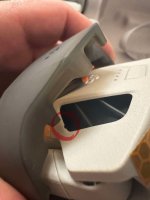
Please could anyone give advice on buying a second hand Dji mimi 4 pro it’s done 18.8 hours flight time , 126 flights and 126 km The battery circles are a mix of 19,23,14 cycles. The drone has had Dji drone refresh for the first year when new, but not renewed, so could I still get Dji drone refresh if I bought it. Would. I be better off with new or would this drone be ok, the amount of flights worried me.
It also has this small amount of wear from were the propeller holder has been took on and off.
Thanks for any info.
 

Attachments

  • IMG_0286.jpeg
    IMG_0286.jpeg
    73.8 KB · Views: 28
Looks like it’s been crashed to me?
How much is it?
I think only the original purchaser can renew the Refresh insurance?
 
Last edited:
Looks like it’s been crashed to me?
How much is it?
I think only the original purchaser can renew the Refresh insurance?
£670 with five battery's I would have get them to show me flying as I would be a bit worried,but if you think it's crashed is it best to keep away, I was not sure of the 126 flights it seems alot but not sure really.
 
Every time the drone lands it’s a flight, so don’t worry about that. So 126 flights is nothing.
The insurance is only available to the original purchaser prior to the first flight.
A crash is not a big problem, but I think I would avoid this one.
 
Preston Dragons is a Dragon Boat Racing club based in Preston, Lancashire, UK. Founded in 2016, they are full members of the British Dragon Boat Racing Association, competing in the British national league every year at events all around the country.

Dragon Boat Racing is one of the world’s fastest-growing participation sports. It’s a whole body workout that builds strength, stamina and endurance. Whether you’re looking to improve your strength and fitness, push your limits, meet new people, try something new and fun, any or all of the above, THIS is the sport for you!


Paul.
 
The Devil’s Bridge on the River Lune is situated right on the edge of the Yorkshire Dales National Park, and is considered to be one of the finest bridges in England of its date.

There is some debate over the dating of Devil’s Bridge. It appears that all the records relating to the construction of the bridge were lost during the reformation in the 16th century. It is thought that it was built by the Abbey of St Mary of York – the earliest documented dates were in 1275 and 1365 when “grants of pontage” for repair were granted.

Legend has it that the Devil appeared to an old woman, and promised to build a bridge in exchange for the first soul to cross over it. It is said that when the bridge was finished, the woman threw bread over the bridge and her dog chased over it, thereby outwitting the Devil.

On the Casterton side of Devil’s bridge there is a stone standing about 3ft high which originally bore the date 1633 and the inscription “Feare God honor the (King)”. It is said to be a Leper or Plague stone.

View: https://youtu.be/UneEIMCwWRE?si=I1-fWiDl_uLqOymo
 
Dent station is England's highest mainline station, standing as it does at 1,150 feet above sea level and providing spectacular views of Dentdale. The station building is in private ownership and after considerable refurbishment undertaken in 2006 is available as a holiday cottage!

Seen first is the village of Dent which is in fact about 4 miles away from the station, which is more in the area of Cowgill in Dentdale. The station is also about ¾ mile uphill (and a very steep climb) – so allow plenty of time if you set off from the village on foot and need to walk back!

Dent station had been unstaffed for about 3 years before the station building was closed in 1970.

In the distance you'll see Dent Head Viaduct on the Settle–Carlisle line. It is the second major viaduct on the line northwards after Ribblehead Viaduct, and is just north of Blea Moor Tunnel at milepost 251, and to the south of Arten Gill Viaduct.

View: https://youtu.be/jWSbWv6v_0c?si=nn1NUhayjDoGDlD_
 
Denham Hill Quarry, Chorley, Lancashire.

A nice little area, popular with climbers (but of course there were none when I ws there). There is a small to medium size (free) car park though it doesn't feel the safest to leave the car there, and some little walks around the site, but be aware some seriously steep / hazardous drops, so some care and caution needed. It's an old quarry that commands some of the best views of the west coast from its top.

Apparently, for you rock climbers watching, it is mostly good quality quarried gritstone. Can be sandy in places. Some fantastic routes equal to peak classics. Mohammed the Mad.... is unmissable at VS 4c as is Splash Arete at VDiff. Flick of the Wrist and End of Time are superb and tricky E2s. Generally the routes have a bold feel to them; protection can be sparse and the fixed gear is often poor.

The quarry does not deserve the poor reputation it seems to have despite the steady influx of summer visitors. There is also some very good but limited bouldering.

View: https://youtu.be/sbU5FvGxkZc?si=6RNeres2poo7YL4W
 
A 240-year-old village church will close its doors to worshippers when its priest leaves later this year (2025).

Brindle St Joseph’s, in Hoghton, will continue until the summer but then parishioners will be advised to attend alternative churches such as St Bede’s. Clayton Green and St Chad’s.

The grade-II listed catholic church dates back to 1786 and, after two centuries of hosting weddings, funerals and other services, its future use is now unclear but is to be decided by the trustees of the abbot and Ampleforth Abbey. As well as the main church, the other buildings are currently used for a wide range of community activities including scouts, music, dancing, sports and parenting groups.

The church of St Joseph and its associated buildings are of high historical and architectural importance. The church is a good example of an early nineteenth-century Catholic chapel, with later alterations and furnishings of architectural interest. The attached presbytery and cottage are buildings of architectural and historic interest in their own right, retaining a range of contemporary interior features.

A late-seventeenth or early eighteenth-century cottage where Mass is said to have been celebrated survives on the site, attached to the presbytery. The site is associated with St Edmund Arrowsmith, who was active in the area and was apprehended in Brindle in 1628. A chapel was built in 1786, and a graveyard seems to have been established at that time. The presbytery appears to be of later eighteenth-century date. The chapel was subsequently rebuilt and extended. A report by the Archdiocesan Liturgy Commission of 1985 attributes the church to Fr Laurence Hadley, but it is unclear which phase of building is referred to and the source is not given.

View: https://youtu.be/dOWx2dgjqAk?si=MLsqeWiq6GuTYUgE
 
My canal walk, from beauty, to industry, to graffiti, and home again...

Close to my home, the Lancaster Canal is a 41-mile, lock-free canal in the North West of England, connecting Preston to Kendal. It's one of the few coastal canals in the country, built along the natural contours of the land, and offers a scenic route for boating, walking, cycling, and other outdoor activities.

The canal was initially built to connect with the Leeds & Liverpool Canal and was later integrated into the national waterway network via the Ribble Link in 2002.

I took a gentle stroll along the tow path from near my home towards the city centre, passing the beautiful scenery around the waterway, and heading to the industry of the city, and under the Blackpool Road bridge, the obligatory graffiti. Then it was time to go home again...

View: https://youtu.be/Y6wY3k9chCk


Paul.
 
We have ordered a mini 4 pro combo kit. First drone and haven’t got much any idea on using it, any suggestions, for a beginner, on who to watch on YouTube. TIA
 
I must have watched a dozen or more videos, it’s surprising how much you need to know! Make sure you go somewhere that has plenty of open space and take it steady.
When you watch the videos you will see the drone has three ‘speeds’, start off with the slower speed until you have some confidence.
I always start by powering up the controller first then the drone. That way you have control from the very start.
 
  • Like
Reactions: nog
Some images from Oldox Camp (Notts) a couple of nights ago. I have had the drone a few weeks and couldn't wait to take it up there!

54584579776_d77cc5bca4_b.jpg


54584579716_4d63ec0521_b.jpg


The small conical hill (possibly a barrow) which the iron age encampment faces is called 'Robin Hood's p*** Pot'. A medieval cross once stood there, when it was removed the base of it became the 'p*** pot'.

54584891540_cea9333cdb_b.jpg
 
After processing this batch of photos, I've realised that the 48MP setting might have been a mistake - I think I'll be sticking to 12MP in future as there doesn't seem to be anything to gain from the higher resolution.
 
We have ordered a mini 4 pro combo kit. First drone and haven’t got much any idea on using it, any suggestions, for a beginner, on who to watch on YouTube. TIA
How are you getting on with the drone @nog
 
  • Like
Reactions: nog
How are you getting on with the drone @nog
We have only been out once so far, work and the weather not helping much. Watched a few videos, surprised how many settings there are but will get used to it. Biggest surprise was the speed even on the cine setting - have altered settings now. Had planned on going this afternoon but the weather warning was correct- it’s lashing it down ATM.
 
We have only been out once so far, work and the weather not helping much. Watched a few videos, surprised how many settings there are but will get used to it. Biggest surprise was the speed even on the cine setting - have altered settings now. Had planned on going this afternoon but the weather warning was correct- it’s lashing it down ATM.
Weather, annoying :mad:
 
After processing this batch of photos, I've realised that the 48MP setting might have been a mistake - I think I'll be sticking to 12MP in future as there doesn't seem to be anything to gain from the higher resolution.
That makes sense since each of the pixel sites are just multiplied by four to produce a 2x2 square the same colour the single pixel would be so I can't see how you'd get more actual detail. I've been reading discussions on the new Mavic 4 Pro which has a 25MP QB 4/3 sensor which has a 100MP mode and people are claiming the 100MP images are showing more detail than the 25MP images and the images from the Mavic 3 4/3 sensor which I can't see being the case.

What's interesting is that Olympus have a couple of 4/3 cameras with an 80MP QB sensor but they advertise them as 20MP cameras, not 80MP. Similarly the A7SIII uses a 48MP QB sensor but Sony make no mention of it and the camera is sold as a 12MP sensor, it was only discovered the sensor was QB on a teardown. DJI on the other hand if you look at the Mavic 4 page boast the 100MP sensor as its main headline feature.

Looking at the initial QB announcements the main advantages were meant to be better dynamic range and high iso since the sensor could use the additional pixels to get more information however looking at results from the smaller QB sensors and the 4/3 and FF QB sensors, they don't seem to show any advantage over conventional sensors and usually behind. The big advantage seems to be as DJI have found being able to boast super high resolutions which many people think makes for a better camera even if it doesn't. I've no experience with the QB sensors myself so I'm curious how people have found the sensor technology.
 

Becconsall Old Church, 1764​


Becconsall Old Church is a redundant church in the village of Hesketh Bank, Lancashire, England. It is recorded in the National Heritage List for England as a designated Grade II listed building, and is in the care of the Churches Conservation Trust. Located down the lane to a large boatyard on the River Douglas, it is a lovely red brick building with a stone slate roof, constructed in 1764 to replace an earlier chantry chapel on this site beside the River Douglas. The church is built to a two-bay plan punctuated by a small sanctuary at the east end. There is no tower, just a west bellcote and entry is through a small west porch.

The simply furnished interior would be flooded with light from its large Georgian windows, but it is very plain, with a small west gallery and tiny chancel. There is a vestry and the bellcote, contains a single bell brought back when the church was repaired after coming into the Churches Conservation Trust's care.

A font, intricately if somewhat crudely carved, was also returned having been rescued during the time that the church lay derelict and forlorn. Two pews, the pulpit, lectern, altar and panelling also survive.

A local resident told me that the church only opens it's doors once a year.The first church here was built in the 16th century, but it was later used as the private chapel of the Becconsall family. For those who are familiar with different styles of brick construction, All Saints uses English garden wall bond.

View: https://youtu.be/2-wqDty-Ie4?si=5ZxmbGtLtffCaBTl

Paul.
 
29mph gusts on the hilltops over Langho was always going to test the little Mini 3 pro drone! But I thought... why not do it anyway!

The Tin Man Sculpture stands as a remarkable testament to creativity and artistry within the quaint village of Langho, Blackburn. This enchanting piece, inspired by the beloved character from 'The Wizard of Oz,' embodies a delightful blend of whimsy and craftsmanship. Visitors are drawn to the sculpture not only for its aesthetic appeal but also for the profound storytelling it encapsulates, reflecting themes of courage, heart, and humanity. The surrounding area offers a picturesque backdrop, perfect for leisurely strolls and photography.

Whether you are an art aficionado or simply seeking a charming spot to unwind, the Tin Man Sculpture promises a memorable visit filled with wonder and inspiration.


View: https://youtu.be/ASRKXo9U-bA?si=68wn7EM5KJ7UjUwC
 
Surprisingly stable considering the wind strength (y)
 
Weather, annoying :mad:
Well had our first bump a few days ago. Had started landing onto our hand rather than carry a mat/ landing thing around. Not sure what happened but ended up falling onto grass from about 1.5 metres. Broken front axis arm but ok apart from that, cost just over a tenner to get a new one. All fitted and now working ok(Thanks Meg for repair job - probably too fiddly for me)

Anyway we are back to using 4 square bits of floor vinyl joined with gaffa tape which is ok ish, is it worth getting a proper landing pad?
 
Well had our first bump a few days ago. Had started landing onto our hand rather than carry a mat/ landing thing around. Not sure what happened but ended up falling onto grass from about 1.5 metres. Broken front axis arm but ok apart from that, cost just over a tenner to get a new one. All fitted and now working ok(Thanks Meg for repair job - probably too fiddly for me)

Anyway we are back to using 4 square bits of floor vinyl joined with gaffa tape which is ok ish, is it worth getting a proper landing pad?

I'd get a proper one, they fold away into a nice size and always handy to have for if you can't land on a decent flat area.
 
  • Like
Reactions: nog
St. Peter’s Church in Inskip, Lancashire, was built in 1848, financed by the Earl of Derby and William Hornby. It’s a Grade II listed building. The original church was built with squared rock-faced limestone and a slate roof, with sandstone dressings. A chancel and tower were added in 1925 by Austin and Paley.

The church’s structure includes a nave, lower chancel, south porch, and a north transept with a tower to its west. Architectural features include buttresses with offsets, lancet windows with angle shafts, a wheel window, and a bellcote with a trefoiled opening and a cross finial. The tower is three stages high with diagonal buttresses and a spire that has gablets and lancet openings.

St Peter’s Church has been a central part of the Inskip community since its founding. he churchyard cemetery holds numerous upright markers and a wall surrounds it. A tall cross marker in the churchyard bears an inscription commemorating the local men who lost their lives in World War I.

The area surrounding Inskip also has other historical significance, including a military radio communications center developed on the former RNAS Inskip airfield, known as “HMS Nightjar” during World War I and World War II.

View: https://youtu.be/qPTMESZrGPc?si=9MuDKtY-J_5pqgqU


Paul.
 
St. Peter’s Church in Inskip, Lancashire, was built in 1848, financed by the Earl of Derby and William Hornby. It’s a Grade II listed building. The original church was built with squared rock-faced limestone and a slate roof, with sandstone dressings. A chancel and tower were added in 1925 by Austin and Paley.

The church’s structure includes a nave, lower chancel, south porch, and a north transept with a tower to its west. Architectural features include buttresses with offsets, lancet windows with angle shafts, a wheel window, and a bellcote with a trefoiled opening and a cross finial. The tower is three stages high with diagonal buttresses and a spire that has gablets and lancet openings.

St Peter’s Church has been a central part of the Inskip community since its founding. he churchyard cemetery holds numerous upright markers and a wall surrounds it. A tall cross marker in the churchyard bears an inscription commemorating the local men who lost their lives in World War I.

The area surrounding Inskip also has other historical significance, including a military radio communications center developed on the former RNAS Inskip airfield, known as “HMS Nightjar” during World War I and World II.


Paul.
Did you fly your drone inside the church Paul?
 
Apologies for any ignorance in advance, I know almost nothing about drones other than I want under 250g and I think I need to get a licence of some sort (Scotland).

That being said, could anyone recommend me a drone please? Primarily it's only for a few flights to get a better view of some things nearby but with limited access on the ground, so I've only been looking at around £100-150 Amazon type stuff. But whilst many reviews seem good, I've seen YouTube videos where the view on the phone can freeze up pretty quickly suggesting short range and also the cameras can seem bit naff. Are there any decent budget ones?

Another consideration, but please don't immediately jump on this option, is investing a little more for a decent one which I could probably use in Arran a lot. However, I only really got to Arran once a year, so I'd probably only consider a high spec drone if used - but could the battery be knackered?

Proper novice with this, so any advice would be greatly appreciated.
 
Take a look at the DJI Neo, look at the Fly More kit. It will get you started and it takes reasonably good images.
It’s a bit more than your budget but might be worth considering.
Take a look also at used drones.

And check this website.
 
Last edited:
Back
Top