The Fabulous Fuji X owners thread

Just a simple macro/close-up Fujigraph of a Yellow Primula. With just a little bit of forward tilt added to the lens panel on this snap to increase the DOF.

X-T1, Schneider 120mm Makro-Symmer Lens, (Adapted Via A Self Made Lens Panel & Focusing Ext Tubes) 1/160th @ F11, ISO-200, Available Light.
Yellow Primula (1)-02058 by G.K.Jnr., on Flickr

:ty: for looking., (y):fuji:

George.
Nice tones George, and really like the detail in the top petal, beautifully lit.
 
I have been considering going down the Fuji route for a while now as an eventual replacement for my Canon 5D2 and I finally got to handle both the X-20 and X-T2 in Jessops.
I must say, I much preferred the build quality and feel in my hand of the X-T2 which I kinda expected, but maybe not so much of a difference.

The trouble is I will be looking at buying a used model either way, and with my budget that means I am looking at either a X-T1 or a X-20, suddenly the choice seems much more difficult. Newer/better sensor and subsequent image quality, or better build/controls? I saw the Xpro-3 is now out, I don't really know where these sit along the other two product lines, but could it hint towards the release of an XT-3? If so the eventual drop in value of used X-T2's would make my choice a lot easier! [emoji38]
I've never had any issue of build quality with my xt10. I'd go for the xt20 in your shoes, much more bang for buck, unless you REALLY need the weather sealing...
 
Possibly a bit of an obscure question...
Has anyone ever tried to run a bracketing sequence when on Bulb mode, and if so what results did you get?

Since the 'normal' bracketing works by adjusting shutter speed, this will not work, given that the SS will go up to 15mins in Timer mode, I don't see the requirement for bulb bracketing. I set offs 15min exposure in Liverpool Cathedral not realising that it was still a 9 bracket sequence, I abandoned after one shot as I didn't have a spare 2 hours!!!

If you were on ISObracketing then in bulb mode might work
 
I have been considering going down the Fuji route for a while now as an eventual replacement for my Canon 5D2 and I finally got to handle both the X-20 and X-T2 in Jessops.
I must say, I much preferred the build quality and feel in my hand of the X-T2 which I kinda expected, but maybe not so much of a difference.

The trouble is I will be looking at buying a used model either way, and with my budget that means I am looking at either a X-T1 or a X-20, suddenly the choice seems much more difficult. Newer/better sensor and subsequent image quality, or better build/controls? I saw the Xpro-3 is now out, I don't really know where these sit along the other two product lines, but could it hint towards the release of an XT-3? If so the eventual drop in value of used X-T2's would make my choice a lot easier! :LOL:

I swapped my X-T1 out for an X-T20 with grip, which actually makes it bigger than the X-T1 :) Obviously it's not weather sealed and the viewfinder is smaller (which I prefer anyway, weirdly), but it has a bigger buffer and the newer sensor and processor. All three are great cameras :)

The big advantage of the X-trans III cameras are faster shooting i.e. more responsive, better control over high ISO noise management, greater resolution, sharper RAW files, snappier autofocus (although the difference isn't massive in that respect). The cameras with the latest technology are the X-Pro 2, X-T2, X-T20 and X-E3.

The Fuji refurb shop has X-T1 bodies for £499, X-T20 for £639 (or £699 with 16-50mm kits lens which is worth £100 used).
 
I swapped my X-T1 out for an X-T20 with grip, which actually makes it bigger than the X-T1 :)

Would you like to measure that against my X-T1 with battery grip? :p You can get third party battery grips for the X-T1 for about £50, I have a Fuji one but I'm sure the cheaper ones do the same job. The great thing about the battery grip is not only extra comfort [IMO] but the camera uses the battery in the grip first, so if you keep an eye on that and keep switching to spares through the grip, you never really have to take it off ... bar times you actually want the smaller form factor.
 
@Sniffer Lenses for hire are on here. Excellent feedback.
@StewartR is the man you want.
Satisfaction guaranteed - and he hasn't paid me to say that!
Thanks for the recommendation. Have just hired a 10-24mm for the long weekend in Wales I have coming up, which hopefully will tell me whether I really really want one, or just really want one!
 
Would you like to measure that against my X-T1 with battery grip? :p You can get third party battery grips for the X-T1 for about £50, I have a Fuji one but I'm sure the cheaper ones do the same job. The great thing about the battery grip is not only extra comfort [IMO] but the camera uses the battery in the grip first, so if you keep an eye on that and keep switching to spares through the grip, you never really have to take it off ... bar times you actually want the smaller form factor.

Haha, the X-T1 wins that fight hands down! But if you just wanted a camera that feels like an ungripped X-T1, well you get my drift :D
 
Haha, the X-T1 wins that fight hands down! But if you just wanted a camera that feels like an ungripped X-T1, well you get my drift :D

Yeah course :D I do like the idea of the XT20, it's a good looking little camera, but there's that bit of a dinosaur still in me that likes something chunkier to hold. And even with the battery grip the X-T1 is still teensy compared to what I used to use, the D800E - which I also had a grip for. It was ridiculous with battery grip on and a hefty lens. I certainly do not miss that, and realise that I must have looked ridonkulous with that set up when just out and about shooting. The X-T1 with grip and a tidy lens, gets the odd look of curiosity, but in general you get left alone more :) There's a pic of me somewhere walking through NYC at night, and when I see it I want to slap myself for 2 reasons. 1. I'm holding the D800E with a Sigma 35 1.4 attached in one hand, casually, without a strap and 2. I'm holding a cigarette in the other! I did give them up about a month later though ;)
 
Last edited:
X-T2 question. I haven't got one yet otherwise I guess I could answer much of this by myself.

Will I need a remote intervalometer for star trails or does the built in one have good functionality? Reason I ask is that on my Nikons I would typically use a remote for landscape shots and as a timer. I normally use an L-bracket, many of which make using a remote cable awkward and the XT2 looks like it will have the same problem. So my thought is to use the internal timer for astro and just use a screw in cable release the rest of the time. Sound practical?
 
X-T2 question. I haven't got one yet otherwise I guess I could answer much of this by myself.

Will I need a remote intervalometer for star trails or does the built in one have good functionality? Reason I ask is that on my Nikons I would typically use a remote for landscape shots and as a timer. I normally use an L-bracket, many of which make using a remote cable awkward and the XT2 looks like it will have the same problem. So my thought is to use the internal timer for astro and just use a screw in cable release the rest of the time. Sound practical?

Using a remote in the mic/remote socket is a bit tight with an L plate, but the other type with the micro usb work ok
 
Using a remote in the mic/remote socket is a bit tight with an L plate, but the other type with the micro usb work ok

Cheers. Not knowing the camera all that well, would I be right in assuming that the micro USB port is in the same sort of place as the 2.5mm port but a little less obscured by a bracket?
 
Cheers. Not knowing the camera all that well, would I be right in assuming that the micro USB port is in the same sort of place as the 2.5mm port but a little less obscured by a bracket?

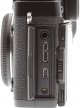
You are correct in your assumption, its below the 2.5mm port, just use the lower section of the USB 3 port
Fuji remote is a bit pricy, Jackthehat do a compatible one for under a tenner

Z-fuji-xt2-ports.jpg
 
Last edited:
You are correct in your assumption, its below the 2.5mm port, just use the lower section of the USB 3 port
Fuji remote is a bit pricy, Jackthehat do a compatible one for under a tenner

View attachment 113689

Many thanks. Can see how the USB option would help. I suppose I still just need clarify whether I'll need a remote at all or whether my threaded cable release is going to do the trick.
 
X-T2 question. I haven't got one yet otherwise I guess I could answer much of this by myself.

Will I need a remote intervalometer for star trails or does the built in one have good functionality? Reason I ask is that on my Nikons I would typically use a remote for landscape shots and as a timer. I normally use an L-bracket, many of which make using a remote cable awkward and the XT2 looks like it will have the same problem. So my thought is to use the internal timer for astro and just use a screw in cable release the rest of the time. Sound practical?
I've done star trails with an X-T2 both with a wired remote and with the intervalometer.
The in built intervalometer does work well, but if you are a pixel peeper (there's a lot on here:eek:) you might find that you can just spot the gaps in the shots. Don't know what software you use but I'm on Star Stax. Using a wired remote locked into continuous shooting gives no discernible gaps. It seems to take the intervalometer a second or two to change over between shots. It really depends how fussy you are.
This was taken with the intervalometer and you can see gaps in the trails. (Of course it may be something else causing the gaps!)

Ribblehead
by Frank Yates2010, on Flickr
whereas this was taken with a wired remote and there doesn't appear to be the same problem.

Formby Point
by Frank Yates2010, on Flickr

The L bracket question is a tricky one. If you use the camera in landscape mode then you should have no problems regardless of using the mic socket or the micro USB post. Both will fit in but both are a bit awkward to either insert or remove. There's not a lot of space for your fingers! Some brackets have a cut out on the upward piece to help with this.
The real problem arises if you use your L bracket in portrait mode. The you have the very real problem of where to put the cables. A genuine Fuji remote is of little use. There is a big ballast resistor near to the socket and this just won't allow you to use portrait mode at all. I'm using an old Canon RS60-E3 plugged into the mic socket. This has a very shallow 90 degree connector. It will allow use in portrait mode but it is a very tight squeeze and you have to be a little bit "forceful". The connector fits OK but the little door gets in the way. I adapted my L plate to give double clearance so that problem doesn't recur, but you need to be a bit creative and practical to do that!

I'm assuming that you will be using the £20/30 brackets from everyone's favourite auction site. You can completely get round the question of use in portrait mode by buying the Kirk or RRS brackets. These come with a sliding bottom section so allowing you to increase the gap between the camera and the top of the tripod. It solves the problem, but you may have to recompose if switching between landscape and portrait modes. Plus there's the extended bracket that you have to remember to slide back into place after use. These are reputedly good stuff, but at prices of approx £200 last time I looked they don't come cheap.

 
OOPS, forgot to mention the threaded release. I've not tried that but would locking the shutter open for a longish exposure cause more hot pixels than a series of continuous single exposures. The Ribblehead shot about was 2 hours long, the one below was just an hour. Worth a try?
 
I've done star trails with an X-T2 both with a wired remote and with the intervalometer.
The in built intervalometer does work well, but if you are a pixel peeper (there's a lot on here:eek:) you might find that you can just spot the gaps in the shots. Don't know what software you use but I'm on Star Stax. Using a wired remote locked into continuous shooting gives no discernible gaps. It seems to take the intervalometer a second or two to change over between shots. It really depends how fussy you are.
This was taken with the intervalometer and you can see gaps in the trails. (Of course it may be something else causing the gaps!)

Ribblehead
by Frank Yates2010, on Flickr
whereas this was taken with a wired remote and there doesn't appear to be the same problem.

Formby Point
by Frank Yates2010, on Flickr

The L bracket question is a tricky one. If you use the camera in landscape mode then you should have no problems regardless of using the mic socket or the micro USB post. Both will fit in but both are a bit awkward to either insert or remove. There's not a lot of space for your fingers! Some brackets have a cut out on the upward piece to help with this.
The real problem arises if you use your L bracket in portrait mode. The you have the very real problem of where to put the cables. A genuine Fuji remote is of little use. There is a big ballast resistor near to the socket and this just won't allow you to use portrait mode at all. I'm using an old Canon RS60-E3 plugged into the mic socket. This has a very shallow 90 degree connector. It will allow use in portrait mode but it is a very tight squeeze and you have to be a little bit "forceful". The connector fits OK but the little door gets in the way. I adapted my L plate to give double clearance so that problem doesn't recur, but you need to be a bit creative and practical to do that!

I'm assuming that you will be using the £20/30 brackets from everyone's favourite auction site. You can completely get round the question of use in portrait mode by buying the Kirk or RRS brackets. These come with a sliding bottom section so allowing you to increase the gap between the camera and the top of the tripod. It solves the problem, but you may have to recompose if switching between landscape and portrait modes. Plus there's the extended bracket that you have to remember to slide back into place after use. These are reputedly good stuff, but at prices of approx £200 last time I looked they don't come cheap.


Many thanks. I can live with tiny star trail gaps so I would imagine the internal intervalometer would work for me. The £200 brackets are really why I asked this question. I'm just budgeting at this point in time but obviously if I'd need a £200 bracket as oppose to an £20 one, that has some bearing. I think from what you have described, I'd find a plug in remote a bit of a pain whatever bracket I use so looks like I'm leaning towards cheapo ebay bracket and threaded cable release when needed.
 
OOPS, forgot to mention the threaded release. I've not tried that but would locking the shutter open for a longish exposure cause more hot pixels than a series of continuous single exposures. The Ribblehead shot about was 2 hours long, the one below was just an hour. Worth a try?

The threaded release would mainly be for 'normal' landscape stuff though locking it down for repeated 30sec exposure may have been one use. It was never really about longer single exposures.
 
It's the Dremels raison d'etre, remodelled a few of those cheap L Brackets since I went Fuji.
Quite good fun especially making the handgrip a bit more anatomical, might not attack the RRS ones with such gusto
 
Yes. Even my adapted bracket can be a bit of PIA to use. The problem is the size of the camera. There just isn't the space available.

I'll be interested to see if one long exposure with the threaded remote works. Would you use bulb mode? What settings would you use? Is there not a danger of over exposure? If you are doing continuous shots each individual exposure can be set more or less correctly. How would you expose for a one hour shot?
 
Sorry. Your post came in whilst I was typing.
I use a threaded release for my normal long exposure landscape shots. Anything up to 10 minutes. Works just fine. Easier than using the side ports.
 
Can't quite understand why Olympus (on the new EM1 MK II), is the only company to have realized that when shooting in portrait (with or without an L-Bracket) that it's better to have the remote port on the right side of the body. The Em1 II with it's small flap just above the card door cover is perfectly positioned so that when using an L-Bracket, the bracket can be close to the body and doesn't restrict the use of a remote release (electronic version that is).
 
Can't quite understand why Olympus (on the new EM1 MK II), is the only company to have realized that when shooting in portrait (with or without an L-Bracket) that it's better to have the remote port on the right side of the body. The Em1 II with it's small flap just above the card door cover is perfectly positioned so that when using an L-Bracket, the bracket can be close to the body and doesn't restrict the use of a remote release (electronic version that is).

It does seem a little odd. Nikon Pro bodies have the socket on the front. That works okay but still needlessly fiddly in comparison to just having a socket somewhere well away from that area.
 
I suppose it depends how open you use portrait mode. Fuji do an official grip that is just an arca plate along the bottom of the camera. No upright bit and even if you buy a cheapo Chinese version you gave the option not to fix the upright bit. Depends if you are happy to have the camera hanging off the side of the tripod for portrait orientation.
 
Most tripod heads allow the camera to be positioned into portrait mode, whilst still on the head in a landscape format, so whats the problem??

Trying to calculate massive length long exposures is difficult, mainly because the light levels can change quite a bit during the exposure. I would have thought that for star trails, an invalometer is the way to go, at least you can see on a regular basis what is happening.
 
I suppose it depends how open you use portrait mode. Fuji do an official grip that is just an arca plate along the bottom of the camera. No upright bit and even if you buy a cheapo Chinese version you gave the option not to fix the upright bit. Depends if you are happy to have the camera hanging off the side of the tripod for portrait orientation.

Nope. Fully sold on L-Brackets. Wouldn't be without one now. This was really about just understanding whether I was going to need to fart on with the cable release and chopping stuff up or buying a super expesnive, better engineered solution. I'm liking the fact that the answer appears to be that a threaded release should suffice. Far more convenient. :)
 
Most tripod heads allow the camera to be positioned into portrait mode, whilst still on the head in a landscape format, so whats the problem??

Trying to calculate massive length long exposures is difficult, mainly because the light levels can change quite a bit during the exposure. I would have thought that for star trails, an invalometer is the way to go, at least you can see on a regular basis what is happening.

I use a geared head normally and it doesn't do portrait. But anyway, I love L brackets. So quick to change and keeps the weight of the camera through the centre of the tripod rather than offset to one side.

There's been some confusion somewhere along the line. I've not actually ever mentioned doing super long exposures. Think there was a crossed wire or two. :)
 
Last edited:
Sorry, but I thought star trails meant super long exposures:eggface:

I typically would just stack shorter exposures hence why I wanted to know how effective the intervalometer was. Anyway, that aside, this has all been very helpful :)
 
I use a geared head normally and it doesn't do portrait. But anyway, I love L brackets. So quick to change and keeps the weight of the camera through the centre of the tripod rather than offset to one side.

There's been some confusion somewhere along the line. I've not actually ever mentioned doing super long exposures. Think there was a crossed wire or two. :)

Which geared head?
 
Which geared head?

It's a 410. Your question piqued my interest to see if I've missed anything so having googled an image, I can see that it can be flipped vertically but it seems to do so puts it right at the limit of its travel in that plane so could only fine tune angle one way from there. Mine has the added complication of being a bit modified to now have a permanently fixed pano head installed which are terrible at holding cameras sideways as any offset load has them rotating unintentionally.
 
It's a 410. Your question piqued my interest to see if I've missed anything so having googled an image, I can see that it can be flipped vertically but it seems to do so puts it right at the limit of its travel in that plane so could only fine tune angle one way from there. Mine has the added complication of being a bit modified to now have a permanently fixed pano head installed which are terrible at holding cameras sideways as any offset load has them rotating unintentionally.

My 410 when I had it would go vertical, remember you can angle the tripod legs to help as well.
 
My 410 when I had it would go vertical, remember you can angle the tripod legs to help as well.

Maybe I'll have a little play around with it tonight. But I really love the ease of an L-Bracket. Will take some persuation to move away from them :)
 
Back
Top