The Fabulous Fuji X owners thread

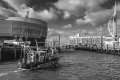
Wasn't it Mick Jäger in some film with a little tank?
 
Brian,

You could host/hold a photographic exhibition with these images.........along with the other amazing photographers who've displayed magnificent images here over the past 3/4 pages.........and more.

Truly inspirational.
 
Tower Bridge Sunrise by Brian M, on Flickr

X-T10, 18-55mm
Yes, this is a cracker too. A touch of the HDR about the tonality without going overboard, very tasteful!

As regards f/22, you will see a bit of softening at that aperture with most lenses due to diffraction limits. It's not too bad on the 18-55, see http://www.photographyblog.com/reviews/fujifilm_xf_18_55mm_f2_8_4_r_lm_ois_review/sharpness_1/ for some images, but for big landscape scenes, I think it might be better to only go as far as f/16, which should still give you nice starbursts with minimal loss of resolution. If you really need the depth of field you can focus stack on a tripod, although I've never bothered yet :-)
 
What is the reason that folk shoot at f22 rather than shooting at the sweet spot and using hyperfocal distance (other than to try and get a slow shutter or starbursts)?
 
You've outlined the two reasons why I'd shoot at f22 (and probably the only two reasons!!)
And for the slow shutter reason I'd take one at f/22 plus one at a sharper aperture and blend as needed, provided the scene isn't changing too quickly. One shot for the smooth elements and another for the sharp. Having said that, I only started playing with ND filters recently...
 
And for the slow shutter reason I'd take one at f/22 plus one at a sharper aperture and blend as needed, provided the scene isn't changing too quickly. One shot for the smooth elements and another for the sharp. Having said that, I only started playing with ND filters recently...
interesting approach. I just use my 10 stopper but you could argue this degrades the image more than shooting at f22.
 
Tbh, nobody is noticing much difference in an image shot at f/16 or f/22 - bar pixel peepers. Once the end result is an overall pleasing image to view, who cares about a little diffraction?
 
Tbh, nobody is noticing much difference in an image shot at f/16 or f/22 - bar pixel peepers. Once the end result is an overall pleasing image to view, who cares about a little diffraction?
Depends how large you might want to print it. But for posting online, it doesn't matter I agree.

interesting approach. I just use my 10 stopper but you could argue this degrades the image more than shooting at f22.
Well so would I probably, but you never know, in low light that might be too much and f/22 just right...I was just trying to imagine a situation where I'd do it. And yes, with the stopper I'd quite likely take one with and one without if I had my wits about me.
 
So would f/16 always be a lenses "sweet spot" ? Is there a rule of thumb for this ? I don't wanna get into a mega discussion over this, I always thought f/11 is meant to be a lenses sweet spot.

I dunno.... (?)
 
So would f/16 always be a lenses "sweet spot" ? Is there a rule of thumb for this ? I don't wanna get into a mega discussion over this, I always thought f/11 is meant to be a lenses sweet spot.

I dunno.... (?)
Different for each lens.
 
Tbh, nobody is noticing much difference in an image shot at f/16 or f/22 - bar pixel peepers. Once the end result is an overall pleasing image to view, who cares about a little diffraction?
TBH often I can see a difference in mine viewed at normal sizes. I guess it depends on viewing medium/resolution.
 
Different for each lens.
Yep, what he said. If you don't know, f/8 is a reasonable bet, but some lenses hit their best as early as f/5.6, possibly f/4 for some very fast lenses if memory serves correctly. But it's not worth being too exact about, usually. Basically, they nearly all benefit from a couple of stops of stopping down, but after that it doesn't change too much until you start to encounter diffraction issues. So if you want the most depth of field without diffraction issues, it's probably at f/11 or f/16. Disclaimer: all this is very "rule of thumb" :-D

Edit: I should add that this is for FF or APS-C lenses. Once you go to MF or LF, lenses can be stopped down much further without loss of sharpness. Hence Edward Weston and Group f/64
 
Last edited:
What's an unti?


Depends on the lens + type of shot, you may notice it in landscapes more, but some macro photographers shoot at silly f stops. I've seen amazing images at f/32 and f/64

In general I think most standard lenses reach their peak at f/8
 
Depends on the lens + type of shot, you may notice it in landscapes more, but some macro photographers shoot at silly f stops. I've seen amazing images at f/32 and f/64

In general I think most standard lenses reach their peak at f/8
Thanks, but that sounds more like what f stop you can use and still get sharp images. Still don't know what an unti is? I've googled it and come up with nothing. Is it just a Nuzikism? ;)
 
Thanks, but that sounds more like what f stop you can use and still get sharp images. Still don't know what an unti is? I've googled it and come up with nothing. Is it just a Nuzikism? ;)

For intense macro those really tight apertures allow more DOF, when you're in that close it can be razor thin. The only other real option is stacking.

I have no idea what a unti is either :D
 
For intense macro those really tight apertures allow more DOF, when you're in that close it can be razor thin. The only other real option is stacking.

I have no idea what a unti is either :D
Yeah, sorry for the confusion. I do actually know all about apertures and DOF etc, and I also do shoot a bit of macro and have used really high f-numbers. It was the unti thing that confused me, which confused me even more when you started referring to f-stops and DOF in response to my question about unti ;) :lol:
 
Back
Top