The demise of the 'asset'

  • Thread starter Thread starter Deleted member 68495
  • Start date Start date
D

Deleted member 68495

Guest
Out of curiosity, I watched an auction of a Nikon D810 (because I own one), it sold for £549, that's a camera that six years ago sold for over £2000. In the very early 80's I owned a Nikon FM2n film camera, I think I paid about £110 for it (although I'm not entirely sure and some 23 years later I sold that camera on eBay for, yes, £110. Ok there is inflation to be taken into account but nevertheless, that was good value. When I see things like the D810, it makes me wary about spending on new camera equipment, especially the actual camera. Even lenses don't really hold the value that one might expect although I'm not sure why. Manufacturers come out with new models all the time and second hand value of the previous one plummets -- yes that is the way of the world I know.

Take the Nikon Z7, when released it cost not far off three grand but was superseded by the Z7ii a tiny bit over two years later so second hand ones now go for a little over a thousand; that's a big drop.

Fifteen years ago, I bought a Yanagisawa saxophone for two thousand pounds, with the right climate for its sale now? about £2000, despite one new model being introduced in the meantime -- that is my only asset. Oh, apart from my tiny house which I bought 20 years ago for £60K and is now valued at £235K - should have bought two!

It all makes me wonder if there is any photographic equipment that holds its value for years or should even the highest quality gear be, in the end, considered disposable.
 
I look at value differently.

By coincidence, I bought a D810 on here for about £1500 in early 2016 (or 2015 - can’t recall exactly). Someone else had bought it new a few months earlier for closer to £2000 so I got a good deal.

I’ve taken a lot of pictures with it, but sold it via Ffordes 2 weeks ago and got about £700 my way. So yes, deprecation costs are part of the game, but the value I got out of using it and the pictures I took with it more than compensated for the monetary loss. The occasional print sale and stock agency sales from images taken with the camera definitely help bridge the gap also.

I’ve now got Nikon Z cameras. I know full well they’ll depreciate in monetary value, but if I was concerned about it, I’d go and take up a different hobby. It’s just a cost of admission.
 
I think your dataset is skewed to strengthen your argument.

Your FM2n would have sold for most of the time you owned it at a loss. Taking into account inflation, it still is a loss. As is the saxophone.

Musical instruments are a unique market, where some items become ‘classics’ and increase in value beyond a certain age, but for the most part, if you bought a cheap instrument 30 years ago it’s worth v little now. If you were lucky enough 30 years ago to predict a future trend; you’ll be quids in.

Cameras have never really held their value, digital magnifies this as the technology moves so fast.

But despite what the defenders of the status quo will tell you about property not being ‘risk free’. The statistics tell me that a house in this country will double in value every 6-10 years, it’s very rare that won’t beat inflation.
 
Everything you buy new usually results in a loss . There is sometimes a profit if you buy used at the right price
 
This comes up on the guitar forums I frequent, too. A lot of people look at it as a rental, which I quite like: using @viewfromthenorth's example, buying a D810 for £1500 in 2016 and selling it in 2023 for £700 equates to a rental cost of less than £3 per week, which is an absolute bargain!
Only if you use it every week ;)
 
I've always taken the view that when money is spent on a consumer good it is lost. Spend it, forget about it. If I'm worrying about depreciation I probably can't really afford something in the first place.

With that in mind I use things until they are knakcered or I no longer have a use for them. I traded my last car in for less than I got for my last camera!
 
Re guitars, I bought my Strat in 1979 for £330 pounds. If I were to sell it I reckon I'd get between £1000 and £1200. So it looks like a good deal. But £330 1979 pounds are now, apparently, worth £1493. So still a loss. That said, I don't plan on selling it - it can still do everything I need of it. The boy can sell it or keep it when I'm gone. :-)
 
Pretty much the same for most things, especially with anything tech related.

Cars on the other hand are hilarious.

I used to own a Honda Prelude bought it for a bargain price of £800 as it had an issue were it would just cut out while driving. Was a simple fix they had a well known issue with the ignition that would cause this once they were a certain age. Part was about £60 and I fixed it myself. Kept the car for a couple of years before moving it on for £2500.

Roll on another couple of years and I noticed it was up for sale again, on a bit of a whim I offered the guy £3500, it was up for sale at £4,000, he turned me down as he got his asking price from someone else.

About 3 months ago I noticed it was up for sale again, this time for £15,000 and was gone within a couple of days.. To be fair its still in great nick, still has low miles and there aren't many genuine unabused Montegi Preludes around anymore. Sort of kicking myself for not just tucking it away somewhere for a few years.
 
Last edited:
Businesses amortize and insure their capital assets over a period of time to take advantage of tax breaks. At the end of the period, while the book value will be zero, the item will almost certainly have a residual value.

Amateur equipment is better considered as of zero book value from the get go, but will also have a recoverable residual value. This is not something that you should rely on, as it will always be a depreciating asset.
 
Another factor is a good camera in 1960, was still a good camera in 1980, the camera you buy today will be out of date in a year and in two or three years the difference compared to the new model will be vast. Now your good camera in just a few years is average if your lucky. Thats without the fact digital cameras on average take a lot more images over their life.
Think back, many people would have a film in their camera for months before developing it. Now we think nothing of shooting more images than a roll of film of a single sunset, or the new fancy wheels on our car. I wouldn't have done that back in the day.
 
Pretty much the same for most things, especially with anything tech related.

Cars on the other hand are hilarious.

I used to own a Honda Prelude bought it for a bargain price of £800 as it had an issue were it would just cut out while driving. Was a simple fix they had a well known issue with the ignition that would cause this once they were a certain age. Part was about £60 and I fixed it myself. Kept the car for a couple of years before moving it on for £2500.

Roll on another couple of years and I noticed it was up for sale again, on a bit of a whim I offered the guy £3500, it was up for sale at £4,000, he turned me down as he got his asking price from someone else.

About 3 months ago I noticed it was up for sale again, this time for £15,000 and was gone within a couple of days.. To be fair its still in great nick, still has low miles and there aren't many genuine unabused Montegi Preludes around anymore. Sort of kicking myself for not just tucking it away somewhere for a few years.


I read an article in one of the classic car mags a few years ago which delved into the costs involved in keeping a car in perfect condition. By the time you factor in climate and humidity controlled storage, maintenance, insurance etc., there's very rarely a profit to be made. The exceptions being ultra exotica sold on brand new, or even as a position on a waiting list (and that can be a one shot deal since they all have "sh*t lists" of customers who profiteer.)
 
Just regarding modern camera kit being out of date in a year or two. I don't see this at all. I think out of date is the wrong term as the kit can still work and do everything the user wants. My A7 didn't stop working when the A1 came out and whilst the A1 can do things that the A7 can't the A7 still does everything it did on the day I bought it.

So lets not say that kit which still works is out of date. Lets just say that some of its performance parameters are superseded by newer models and that new models also sometimes bring new abilities :D

It's also worth remembering that some basic things, like DR, aren't leaping forward these days and are more inching forward if moving forward at all and indeed in some instances newer kit may actually take a backward step in one area like DR to take a step forward in another like frames per second.

I suppose the big changes in my lifetime have been the move from MF to AF, from film to digital and from DSLR to mirrorless. After mirrorless and all that brings I haven't seen another big leap, rather more of an inching forward but some would argue that the increased abilities of the latest AF systems is a big leap.
 
Last edited:
I read an article in one of the classic car mags a few years ago which delved into the costs involved in keeping a car in perfect condition. By the time you factor in climate and humidity controlled storage, maintenance, insurance etc., there's very rarely a profit to be made. The exceptions being ultra exotica sold on brand new, or even as a position on a waiting list (and that can be a one shot deal since they all have "sh*t lists" of customers who profiteer.)

One of my favourite things on TV is "Bangers and cash." They very often say that you'll never get your money back restoring a car and that's without thinking about the hours of labour needed but of course people do it for the love of it.
 
Par for the course with digital really. My film cameras/lenses have all appreciated in the last 10 years so it evens out, but then again colour film prices have also tripled. I've had some lenses and bodies triple in value over the years. Missed a trick in not hoovering up all the Contax T2s/3s I could find though!
 
Last edited:
I've had some lenses and bodies triple in value over the years.
The same happened to me.

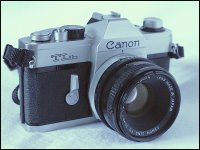
I bought a Canon TLb, a FTQL and an AE1, all with lenses, for around £15 each around 2007. A few years later, I sold the FTb for £40 and I still have the other two. Of course, they don't seem quite so cheap when you factor in film costs... :naughty:

Camera Canon FTB G2 1020526.JPG
 
It's just like when most amateurs call their equipment 'investments'.... yes, you invest money but more often that not you don't get back what you paid....

buying cars is the same. most depreciate once you take it out of the garage (that's the VAT gone straight away)...but as a family we always got the basic model and the only optional extra we would spend on would be the metallic paint. You might spend £10000 on the car and upgrade the stereo, paintwork and wheels for a £1000 but you would not get that back when you came in to part exchange the car (you'd be offered the same as the standard model.. but when it comes to buying the same car used there would always be a premium)...

as my mum says, shrouds have no pockets.
 
It's just like when most amateurs call their equipment 'investments'.... yes, you invest money but more often that not you don't get back what you paid....

buying cars is the same. most depreciate once you take it out of the garage (that's the VAT gone straight away)...but as a family we always got the basic model and the only optional extra we would spend on would be the metallic paint. You might spend £10000 on the car and upgrade the stereo, paintwork and wheels for a £1000 but you would not get that back when you came in to part exchange the car (you'd be offered the same as the standard model.. but when it comes to buying the same car used there would always be a premium)...

as my mum says, shrouds have no pockets.
This is why I lease my cars. I'm not paying out a huge lump sum of cash, or taking finance and paying interest on an ever depreciating thing. Lease it for 3 or 4 years, effectively only pay for the depreciation (which you pay anyway) and hand it back. Although that said lease prices have gone through the roof recently.

With cameras, it's the same with any electronic technology. The depreciation curve is fairly vertical at first but then levels out. Film cameras are now rising in value, largely because of their rarity but I'd have thought most film cameras were essentially worthless about 10 or 15 years ago as digital photography really took over.

To return to the OPs point, £110 in the early 80s equates to about £350 today, so you've still lost an effective £240. To break even you'd have had to spend £33 on the camera in the early 80s.

I read recently that the best performing investment asset over the past few years has been rare old whisky.
 
I think your dataset is skewed to strengthen your argument.

Your FM2n would have sold for most of the time you owned it at a loss. Taking into account inflation, it still is a loss. As is the saxophone.

Musical instruments are a unique market, where some items become ‘classics’ and increase in value beyond a certain age, but for the most part, if you bought a cheap instrument 30 years ago it’s worth v little now. If you were lucky enough 30 years ago to predict a future trend; you’ll be quids in.

Cameras have never really held their value, digital magnifies this as the technology moves so fast.

But despite what the defenders of the status quo will tell you about property not being ‘risk free’. The statistics tell me that a house in this country will double in value every 6-10 years, it’s very rare that won’t beat inflation.

I often wonder this with regards to residential property - most are bought with mortgages, often 20 years or more.

Say you buy a £100k house, borrow £90k over 20 years and put £10k down, you'll have paid £180k back almost in interest and capital. If you sell that at £200k or even £250k, you've not doubled your money as you've in essence paid £190k for the house, then presumably carried out some repairs/refurbishment. When you sell, removal costs, the legal fees, estate agents commission etc all eat into any gain.

Then when you sell it, to buy another one, the other will also be more expensive. I don't see property as an asset at all.

If you want real returns, you need to play the stockmarket.
 
If you want real returns, you need to play the stockmarket.
Provided you have enough inside information and the Financial Conduct Authority don't know you have it!
I gave up on it when I realised I'd made 4% after charges and tax, at a time when building societies were offering 10%! :tumbleweed:
 
Provided you have enough inside information and the Financial Conduct Authority don't know you have it!
I gave up on it when I realised I'd made 4% after charges and tax, at a time when building societies were offering 10%! :tumbleweed:

I invested £3k in F&C investment trust in 2003, got back £16k in 2023 off one investment. Over a long term, nothing will gain value like equities.
 
I invested £3k in F&C investment trust in 2003, got back £16k in 2023 off one investment. Over a long term, nothing will gain value like equities.

The FT100 has gone mad. If I'd left my investments in place Gosh knows what they'd be worth now but it's all too late for me. These days I don't really look at the amounts in isolation and instead think how any payout or gain amount would change my life and I'm afraid the answer is not at all. So I don't bother. I appreciate that others will have other views and other priorities.
 
I often wonder this with regards to residential property - most are bought with mortgages, often 20 years or more.

Say you buy a £100k house, borrow £90k over 20 years and put £10k down, you'll have paid £180k back almost in interest and capital. If you sell that at £200k or even £250k, you've not doubled your money as you've in essence paid £190k for the house, then presumably carried out some repairs/refurbishment. When you sell, removal costs, the legal fees, estate agents commission etc all eat into any gain.

Then when you sell it, to buy another one, the other will also be more expensive. I don't see property as an asset at all.

If you want real returns, you need to play the stockmarket.

Not forgetting the negative impact from 20 years of inflation against the increased value of the property. I suppose an extension, attic conversions etc can all help increase the value somewhat, but I think in general it's not really a good investment choice as you can't really unlock the value because you need to live in it and remortgaging introduces interest again. Flipping houses is perhaps one way of getting good returns, although you really have to know what you are doing to negate the risk involved and of course you usually need a fair amount of capital to begin with.

As far as I'm concerned, the key benefit for me when it comes to a house is passing it onto my children. A recent video short suggested that the whole house/mortgage thing was an invention of the banks to make money (from the interest) as they needed to create a reason for people to borrow. "The American Dream.....everyone deserves to have a home...yada yada"

Share trading for me as well. Although recently they've been rather crap and unpredictable thanks to the Biden family war in Ukraine. A neat idea is to follow the published trading of US politicians where insider trading appears to be legal. Nancy Pelosi and her hubby being a classic example, but I fear this thread may get moved to Hot Topics if we start on all that lol
 
Not forgetting the negative impact from 20 years of inflation against the increased value of the property. I suppose an extension, attic conversions etc can all help increase the value somewhat, but I think in general it's not really a good investment choice as you can't really unlock the value because you need to live in it and remortgaging introduces interest again. Flipping houses is perhaps one way of getting good returns, although you really have to know what you are doing to negate the risk involved and of course you usually need a fair amount of capital to begin with.

As far as I'm concerned, the key benefit for me when it comes to a house is passing it onto my children. A recent video short suggested that the whole house/mortgage thing was an invention of the banks to make money (from the interest) as they needed to create a reason for people to borrow. "The American Dream.....everyone deserves to have a home...yada yada"

...
The key benefit to purchasing a house is that while you may not make a real profit when inflation, maintenance, etc are figured in - you are still much better off than you would be if you rented the same property!
 
With digital...After 1 trip or 1 wedding, I would get the value out of film processing cost back almost immediately, and after that, free camera! lol

You can think of it that way when viewed against film era stuff.
 
Last edited:
Out of curiosity, I watched an auction of a Nikon D810 (because I own one), it sold for £549, that's a camera that six years ago sold for over £2000. In the very early 80's I owned a Nikon FM2n film camera, I think I paid about £110 for it (although I'm not entirely sure and some 23 years later I sold that camera on eBay for, yes, £110. Ok there is inflation to be taken into account but nevertheless, that was good value. When I see things like the D810, it makes me wary about spending on new camera equipment, especially the actual camera. Even lenses don't really hold the value that one might expect although I'm not sure why. Manufacturers come out with new models all the time and second hand value of the previous one plummets -- yes that is the way of the world I know.

Take the Nikon Z7, when released it cost not far off three grand but was superseded by the Z7ii a tiny bit over two years later so second hand ones now go for a little over a thousand; that's a big drop.

Fifteen years ago, I bought a Yanagisawa saxophone for two thousand pounds, with the right climate for its sale now? about £2000, despite one new model being introduced in the meantime -- that is my only asset. Oh, apart from my tiny house which I bought 20 years ago for £60K and is now valued at £235K - should have bought two!

It all makes me wonder if there is any photographic equipment that holds its value for years or should even the highest quality gear be, in the end, considered disposable.

I've been looking at D810's recently, almost bought one last night but stopped myself as I would like to think about it a little more. I'm not keen to use eBay for a big purchase and elsewhere anything under £700 seems to have mega mileage and even exceeding the shutter life. One I was looking at was £800, but then I spotted a nice D850 at £1,300 so got thinking that for an extra £500 it could be worth it.

However, add in a lens and budget creep is coming in fast. I only wanted to spend £1,000 for a D810 and lens, which was possible last week as there was a lovely low mileage D810 for around £500-600 but it's gone.

Some of the used prices in the usual places are ridiculous. A few hundred pounds off new doesn't work for me. It should be a third off just for being second hand, and then whatever else comes off should be reflective of condition.
 
The key benefit to purchasing a house is that while you may not make a real profit when inflation, maintenance, etc are figured in - you are still much better off than you would be if you rented the same property!

I agree with that, I'm not a fan of renting as I prefer the stability of owning a property. Although in Scotland you are probably safer renting now due to their stupid rent control "emergency" laws. Of course you generally need a decent deposit to buy, or at least to get a decent interest rate, so it's not an option for all. I have noticed the gradual return of 100% mortgages though.

Personally, I think mortgage interest rates are far too high (even when "low"). Whilst they may be loaning a substantial amount of money, they do have an asset somewhat securing it.
 
I often wonder this with regards to residential property - most are bought with mortgages, often 20 years or more.

Say you buy a £100k house, borrow £90k over 20 years and put £10k down, you'll have paid £180k back almost in interest and capital. If you sell that at £200k or even £250k, you've not doubled your money as you've in essence paid £190k for the house, then presumably carried out some repairs/refurbishment. When you sell, removal costs, the legal fees, estate agents commission etc all eat into any gain.

Then when you sell it, to buy another one, the other will also be more expensive. I don't see property as an asset at all.

If you want real returns, you need to play the stockmarket.

If you bought the house to live in, you would have paid the same in rent as the mortgage if you hadn't bought it, and have nothing at all at the end of the period.

If you bought it to rent out, you would have had the income from rental to pay for the mortgage.

Unless you bought it just to sit and do nothing, I don't follow your reasoning
 
  • Like
Reactions: zx9
I agree with that, I'm not a fan of renting as I prefer the stability of owning a property. Although in Scotland you are probably safer renting now due to their stupid rent control "emergency" laws. Of course you generally need a decent deposit to buy, or at least to get a decent interest rate, so it's not an option for all. I have noticed the gradual return of 100% mortgages though.

Personally, I think mortgage interest rates are far too high (even when "low"). Whilst they may be loaning a substantial amount of money, they do have an asset somewhat securing it.

Renting comes with other pluses. You aren't liable for maintenance, repairs to the property. If the boiler craps out, its the landlords problem, not yours. It makes moving more easy as you're not stuck in a chain.

Where ownership wins is once you've repaid the loan, you have no ongoing commitment, unlike renting. If you put down a large down payment, the monthlies will be a lot less than renting.
 
If you bought the house to live in, you would have paid the same in rent as the mortgage if you hadn't bought it, and have nothing at all at the end of the period.

If you bought it to rent out, you would have had the income from rental to pay for the mortgage.

Unless you bought it just to sit and do nothing, I don't follow your reasoning

The point is was they don't truly double in value to the purchaser, because the purchaser in reality pays back a massive amount of interest along with the original purchase price. The ones that make the money in this are the mortgage people, not the home owner.
 
The key benefit to purchasing a house is that while you may not make a real profit when inflation, maintenance, etc are figured in - you are still much better off than you would be if you rented the same property!
Exactly
You pay rent for life.
You pay of a mortgage to the end of the term.
Those of us who have paid off out mortgages, live the equivalent as rent free there after.
Now that I am retired, I certainly could not afford to pay the market rent for my house.

Investments based on a wide range of stocks and shares. whilst they may show ups and downs, always keep ahead of inflation in the long term.
individual shares and investments are inevitably risky, and can show extremes of losses and gains.
 
There are always plenty of people who are prepared to pay a premium price for the latest model of anything, good for them.

My own solution is simple - buy secondhand and let the first owner bear the brunt of the depreciation, I still have a product that will work perfectly for years.
 
With the number of incremental updates (that tbh most people don't even need) between models and the frequency of new models being released- I'm looking at you Fuji/Sony ;) Cameras are consumables.

They're only investments for professionals who make a purchasing decision based on how much money the camera will make them by using it as a tool... I often see pros with older kit.. they know what they need..!
 
They're only investments for professionals who make a purchasing decision based on how much money the camera will make them by using it as a tool... I often see pros with older kit.. they know what they need..!
When I started in photography, in the 1960s, there were a lot of working photographers who did everything with one camera, often a Rollei twin lens reflex.

Others, generally those with a studio, also had a 5x4 or a wholeplate for big prints. One bloke, who I would run into from time to time at local events, had a prewar Leica, with a couple of lenses and an early Rolleiflex, which were the only things he had managed to smuggle out when he escaped from Germany in the 1930s. These things were seriously expensive in terms of income and personal wealth at the time, so they were kept going as long as possible.
 
With the number of incremental updates (that tbh most people don't even need) between models and the frequency of new models being released- I'm looking at you Fuji/Sony ;) Cameras are consumables.

...
With 8 and 9 different models respectively in the past 5 years, Canon and Nikon haven't been slow at releasing new models in their mirrorless ranges either!
 
I look at it differently - I see some second hand lens prices - often for lenses more than 10-15 years old and say 3 generations behind their modern counterparts and the sale price is more than 50% of the original cost, or more than 50% of the cost of the new generation lens.

Too me that feels too little depreciation especially given the lack of scarcity. Feels like the market is being controlled by people like mpb.
 
So many replies, I like a good conversation on this forum.

It is true that almost all things should be bought with the expectation that sooner or later, their value in actual money terms will be less, sometimes much less, than the original price, even taking inflation into account, but as Terry says above, there is residual value in almost all things. Motorbikes are a case in point. one might pay thousands for a new one and the price will drop and drop over the years but, unless there is irreparable damage to the frame, they will always have value as they are like a more complicated version of the broom -- had the same one for twenty years only ever changed the head or the handle. Motorbikes will sell forever while there is fuel to run them.

The problem with modern photographic gear though is the complexity. If something goes wrong there is every chance that it might be impossible to repair therefore any residual value is totally lost, I sense this is less of a problem the older and more mechanical the camera is (although a repair may be possible but still uneconomical).

It is a fact of life that things get older and are worth less I suppose. It's a bit like me, when I was working I was worth far more dead than alive with various insurances, job protection, earning potential etc. but now I'm retired I have my pensions and am now worth far more alive than I am dead (where, apart from a potential source of fertiliser, I would be utterly worthless) so I do have some residual value, at least for now; I'm starting to envy the simple broom though :)
 
Back
Top