

You are using an out of date browser. It may not display this or other websites correctly.
You should upgrade or use an alternative browser.
You should upgrade or use an alternative browser.
The Amazing Sony A1/A7/A9/APS-C & Anything else welcome Mega Thread!
- Thread starter woof woof
- Start date
As a A7Rii owner, i have tried using it for photographing birds and its fine if they are fairly static in a tree, but useless when in flight.
Thats with the Sigma 100-400 lens.
I would expect the RX10 to have newer and better AF than an Rii which came out in 2015,
The only thing you gain with the Rii is better ISO performance
Thats with the Sigma 100-400 lens.
I would expect the RX10 to have newer and better AF than an Rii which came out in 2015,
The only thing you gain with the Rii is better ISO performance

danbroad
Suspended / Banned
- Messages
- 1,634
- Name
- Dan
- Edit My Images
- No
I’m sure either is a sound choice with missed opportunities.. lack of crop detail or lack of AF. A7iii will be considered closely, though.
I wonder in my own RX10iv shooting.. 80% of “acquisition-to-image” is finding it and zooming into it - ie. manual zooms and slower AF probably overall far quicker than faster AF on a motorised zoom.
I owned an A7 original a long time ago, and was able to manually focus a Zuiko 300mm on swallows… I’m not so surefooted now. Although I prefer the A7 shooting experience, I’ll look at the competition too.
I wonder in my own RX10iv shooting.. 80% of “acquisition-to-image” is finding it and zooming into it - ie. manual zooms and slower AF probably overall far quicker than faster AF on a motorised zoom.
I owned an A7 original a long time ago, and was able to manually focus a Zuiko 300mm on swallows… I’m not so surefooted now. Although I prefer the A7 shooting experience, I’ll look at the competition too.
Last edited:
OP

- Messages
- 43,206
- Name
- Alan
- Edit My Images
- No
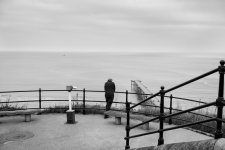
I managed a few minutes at the seaside today, the light was flat and dead and there weren't too many people about but I was glad to be there  There were a few Chinese young people but they quickly disappeared and I had to wait for someone to walk into this...
Beach huts.
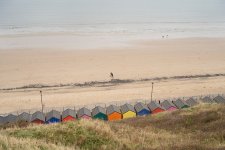
It was nice to have the 40mm f2.5 on the A7III and the 24mm f2.8 on my A7. Top two are A7III and 40mm and this next one is a pan I did with the A7 and 24mm. Shame about the conditions.
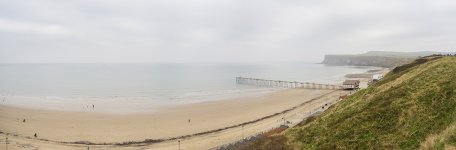
There were a few Chinese young people but they quickly disappeared and I had to wait for someone to walk into this...Beach huts.
It was nice to have the 40mm f2.5 on the A7III and the 24mm f2.8 on my A7. Top two are A7III and 40mm and this next one is a pan I did with the A7 and 24mm. Shame about the conditions.

nandbytes
Suspended / Banned
- Messages
- 16,780
- Edit My Images
- Yes
A6400 + 70-350mmI’m sure either is a sound choice with missed opportunities.. lack of crop detail or lack of AF. A7iii will be considered closely, though.
I wonder in my own RX10iv shooting.. 80% of “acquisition-to-image” is finding it and zooming into it - ie. manual zooms and slower AF probably overall far quicker than faster AF on a motorised zoom.
I owned an A7 original a long time ago, and was able to manually focus a Zuiko 300mm on swallows… I’m not so surefooted now. Although I prefer the A7 shooting experience, I’ll look at the competition too.

snerkler
Suspended / Banned
- Messages
- 26,078
- Name
- Toby
- Edit My Images
- No
Is there a reason you don’t use auto ISO?I’d consider an A6400 but I prefer three dials, I set SS and aperture for the subject but adjust ISO on the fly -
danbroad
Suspended / Banned
- Messages
- 1,634
- Name
- Dan
- Edit My Images
- No
I’ve shot Manual mode for years.. I figure for small birds, I know the shutter speed to freeze the critter and I want the aperture as sharp or open as poss.. the A7 allowed me to gain the shot realtime by adjusting the film speed. It just feels so natural, I’m of the opinion that modern digitals need three dials for F/Ss/ISO. I guess it’s about trusting auto ISO.Is there a reason you don’t use auto ISO?
A6400/A7iii/A7rii is the ‘cost neutral’ point trading in an RXiv so looking to get the best I can. My SLR wildlife has always been everything on centre point (AF/meter etc) with a defined shutter speed/aperture, and “ISO priority” as my preferred method.
I do appreciate the TP wisdom though, looking at 6400’s, A7iii’s and even the SLR alternatives. I will say, from my original A7 ownership, that of my ‘3 dial’ ethos only the Sony delivered that.
Last edited:

ancient_mariner
Moderator
- Messages
- 27,780
- Name
- Toni
- Edit My Images
- No
I guess it’s about trusting auto ISO.
Don't forget that with mirrorless, what you see is what you get. You can see what the exposure will be like if you have concerns about auto-ISO.
nandbytes
Suspended / Banned
- Messages
- 16,780
- Edit My Images
- Yes
I’ve shot Manual mode for years.. I figure for small birds, I know the shutter speed to freeze the critter and I want the aperture as sharp or open as poss.. the A7 allowed me to gain the shot realtime by adjusting the film speed. It just feels so natural, I’m of the opinion that modern digitals need three dials for F/Ss/ISO. I guess it’s about trusting auto ISO.
A6400/A7iii/A7rii is the ‘cost neutral’ point trading in an RXiv so looking to get the best I can. My SLR wildlife has always been everything on centre point (AF/meter etc) with a defined shutter speed/aperture, and “ISO priority” as my preferred method.
I do appreciate the TP wisdom though, looking at 6400’s, A7iii’s and even the SLR alternatives. I will say, from my original A7 ownership, that of my ‘3 dial’ ethos only the Sony delivered that.
I appreciate having the 3 dials, I am also a big fan. But I'd take the better AF in A6400 with the APS-C crop and that 70-350mm lens over the third dial on A7iii or A7RII any day.
70-350mm is simply an amazing lens!

f/1.2
Suspended / Banned
- Messages
- 7,424
- Name
- Tommy
- Edit My Images
- No
With all this £300 off a lens if you buy an a7cii deal stuff, I’m just really hoping it’s a case of shifting stock so they can launch a new model that’ll not make me regret spending so much on type a cards!
You can buy type A cards for around the same price as a decent V90 S.D card sometimes cheaper.
The A7CII has had offers on it from launch. It was £200 of certain lenses then. It's also had cash back offers and was very cheap during the photography show.
Last edited:

mstphoto
Suspended / Banned
- Messages
- 5,755
- Name
- Mike
- Edit My Images
- Yes
That's how I have my a1 set up for wildlife.I’ve shot Manual mode for years.. I figure for small birds, I know the shutter speed to freeze the critter and I want the aperture as sharp or open as poss.. the A7 allowed me to gain the shot realtime by adjusting the film speed. It just feels so natural, I’m of the opinion that modern digitals need three dials for F/Ss/ISO. I guess it’s about trusting auto ISO.
A6400/A7iii/A7rii is the ‘cost neutral’ point trading in an RXiv so looking to get the best I can. My SLR wildlife has always been everything on centre point (AF/meter etc) with a defined shutter speed/aperture, and “ISO priority” as my preferred method.
I do appreciate the TP wisdom though, looking at 6400’s, A7iii’s and even the SLR alternatives. I will say, from my original A7 ownership, that of my ‘3 dial’ ethos only the Sony delivered that.
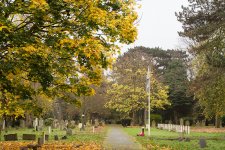
I set the shutter speed and aperture then control exposure with ISO set to the rear dial




LeeRatters
Suspended / Banned
- Messages
- 7,354
- Name
- Lee
- Edit My Images
- Yes


snerkler
Suspended / Banned
- Messages
- 26,078
- Name
- Toby
- Edit My Images
- No
I understand what you’re saying but I don’t see the point of having to manually adjust the ISO. I too set the shutter speed and aperture manually, but then the ISO has to be whatever it needs to be so why not let that take care of itself so you can concentrate on capturing the action. I’m sure it’s pretty awkward tracking a bird whilst trying to constantly adjust the ISO as it moves in and out of shadows.I’ve shot Manual mode for years.. I figure for small birds, I know the shutter speed to freeze the critter and I want the aperture as sharp or open as poss.. the A7 allowed me to gain the shot realtime by adjusting the film speed. It just feels so natural, I’m of the opinion that modern digitals need three dials for F/Ss/ISO. I guess it’s about trusting auto ISO.
Of course we all do what we feel comfortable or are used to doing but I like to make it as easy as possible

OP
- Messages
- 43,206
- Name
- Alan
- Edit My Images
- No
I understand what you’re saying but I don’t see the point of having to manually adjust the ISO. I too set the shutter speed and aperture manually, but then the ISO has to be whatever it needs to be so why not let that take care of itself so you can concentrate on capturing the action. I’m sure it’s pretty awkward tracking a bird whilst trying to constantly adjust the ISO as it moves in and out of shadows.
Of course we all do what we feel comfortable or are used to doing but I like to make it as easy as possible
Yup.
Setting the ISO manually is just another thing to take attention away from composition and deciding when to press the shutter button. Using auto ISO and dialling in ISO compensation when necessary is IMO a different thing and another way to go about it.
OP
- Messages
- 43,206
- Name
- Alan
- Edit My Images
- No
Not Sony but may be interesting... A review of the Nikon 58mm f0.95.
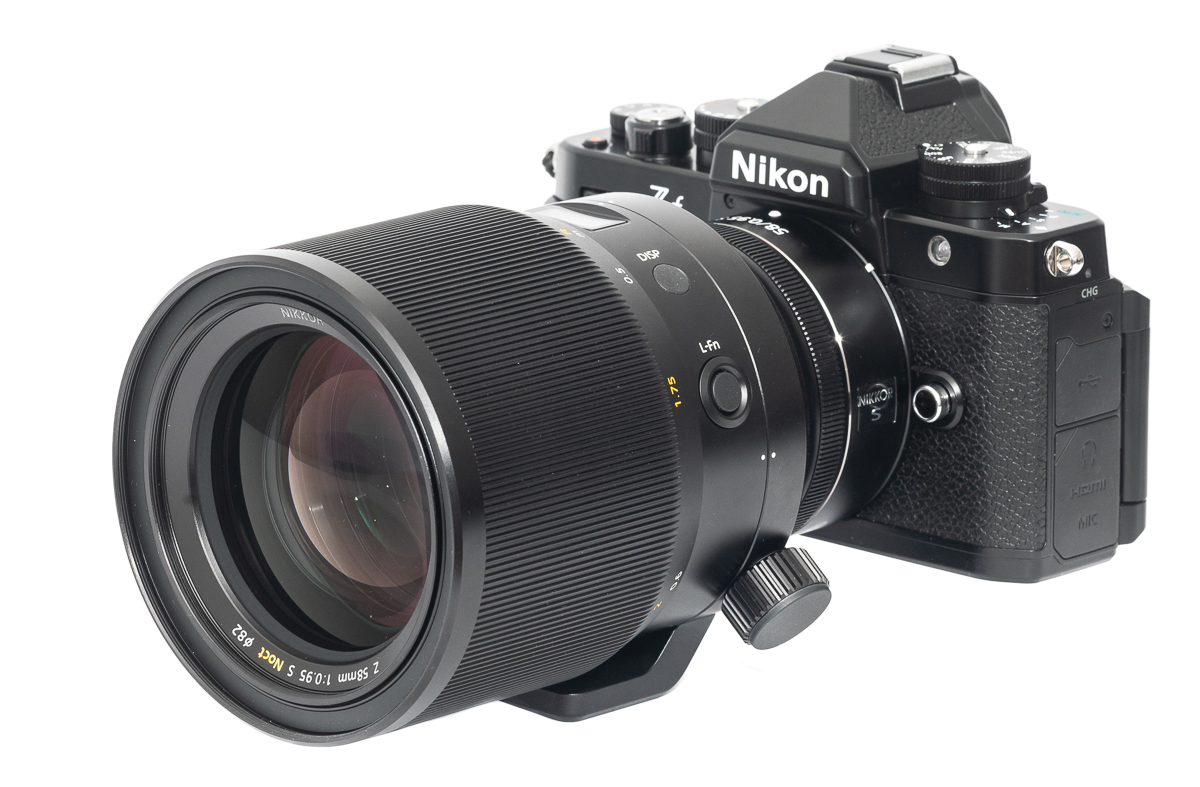
 phillipreeve.net
Review: Nikon 58mm 0.95 Noct-Nikkor - The Ultimate Lens? - phillipreeve.net
The Nikon Z 58mm 0.95 S Noct-Nikkor was Nikon's Halo lens to promote the new Z-mount, but it is actually a really
phillipreeve.net
OP
- Messages
- 43,206
- Name
- Alan
- Edit My Images
- No
The rumor site reports a "first ever" price cut on the A1 in France. 500e.
 www.sonyalpharumors.com
First ever price drop on the Sony A1 sold in France: 500 euro off! – sonyalpharumors
www.sonyalpharumors.com
danbroad
Suspended / Banned
- Messages
- 1,634
- Name
- Dan
- Edit My Images
- No
Interesting to hear everyone’s ways of shooting... ‘Fixing two variables and adjusting the third’ isn’t really much different from Aperture priority/Shutter priority modes, or indeed even adjusting exposure compensation in manual mode - in as much as the shooter retains control over one leading variable.
When I owned my original A7, I had fingertip control of all three, with lovely feedback in the EVF. Deepening the DOF, slowing the shutter for a stationary thing, upping the exposure by ISO… all right there without having to come away from the viewfinder. No histograms or exposure meters required!
However, I do get the Auto ISO thinking - especially as sensor tech is so good. Back to that line about trusting Auto ISO and the camera in general
When I owned my original A7, I had fingertip control of all three, with lovely feedback in the EVF. Deepening the DOF, slowing the shutter for a stationary thing, upping the exposure by ISO… all right there without having to come away from the viewfinder. No histograms or exposure meters required!
However, I do get the Auto ISO thinking - especially as sensor tech is so good. Back to that line about trusting Auto ISO and the camera in general
Last edited:
OP
- Messages
- 43,206
- Name
- Alan
- Edit My Images
- No
Interesting to hear everyone’s ways of shooting... ‘Fixing two variables and adjusting the third’ isn’t really much different from Aperture priority/Shutter priority modes, or indeed even adjusting exposure compensation in manual mode - in as much as the shooter retains control over one leading variable.
Auto ISO is IMO one of the real "game changers" and being able to have auto ISO and exposure compensation in aperture or shutter priority and manual mode is IMO a real step forward. I suppose there is an argument to say that adjusting ISO and dialing in exposure compensation is the same thing but I'd argue that it isn't. When you know the aperture or are forced to use an aperture and you know the shutter speed you want the camera could in many instances get you there or there abouts with auto ISO leaving exposure compensation for the specific instances when metering doesn't give you the precise ISO you want.
f/1.2
Suspended / Banned
- Messages
- 7,424
- Name
- Tommy
- Edit My Images
- No
Interesting to hear everyone’s ways of shooting... ‘Fixing two variables and adjusting the third’ isn’t really much different from Aperture priority/Shutter priority modes, or indeed even adjusting exposure compensation in manual mode - in as much as the shooter retains control over one leading variable.
When I owned my original A7, I had fingertip control of all three, with lovely feedback in the EVF. Deepening the DOF, slowing the shutter for a stationary thing, upping the exposure by ISO… all right there without having to come away from the viewfinder. No histograms or exposure meters required!
However, I do get the Auto ISO thinking - especially as sensor tech is so good. Back to that line about trusting Auto ISO and the camera in general
That isn't what they are doing though.
They are using auto ISO and manually adjusting shutter speed and aperture.
snerkler
Suspended / Banned
- Messages
- 26,078
- Name
- Toby
- Edit My Images
- No
Auto ISO works very well 98% of the time, but even if it doesn’t it’s not usually out by more than 2/3 of a stop which is easy to fix in post, much easier than a missed shot because you were too busy changing settingsInteresting to hear everyone’s ways of shooting... ‘Fixing two variables and adjusting the third’ isn’t really much different from Aperture priority/Shutter priority modes, or indeed even adjusting exposure compensation in manual mode - in as much as the shooter retains control over one leading variable.
When I owned my original A7, I had fingertip control of all three, with lovely feedback in the EVF. Deepening the DOF, slowing the shutter for a stationary thing, upping the exposure by ISO… all right there without having to come away from the viewfinder. No histograms or exposure meters required!
However, I do get the Auto ISO thinking - especially as sensor tech is so good. Back to that line about trusting Auto ISO and the camera in general
I get there’s no right way for everyone but auto ISO isn’t to be feared
nandbytes
Suspended / Banned
- Messages
- 16,780
- Edit My Images
- Yes
Auto ISO works very well 98% of the time, but even if it doesn’t it’s not usually out by more than 2/3 of a stop which is easy to fix in post, much easier than a missed shot because you were too busy changing settings
I get there’s no right way for everyone but auto ISO isn’t to be feared
I mostly just stick to the "second base ISO" and forget about it. The rest can be done in post.
There is no difference between bumping the ISO in camera or increasing the brightness in post, sensors are ISO invariant past second base ISO on a dual gain sensor
snerkler
Suspended / Banned
- Messages
- 26,078
- Name
- Toby
- Edit My Images
- No
There’s certainly an argument for that, although not when shooting f1.2 in bright conditionsI mostly just stick to the "second base ISO" and forget about it. The rest can be done in post.
There is no difference between bumping the ISO in camera or increasing the brightness in post, sensors are ISO invariant past second base ISO on a dual gain sensor
The reason I don’t stick to an ISO is the least I have to do in post the better
nandbytes
Suspended / Banned
- Messages
- 16,780
- Edit My Images
- Yes
Yeah of course not, if you plenty of light to shoot at ISO100 then you'd just do that.There’s certainly an argument for that, although not when shooting f1.2 in bright conditions
Was just referring to conditions where ISO needs to be higher than the second base.
The reason I don’t stick to an ISO is the least I have to do in post the better
On the whole it's less work tbh. Since all the shots start uniformly, I can just fix the exposure on one shot and sync the exposure across a series of shots. LR will match the exposure perfectly.
With auto ISO I found I had to tweak every shot because camera is not always consistent as software in post.
Last edited:
LeeRatters
Suspended / Banned
- Messages
- 7,354
- Name
- Lee
- Edit My Images
- Yes
I tend to shoot in Av with auto ISO for general, everyday shooting. Will just flick the Ex Comp if I need to.
I only tend to go to manual for exact settings ie night skies. Or if I want a consistent exposure for a set of shots or a panorama etc
I only tend to go to manual for exact settings ie night skies. Or if I want a consistent exposure for a set of shots or a panorama etc

snerkler
Suspended / Banned
- Messages
- 26,078
- Name
- Toby
- Edit My Images
- No
That’s only true if the light doesn’t change between shots, or you’re not following a subject that’s moving from dark to light etc.Yeah of course not, if you plenty of light to shoot at ISO100 then you'd just do that.
Was just referring to conditions where ISO needs to be higher than the second base.
On the whole it's less work tbh. Since all the shots start uniformly, I can just fix the exposure on one shot and sync the exposure across a series of shots. LR will match the exposure perfectly.
With auto ISO I found I had to tweak every shot because camera is not always consistent as software in post.
Unless I’m in a studio it’s rare light is consistent so it wouldn’t work for me. YMMV

nandbytes
Suspended / Banned
- Messages
- 16,780
- Edit My Images
- Yes
I shoot a wide variety of things....That’s only true if the light doesn’t change between shots, or you’re not following a subject that’s moving from dark to light etc.
Unless I’m in a studio it’s rare light is consistent so it wouldn’t work for me. YMMV
LR's exposure matching should work for you too if you haven't used it in the past. Really speeds up your processing. Its will try to match exposure between shots and not just a simple copy paste of the brightness levels. you should give it a go, plenty of example and tutorials on youtube.
In my case having mostly the same starting point helps a lot in many cases as I don't need to review each photograph for a 1/2-1/3rd stop mistakes from the camera's auto-ISO and tweak it all individually.
That is not say I don't use higher ISO at all, I do use higher ISO settings too but those are exceptions for me.
Last edited:
snerkler
Suspended / Banned
- Messages
- 26,078
- Name
- Toby
- Edit My Images
- No
Ahh sorry I misunderstood, I thought you meant you copied the exposure settings. I’ve not heard of the exposure matching in LR, I’ll have to look into itI shoot a wide variety of things....
LR's exposure matching should work for you too if you haven't used it in the past. Really speeds up your processing. Its will try to match exposure between shots and not just a simple copy paste of the brightness levels. you should give it a go, plenty of example and tutorials on youtube.
In my case having mostly the same starting point helps a lot in many cases as I don't need to review each photograph for a 1/2-1/3rd stop mistakes from the camera's auto-ISO and tweak it all individually.
That is not say I don't use higher ISO at all, I do use higher ISO settings too but those are exceptions for me.
snerkler
Suspended / Banned
- Messages
- 26,078
- Name
- Toby
- Edit My Images
- No
Been going through more old photos.
1.

A1_08701-Edit by Toby Gunnee, on Flickr
2.

A1_08705 by Toby Gunnee, on Flickr
3.

A1_08710 by Toby Gunnee, on Flickr
4.

A1_08714 by Toby Gunnee, on Flickr
5.

A1_08749-Edit by Toby Gunnee, on Flickr
6.

A1_08756 by Toby Gunnee, on Flickr
7.

A1_08758 by Toby Gunnee, on Flickr
1.
A1_08701-Edit by Toby Gunnee, on Flickr
2.
A1_08705 by Toby Gunnee, on Flickr
3.
A1_08710 by Toby Gunnee, on Flickr
4.
A1_08714 by Toby Gunnee, on Flickr
5.
A1_08749-Edit by Toby Gunnee, on Flickr
6.
A1_08756 by Toby Gunnee, on Flickr
7.
A1_08758 by Toby Gunnee, on Flickr
Dealing with GAS and trying to decide between a A7IV and A7RV (A1 is likely to remain out of budget). In order to afford the A7R I'd have to sell my much loved A9. Would like a newer Sony body with the updated menus (to match my A6700) and the closable shutter when changing lenses. Will be used for both landscapes and wildlife, previously did more of the latter but leaning ever more towards the former currently.
A7IV Pros: can keep the A9 which has higher FPS, blackout free shooting and better tracking (?), I prefer having 2 bodies.
A7RV Pros: higher resolution, matches the A6700 on APS-C lenses, better rear screen, better subject detection.
A7IV Pros: can keep the A9 which has higher FPS, blackout free shooting and better tracking (?), I prefer having 2 bodies.
A7RV Pros: higher resolution, matches the A6700 on APS-C lenses, better rear screen, better subject detection.
nandbytes
Suspended / Banned
- Messages
- 16,780
- Edit My Images
- Yes
Had A1, switched to A7iv and then to A7RV.Dealing with GAS and trying to decide between a A7IV and A7RV (A1 is likely to remain out of budget). In order to afford the A7R I'd have to sell my much loved A9. Would like a newer Sony body with the updated menus (to match my A6700) and the closable shutter when changing lenses. Will be used for both landscapes and wildlife, previously did more of the latter but leaning ever more towards the former currently.
A7IV Pros: can keep the A9 which has higher FPS, blackout free shooting and better tracking (?), I prefer having 2 bodies.
A7RV Pros: higher resolution, matches the A6700 on APS-C lenses, better rear screen, better subject detection.
I really enjoyed the A7iv, it's a wonderful jack of all trades body. The AF was great, the new sensor is really good, decent resolution to with decent cropping room.
The A7RV i have really liked more because of the 8stops IBIS and the fully articulating screen. I can handhold down to 2s shutter which is amazing, means I can leave the tripod at home many of the times.
All in all both good bodies can't go wrong with either. There is supposedly an A7V on the horizon. Might be worth waiting even if it is to just get the price of A7IV down.
If you like A6700 also consider A7CR if you need/ want highres. Then may be you can keep the A9 too.
OP
- Messages
- 43,206
- Name
- Alan
- Edit My Images
- No
Vaguely on the subject of resolution and cropping from my 24mp sensor files.
When I send pictures to Mrs WW (who is still abroad) I used to crop them to 1,500 pixels on the longest side but I later found that 1,000 making a file anywhere between 200kb and 700kb depending upon content was ok and allowed some zooming in when viewed on a phone screen. 1,000 is also ok my pc screen when filling the screen. I recently printed some pictures which were crops each to fill an A4 sheet. I've just checked and one is a 25% crop and it stands up to viewing with a magnifying glass, eye lashes are sharp etc.
Pretty good stuff
When I send pictures to Mrs WW (who is still abroad) I used to crop them to 1,500 pixels on the longest side but I later found that 1,000 making a file anywhere between 200kb and 700kb depending upon content was ok and allowed some zooming in when viewed on a phone screen. 1,000 is also ok my pc screen when filling the screen. I recently printed some pictures which were crops each to fill an A4 sheet. I've just checked and one is a 25% crop and it stands up to viewing with a magnifying glass, eye lashes are sharp etc.
Pretty good stuff

mav
Suspended / Banned
- Messages
- 902
- Edit My Images
- No

snerkler
Suspended / Banned
- Messages
- 26,078
- Name
- Toby
- Edit My Images
- No
Recently I’ve been appreciating the benefit of having a second body and so would keep the A9. However if you’re happy using the a6700 as a second body, or don’t need a second body then the A7RV is a better camera than the A7IV,… if you’re happy with the larger file sizes.Dealing with GAS and trying to decide between a A7IV and A7RV (A1 is likely to remain out of budget). In order to afford the A7R I'd have to sell my much loved A9. Would like a newer Sony body with the updated menus (to match my A6700) and the closable shutter when changing lenses. Will be used for both landscapes and wildlife, previously did more of the latter but leaning ever more towards the former currently.
A7IV Pros: can keep the A9 which has higher FPS, blackout free shooting and better tracking (?), I prefer having 2 bodies.
A7RV Pros: higher resolution, matches the A6700 on APS-C lenses, better rear screen, better subject detection.
snerkler
Suspended / Banned
- Messages
- 26,078
- Name
- Toby
- Edit My Images
- No
Nicely done

Gandalf
Suspended / Banned
- Messages
- 1,637
- Name
- Andy
- Edit My Images
- No
You will see from my signature that I have 3 bodies, those that you have and that what you want. Having had the a7iii which I loved, the a7iv is a great camera. Between all three I have the frames per second covered, the increase in megapixels and something that is just fun to use and that has a lot of the a7rv newer tricks. Sometimes I find myself wanting the a7rv but then I would have to upgrade everything else just to be able to handle the file sizes. The a9 I use with 70-200mm and the 200-600mm with t/c. The a6700 now has the gorgeous 23mm and 56mm Contemporary lens combo and the a7iv has the 24-70mm & 85mm combo. I’m happy with my setups, I just need to get out more ….