Tesla blown up

JohnC6

Suspended / Banned
Messages
11,799
Name
John
Edit My Images
Yes
Unfortunately, I cannot read the science article because it says I have reached the 5 reads this month limit :thinking:

Having said.......................what a plonker the the owner is................I surmise he 'went green' for a reason but has now contaminated the area with battery waste amongst other pollants due to his unorthodox disposal method! :banghead:

PS as for the cost of battery replacements ???
 
Unfortunately, I cannot read the science article because it says I have reached the 5 reads this month limit :thinking:

Having said.......................what a plonker the the owner is................I surmise he 'went green' for a reason but has now contaminated the area with battery waste amongst other pollants due to his unorthodox disposal method! :banghead:

PS as for the cost of battery replacements ???

Yes..it was not only a bit drastic ,if you can be 'a bit' drastic..lol..but counter to his hitherto green credentials.

Try this one ,Laurence. https://dug.com/recycling-electric-batteries-is-tough-but-it-has-to-be-done/
 
No EV batteries end up in land fill. They're all recycled and re-used. It's a nonsense. Most have lasted a lot longer than the gloomy Clarksonian predictions of 4 or 5 years before they were dead. They often end up second life in battery storage applications so there is nearly no waste at all.

Tesla sensibly don't just let any twazzock do battery repairs. They also check over any car that's been in an accident and there are a few folk that are narked that it means having to take the car to Tesla. There were some battery fires in Model S a few years ago that were a direct result of crappy accident repair which is why Tesla go to all the trouble of disabling rapid charging in cars that haven't been checked over.

The battery warranty on the S is 8 years and unlimited miles which isn't unreasonable.
 
Yes..it was not only a bit drastic ,if you can be 'a bit' drastic..lol..but counter to his hitherto green credentials.

Try this one ,Laurence. https://dug.com/recycling-electric-batteries-is-tough-but-it-has-to-be-done/
Thanks John, will check that out :)
No EV batteries end up in land fill. They're all recycled and re-used. It's a nonsense. Most have lasted a lot longer than the gloomy Clarksonian predictions of 4 or 5 years before they were dead. They often end up second life in battery storage applications so there is nearly no waste at all.

Tesla sensibly don't just let any twazzock do battery repairs. They also check over any car that's been in an accident and there are a few folk that are narked that it means having to take the car to Tesla. There were some battery fires in Model S a few years ago that were a direct result of crappy accident repair which is why Tesla go to all the trouble of disabling rapid charging in cars that haven't been checked over.

The battery warranty on the S is 8 years and unlimited miles which isn't unreasonable.
Tesla may attract a marmite response (in regard to the owner?) but to have a "whole life" approach to their products is a good and responsible way to do business.

As for the the Finnish owner . ......I wonder if and how many environmental protection & waste disposal laws he broke and will the next report tell of him being prosecuted!? And frankly I think he should be.....as well the 'funsters'(?) who aided & abetted his prank.
 
Last edited:
No EV batteries end up in land fill. They're all recycled and re-used. It's a nonsense. Most have lasted a lot longer than the gloomy Clarksonian predictions of 4 or 5 years before they were dead. They often end up second life in battery storage applications so there is nearly no waste at all.

Tesla sensibly don't just let any twazzock do battery repairs. They also check over any car that's been in an accident and there are a few folk that are narked that it means having to take the car to Tesla. There were some battery fires in Model S a few years ago that were a direct result of crappy accident repair which is why Tesla go to all the trouble of disabling rapid charging in cars that haven't been checked over.

The battery warranty on the S is 8 years and unlimited miles which isn't unreasonable.


I'm in no position regarding detailed knowledge to 'challenge' your points so I've managed to do a copy/paste re the original link..Science.org. because I have it in my history and maybe that version isn't subject to the 'read 5 and you're done ' issue which is why Laurence was unable to read it. It's a long article so I've copied what appears to me to be key paragraphs.

The battery pack of a Tesla Model S is a feat of intricate engineering. Thousands of cylindrical cells with components sourced from around the world transform lithium and electrons into enough energy to propel the car hundreds of kilometers, again and again, without tailpipe emissions. But when the battery comes to the end of its life, its green benefits fade. If it ends up in a landfill, its cells can release problematic toxins, including heavy metals. And recycling the battery can be a hazardous business, warns materials scientist Dana Thompson of the University of Leicester. Cut too deep into a Tesla cell, or in the wrong place, and it can short-circuit, combust, and release toxic fumes.

That's just one of the many problems confronting researchers, including Thompson, who are trying to tackle an emerging problem: how to recycle the millions of electric vehicle (EV) batteries that manufacturers expect to produce over the next few decades. Current EV batteries "are really not designed to be recycled," says Thompson, a research fellow at the Faraday Institution, a research center focused on battery issues in the United Kingdom.

That wasn't much of a problem when EVs were rare. But now the technology is taking off. Several carmakers have said they plan to phase out combustion engines within a few decades, and industry analysts predict at least 145 million EVs will be on the road by 2030, up from just 11 million last year. "People are starting to realize this is an issue," Thompson says.

Governments are inching toward requiring some level of recycling. In 2018, China imposed new rules aimed at promoting the reuse of EV battery components. The European Union is expected to finalize its first requirements this year. In the United States, the federal government has yet to advance recycling mandates, but several states, including including California—the nation's largest car market—are exploring setting their own rules.

Complying won't be easy. Batteries differ widely in chemistry and construction, which makes it difficult to create efficient recycling systems. And the cells are often held together with tough glues that make them difficult to take apart. That has contributed to an economic obstacle: It's often cheaper for batterymakers to buy freshly mined metals than to use recycled materials. To jump-start recycling, governments and industry are putting money into an array of research initiatives. The U.S. Department of Energy (DOE) has pumped some $15 million into a ReCell Center to coordinate studies by scientists in academia, industry, and at government laboratories. The United Kingdom has backed the ReLiB project, a multi-institution effort. As the EV industry ramps up, the need for progress is becoming urgent, says Linda Gaines, who works on battery recycling at DOE's Argonne National Laboratory. "The sooner we can get everything moving," she says, "the better."


Batteries are constructed a bit like nested dolls. Typically, a main pack holds several modules, each of which is constructed from numerous smaller cells (see graphic, below). Inside each cell, lithium atoms move through an electrolyte between a graphite anode and a cathode sheet composed of a metal oxide. Batteries are usually defined by the metals in the cathode. There are three main types: nickel-cobalt-aluminum, iron-phosphate, and nickel-manganese-cobalt.

Now, recyclers primarily target metals in the cathode, such as cobalt and nickel, that fetch high prices. (Lithium and graphite are too cheap for recycling to be economical.) But because of the small quantities, the metals are like needles in a haystack: hard to find and recover. Scientists are working to ensure the electric vehicle (EV) batteries being sold today can be recycled in 2030 and beyond, when thousands of batteries will reach the end of their lives every day. The ideal is direct recycling, which would keep the cathode mixture intact. That's attractive to batterymakers because recycled cathodes wouldn't require heavy processing, Gaines notes (although manufacturers might still have to revitalize cathodes by adding small amounts of lithium). "So if you're thinking circular economy, [direct recycling] is a smaller circle than pyromet or hydromet."

To realize direct recycling, however, batterymakers, recyclers, and researchers need to sort out a host of issues. One is making sure manufacturers label their batteries, so recyclers know what kind of cell they are dealing with—and whether the cathode metals have any value. Given the rapidly changing battery market, Gaines notes, cathodes manufactured today might not be able to find a future buyer. Recyclers would be "recovering a dinosaur. No one will want the product. Another challenge is efficiently cracking open EV batteries. Nissan's rectangular Leaf battery module can take 2 hours to dismantle. Tesla's cells are unique not only for their cylindrical shape, but also for the almost indestructible polyurethane cement that holds them together.

To extract those needles, recyclers rely on two techniques, known as pyrometallurgy and hydrometallurgy. The more common is pyrometallurgy, in which recyclers first mechanically shred the cell and then burn it, leaving a charred mass of plastic, metals, and glues. At that point, they can use several methods to extract the metals, including further burning. "Pyromet is essentially treating the battery as if it were an ore" straight from a mine, Gaines says. Hydrometallurgy, in contrast, involves dunking battery materials in pools of acid, producing a metal-laden soup. Sometimes the two methods are combined.

Each has advantages and downsides. Pyrometallurgy, for example, doesn't require the recycler to know the battery's design or composition, or even whether it is completely discharged, in order to move ahead safely. But it is energy intensive. Hydrometallurgy can extract materials not easily obtained through burning, but it can involve chemicals that pose health risks. And recovering the desired elements from the chemical soup can be difficult, although researchers are experimenting with compounds that promise to dissolve certain battery metals but leave others in a solid form, making them easier to recover. For example, Thompson has identified one candidate, a mixture of acids and bases called a deep eutectic solvent, that dissolves everything but nickel.

Both processes produce extensive waste and emit greenhouse gases, studies have found. And the business model can be shaky: Most operations depend on selling recovered cobalt to stay in business, but batterymakers are trying to shift away from that relatively expensive metal. If that happens, recyclers could be left trying to sell piles of "dirt," says materials scientist Rebecca Ciez of


Recycling researchers, meanwhile, say effective battery recycling will require more than just technological advances. The high cost of transporting combustible items long distances or across borders can discourage recycling. As a result, placing recycling centers in the right places could have a "massive impact," Harper says. "But there's going to be a real challenge in systems integration and bringing all these different bits of research together.

There's little time to waste, Abbott says. "What you don't want is 10 years' worth of production of a cell that is absolutely impossible to pull apart," he says. "It's not happening yet—but people are shouting

 
Man buys nine year old 2nd hand car, sold a pup, blows it up.
 
The following article was just as much fun ...

Man Challenges Twitters Users To Spot Dalmatian Having A Poo In Snow

 
  • Like
Reactions: Nod
I have the same worries as in John's post above. I think that electric cars work well enough when they're few and far between but when / if they mushroom into the millions they could potentially be planet killers if the materials are even there in the quantities that'll be needed. Recharging all those millions of electric cars will be an issue too as the UK rarely seems to produce enough electricity for its own needs now so how is the grid going to cope when everyone plugs their car in when they get home? France will doubtless have the same issues so we wont be relying on their electricity as we do now because they wont be able to supply it as they'll need it themselves. With the current state of battery and recharging tech I just can not see electric cars being the solution. Not in the millions that'll be needed to replace the internal combustion engine.
 
Last edited:
So, in your opinion, what IS the answer? More ICE? Hydrogen?
 
National Grid have already said it won't be an issue. You can also use electric vehicle batteries to store energy to release back in peak times so they're also part of the solution to smoothing out energy demands.

With the Russians being absolute arses over gas the quicker the UK shifts over to renewable energy the better.
 
So, in your opinion, what IS the answer? More ICE? Hydrogen?
Me?

Fuel cells or hydrogen maybe. I can't know.

I think I've told this story before but I'll tell it again for the conspiracy theorists out there. Years back when I worked I heard a whisper that a certain European manufacturer with the backing of their national government decided that electric was the way forward and there was no other way. If that's true or not I can't know but from the outside looking in and with the state of the art as it is today electric vehicles hardly seem the obvious choice do they?
 
They are the only viable alternative to ICE at the moment. IIRC there are 13 or so Hydrogen filling stations in the UK.
 
National Grid have already said it won't be an issue. You can also use electric vehicle batteries to store energy to release back in peak times so they're also part of the solution to smoothing out energy demands.

With the Russians being absolute arses over gas the quicker the UK shifts over to renewable energy the better.

At the moment the UK regularly relies on electricity from France and I think a new cable has been laid between Norway and the UK so it doesn't seem that the UK can reliably and consistently meet demands at present does it? I read an article within the last few months which said that the UK govt is considering switching off car chargers at peak time and that must be for a reason. One obvious question is what happens when car chargers are allowed to charge again? Will that be the new peak time requiring another turn off?

Renewable isn't going to power the UK any time soon.
 
Last edited:
They are the only viable alternative to ICE at the moment. IIRC there are 13 or so Hydrogen filling stations in the UK.

That's because electric has been decided as the way forward.

I am worried about it as I do think that with the technology as it exists now electric could well be a disaster once the numbers ramp up.
 
As big a disaster as ICE seems to have been?
 
You can also use electric vehicle batteries to store energy to release back in peak times so they're also part of the solution to smoothing out energy demands.
So they took it and are going to give it back?
Knowing peoples behaviour, do you really think they will be giving it back?

It sounds like filling your tank with petrol, realising the you didn't need it all after a week or so, then giving half back.
You only have to look at peoples behaviour during the so called fuel shortage to know that either scenario won't happen..
 
As big a disaster as ICE seems to have been?

So we just ignore past lessons and dive headlong into another disaster?

If that's your attitude hopefully those driving this have a different attitude you.

Tech may fix the issues with electric but there's no sign of that today.
 
Hydrogen would need even more energy as it's so inefficient. A fuel cell makes electricity to power an electric motor. Why on earth fart about with hydrogen gas when you can just have a battery and power the electric motor with that...

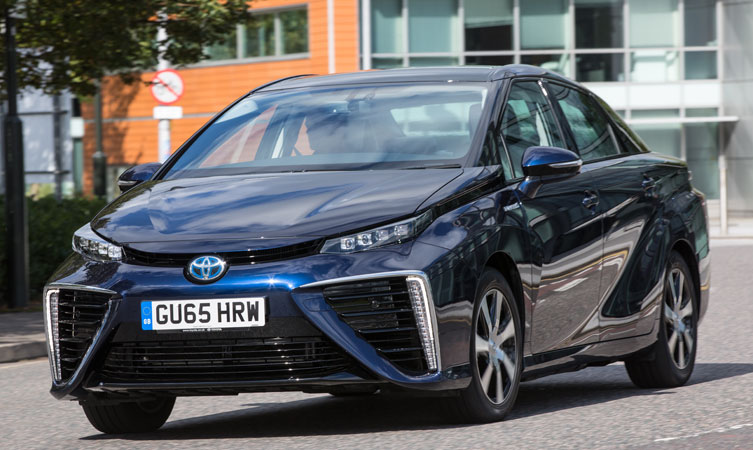
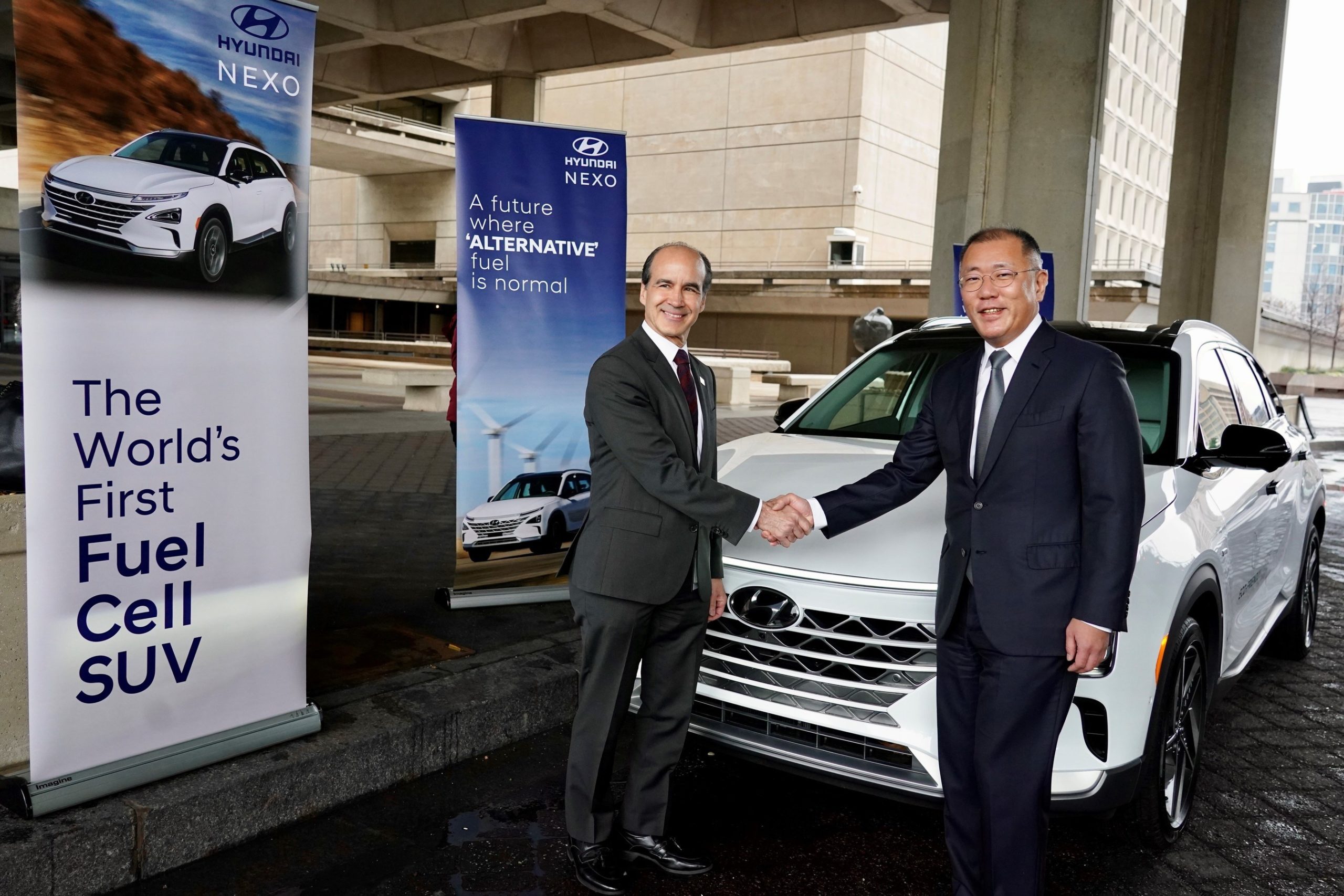
There's 11 active hydrogen stations in the UK. In a full free market as of earlier this year Toyota haven't even got 200 Mirai registered in the UK. It's a joke. Hyundai have also been pushing hydrogen.

Vauxhall are supposedly bringing out a hydrogen Vivaro in a few years. Where is anyone going to fill up this van?
 
Hydrogen would need even more energy as it's so inefficient. A fuel cell makes electricity to power an electric motor. Why on earth fart about with hydrogen gas when you can just have a battery and power the electric motor with that...

There's 11 active hydrogen stations in the UK. In a full free market as of earlier this year Toyota haven't even got 200 Mirai registered in the UK. It's a joke. Hyundai have also been pushing hydrogen.

Vauxhall are supposedly bringing out a hydrogen Vivaro in a few years. Where is anyone going to fill up this van?

Because there may not be enough of the materials required to make the batteries on Earth, the batteries are hard and expensive to recycle and they're environmentally dirty.
 
So they took it and are going to give it back?
Knowing peoples behaviour, do you really think they will be giving it back?

It sounds like filling your tank with petrol, realising the you didn't need it all after a week or so, then giving half back.
You only have to look at peoples behaviour during the so called fuel shortage to know that either scenario won't happen..

It's basically what FIT offers via solar generation. Demand shifting is a thing and folk with battery storage do it already but they use their static batteries in the home to do it rather than the ones in the car.
 
It's basically what FIT offers via solar generation. Demand shifting is a thing and folk with battery storage do it already but they use their static batteries in the home to do it rather than the ones in the car.
I realise that but we were talking about cars :)
 
I have a feeling that it's possible to do it with the batteries still in the car.
 
I have a feeling that it's possible to do it with the batteries still in the car.
It's called (possibly many things) V2L Vehicle to Load. New cars with bigger batteries are coming with the capability to feed power back into the house/grid.
 
  • Like
Reactions: Nod
Hydrogen has some big issues to get past before it becomes really viable and I don't think it will ever be a thing for cars, more likely Big trucks that can carry big tanks to store it.

Long term storage of hydrogen is a problem and actually making it takes a lot of electricity which for the moment is not very green. Why opt for Hydrogen as a clean fuel but have to use dirty power to make it.

Car battery technology is advancing at a rapid rate and already there are alternatives to heavy metal batteries coming through.
 
You know there are other uses for Incognito mode, right?
Actually no, not being au fait with "incognito mode" I have never used it :thinking: but tried opening that link using an incognito mode tab and I still get the limit block.
 
The company I work for in my day job have 750 vehicles and I'm told by the people investigating using electric vehicles that a completely new power supply and substation will have to be installed costing many millions if they go electric ( who pays for this ). Every vehicle they have tested so far has had somewhere near a 1/4 to a 1/2 of the range advertised with some of the larger test vehicles (HGV's) having to be taken back to base on a low loader as they have ran out of power within the first couple of hours of an 8 hour day, These HGV's never get more than 10 miles at max from base but do have various power take offs for machinery. There just not there yet. Adding to the strain on the electrical system will be the fact that gas heating is being phased out in homes !
 
Last edited:
The industrial scale production of clean hydrogen (i.e. hydrogen generated using electricity from renewable sources) is not many years away. Orsted - the largest renewable energy company in the world - are the leaders in this field and already have several pilot plants either in build or running, including one in the UK. Hydrogen may not be the best solution for small vehicles but could make a significant difference to the large road, rail and shipping industries, where the size and weight of batteries needed for a purely electric solution would be prohibitive. Having said that, hydrogen in cars is no more difficult or dangerous to manage than LPG.

One of the reasons Honda gave for leaving the UK was the Government's blinkered bias towards electric vehicles and their refusal to explore other alternatives.

In post #11 Suz quite correctly quoted National Grid in saying there will be no problems "fuelling" electric vehicles. Unfortunately, they were towing the Government's line when that was spouted. At the same time there were several reports and memos circulating with NG that stated this was only true as long as France continued to export electricity to us, otherwise the opposite was true. At the time the estimate was that we would need between 5 and 10 new nuclear power stations before 2040 which, considering the length of time it takes to create one, is highly unlikely.
 
In regard to Hydrogen....

I am fairly sure the issue of fuel 'tank' storage in vehicles was sorted years back by the science of having it in hydride form and released by a reversible chemical reaction.... catalyst? In other words not stored/used in gaseous form onboard the cars etc

This is a vague'ish from I think over a decade ago :thinking:
 
Hydrogen in vehicle tanks is actual pressurised gas in the Mirai
Ah! pressurised gas.

Bearing in mind the propensity for it to leak past a seal........I wonder of the modern mitigations there are or will need to be for its carriage in smaller volumes (compared to current industrial volume transportation in very highly compressed form).

Edit ~ doh! now read the article, all makes sense in regard to the carriage mitigation.
 
Last edited:
Hyundai have thrown in the towel by the look of it.

 
Tesco are starting trials of electric HGVs. https://www.theguardian.com/busines...s-first-commercial-use-of-fully-electric-hgvs

Says they are supposed to do 100 miles to a charge and they've got them doing a 60 mile return trip. I hope they've tested this in Winter and fully laden or it's going to be a bit embarrassing if they can't make it.

Personally I always think double the range you need is the absolute minimum you'd want. I think they may have got the wrong capacity trucks if that figure isn't the fully laden range.
 
So, in your opinion, what IS the answer? More ICE? Hydrogen?
We will almost certainly have to change the way we travel.

Private transoort is horribly wasteful, a really individually focussed way of using the world’s resources, and recreating the ICE with a different power supply is too.

Busses, shared ownership/use cars, electric bikes, walking, cycling, etc. all on top of less travel by choosing what we do differently. (We currently largely choose what travel we do based on car availability and cheapness).

It is possibly too late for all that, so we will kick and scream instead, and it probably won’t be much fun. The kicking and screaming is bad enough already when fuel reaches £1.50 a litre.
 
Back
Top