Beginner Technological convergence

The light.

After that I suppose you mean technical image quality?

The quality of the lens and the size and generation of sensor maybe?
 
Yes thanks. Again we have noise amount, colour science, dynamic range, resolution, compression quality and etc...
 
Hi, What impact does smartphones have, and how it affect people's lifes today?
 
Technology in and of itself is not the only factor in regard to image quality.

IMO one cannot ignore the aesthetic quality that the photographer by intent or good fortune (trying or intended) has conveyed.

Furthermore, though compositional 'rules' are there to guide & aid the creation of a pleasing quality image, it is sometimes those images that embody none of the 'rules' that are most pleasing!
 
hi @0635971770 Pollen - please don't open multiple threads in different areas of the forum. I've merged these two together and moved them to the Beginners section of the forum (as we do with all the "South African, Can you Answer my Homework" questions we get.

Don't worry, people will still respond.
 
Yes thanks. Again we have noise amount, colour science, dynamic range, resolution, compression quality and etc...

I think it helps to define what you're after. If you're asking about technical quality all that technical stuff comes into it and the qualities of the lens although it may be getting difficult to find a bad lens these days. I suppose you could also pull in other not so technology based but still technical things such as the exposure, the composition and things such as spatial relationships etc.

I think for me the biggest technical limitation is possibly dynamic range as I often take pictures where it can be difficult to retain detail in the shadows and not blow the highlights.
 
Mmh, I'm learning a lot. Again, what impact does smartphones have and how does it influences people's life's.
 
Mmh, I'm learning a lot. Again, what impact does smartphones have and how does it influences people's life's.

I used to fix computer kit and got sick of the sight of it and these days I avoid a lot of tech and smartphones are one thing that I avoid. I have a PAYG one but I only turn it on when I go out for emergency use and I don't like taking photos with them. I don't like holding an oblong box 18" from my face and jabbing at it.

On the positive side more pictures are taken now than ever and for a time 28mm was the most used focal length although these days phones may have other lengths.
 
Mmh, I'm learning a lot. Again, what impact does smartphones have and how does it influences people's life's.


Depends very much on the user. Some people are totally reliant on them while others use them pretty much like they used to use plain old mobiles. I'd be very surprised if they haven't been a direct cause of the end of some users' lives given the number of phombies that wander out into the road in front of me.
 
Mmh, I'm learning a lot. Again, what impact does smartphones have and how does it influences people's life's.

I think Smartphones are a good technology but in common with all such new tech there is way too much reliance on them that at times beggars belief.

As to the camera aspect....................I work on the adage of the 'best camera that you have is one you have with you at the time you want/need one' and sometimes that is my phone :)
 
Depends very much on the user. Some people are totally reliant on them while others use them pretty much like they used to use plain old mobiles. I'd be very surprised if they haven't been a direct cause of the end of some users' lives given the number of phombies that wander out into the road in front of me.

There is that and I nearly hit a zombie on Sunday but on the positive side they must have saved a lot of lives too. I suppose it could be a win win. The Darwin award winners have our gratitude and smartphones save some worthy people :D
 
Depends very much on the user. Some people are totally reliant on them while others use them pretty much like they used to use plain old mobiles. I'd be very surprised if they haven't been a direct cause of the end of some users' lives given the number of phombies that wander out into the road in front of me.
I'm learning. What change did smartphones brought into today's life, are they really helping or causing more damage to the world?
 
I'm learning. What change did smartphones brought into today's life, are they really helping or causing more damage to the world?

Well, my mother in law still uses an old Nokia 3310 which was mine until she took it on. She had to replace the battery once. Mrs Nod upgrades her phone every 2 years or so and uses it a lot for business (but not much for private things) and I'm on a 3 or 4 year old one. Not sure that the faster upgrades are much help to the environment or people's health.
 
There is that and I nearly hit a zombie on Sunday but on the positive side they must have saved a lot of lives too. I suppose it could be a win win. The Darwin award winners have our gratitude and smartphones save some worthy people :D
Yeah, it all makes sense
 
I'm learning. What change did smartphones brought into today's life, are they really helping or causing more damage to the world?

The fact that some see them as consumable and disposable fashion items to be replaced at whim must be damaging as perfectly good electronic items and their batteries are discarded.
 
Well, my mother in law still uses an old Nokia 3310 which was mine until she took it on. She had to replace the battery once. Mrs Nod upgrades her phone every 2 years or so and uses it a lot for business (but not much for private things) and I'm on a 3 or 4 year old one. Not sure that the faster upgrades are much help to the environment or people's health.
Exciting
 
Hi, What impact does smartphones have, and how it affect people's lifes today?
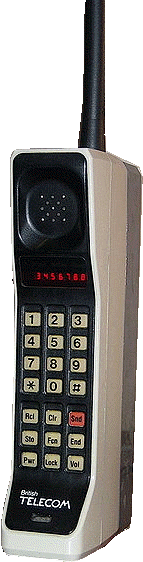
Overall it's amazing the "takeup" of mobile technology - like a lot of the people on this site, I've been on this earth a while now - Mobile Phones were just becoming "a thing" at work in the late 1980's. I had one issued to me as I was "on call" over the Christmas period 1989. Was a pain in the arse carrying it around. Size of a housebrick, made calls, recieved calls, that was it.
motorola_8000x.gif

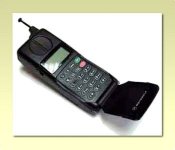
Fast forward 10 years, and I got my first works phone as an "all the time thing" - Motorola 7200 - calls in and out and text messaging.

Motorola Micro Tac 7200.jpg
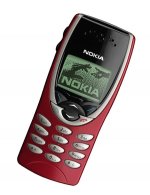
By 1999 i'd been swapped to a Nokia 8210

Screenshot 2022-05-02 182238.jpg
which I pretty much stuck with for the next 10 years or so (it still works, or at least switches on!) - and since then I've had a succession of various, random Android phones of one make or another, none of which have had any personality or impact upon me other than costing more and getting bigger each time.

Sure, it's nice to have a camera always with me in case I need to make a "visual note" - but I use the "smart" bits of the phone more than the camera - mapping, payment apps, information lookups et al. It's very rare that any photo's i'll post anywhere are taken on the phone though. The Phone's software and hardware is getting better, but ultimately, it's still hamstrung by the lens (unless you're spending what's currently a months salary for me on a mobile device with a planned obsolescence from its factory of around 18 months - I can't face that) - so I stick to traditional cameras, traditional lenses, and sit wishing I could go back to a phone that was the form factor and battery life of the Nokia 8210.

But - i'm pushing 60. Ask the same of someone a generation younger and they'll have a differnet answer, having lived with mobiles all their life - and people coming to the end of their teens have pretty much had smartphones all their life and will think of me very much in the same bracket as the cavemen...

that's why a 1 line question like this is meaningless without context, and why you'll have to do a lot of research before you get an answer worthy of use for your homework...
 
Last edited:
What is dynamic range?
a phrase that can be used in many contexts - in audio it's the difference between the quietest part of the music and the loudest. In Photography, it's the contrast ratio between the darkest and brightest color tones that a camera can capture in a single exposure.
 
Overall it's amazing the "takeup" of mobile technology - like a lot of the people on this site, I've been on this earth a while now - Mobile Phones were just becoming "a thing" at work in the late 1980's. I had one issued to me as I was "on call" over the Christmas period 1989. Was a pain in the arse carrying it around. Size of a housebrick, made calls, recieved calls, that was it. Fast forward 10 years, and I got my first works phone as an "all the time thing" - Motorola 7200 - calls in and out and text messaging. By 1999 i'd been swapped to a Noka 8210 which I pretty much stuck with for the next 10 years or so (it still works, or at least switches on!) - and since then I've had a succession of various, random Android phones of one make or another, none of which have had any personality or impact upon me other than costing more and getting bigger each time. Sure, it's nice to have a camera always with me in case I need to make a "visual note" - but I use the "smart" bits of the phone more than the camera - mapping, payment apps, information lookups et al. It's very rare that any photo's i'll post anywhere are taken on the phone though. The Phone's software and hardware is getting better, but ultimately, it's still hamstrung by the lens (unless you're spending what's currently a months salary for me on a mobile device with a planned obsolescence from its factory of around 18 months - I can't face that) - so I stick to traditional cameras, traditional lenses, and sit wishing I could go back to a phone that was the form factor and battery life of the Nokia 8210.

But - i'm pushing 60. Ask the same of someone a generation younger and they'll have a differnet answer, having lived with mobiles all their life - and people coming to the end of their teens have pretty much had smartphones all their life and will think of me very much in the same bracket as the cavemen...

that's why a 1 line question like this is meaningless without context, and why you'll have to do a lot of research before you get an answer worthy of use for your homework...
Crumbs, takes me back.......

In the 1980's I worked in laboratory equipment manufacturing and supplies. ....I sold items to universities working on in the infancy of fibre optic cables development and CD/DVD production pilot plant and the late 80's to start of 90's in another industry when GEC SIM cards were being developed. Then in the early to mid 90's I had a mobile phone in the car that could be unmounted and carried around, it weighed about 8lbs.

Having said my OH father worked in agriculture for a big multi national and his car was fitted with a 2way radio set for area comms.

Oh my, how technology has moved forward :)

PS in the NHS I carried a pager when on night duty....in the 70's
 
Having said my OH father worked in agriculture for a big multi national and his car was fitted with a 2way radio set for area comms.

in the 1980's I worked for a construction company, and we had 2 way radio setups in the vans and company cars. To get the coverage we needed, we had a leased line from our office in Castleford, through to Emley Moor Broadcast Mast (the TV and radio Mast), and the handsets on the mobile units actually rx/tx via that big concrete beastie. We got coverage from scotch corner down into Lincolnshire but nothing the "wrong" side of the Pennines :D

as to Pagers, the NHS pretty much only stopped using them in the last year or so... and I think we're still pretty much the biggest users of Fax machines - even though again they're supposed to be getting phased out...
 
Last edited:
I don't know but somehow still using pagers into the 2020's seems 'so last century'..... I wonder if they were more than the beige lumps we carried that really only acted as a notice to phone the switchboard..

On a side note ~ in the haematology lab we had what I think was called a 'remote writer'. It was used when the "Warfarin clinic" was working. We wrote the patient number and test results and the clinic repeater mimiced the writing. It was not always readable...... resulting in the clinic phoning the lab repeatedly !
 
Last edited:
On image quality:

I suspect most people using that phrase are thinking solely in terms of technical quality. I'll come to the other (big) part of what I consider makes for a good image later. So, technically - sharp (depends on the lens, accuracy of focus, lack of camera shake), fine detail (depends on minimal enlargement), full tonal range (depends on exposure, capability of the sensor - if digital - and capability of the film and choice of processing if conventional), lack of distortion. No lens is perfect, and the more you enlarge the image, the more you enlarge the imperfections.

Naturally, virtually all of the above factors can be discarded if the artistic vision of the photographer demands it. I'd put it this way. It's simple to produce an almost technically perfect image of a lens test chart - a two dimensional subject avoids some of the inherent problems in imaging a 3D subject). But would anyone want to hang the result on their wall? A high quality image in my opinion needs more than technical perfection. And, depending on how restrictively you define technical perfection, it may be all the better for falling short.

Technological convergence. I see that as the camera maker's nightmare - everyone using phones to take photographs, and not buying cameras. My own mobile phone is a supermarket cheapie used only to contact emergency services, or (for two weeks only) contacting friends to meet up when away from home. I only discovered it had a camera built in a few weeks ago.

My career is idleness (or retired, if you prefer to call it that) :D
 
Last edited:
Lol fair enough . I'll opt out as I've no idea who or what it's for
It's for referencing an assignment. I'd be glad if you all can state atleast the careers and some details that can help when referencing.
 
Fair enough, I'll fill in the blanks a little.

You'll have gathered I'm not really interested in a lot of modern technology. I regard a telephone as a device that does no more than the name implies, "distant voice" allowing talking over a long distance. Not accessing the internet, sending text messages or taking photos. I also prefer very basic photographic apparatus - look up Canham MQC to see my current favorite camera. Not a pixel, let alone megapixel, in sight.

Definitely on paper a Luddite. Except...

My career was spent programming computers, from the mainframes I started on through to PCs with a mini in there as well. Mainly in low level languages even on mainframes, and at a bit level. Prior to that, I took a BSc in chemistry.

And you might have picked up from my dissection of "telephone" that there's Latin and classical Greek in my past (and present).
 
Just a thought, perhaps things have moved on, but as a former tutor I wouldn't be too impressed with Ref.1 - bloke on internet, plumber.

See what I mean?
 
What is it that you people do as a career?

I used to wire stuff up and fix stuff. After that I mostly put down my tools and did risk assessments, audits, wrote policy statements and did product approvals then I retired at the ripe old age of 49. My advice to anyone reading this is use sunscreen. Other than that give up work as soon as possible.
 
Back
Top