

Taylor Wessing Portrait Proze Shortlist

I am mesmorized by that photograph. Out of interest and because I'd really like an insight into what it takes to take a photo like that, on a scale of "candid iPhone shot" to "the photographer spend 4 hours setting up lighting and chose the womans nose ring", does anyone know how much of that shot was set-up and how much was ... well ... serendipity?
Being there, normalising photography within the context, timing/serendipity, having an eye for the light and detail with the confidence to capture it..

Titlow’s winning portrait was called Konrad Lars Hastings Titlow, the name of his infant son. The picture was taken the morning after what appeared an idyllic night before. Titlow said he had been at a large midsummer party in Rataryd, Sweden, on the occasion of the shot.
“Everyone was a bit hazy from the previous day’s excess. My girlfriend passed our son to the subdued revellers on the sofa – the composition and back light was so perfect I had to capture the moment.”

https://www.theguardian.com/artandd...ins-taylor-wessing-photographic-portait-prize
 
It is simultaneously encouraging and discouraging, I would like to salve my pathetic skills with the notion that I could never get a shot like that because it takes to much gear and effort to set up but it would seem that any of us could take that photo. At least I know I am part way there, I am quite good at getting a hang-over :-)
 
More on captions...
news photographs generally need long captions, stories, to provide the context and the full information

some photographs are interesting because they are enigmatic and feed the imagination. Generally they need no further explanation. They should leave you in a state of wonder or bemusement. For these a caption is perhaps terminal.

Some photographic "works of art" and most paintings may provide a title and little more.

Yet other "art photographs" come complete with long captions to justify the intent of the artist. They could certainly not stand on their own, they almost always need context.

I rather like feeling that I would like to know more...and mostly my imagination provides it.

Rather like a good meal we should always end up wanting a little more.

when a photograph neede a caption as a form of crutch, to have any meaning at all, it has already failed
 
Last edited:
If someone posted on here that your photos are a load of s***e they'd have the mods on them like a ton of bricks. But it's OK to say it about photos that are in line to win a major competition. :rolleyes:

I think the Mona Lisa is sh**e too - mods feel free

Dave
 
I think the Mona Lisa is sh**e too - mods feel free

Dave

Go an make yersen a brew.
mug-yorkshireman.jpg
 
Last edited:
but I'd still rather look at that then the unmitigated s***e you produce. There I said your work is s***e again... just like you called theirs s***e. Am I as bad as you, or are you going to pretend that calling the work of a published artist s***e is OK, whereas because you're here in this forum I can not call yours s***e with equal facility?

That's fine - and a perfectly valid opinion in my book ;)

And I won't even argue its cos you don't understand it lol

I find a great deal of Art sh**e, both of dead folk and alive - maybe its cos I don't like it or understand it or maybe it (IMHO) is cos it is sh**e

Dave
 
What would be required for a discussion about art and photography on TP that wouldn't get a "I think it's all s***e" comment before the end of the first page?

Would it need a separate area of the forum that specific members are barred from, or a separate area you needed to apply to see?

And why is it such a hot topic for some folk that openly don't get it and find "I don't get it, it's s***e" to be the limit of their ability to engage in the discussion? - not just this thread, it happens every ****ing time.
 
I'm getting rather confused by this thread :thinking:

The Taylor Wessing Photographic Portrait Prize 2016 is the leading international competition, open to all, which celebrates and promotes the very best in contemporary portrait photography from around the world.

Where did "Art" come into it ? , isn't this thread meant to be about three good (or bad) portraits ?


*I've always believed the difference between Art & S***E is that you know S****E straight away & Art has to be explained :cautious:

** And often I don't believe (or understand) the explanation o_O
 
I must admit to also thinking we were discussing photos rather than art in general, and do we really think, as photographers, that a shot of a couple of miserable looking kids in front of crappy wallpaper makes for a stunning photo?

If your clients had asked you to shoot that for them would they really truly have thought how amazing it was?

Dave
 
I'm not sure how anyone could miss the art context of this competition..

It's hosted by the National Portrait Gallery, that's a very strong hint, what with it being generally regarded as qualifying for the term "art gallery".

The use of the phrase "contemporary photography" is a slightly more esoteric clue. But it's there for those that know it.


I suspect many pro's regard their photography as a craft rather than an art, nothing wrong with that. But no need to p*** on the opposing view because you don't understand it. If I'm honest I find the majority of High Street professional portraiture uninspiring, lacking engagement with the subject or any sense of capturing emotion with a strong sense of having been churned out by someone bored with the job on a wet Wednesday afternoon. But I refrain from commenting on the relevant sections of the forum. Doesn't seem to stop those that don't get art from p***ing around though.


There's a quote in a book I'm reading along the lines that too many photographers look to meet the expectations/rules imposed by other photographers and fail to engage with the subject in front of them. It was specifically regarding landscape photography, but I think it can be said about most genres. It's why everything looks the same. It's why there's very rarely anything challenging on mainstream photography forums. It's why there had to be a Creative section added to TP, to capture the stuff that couldn't be slotted into the ruts of genre.
 
My approach is ALWAYS to look for the good in any image, comment on what I feel can be improved if necessary, and how if so, and to end on a positive too such that the photographer will feel encouraged to achieve more next time – or maintain that standard if they win!

From your actual website. Seems a little contradictory to the BS your spouting now, but hey, you came 5th in some comp and had an image on a calendar, so im clearly not in your league, so what do i know. Other than how to straighten verticals i guess.
 
I'm not sure how anyone could miss the art context of this competition..

It's hosted by the National Portrait Gallery, that's a very strong hint, what with it being generally regarded as qualifying for the term "art gallery".

The use of the phrase "contemporary photography" is a slightly more esoteric clue. But it's there for those that know it.


I suspect many pro's regard their photography as a craft rather than an art, nothing wrong with that. But no need to p*** on the opposing view because you don't understand it. If I'm honest I find the majority of High Street professional portraiture uninspiring, lacking engagement with the subject or any sense of capturing emotion with a strong sense of having been churned out by someone bored with the job on a wet Wednesday afternoon. But I refrain from commenting on the relevant sections of the forum. Doesn't seem to stop those that don't get art from p***ing around though.


There's a quote in a book I'm reading along the lines that too many photographers look to meet the expectations/rules imposed by other photographers and fail to engage with the subject in front of them. It was specifically regarding landscape photography, but I think it can be said about most genres. It's why everything looks the same. It's why there's very rarely anything challenging on mainstream photography forums. It's why there had to be a Creative section added to TP, to capture the stuff that couldn't be slotted into the ruts of genre.


Wasn't going to get too involved in threads like this, but I agree with this 100%, and that's from someone who is trying to make it in wedding photography. That's why I shoot portraits with models for my own personal stuff, to try and make something a little different. I am still not where I want to be with that. I want to make something real and honest I think. It's a long road. The posts from yourself @Alastair and @Pookeyhead in this thread really resonate with me.

I love the photos in the Taylor Wessing. The one on wet plate in particular is stunning IMO. That's a chap who has spent time mastering a craft and the results are stunning.

If your clients had asked you to shoot that for them would they really truly have thought how amazing it was?

Surely it depends on your clients Dave? As someone who studies a LOT of different styles of wedding photographer, I know there are so many different markets. I personally don't know which one I want to slot into yet, or which one I do in fact slot into now, but I know I am not fully happy with what I am creating.

Critique on forums with regards to a lot of 'portraits' often goes along the lines of, "background is distracting", "there's a lamp in the shot which is on, therefore fail", "there's no eye contact, therefore fail", "It would be better with a plain background", "a portrait MUST have the closest eye in focus".

Crumbs.
 
I suspect many pro's regard their photography as a craft rather than an art, nothing wrong with that.

There could well be a lot of truth in this comment - best one so far in fact :)

I, as I'm sure anyone ever commissioned to shoot a portrait of a couple of kids, look at that first shot and think - How the fk am I going to get them to buy this :( In a commercial sense it is highly unlikely their parents would ever want that on their wall, and perhaps moreso their grandparents

Its not untypical of the type of photo that crops up at Weddings in slideshows for everyone to laugh at, and they do laugh a LOT at such as this

Some parents would of course love it if they had miserable kids and this captured their personality perfectly, but I still doubt it'd be a 40" canvas over the fireplace

As a boring commercially orientated pro I accept I don't understand why anyone finds work like this interesting, let alone worthy of praise & awards; but I don't see that as my failing, more that we're all in a different place with different opinions on what's good/sh**e

As photography judge for camera clubs I never see work like this, so presumably those hundreds of photographers whose work I see don't get it either

If you can 'engage' with Art then good for you :)


Dave
 
I wasn't surprised to see these kinds of portraits in the Taylor Wessing award.

To me I find the gaze in all these to be very striking. All held my attention, making me want to look a little deeper. To me, that makes the images sit strongly. They all convey something more, something real, than your everyday portrait. Not that there is anything wrong with the latter obviously but I don't see that's what the Taylor Wessing award is about.
 
...I don't understand why anyone finds work like this interesting, let alone worthy of praise & awards; but I don't see that as my failing, more that we're all in a different place with different opinions on what's good/sh**e

You don't seem to want to understand why people find this sort of stuff interesting either.
 
Different markets, if you look at a lot of high end commercial the result angle more towards art. If you're taking £250 there's a bit more of a temptation to churn-it-out-and-****-off, whereas if you were commissioned to shoot a portrait for £5k you might be inclined to spend longer engaging with the subject and incorporating meaning into the props, poses and portrayal. I can see @TheBigYin has been quietly following this thread, and I know that like me he's got a bit of an interest in the depth of meaning a portrait or still life can convey with coded messages in the frame.

With contemporary art photography, as seen by the examples in the shortlist, the investment isn't necessarily the fee paid by a commissioning subject - it's the investment of time, emotion and resources to engage with a community, to gain access to subject at particular times and places in their lives. The Taylor Wessing is particularly good at showcasing portraits of members of (semi-)closed communities. The 2012 winner by Jordi Ruiz Cirera is a particularly captivating example, and even 2011's winning entry by Jooney Woodward involved gaining access to and engaging with a specific community.

Reminder link for previous winners referred to above.. http://www.npg.org.uk/whatson/twppp-2016/exhibition/past-winners.php
 
You don't seem to want to understand why people find this sort of stuff interesting either.

That's not true at all - Arty folk fascinate me, I just cannot understand them - and yes I have a few pals who are such, we chat a lot, and each is still baffled by the other

Dave
 
That's not true at all - Arty folk fascinate me, I just cannot understand them - and yes I have a few pals who are such, we chat a lot, and each is still baffled by the other

Dave

So why troll the 'arty' threads with your dismissive comments?
 
Here's something I don't get.

Sternbach uses the historic and instantaneous wet-plate collodion process (which dates back to the 1850s) to create one-of-a-kind tintype photographic plates..... The entire process is done on location, with a portable darkroom..... Thats some serious commitment..... How magic is that producing prints in front of the subjects
With contemporary art photography, as seen by the examples in the shortlist, the investment isn't necessarily the fee paid by a commissioning subject - it's the investment of time, emotion and resources to engage with a community, to gain access to subject at particular times and places in their lives.

Both of you seem to be saying that the process of taking the photograph is a significant factor in its quality. Have I understood that right?

I'm afraid this reminds me of some of the descriptions / explanations you see in wildlife photo competitions. It's just a drab bird on a stick, but it's an incredibly rare bird and the photographer had to sit for 3 days in a leech-infested swamp to get the photo, so that makes it a good photo. Er, no it doesn't, it's still a drab bird on a stick.
 
Both of you seem to be saying that the process of taking the photograph is a significant factor in its quality. Have I understood that right?
No, the thought behind the process is significant. Which is where a series and body of work comes into it.
I'm afraid this reminds me of some of the descriptions / explanations you see in wildlife photo competitions. It's just a drab bird on a stick, but it's an incredibly rare bird and the photographer had to sit for 3 days in a leech-infested swamp to get the photo, so that makes it a good photo. Er, no it doesn't, it's still a drab bird on a stick.
A better example might be a drab bird on a stick that's endangered by illegal logging, that's incredibly rare and the photographer had to sit for 3 days in a leech-infested swamp to get the photo. The "process" as you style it, is about layering meaning beyond the immediate image. It's something you have to think about.

It's not (necessarily) a Countryfile calendar image. It could be, there's layers of meaning behind something as common as a robin on a stick but it would take thought and preparation to capture them.
 
The "process" as you style it, is about layering meaning beyond the immediate image. It's something you have to think about.
OK, I get that.

But when I'm seeing a photo of a drab bird on a stick, I don't know how rare it is or how much illegal logging is taking place or how long the photographer had to spend in a leech-infested swamp. The photographer has to tell me. So the photo can't "work" without the explanatory commentary.

I get that too. But what that says to me is that the work of art is therefore the photo *plus* the explanation. And that's quite a modern concept. For most of history a work of art, be it a painting or a sculpture or a photo or whatever, has had to stand alone without the benefit of an explanatory text. We don't have many explanations from Rembrandt, for example, telling us what was going on in his head.

This is probably old hat to people who are versed in art history, but it's new to me. How does one reconcile the concept of visual art with the requirement for a non-visual explanatory text? And why don't we require explanatory texts for pre-20th/21st century art?
 
I get that too. But what that says to me is that the work of art is therefore the photo *plus* the explanation. And that's quite a modern concept. For most of history a work of art, be it a painting or a sculpture or a photo or whatever, has had to stand alone without the benefit of an explanatory text. We don't have many explanations from Rembrandt, for example, telling us what was going on in his head.
It's not that the explanation isn't there, it's that we (as viewers and as photographers) have lost the vocabulary of symbols that encoded the explanatory detail within the image. A lot of art particularly portrait paintings has encoded meaning, and this transferred to early photographic portraits but has largely been lost in the commodification of photography. Because many professionals come through the craft rather than the art they're perhaps not even aware of the concept of encoding meaning so they don't include it.


Take the Kovi Konowiecki image,as it's taken a bit of flak already..

taylor-wessing-840x560.jpg


Even without explanatory text there's encoded information within the frame. The girls are wearing identical dresses which suggests a uniform or conformity, there hair is styled very similarly. The backdrop is a rather dated pattern, as is the style of dress. The girls aren't smiling or looking particularly confident or comfortable. Already, without a textual context the image is communicating that perhaps this is set within a controlling environment, perhaps rather dated in its outlook, that encourages conformity over independence, and probably isn't very forward thinking in the role of women. It could be anyone of a number of middle-eastern/western religions, we only really need the text to tell us which.
 
For most of history a work of art, be it a painting or a sculpture or a photo or whatever, has had to stand alone without the benefit of an explanatory text.
In part that is due to education though. I'm presuming here but you know what the "The Creation of Adam" on the Sistine chapel ceiling is about because you have had a western Christian education. If you didn't you may think all sorts of other things about that image. And then there are those allegorical paintings of Kings etc. which have meaning if your are well versed in the classics but perhaps look a little strange if not.
 
It's not that the explanation isn't there, it's that we (as viewers and as photographers) have lost the vocabulary of symbols that encoded the explanatory detail within the image. A lot of art particularly portrait paintings has encoded meaning, and this transferred to early photographic portraits but has largely been lost in the commodification of photography....
In part that is due to education though.....
Good points both, but we were talking about needing explanations of *how* the photos were taken (mobile lab on the beach, gaining the trust of a reclusive community, etc) rather than explanation of what we're seeing in the images.

To pursue the natural history analogy, understanding my image of a drab bird on a stick would be enhanced if one could tell that the state of its plumage indicated that the photo was taken during the mating season, and that the bird's posture was defensive. One could read a lot into that, and that seems analogous to the vocabulary of symbols which we have lost. But it's a completely different type of explanation than the one about it bring a rare bird living in a leech-infested swamp.
 
Last edited:
I, as I'm sure anyone ever commissioned to shoot a portrait of a couple of kids, look at that first shot and think - How the fk am I going to get them to buy this :( In a commercial sense it is highly unlikely their parents would ever want that on their wall, and perhaps moreso their grandparents
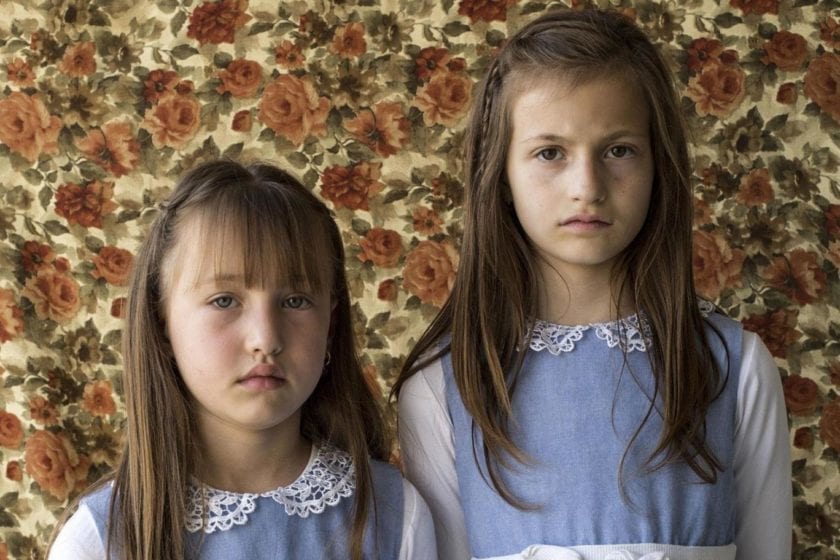
Surely you understand that is completely irrelevant though?

The Konowiecki image has exactly nothing to do with commercial domestic portraiture. I mean, they're just incomparable - why would you look at it and think how am I going to sell this to their mum, when that's not the reason the image exists in the first place?

I say that as someone who has in the past been commissioned to shoot a portrait of a couple of kids. Funnily enough, I didn't enter the result into a portrait prize, because the photo didn't mean anything - it was just a commercial snap of a couple of kids looking happy.
 
Good points both, but we were talking about needing explanations of *how* the photos were taken (mobile lab on the beach, gaining the trust of a reclusive community, etc) rather than explanation of what we're seeing in the images.

To pursue the natural history analogy, understanding my image of a drab bird on a stick would be enhanced if one could tell that the state of its plumage indicated that the photo was taken during the mating season, and that the bird's posture was defensive. One could read a lot into that, and that seems analogous to the vocabulary of symbols which we have lost. But it's a completely different type of explanation than the one about it bring a rare bird living in a leech-infested swamp.

In the case of the tintype, the medium is the message. Its use imposes a certain method of working/posing/collaborating, which in turn produces results that you simply wouldn't get from a faster, more convenient medium, which changes the way such a portrait is perceived. There's the contradiction of documenting a typically laid back culture with a medium that's associated with stiff formality. The contrast between a modern lifestyle seen through an old process. Everything about the process adds to the result in this instance. It's like showing your working for a Math problem - the answer is important, yes, but you get more marks by showing how you manipulated those numbers and formulas to get to a result.

Now as for the theoretical drab bird on a stick, I assume that it's perfectly exposed, perfectly in focus, and technically acceptable. Very safe and 'proper'. The process and the story behind that image would be glossed over by that clinical perfection - of course, being clinical can be used to great effect, but more often than not it comes across as plastic.

A more interesting way of visually conveying that bird's rarity and the struggle to get to that result could be to present that single bird on a stick frame within sequence of frames just showing the stick. Or place that drab bird in the middle of a grid of photos, with the other photos showing the physical process of getting to the swamp, setting up, and waiting. Or even a GIF where the bird is present in a single frame. That way the medium conveys how fleeting seeing (let alone capturing it in an image) one of those birds actually is.

Now most of the time the way you took a photo isn't as important as the way you present it, but I think tintype is a special case in the way it rolls everything together. It's self referential, the result always points back to its process, a bit like looking at the rings of a tree drunk or layers of sediment in a rock. Polaroids have a hint of that too. Regular film (and digital), not so much.
 
I suspect many pro's regard their photography as a craft rather than an art.

I'm merely an amateur, but I consider most photography to be craft rather than art.

Photography is a medium which can be used to create art. It can also be used to document, illustrate, record and copy. Just because there is an image involved, it isn't always art.


Steve.
 
Both of you seem to be saying that the process of taking the photograph is a significant factor in its quality. Have I understood that right?

Sorry late to the discussion.
No I loved the photo, looking forward to seeing it in the flesh. It's very reminiscent of the old western images and stands on it's own, even better with the series.
Reminded me of stuff like Timothy O Sullivan
http://www.getty.edu/art/collection/artists/1892/timothy-h-o'sullivan-american-about-1840-1882/

Then, looking at the time, how it was produced, and even the little magic of producing the image in front of the subjects on the beach is an added touch, not for the judging but more as an answer to the comment of "They're all s***e"
 
Last edited:
Kovi Konowiecki image is easy to dismiss at first hand, it's better as part of the series and I don't think is the best in the series. It also needs the description to add to the meaning

“When I set out to photograph the faces of Orthodox Jews around the world, it was an attempt to both strengthen my ties to my family’s history and shed light on the traditions of a people that seem strange to modern society.
The project started by contacting members of the Jewish community from where I grew up, and evolved into travels across the world to capture Orthodox Jews who, although live thousands of miles apart, are bound together by history, tradition and a set of values that serve as the cornerstone of the lives of many who live in today’s society.”
 
What I have found interesting in this thread is that it is an almost perfect example of the habit of a lot of people to regard their particular opinion as fact, and arguing with others who have a different opinion.

I posted a comment which was my opinion of the three photographs in question, others may agree or disagree with my comments, as is their right, but it is an opinion and therefore has no more or less weight than anyone else's opinion.

Present mathematical knowledge is that 2 + 2 = 4 is a matter of fact and therefore cannot be the subject of debate, the meaning or value of any piece of art is a matter of opinion and therefore has no factual basis which can be considered as right or wrong.
 
Last edited:
I posted a comment which was my opinion of the three photographs in question, others may agree or disagree with my comments, as is their right, but it is an opinion .
Absolutely correct (y)

others may agree or disagree with my comments, as is their right, but it is an opinion and therefore has no more or less weight than anyone else's opinion.
.

Absolute [PLEASE DON'T TRY TO BYPASS THE SWEAR FILTER] :LOL:

All opinions are valid, all do not carry the same weight. Should I get cancer, I'll take the opinion of the Oncologist regarding my treatment rather than Joe down the pub.

If I want advice about a car to buy, I'll take an expert opinion, likewise a restaurant to eat at or anything else where the building of knowledge creates an 'expert'.

Now whilst you might create fantastic pictures or complete s***e (I've no idea), why would I measure your unqualified opinion as equal to an art teacher, art critic etc when it comes to 'art'.

Simple really :D

Feel free to disagree with what I've said, but it devalues it in no way whatsoever, because you're clearly not an 'expert' when it comes to opinions :p
 
Last edited:
What I have found interesting in this thread is that it is an almost perfect example of the habit of a lot of people to regard their particular opinion as fact, and arguing with others who have a different opinion.

I posted a comment which was my opinion of the three photographs in question, others may agree or disagree with my comments, as is their right, but it is an opinion and therefore has no more or less weight than anyone else's opinion.


We have this in art based discussions. Someone will post it's s***e, at least you avoided that by posting some reasoning to your thinking which was:

Two girls photographed by their mother using a single use film camera.
A boring static photograph of a couple which appears to have been chosen because it was produced using an approximately 100 year old imaging process.
A photograph of a school pupil which is one selected from the 500 or so taken on the same day by a very average schools photographer.

So you've reached the same conclusion, but at least expanded on it slightly.

What we've tried to do is discuss around the images, explain why they've been selected, how they fit in the series they were from and why they have merit in the field they are being judged in - as art pieces. As such, taking the images on their own, without the explanation (or research) has led to to your conclusion.

It's not about right's, agreements, triggering or any of the new fashionable trends, It's about discussing the merits of a piece (or pieces) of work, understanding the context it belongs in and then forming an opinion.

Of which, sorry, but yours is wrong in this case. But thats fine, I too wouldn't have understood two of these three images without having studied similar, but one needs to understand that there are different forms of photography. It's not just about documenting a moment, or creating something thats pretty. Sometimes it's using the media of photography to create something that provokes a different reaction than just eye candy, it's about thinking about the image. At least you started along that path ;)
 
Back
Top