Switching to Fujifilm?

Sgtpowers

Suspended / Banned
Messages
5
Edit My Images
Yes
Dear fellow photographers,

I recently switched to a mirrorless camera for the first time (a Sony A7 II), and I have absolutely no regrets. The design and compactness of it is a huge pro for me. However, maybe I was a bit too hasty with choosing the brand and model. I was already looking at Fujifilm cause I like the retro design, compactness, and for the same money of the A7 II I could buy a way newer model with newer technology.

The models I'm looking right now at the moment are the X-T3, X-T30, and the X-S10. But, I think the X-T30 is too small for my taste. Is it worth switching from a A7 II, with a Tamron 28-75 lens, to a Fujifilm? (the setup I own now is quite compact, but the lens really isn't). And Im not sure yet what lenses I could get for a Fujifilm... I might like the 18-55mm 2.8.

How is the image quality of these newer Fujifilm models compared to the A7 II? I've got so many questions but I'm getting headache with comparing all these models:p

Please, any advice is welcome why I could / should switch, or maybe not.
 
Ok I will put my bit in.
I have never used a Sony but have a Fuji XT-1 and an XE-2, the things that would sway me are Sony has a FF sensor and there are more 3rd party lenses available for Sony than for Fuji.
This might be a help


Personally I would stick with the Sony unless there was something about it that you absolutely hated
 
I've just gone the other way. Sold my xt3 and bought a Sony a9.
I adore Fuji and love the xt3, but it wasn't good enough for birds in flight. Static subjects it's hard to beat, but the AF just can't keep up with moving birds.

Thankfully I sold my xt3 to my wife, so I can still use it! The xt3 video is incredible, way better than the A9.

Fuji lenses are generally cheaper than Sony, even the third party ones. I had the 10-24, 18-55 and 100-400. My wife also bought the 100-400 off of me and I sold the others.

I've bought the Sony 200-600 and probably that's all I get as I cant afford to buy a wide zoom right now. Even the tamron is over £500. The A9 body cost £1600, the xt3 is worth about £700 even though they are around the same era. The Fuji 100-400 and the Sony 200-600 are about the same money give or take.

No experience with the a7ii so can't help there, but if you shooting anything other than fast moving birds, you won't regret the xt3.

Should also add, the xt3 with the 100-400 and 1.4tc is considerably lighter than the Sony A9 with the 200-600.
 
Last edited:
What do you do with your images and what sort of photos do you take?

Your reason for switching is design & cost but as you've already spend money on the Sony, wouldn't you lose a lot of that "value" in p/x or resale making it less cost effective?

I tend to switch between the (Fuji) 18-135 for general stuff and the small & light 35mm f/1.4 for low light. This has been plenty good enough for the majority of my digital work, with the 50-140 as a portrait lens and the 16mm f/1.4 as wideangle. I did have a 16-55 f/2.8 but ended up selling it as it was too big & heavy, and it overbalanced the body with too little gain over the "kit" 18-55 for my photography.

In terms of image quality, there are plenty of reviews online and I haven't used the Sony so can't comment there. What I would say is try and consider the reviews in their context. No-one apart from photographers look at an image down at pixel levels.

What you end up measuring is the cost of switching (which is subjective to you) and your desire for the Fuji form & design (which is very subjective to you!). Difficult to advise on that one! For me, there's nothing worse than a camera that doesn't feel right in my hands - I end up never taking it out, which doesn't help my photography at all.
 
No-one apart from photographers look at an image down at pixel levels.
That's very true and no-one apart from photographers care what camera you used.

There's no such thing as a bad camera these days, which one you choose depends entirely on you, how you want to use it and what you want to shoot with it. I'd say that the Sony is likely as good a camera as you'll need initially, you say you are new to mirrorless but you don't say where you are in photography generally (phone, dslr, compact etc), if it were me I'd give the Sony a chance, develop my skills with it then decide if a change was necessary.

Ian is right though how it feels to you makes a big difference.
 
One good thing with FF mirrorless is that you can enjoy old film era lenses at their intended FoV. It's addictive though :D

I'm pretty happy with my Sony A7 mk1 and the relatively cheap Sony f1.8 lenses do seem to be very good for (IMO) reasonable money. I do also like the Sony 35mm f2.8 as it's tiny and makes for a very compact camera and lens package. Faced with a choice of FF or a similarly sized APS-C package the APS-C choice would have to offer a clear and real advantage over the FF offering. I don't know if any Fuji APS-C package offers a real and clear advantage and the Fuji retro look isn't enough to tempt me.

Good luck choosing but I'd keep the Sony A7II.
 
I switched from Canon FF to Fuji a few years back and am pleased I made the move, Fuji lenses are great, particularly the primes. However I would not be looking at the 16-55 if you are after a smaller set up.
 
The only person who knows whether the Fuji cameras would suit you is you. If you could borrow or rent a camera it might help you make the choice.

A camera that you bond with is the camera you will find any excuse to use because you love the process of taking photographs with it. Personally, I love the Fuji cameras and have several for different jobs (X-H1, X-T3, X-T2, X-T20, even an X-A5). I like the retro looks and just love the way the dials and controls make the cameras a wonderful tactile experience to use but you may be different.

I think it's fair to say that if you're into sports photography or birds in flight then the Fuji cameras AF performance may not be technically as good as other brands.

I don't think that Fuji make a bad lens. Even the 'kit' lenses perform well. The 18-55 is a fine lens for the price and whilst the 16-55 is better in image quality terms it is twice the price and twice the size and weight. The prime lenses are superb for IQ and offer good value for money. I tend to use the 10-24, 18-55 and 55-200 and occasionally the 100-400 for most of my photography but sometimes go out with the 23mm and 35mm on something like the X-T20 if I want a light and inconspicuous setup.

I suggest that you beg steal or borrow an X-T3/X-T2 with the 18-55 to try for yourself and make the decision based on your experiences.
 
Last edited:
I'm a bit of a camera whore, nikon, canon 7Dii, Fuji XT3, recently bought an A9ii and a 200-600 , took it to oulton park yesterday for the first time and it's blown my mind , the tracking is unbelievable , the little green box locked on to a bike doing 90mph 300m away , followed it round a bend where only his helmet was still visible, didn't lose it when a post got in the way , then when he came back into view, go on then take the bloody picture

I was shooting handheld at 600mm and barely missing a shot

Just upgrade the body if you've already got sony lenses , I've also got 2 Samyang AF lenses a 50mm f/1.4 and a 16mm f/2.8 both of those are really good too

I got the A9ii from a guy on ebay , UK stock , sealed box £3200 , registered for the 2 year warranty OK
 
Last edited:
What do you do with your images and what sort of photos do you take?

Your reason for switching is design & cost but as you've already spend money on the Sony, wouldn't you lose a lot of that "value" in p/x or resale making it less cost effective?

I tend to switch between the (Fuji) 18-135 for general stuff and the small & light 35mm f/1.4 for low light. This has been plenty good enough for the majority of my digital work, with the 50-140 as a portrait lens and the 16mm f/1.4 as wideangle. I did have a 16-55 f/2.8 but ended up selling it as it was too big & heavy, and it overbalanced the body with too little gain over the "kit" 18-55 for my photography.

In terms of image quality, there are plenty of reviews online and I haven't used the Sony so can't comment there. What I would say is try and consider the reviews in their context. No-one apart from photographers look at an image down at pixel levels.

What you end up measuring is the cost of switching (which is subjective to you) and your desire for the Fuji form & design (which is very subjective to you!). Difficult to advise on that one! For me, there's nothing worse than a camera that doesn't feel right in my hands - I end up never taking it out, which doesn't help my photography at all.
I take allround photos. Street, people, landscape, and cars. So I definitely dont need a huge lens on my body.

That's very true and no-one apart from photographers care what camera you used.

There's no such thing as a bad camera these days, which one you choose depends entirely on you, how you want to use it and what you want to shoot with it. I'd say that the Sony is likely as good a camera as you'll need initially, you say you are new to mirrorless but you don't say where you are in photography generally (phone, dslr, compact etc), if it were me I'd give the Sony a chance, develop my skills with it then decide if a change was necessary.

Ian is right though how it feels to you makes a big difference.
I used Nikon and Canon dslr's for many years, and the A7 II is my first mirrorless. A huge benefit for me personally of mirrorless is the smaller size of the camera, but also that you can keep taking great quality photos. For example, using a phone for photography is a BIG NO from me.

Thanks for all the other thoughts and advice.
I was thinking, maybe I could buy a used X-T20 with kitlens for a nice price, keep my Sony A7 II, and play around with the X-T20 for a while. If I like it, I could upgrade later on to a body like the X-T3.
 
The choice to me comes down to full frame or crop. Do you like the extra depth of field from crop or the bett subject separation of FF? Do you need the extra dynamic range and lower noise of FF or is crop acceptable. Those would be the deciding factors for me.

As said already, there aren't any bad cameras now.
 
These are some of the results from my first trip out with the A9ii and 200-600, I really think you'd be better off spending money upgrading the body you have than starting with a new system

 
Last edited:
Often thought about switching the other way, from Fuji to Sony - it was the A7III I was interested in. I wouldn't switch for anything less. I think the Fuji crop sensor cams stand up very well to anything older in that line. Really depends on your personal needs, if it's speed you're after then a higher end Sony model is the way to go if money is no obstacle. It's the main reason I didn't switch in the end, the price of the lenses I would like to use on FF are just beyond my budget
 
I am primarily a Canon DSLR shooter but I bought a Fuji XT-30 ( which can be too small to handhold properly with larger lenses)to try out mirrorless, Personally I find the JPEGs much easier to set up in the menu with recipes than compared to Canon. The silent shutter is nice but overall I didn’t find it that much better to switch. I am so used to my Canon gear that it’s more instinctive when I use it. As others have said the image quality is pretty similar between different brands, it’s more like your decision is determined by your software being able to process the RAWs, the lens choice/price, weather sealing, reliability, ergonomics and for sports AF tracking.
 
Last edited:
I’ve just switched from Sony to Fuji. Had an A7iii, a Tamron 28-75 which I changed to Sony 24-105, Voightlander 40 1.2 and Samyang 35.
Now have an X-pro3, 16-55 and 23 1.4.
It has reinvigorated my love for photography. Difficult to describe but I just didn’t get on with the Sony. The Fuji’s manual dials, aperture ring, smaller size (more so the lenses), I now enjoy taking photos again. Thinking of getting an XT4 and 100-400 for bird photos.
Just really glad I changed
 
Last edited:
Sorry, but whenever people say thing like "I can't explain...." and "There's something about..." or "Difficult to describe" I just want them to try harder to qualify and quantify and explain. Maybe it's because I spent my working life fixing and testing suff, but I like detail and reasoned decisions.

I do get the appeal of manual dials and if that's what floats anyone's boat that's a good enough reason but at least it can be a thought about and stated reason.

Other than that. When I first switched from 35mm to DSLR it was with a Canon APS-C as there weren't any FF digital cameras then. After initially wondering why 28mm wasn't wide any more I quickly adapted to APS-C shooting and stick with Canon APS-C for something like 8 or 9 years before switching to a FF 5D. I actually found the transition back to "FF" more difficult than I'd thought it would be because I was stopping down more to get depth and that was affecting the shutter speed/ISO. Once I'd readjusted to FF I was TBH happier than I'd ever been with APS-C and although I've bought into and still have MFT kit FF is what I mostly want to use.

The bulk and weight is worth looking at but I think as far as possible the crop factor should be thought about and equivalent lenses should be compared, for example I think there's little point comparing a Sony 50mm f1.4 to a Fuji 50mm f1.4.

Good luck weighing the pros and cons and deciding.
 
The choice to me comes down to full frame or crop. Do you like the extra depth of field from crop or the bett subject separation of FF? Do you need the extra dynamic range and lower noise of FF or is crop acceptable. Those would be the deciding factors for me.

As said already, there aren't any bad cameras now.
I actually don't really need a full frame camera, it's a nice extra but not a must for me. Just like the Fujifilm, I really like'd the design of the Sony A series.

These are some of the results from my first trip out with the A9ii and 200-600, I really think you'd be better off spending money upgrading the body you have than starting with a new system

Nice shots. No its ok, I dont mind switching brands or upgrade with new lenses. I noticed that FF lenses are pretty expensive.

I’ve just switched from Sony to Fuji. Had an A7iii, a Tamron 28-75 which I changed to Sony 24-105, Voightlander 40 1.2 and Samyang 35.
Now have an X-pro3, 16-55 and 23 1.4.
It has reinvigorated my love for photography. Difficult to describe but I just didn’t get on with the Sony. The Fuji’s manual dials, aperture ring, smaller size (more so the lenses), I now enjoy taking photos again. Thinking of getting an XT4 and 100-400 for bird photos.
Just really glad I changed
Nice to hear, Craig. I can't wait to try out a Fujifilm. I do like my Sony A7 II but I want something more compact with a small lens. Easy to carry and shoot for all kinds of occasions.

As I said before, I do like my A7 II and because I just own it recently, I try to buy a used X-T20 with 18-55mm lens and keep my Sony. If I want more I can always later on sell the A7 and buy a different model of Fujifilm. I think this is my best option now.
 
I jumped ship to Fuji about 4 years ago now. Some of the better Fuji lenses are deceptively bigger & heavier than you think. I have the X-T2 & X-T3 bodies, plus about 5 or 6 lenses. The one I regret moving on is the 16mm f1.4. The 50-140 & 100-400 are both excellent but heavier than you may think. Saying that, my T3 with grip with 100-400 & 1.4TC is a lot lighter than my old gripped 7D2 & Sigma 150-600.

About the only thing I would change for now (other than a GFX) is a Nikon Z set up (did really say that???)... But it's bigger, heavier, and a very lot more money.
 
Kerbside appeal has a lot to do with our decision maiing process, its difficult to buy a 'bad' camera these days, but its perfectly possible to buy one that doesn't suit your personal requirements and its very possible to buy one that gets left at home.

Having a camera that you want to pick up and take out makes a real diffenence to how much it gets used.

I've owned many Fuji's (along with lots of other cameras) including X100, X-E1, X-E2, X-T1, X-T2, X-M1, X-A1 and currently have X100F, X-H1 and GFX. The X-H1 with its more DSLR like style has lost the kerbside appeal of the X-T range, and as such is a camera that I just can't bond with as much - is that rational ?? Probably not, as effectively it replaced an identical output X-T2 but has more bells and whistles.

My wife has an X-T20 is a good camera, but it is small, if you have larger than average hands you might find it too small - just a warning.
 
My wife has an X-T20 is a good camera, but it is small, if you have larger than average hands you might find it too small - just a warning.
My son has the X-T10, and it's a great camera, but it is a little small for me.
It's 90% of the Fuji experience to me (I have the X-T2 and X-T3), but do I miss the ISO dial and the comfort provided by the twin card slots.
 
Lucky me, I haven't got huge hands. Size maybe isn't problem when I keep the A7 II besides the X-T20. And I don't want to spent more for the X-T2, too expensive.
 
I just bought an X-T20 + 18-55 lens! I'm instant in love with the design, the feel, the look, everything. I understand why people love Fujifilm. This is something else than a Nikon or Canon.

I'm figuring out all the new setting manners of Fujifilm, a bit different than other brands. There is one thing I don't understand and I could use some help. I like to shoot manual, and try to use some of the film simulation recipes from the internet. For example this one:
Classic Chrome
Dynamic Range: DR200
Highlight: -1
Shadow: +1
Color: +2
Noise Reduction: -2
Sharpening: +2
Grain Effect: Weak
White Balance: Auto, +1 Red & -1 Blue
ISO: Auto up to 12800
Exposure Compensation: +2/3 (typically)


My iso is set from 200 to 800, everything else is set as here above. But I dont understand why I can set up the shutterspeed all up to 1/4000 and sometimes it still is too bright? Am I missing something? The shutter speed dail works like B-T-1(second?)-2-4-8 etc > 1/125-180x-250-500 etc>? My pictures are too dark, too bright or have lots of contrast. I dont understand whats wrong. Please help, and sorry if my explanation is a bit confusing (bad English).
 
Has the X-T20 an option for electronic shutter. ?
Put it in Aperture priority and Give it a go.
 
Kerbside appeal has a lot to do with our decision maiing process, its difficult to buy a 'bad' camera these days, but its perfectly possible to buy one that doesn't suit your personal requirements and its very possible to buy one that gets left at home.

Having a camera that you want to pick up and take out makes a real diffenence to how much it gets used.

I've owned many Fuji's (along with lots of other cameras) including X100, X-E1, X-E2, X-T1, X-T2, X-M1, X-A1 and currently have X100F, X-H1 and GFX. The X-H1 with its more DSLR like style has lost the kerbside appeal of the X-T range, and as such is a camera that I just can't bond with as much - is that rational ?? Probably not, as effectively it replaced an identical output X-T2 but has more bells and whistles.

My wife has an X-T20 is a good camera, but it is small, if you have larger than average hands you might find it too small - just a warning.
I’ve been in a similar situation with Fuji, as you may recall @Mr Perceptive. My involvement with Fuji ended with the X-H1, which I could not gel with. Like @woof woof I have had a technical career, in HGV repairs and then IT, which meant careful analysis of problems and situations, but I also can have strong emotional attachment to devices which bond with me. Often for irrational reasons. If the X-Pro range sported IBIS I would be back to it in a shot, but now I am more or less committed to Sony, specifically the A7C, which is almost there but a little lacking, in my opinion, ergonomically. That camera is certainly more suited to smaller prime lenses though I do have a couple of zooms.
 
I just bought an X-T20 + 18-55 lens! I'm instant in love with the design, the feel, the look, everything. I understand why people love Fujifilm. This is something else than a Nikon or Canon.

I'm figuring out all the new setting manners of Fujifilm, a bit different than other brands. There is one thing I don't understand and I could use some help. I like to shoot manual, and try to use some of the film simulation recipes from the internet. For example this one:
Classic Chrome
Dynamic Range: DR200
Highlight: -1
Shadow: +1
Color: +2
Noise Reduction: -2
Sharpening: +2
Grain Effect: Weak
White Balance: Auto, +1 Red & -1 Blue
ISO: Auto up to 12800
Exposure Compensation: +2/3 (typically)


My iso is set from 200 to 800, everything else is set as here above. But I dont understand why I can set up the shutterspeed all up to 1/4000 and sometimes it still is too bright? Am I missing something? The shutter speed dail works like B-T-1(second?)-2-4-8 etc > 1/125-180x-250-500 etc>? My pictures are too dark, too bright or have lots of contrast. I dont understand whats wrong. Please help, and sorry if my explanation is a bit confusing (bad English).
Have you accidentally set 3 stops over compensation instead of 2/3 stop compensation?
 
I’ve been in a similar situation with Fuji, as you may recall @Mr Perceptive. My involvement with Fuji ended with the X-H1, which I could not gel with. Like @woof woof I have had a technical career, in HGV repairs and then IT, which meant careful analysis of problems and situations, but I also can have strong emotional attachment to devices which bond with me. Often for irrational reasons. If the X-Pro range sported IBIS I would be back to it in a shot, but now I am more or less committed to Sony, specifically the A7C, which is almost there but a little lacking, in my opinion, ergonomically. That camera is certainly more suited to smaller prime lenses though I do have a couple of zooms.
I agree I view the X-H1 as a machine, almost tempted to buy another X-T2 to get the 'feel' back
 
I just bought an X-T20 + 18-55 lens! I'm instant in love with the design, the feel, the look, everything. I understand why people love Fujifilm. This is something else than a Nikon or Canon.

I'm figuring out all the new setting manners of Fujifilm, a bit different than other brands. There is one thing I don't understand and I could use some help. I like to shoot manual, and try to use some of the film simulation recipes from the internet. For example this one:
Classic Chrome
Dynamic Range: DR200
Highlight: -1
Shadow: +1
Color: +2
Noise Reduction: -2
Sharpening: +2
Grain Effect: Weak
White Balance: Auto, +1 Red & -1 Blue
ISO: Auto up to 12800
Exposure Compensation: +2/3 (typically)


My iso is set from 200 to 800, everything else is set as here above. But I dont understand why I can set up the shutterspeed all up to 1/4000 and sometimes it still is too bright? Am I missing something? The shutter speed dail works like B-T-1(second?)-2-4-8 etc > 1/125-180x-250-500 etc>? My pictures are too dark, too bright or have lots of contrast. I dont understand whats wrong. Please help, and sorry if my explanation is a bit confusing (bad English).
Have you accidentally set 3 stops over compensation instead of 2/3 stop compensation?

If you rteally are shooting manual, put the exposure compensation to zero, and put teh ISO on a control wheel. You can control your whole exposure then by fixiung teh ISO, and adjusting Aperture and Shutter Speed to suit.

Auto ISO and Exposure Compensatiuon have no place in shooting manual!!
 
If you rteally are shooting manual, put the exposure compensation to zero, and put teh ISO on a control wheel. You can control your whole exposure then by fixiung teh ISO, and adjusting Aperture and Shutter Speed to suit.

Auto ISO and Exposure Compensatiuon have no place in shooting manual!!

Why not? Discounting these things seem rather Talibanesque but using them can have real advantages.

Fixing the ISO and adjusting the aperture and shutter speed to suit what? Setting the ISO and then setting the aperture and shutter speed to suit could result in the dof being too thin or needless diffraction or the shutter speed being too slow or any combination of problems. If hitting a problem I suppose you set the ISO again and then set the aperture and shutter speed again? And again? Better to fix the aperture and shutter speed to suit the subject and the result you want and adjust the ISO to suit, IMO. For example, if the camera selects 1/60 in aperture priority that may be too low a shutter speed for anything that may move from people to flowers in the breeze. Switching to manual would allow both the aperture and shutter speed to be fixed to whatever you deem appropriate (f5.6 and 1/160 maybe?) whilst leaving the camera to set the ISO. Dialing in exposure compensation could then get the exposure to what the photographer thinks appropriate as metering doesn't always get it "right."

If you want to shoot manual with no bells and no whistles and assuming you have a reason for doing so other than bloody mindedness or to pretend it's 1956 then you'll spend time that could be spent concentrating on the composition and pressing the shutter at the right moment on fiddling with the controls.

But, each to their own.
 
I used to shoot full manual all the time, but lately I have been sticking the controls to A on the ISO and SS and just letting it do it's thing, been working out nicely. I think cameras these days have significantly better AI than ones from a decade back for sure. Also ISO performance has greatly improved, I'm not mad if the camera decides 3200 is what we should be at - situation dependent of course, when I'm shooting macro I'll revert to all manual, I want the lowest ISO and will use flash to allow for narrow aperture, and with flash I want to control the SS also. But for general shooting I'm mostly choosing the aperture I desire and letting the camera take care of the rest

On the X-H1, I love this camera, I like having a nice chunky grip, the other models may look nicer but that's not so important for me. I've owned the XT1 and XPro1 and neither compare to the comfort I find from the H1.
 
Dialing in exposure compensation could then get the exposure to what the photographer thinks appropriate as metering doesn't always get it "right."

Yes there are loits of ways to shoot, but why dialling in exposure compensation if you have control of the shutter speed and aperture, surely you would adjust shutter speed or alter the ISO.. I don't see Exposure Compensation on the Exposure Triangle, just ISO, Shutter Speed and Aperture

Exposure Compensation has its place especially in shooting in Aperture Priority, where it will alter shutter speed and the ISO if the min shutter speed has dropped below your preset min target.
 
Yes there are loits of ways to shoot, but why dialling in exposure compensation if you have control of the shutter speed and aperture, surely you would adjust shutter speed or alter the ISO.. I don't see Exposure Compensation on the Exposure Triangle, just ISO, Shutter Speed and Aperture

Exposure Compensation has its place especially in shooting in Aperture Priority, where it will alter shutter speed and the ISO if the min shutter speed has dropped below your preset min target.

Because there are times when you want to set the aperture and the shutter speed and that leaves the ISO as the only variable.

For example in the aperture priority example I gave above. If the light is low the camera will probably select too slow a shutter speed for many uses. You can then switch to shutter priority but the camera may then select an aperture you wouldn't or you can dial in a minimum shutter speed which may not be appropriate for the next shot. It's all choices but what I do is switch to manual and dial in the aperture and shutter speed I want, let the ISO float and if required dial in exposure compensation.

When entering aperture and shutter settings in manual I'll have only one variable, the IS, and I'll have to either allow the camera to select it or select it myself. Letting the camera do it saves time and if I disagree I can turn the exposure dial.

Exposure compensation is then just adjusting the ISO and is a part of the exposure triangle, it's just a faster way of doing it with less fiddling with settings.

I personally don't see the logic in going full manual just for the sake of it. If there's a reasoned argument behind it like you want to fix all the values because... then fine but I don't see the argument that exposure compensation isn't part of the exposure triangle therefore I'm not going to use it or auto ISO and compo have no place in shooting manual as good arguments as clearly it is, you're adjusting the ISO and that's a part of the exposure triangle.


Because Auto ISO is an Automatic setting so isn't manual. As for EC, any variance from the original/correct exposure is just over or under exposure.

I use full manual occasionally but only when I feel I need to - modern metering is pretty damn good and I think I have enough knowledge to know when to add a bit of EC.
 
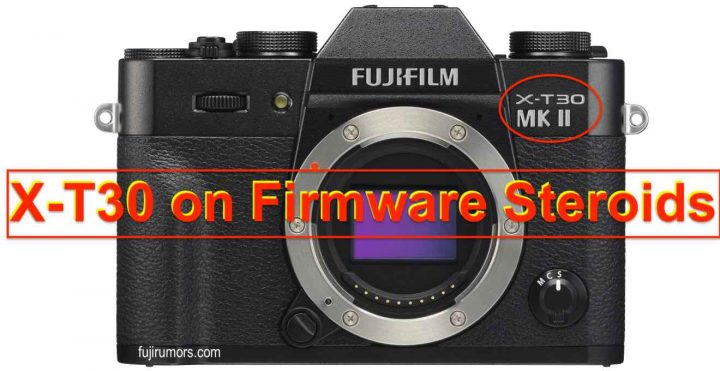
I don’t know if this is of relevance, looks like the X-T30 II is coming out, it adds IBIS. Official announcement on September 2nd.
 
Has that been confirmed anywhere? IBIS, not the date.
 
It’s always speculation until the official announcement.
 
Back
Top