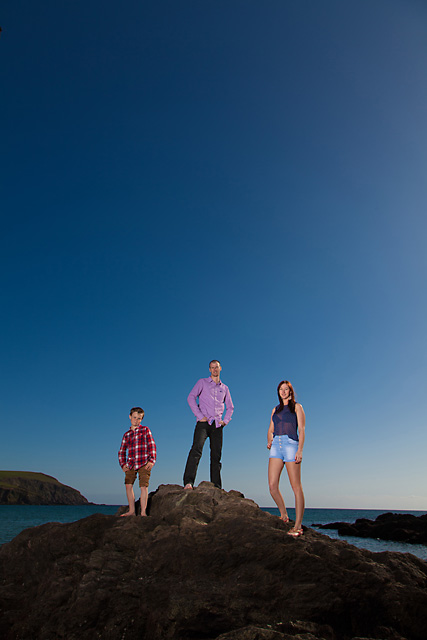
Strobe lighting rig for location shoots

Gary.D

Hoodie
Suspended / Banned
Messages
2,499
Name
Gary Derbridge
Edit My Images
Yes
Lencarta Safari either the classic or Li-on . I have the classic kit , one head is 600ws or you can plug in two and split the power 50/50 over them both . I have used both and they are very good units .
 
Posts crossed....

Re the Classic vs Lion.....I've used both. I don't think there's any area where the Classic beats the Lion EXCEPT robustness of heads. Classic wins in that area for me by quite a long way.

But having both a Classic and a Strobeam to hand, 90% of the time I grab the Strobeam.
 
As Jonathan stated the classic heads seem to be a little bit more robust .
Why the strobeam over safari Jonathan ? I quite like the look of the strobeam but can't really justify the cost of both .
 
Hi guys,

I am looking into buying a lighting rig for location shoots mainly wedding and portraits.

It needs to be a powerful kit around 400w/s

I have found this kit: http://www.fotosense.co.uk/elinchrom-ranger-quadra-rx-to-go-s-standard-set-el10292.html

for around £1100 which suits my needs but is a tad over budget.

Do any of you suggest a whole kit with a smaller price tag?

I look forward to your replies.Gary
This thread will probably answer most of your questions, but for a more complete answer it will be worth getting hold of the head to head tests in Advanced Photographer, they tested nearly all of the location lighting systems on the market and the Safari Li-on won by a country mile, followed by Profoto and then Elinchrom.
 
As Jonathan stated the classic heads seem to be a little bit more robust .
Why the strobeam over safari Jonathan ?

2 questions first of all why do you prefer the Strobeam to the Classic

It's lots of little things rather than any one big one. But mainly, the Strobeam battery pack is MUCH smaller than the Lencarta one. I find that easier to live with.

For example, I have a smallish zip bag the will take a softbox, nano stand, single head and cables. With the Strobeam system I can also easily fit the battery pack in there. With the Lencarta I need to take it separately. Sounds like a small thing but it makes an easy choice for me. Also, if I set up a light on a stand I can easily hang a Strobeam battery from it. Lencarta either needs fastening to the stand or leaving nearby. With the Strobeam if I have a camera in one hand I can pick up and move the light with the other. With the Lencarta I need 3 hands.

secondly do you think it is worth a £111.00 more?

Price is always tricky, but I think anybody who has used both will agree that a Lion battery is worth more than an equivalent system with a NiMH or Nicad. Lighter, longer lasting and more forgiving of real life. Safari Lion is about 20% more expensive than Safari Classic and that doesn't seem unreasonable to me for the extra benefits you get.

Strobeam is a little cheaper than the Safari Lion and also runs on mains.
 
Hi Gary,

I happen to have stumbled across your post. Here is a link to the Lencarta spare parts page. On it you can find spare battery prices for both models of Safari. It's £99.99 for a Safari Classic battery (NiMH), and £139.99 for a Safari Li-on battery (Lithuim Ion), all VAT inclusive and p&p free. These batteries are normally bought as backups, in addition to the battery that comes with each Safari pack.

For more information on the Safari Li-on, including feature comparison tables, please check out the Lencarta Safari Li-on page.

Hope this helps. :thumbs:

We are a service-first company. So whenever you have a question please always feel free to get in touch. We are here to help! :)
 
Last edited:
Thank you! For me it's likely to be between the Safari Li-on and the Strobeam.

I wish the Li-on had the remote trigger where I could change the settings from Camera.

It's on the Safari pack where all adjustments are made. In practice when on a shoot the pack will either be carried on your shoulder (with the supplied strap), or sitting on the ground next to the flash heads (each pack can take up to two heads). This makes the pack readily accessible and any adjustment quick and easy.

IMO remote adjustment really becomes more desirable when all controls are on the flash heads themselves, and especially when heads are lifted high up, etc.

p.s. the Safari has a power dial plus digital readout so you can turn it to any power output in literally a second or two.
 
It's on the Safari pack where all adjustments are made. In practice when on a shoot the pack will either be carried on your shoulder (with the supplied strap), or sitting on the ground next to the flash heads (each pack can take up to two heads). This makes the pack readily accessible and any adjustment quick and easy.

IMO remote adjustment really becomes more desirable when all controls are on the flash heads themselves, and especially when heads are lifted high up, etc.

p.s. the Safari has a power dial plus digital readout so you can turn it to any power output in literally a second or two.

What if you are using a 70-200 lens (which is a great lens for portraits) and you are 10m away, not such an advantage then.

When a company invents the cheap do-it-all, they will become very rich, very quick.

I have used both of the above mention kits and also had a bit of access to the Elinchrom stuff too. At the end of the day there is very little between any of the kits and usually it is down to cost/brand snobbery but the main factor should be quality of light which at the end of the day is 99% of the time down to modifiers which, in today's market, are pretty much interchangeable so you should be able to pick any of the systems and shoot to your hearts content, with total freedom.
 
Thanks for your comments Tom.

We spend a lot of time working on all sorts of improvements and innovations. The aim is to provide low cost, high spec products that meet photographers' needs. To make this happen, feedback from Lencarta users are absolutely essential, and unconditionally appreciated. :thumbs:
 
Last edited:
I'm a happy Safari Li-on user and have used the lights both indoors and out (including some beach shots) and wasn't worried about the build or quality. What is great for me is the 600ws of the Safari as I was manging to knock the sun down nicely when shooting beach shots with the sun as rim light :) I had the pack on full power and it did the days shoot with ease.

(Harry, did you get my email today btw?)

Here is one of the beach shots, the sun is just out of frame so you can see how much colour you can bring to even the light side of the sky when shooting almost into the sun. Also, the light is a bit of a way back so losing quite a bit of power. The exif should be there for you to see what was going on.


Beach Safari Li-on by Mark Smith Photography UK, on Flickr

The only thing I would love it a smaller lighter pack, but that's about it.
 
Yes, I'm looking at it now! :)

Thanks :)

I will stop stealing the thread now LOL.

One other thing I love is the modeling light as when I used to use only speedlights the pupils are really large in lower light situations. Now I can rock up anywhere and help get the pupils closed down a bit. It also helps with focus as we all know and was invaluable on a family shoot yesterday evening.
 
IMO remote adjustment really becomes more desirable when all controls are on the flash heads themselves, and especially when heads are lifted high up, etc.

p.s. the Safari has a power dial plus digital readout so you can turn it to any power output in literally a second or two.

Well, my TV has a perfectly adequate set of controls for changing the channel, but I don't think anybody would seriously suggest that a remote control wasn't a good idea.

What if you are using a 70-200 lens (which is a great lens for portraits) and you are 10m away, not such an advantage then.

When a company invents the cheap do-it-all, they will become very rich, very quick.

It's interesting that for all their compromises, one thing that the Elinchrom Quadras got right day 1 was the remote control system. It has some flaws but in rapidly changing light it's amazingly useful to be able to change light power from camera position. It also allows you to finesse the image and even change it totally by flipping lights on and off/up and down.

It's surprising that 3 or so years after their launch, some lights still can't compete with this ease of use of the quadras.

The original question was about weddings and portraits. Even with a trained assistant on each light I'd be happier being able to control light from camera position under these circumstances. Your priorities may differ.
 
Well, my TV has a perfectly adequate set of controls for changing the channel, but I don't think anybody would seriously suggest that a remote control wasn't a good idea.
It's interesting that for all their compromises, one thing that the Elinchrom Quadras got right day 1 was the remote control system. It has some flaws but in rapidly changing light it's amazingly useful to be able to change light power from camera position. It also allows you to finesse the image and even change it totally by flipping lights on and off/up and down.

It's surprising that 3 or so years after their launch, some lights still can't compete with this ease of use of the quadras.

The original question was about weddings and portraits. Even with a trained assistant on each light I'd be happier being able to control light from camera position under these circumstances. Your priorities may differ.
I agree with you, different people have different priorities.
On a TV, I'm lost without a remote control, in fact I don't even know how to use the buttons on the set itself or where they actually are...

On a monoblock flash head, it's always far quicker and easier to make adjustments by pushing buttons or turning a knob on the head itself, provided that it can be reached easily. But if the flash head is stuck up high on a boom arm then remote control becomes a real benefit rather than a marketing feature, which is why Lencarta now has the UltraPro range of remote controlled flash heads. Elinchrom have had remotes in various forms for many years, I bought one of their first ones (hard wired) and gave up on it very quickly simply because I couldn't rely on it to do what it was supposed to do, although I'm sure that that particular shortcoming has been overcome now.

On a flash generator, I greatly prefer just to use the controls on the pack, right at my feet, it's easy, intuitive and very quick.

It isn't really about whether or not a manufacture can add features so much as whether or not their customers want to pay the extra that they cost, or whether they prefer to get a simpler device that has less to go wrong and which costs them less. Maybe a good analogy is the electronic handbrakes fitted to some cars - a nice feature that costs money but which goes wrong, and when it does go wrong the car doesn't go at all... The question really is whether marketing features trump real benefits.

And sometimes it can be difficult to define whether something is a real benefit or just a feature. For example, it can be a 'nice to have' feature to have really short flash durations for most people, but most people don't actually need that feature. For some people (though with studio lighting rather than location lighting) fast flash durations are a real benefit rather than a feature and people are prepared to pay higher cost, get much lower power and take the risk of having a bit of gear that is more highly stressed and which is likely to have a shorter life - horses for courses!

 
Maybe a good analogy is the electronic handbrakes fitted to some cars - a nice feature that costs money but which goes wrong, and when it does go wrong the car doesn't go at all... The question really is whether marketing features trump real benefits.

An interesting analogy. But not a very relevant one.

If my TV remote stops working I walk over and change the channel. If the remote power control on a flash head fails then I can just use the head like one that never had the control in the first place. The volume knob will still set the power perfectly.

It's not like something catastrophic had happened and the power connector to the head had broken.
 
It's surprising that 3 or so years after their launch, some lights still can't compete with this ease of use of the quadras.

I agree with you Jonathan that people have different priorities. To me, and I'm sure to most people, simple, honest power output is something that's a little higher up on the list than a remote control feature. This is more so with portable lighting, when power is critical to beat the Sun in many cases.

Therefore I look on with great interest that some lights claim seemingly unrealistic figures when their flash tube is simply not designed for the job, having a radically different design to other high powered lights worldwide, with a flash tube that is very short and thin, and does not have the adequate surface area to provide good power: it's physics. I could be totally wrong on this of course - it might have been an engineering feat. However, if that unit's power output is genuine it would imply great stress on the (nimble) tube, and a drastically reduced lifespan. ;)
 
Of course I'd love to be proved wrong on this and see some in-depth technical reviews on this light done by a reputable magazine. It would be excellent to see technical breakthroughs that we have previously thought impossible.
 
Last edited:
An interesting discussion between Lencarta and Strobeam :) Priceless.

Back on topic, has anyone come up with a clever way how to take advantage of the "bigger" generators of the Safari LiIon to lower the centre of gravity of a light stand on location? The best I've seen to date is using a Manfrotto background hook with a superclamp. Ok but can be better.
 
An interesting discussion between Lencarta and Strobeam :) Priceless.

Back on topic, has anyone come up with a clever way how to take advantage of the "bigger" generators of the Safari LiIon to lower the centre of gravity of a light stand on location? The best I've seen to date is using a Manfrotto background hook with a superclamp. Ok but can be better.
Nah, the Li-on is too lightweight for use as a stand weight:)
 
Back on topic, has anyone come up with a clever way how to take advantage of the "bigger" generators of the Safari LiIon to lower the centre of gravity of a light stand on location? The best I've seen to date is using a Manfrotto background hook with a superclamp. Ok but can be better.

The safari classic made a worthwhile stand weight, and I used a superclamp, or occasionally juust hung the strap over the lowest adjustment screw of the stand.
The Li-on on the other hand, isn't up to it. There is insufficient weight. I therefore tend to use guide ropes far more often than I used to on soft ground, or simply lay equipment on the three legs on rocky ground.
 
Back
Top