Starting Astro Photography

YoshiK1

Suspended / Banned
Messages
1,535
Edit My Images
No
Can anyone enlighten me to what kind of set up they used when they started astro photography please? I've been researching this for a bit now and there's still I a lot I don't understand and a lot that contradicts each other.

Can I take photos of deep sky objects or even the brightest planets like Mars, Saturn (with rings) with a Sony A7 and a 70-200 lens? And also do it without a tracker?

If you could provide your starting set up that would be a great help. I think I'm getting lost in all of the terminology.
 
Swag72 on here is a bit tasty, or get yourself a copy of "making every photon count". Basically the longer the timed exposure you require the more chance you will need some form of tracking device. Generally prime lenses are better than zooms, because of their aperture. "Bright" planets are very small so large magnification is required, so a telescope is generally better. If the A7 is FF you might find vignetting when using a scope. Where are you based? Do you have very big pockets? :-)
 
^+1 Agreed
 
You might find this web site of use: https://petapixel.com/2014/01/29/picking-great-lens-milky-way-photography/. They recommend a 24mm f1.4 as the 'best' Milky Way lens.

The field of view gets narrower with longer focal lengths and larger sky objects can not be captured in one frame. You also have lower light gathering ability.

The apparent motion of the stars is 'faster' and leads to motion blur with longer f/l lenses.. The usual way to estimate maximum exposure to avoid blurring is 600/fl. So, for 70mm, the maximum shutter speed would be around 9 seconds. For 200mm, it would drop to around 3 seconds.

Most 'good' astrophotographs are made through stacking multiple images (sometimes several 100 images) using specialized software. These can help control noise from high ISO and address other quality issues.

These sites might provide more useful information:
 
Last edited:
If you take a long enough (or a lot of shorter - say 1 min - exposures added together) with your 70-200 aimed at the right bit of sky you may be able to pick out some of the brighter, larger deep sky objects (DSOs) but I guess that's not what you meant. I've successfully done deep sky with a 150-600mm lens on a crop sensor, but the field of view is quite large - the Andromeda Galaxy fits comfortably. Without tracking? No. Saturn and rings? No. The planets are very small and need a telescope - the bigger the better.
You need: tracker that fits on a tripod or dedicated driven equatorial mount, long lens or scope, adaptor to fit camera to scope if you're using one, intervalometer, a means of focusing (bahtinov masks are brilliant), and lots of patience. Take lots of short subs (find the limits of your mount - mine's about 1 min) and integrate not forgetting dark frames to take out sensor noise. Deep Sky Stacker is free and works up to a point.
There's stuff in my Flickr astromony album (same user name as here) taken with the 150-600mm lens, a 70-300mm lens for really big DSOs (not many of them) and a 200mm scope which I only get to use once a year as it's not mine. All using short subs from a driven but unguided mount.
But as Matt said, it don't come cheap, and that's why I don't own my own scope - only a mount .................
 
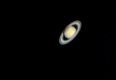
If you want to do planets, you really need a decent telescope that can track and something to get the image with. You don’t need a fantastic camera.
I took this with a 200mm guided telescope and a 1/3 mp camera

33618E34-3DBA-4042-89FD-35590C9A5EC5.jpeg
 
If you want to do planets, you really need a decent telescope that can track and something to get the image with. You don’t need a fantastic camera.
I took this with a 200mm guided telescope and a 1/3 mp camera

View attachment 256522

Wow!!!
 
Back
Top