You are using an out of date browser. It may not display this or other websites correctly.
You should upgrade or use an alternative browser.
You should upgrade or use an alternative browser.
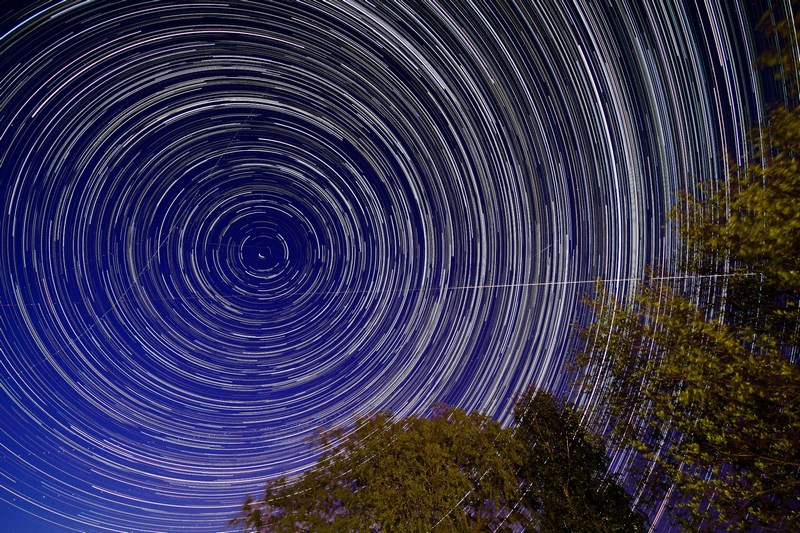
Star Trails
- Thread starter mkemp
- Start date

PaulF
Suspended / Banned
- Messages
- 1,863
- Name
- Paul
- Edit My Images
- Yes
Cheers, one slight problem I run a mac. Is their any equivalent?


Comfy
Suspended / Banned
- Messages
- 578
- Name
- Ryan
- Edit My Images
- Yes
I wrote this in a thread a few months ago, hope it helps 
All I'll add to that is take a flask and some sandwiches
Here's some tips for your first time at star trials to make it easier.
Get your fastest lens on (F2.8 being faster then F4 etc).
Go to manual mode, set to widest aperture and set to 30 secs.
Set your white balance to tungsten (this is my preference, you could do a custom WB).
Set your iso as low as possible that will allow the stars to be exposed, just do a few try-outs and you'll probably be ok with iso 800 (obviously dependant on how fast your lens is).
When checking your "iso try-outs" make sure the image is in focus.
Set to continuous shooting mode and jpg (star trail software doesn't like my raw files)
Compose your image and set your camera to keep taking images. This can be done either with a remote shutter release or a cheap way is to place a suitable object on the shutter button and hold it there with an elastic band.
Let the camera shoot off for a good 20-30 mins to give you a good effect.
Download startrail.de software, load the images into it and watch as your pretty picture comes to life.
All I'll add to that is take a flask and some sandwiches

posiview
Suspended / Banned
- Messages
- 19,304
- Name
- Andy
- Edit My Images
- Yes
I wrote this in a thread a few months ago, hope it helps
All I'll add to that is take a flask and some sandwiches
Hi, Ryan, and apologies the the minor hijack, but does focal length matter? Sorry if thats a stoopid question..
Great tips, by the way.
Cheers.
posiview
Suspended / Banned
- Messages
- 19,304
- Name
- Andy
- Edit My Images
- Yes
@Andy, Focal length when shooting objects at infinity only really affects composition as far as I'm aware.
Cheers...


thelongmile
Suspended / Banned
- Messages
- 46
- Edit My Images
- Yes
focus at infinity if your lens supports it!
Funny, I was tying to do a super super long exposure with about 3 gradient filters on top, it worked, but not well enough and a 28 minute exposure didn't quite work... didn't really think about shooting tonnes and tonnes of pictures!
Funny, I was tying to do a super super long exposure with about 3 gradient filters on top, it worked, but not well enough and a 28 minute exposure didn't quite work... didn't really think about shooting tonnes and tonnes of pictures!
Dangerous_Dave
Suspended / Banned
- Messages
- 128
- Name
- Dave
- Edit My Images
- No
Here's a tutorial I wrote for Astrochat:
http://astrochat.co.uk/forum/viewtopic.php?t=7518
Examples of my star trail pics here:
http://www.flickr.com/photos/dangerous_astro/sets/72157607475934651/
Hope that helps
http://astrochat.co.uk/forum/viewtopic.php?t=7518
Examples of my star trail pics here:
http://www.flickr.com/photos/dangerous_astro/sets/72157607475934651/
Hope that helps
Dangerous_Dave said:Here's a tutorial I wrote for Astrochat:
http://astrochat.co.uk/forum/viewtopic.php?t=7518
Examples of my star trail pics here:
http://www.flickr.com/photos/dangerous_astro/sets/72157607475934651/
Hope that helps
Dangerous D,
Your star trails are immense. Goodjob

Splog
Suspended / Banned
- Messages
- 6,257
- Name
- Steve
- Edit My Images
- No
Those are great now that i can see them, work wont let me.
Would using a hood help keep side light out?
Yes.
Maniacfest
Suspended / Banned
- Messages
- 155
- Name
- James
- Edit My Images
- Yes
Thanks for the info, I have been wanting to try this myself. 
leeharrison2
Suspended / Banned
- Messages
- 79
- Name
- Lee Harrison
- Edit My Images
- Yes
These are some great tips, I can't wait to try it out, how do I know were to point the camera so I get the circular motion of the stars and not just some lines going through my picture???
Splog
Suspended / Banned
- Messages
- 6,257
- Name
- Steve
- Edit My Images
- No
These are some great tips, I can't wait to try it out, how do I know were to point the camera so I get the circular motion of the stars and not just some lines going through my picture???
You need to point it at Polaris.. the North star or pole star (just different names for the same star)...
Look here
Last edited:
leeharrison2
Suspended / Banned
- Messages
- 79
- Name
- Lee Harrison
- Edit My Images
- Yes
thanks, that great, I cant wait to give it a go
Hi Dave thanks for the link to your tutorial, I'm off to north Cyprus next week, there's very low light pollution in the locations I'm planning which is obviously a bonus, but this will be my first attempt as well.
Could you advise me on a few things please ?
I don't know when to take the dark frames, I think at the beginning in case the battery runs out, and why more than one?
I will be able to frame Polaris as well as my foreground subject so would I be best using my 28-70 f2.8 or my 17-55 kit f3.5 for more fov but less light?
If I wanted to light the foreground subject should I do it on a single frame or multiple exposures?
Any tips would be greatly appreciated, thanks Si
Could you advise me on a few things please ?
I don't know when to take the dark frames, I think at the beginning in case the battery runs out, and why more than one?
I will be able to frame Polaris as well as my foreground subject so would I be best using my 28-70 f2.8 or my 17-55 kit f3.5 for more fov but less light?
If I wanted to light the foreground subject should I do it on a single frame or multiple exposures?
Any tips would be greatly appreciated, thanks Si
Splog
Suspended / Banned
- Messages
- 6,257
- Name
- Steve
- Edit My Images
- No
Hi Dave thanks for the link to your tutorial, I'm off to north Cyprus next week, there's very low light pollution in the locations I'm planning which is obviously a bonus, but this will be my first attempt as well.
Could you advise me on a few things please ?
I don't know when to take the dark frames, I think at the beginning in case the battery runs out, and why more than one?
I will be able to frame Polaris as well as my foreground subject so would I be best using my 28-70 f2.8 or my 17-55 kit f3.5 for more fov but less light?
If I wanted to light the foreground subject should I do it on a single frame or multiple exposures?
Any tips would be greatly appreciated, thanks Si
Enjoy the hols!

Don't worry too much about dark frames if you're just starting out :shrug: It does get complicated
Dark frames are used to subtract noise from the shot.. If you want to use them then they should be taken in exactly the same conditions as the shot ... i.e. same exposure length, same ISO and just as importantly same temperature..... Then consider light frames, averages etc. Not to mention average light frames and average dark frames
Nah! sod it...... Just take the shots and begin the fun and the the learning process... Have fun
hollis_f
Suspended / Banned
- Messages
- 3,696
- Name
- Frank
- Edit My Images
- Yes
I don't know when to take the dark frames, I think at the beginning in case the battery runs out, and why more than one?
Like Dave said, having a dark frame at the same temperature is the main thing - so I take them at the end of a shoot. At the beginning just one will suffice.
I will be able to frame Polaris as well as my foreground subject so would I be best using my 28-70 f2.8 or my 17-55 kit f3.5 for more fov but less light?
I've always used as wide as possible. 17mm @ f/3.5 should be good.
If I wanted to light the foreground subject should I do it on a single frame or multiple exposures?
Just the one exposure should be enough.
Thanks for the replies fellas I'm pretty happy now about what I need to do, think is I've got this image in my mind of a particular shot I want and I just have a feeling it'll turn out a load of pants! Still I'll enjoy trying and post up to give everyone a laugh.
Cheers
Si
Cheers
Si
I've got a couple of related questions if that's OK? Should I turn the noise reduction feature off if I attempt this? And if I leave it on will it affect the star trails themselves by leaving little gaps in the trails? Presumably if I left it on I wouldn't need the dark frames?
Ooh, and what's the best way to light the foreground, paint it with flash or with a torch? Cheers!
Ooh, and what's the best way to light the foreground, paint it with flash or with a torch? Cheers!
Splog
Suspended / Banned
- Messages
- 6,257
- Name
- Steve
- Edit My Images
- No
I've got a couple of related questions if that's OK? Should I turn the noise reduction feature off if I attempt this? And if I leave it on will it affect the star trails themselves by leaving little gaps in the trails? Presumably if I left it on I wouldn't need the dark frames?
Ooh, and what's the best way to light the foreground, paint it with flash or with a torch? Cheers!
Yes, yes and yes again
Turn it off.
gnirtS
Suspended / Banned
- Messages
- 601
- Name
- Richard
- Edit My Images
- Yes
You need to point it at Polaris.. the North star or pole star (just different names for the same star)...
I will add though finding the north star exactly in a viewfinder is difficult even if you can see it clearly without the camera.
hollis_f
Suspended / Banned
- Messages
- 3,696
- Name
- Frank
- Edit My Images
- Yes
I will add though finding the north star exactly in a viewfinder is difficult even if you can see it clearly without the camera.
You don't need Polaris dead centre, as long as it's somewhere near the middle of the frame you'll be fine.
gnirtS
Suspended / Banned
- Messages
- 601
- Name
- Richard
- Edit My Images
- Yes
You don't need Polaris dead centre, as long as it's somewhere near the middle of the frame you'll be fine.
Yeah but i have a habit of getting it just out of frame or other places that screw up the shot. No matter how obvious it is to me by eye i always struggle to find it in a view finder.
(its also a high elevation here meaning you cant really use foreground objects to help sight it).
hollis_f
Suspended / Banned
- Messages
- 3,696
- Name
- Frank
- Edit My Images
- Yes
Yeah but i have a habit of getting it just out of frame or other places that screw up the shot. No matter how obvious it is to me by eye i always struggle to find it in a view finder.
(its also a high elevation here meaning you cant really use foreground objects to help sight it).
How wide a lens are you using? At 10mm it's virtually impossible not to include it in any shot where the camera is pointing north and/or up.
hollis_f
Suspended / Banned
- Messages
- 3,696
- Name
- Frank
- Edit My Images
- Yes
10-22mm (at 10mm but on a crop body).
Ive "nearly" got it a few times and just missed. It is 50+ degrees elevation which doesnt help framing.
It's 51º high from here and if I get the horizon just out of frame then Polaris is smack in the middle at 10mm on a 7D.