Star Trails!!

Super_Jimmy

Suspended / Banned
Messages
4
Name
James
Edit My Images
No
Hi everyone, im looking to take some star trail shots, looking for any tips or techniques i should use. im using a 500d with the 18-55mm IS lens. Dont know if interval shots merged on software or simply a really long exposure shot it best??? also what sort of apperture and iso settings are advised?? thanks!:)
 
Hello James...
Yes your right, there are two ways to shot startrails,
1:Through long exposure
2:Via a stacking software

I alway use the long exposure method I find it works for me, My settings are normally F/5.6, Iso 200, with noise reduction on.

Whereby the stacking method you can up the Iso higher, because your only shooting for short bursts...
Hope this helps?
Lance..
 
I on the other hand would recomend the stacking method:lol:

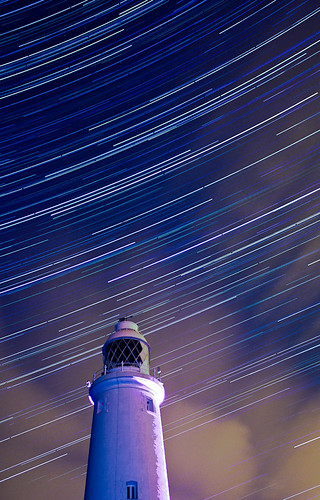
This shot was shot at 30 second exposures at f4and ISO 800 due to the lighthouse been lit. This was taken with my 450d using the 18-55mm IS lens with IS turned off.

In total there were 260ish shots stacked using the free software from http://startrails.de/html/software.html so simple to use, for me the advantage of using this method lies in the fact that if a stray light gets into the image from something like a plane flying by then it's a simple matter of droping those frames from the final image rather than having to start over again.


St Mary's Lighthouse by KeenBfB, on Flickr
 
Hello James...
Yes your right, there are two ways to shot startrails,
1:Through long exposure
2:Via a stacking software

I alway use the long exposure method I find it works for me, My settings are normally F/5.6, Iso 200, with noise reduction on.

Whereby the stacking method you can up the Iso higher, because your only shooting for short bursts...
Hope this helps?
Lance..

Noise reduction and long eposure is not a good idea with star trail shots!
 
Depending on where you are and how dark your skies are, a single long exposure may not work due to light pollution effectively over exposing your sky.

I would use a fairly wide aperture and ISO 800 to capture as much light from the stars as possible, and a 30s exposure. Check your first exposure at these settings to get an overall feel of whether it is too dark/light/just right.

If all is OK, run several exposures at these settings for stacking later. This way you can build up an exposure equivalent to several minutes or even hours without risking blowing out the sky. If you just jump straight in with a single long exposure, if you are looking for a decent length trail you are going to have to wait several minutes before you can check to see what the sky looks like.
 
Hi everyone, im looking to take some star trail shots, looking for any tips or techniques i should use. im using a 500d with the 18-55mm IS lens. Dont know if interval shots merged on software or simply a really long exposure shot it best??? also what sort of apperture and iso settings are advised?? thanks!:)

I tried single long exposure (15 minutes) on my 450D and it turned out to be a noisy mess. Unusable for anything.

The 500D has slightly less noise but i cant see it making a huge difference.

By far the best results ive had is using multiple continuous shot 30 second increments and combing together using Startrails.de free software.

With the 18-55 turn the IS on the lens off as its on a tripod. I use a 10-22 lens but you'll likely want the 18mm end of yours.

The main difficulty is going to be focus so manual focus and ideally focus in daylight ahead of time to ensure its spot on.

Then take some test exposures at high ISO to get the right look,compensation etc THEN for the main shoot knock the ISO down to the desired level and adjust to keep that exposure. Lower is better.
Keeping the lens wide open is probably the best bet for aperture.
Then use a remote release with it locked down and just let it shoot.

Shoot in RAW, on the computer use the raw converter to make a tiff then stitch.

The main difficulty i have is identifying the pole star in the viewfinder to get it where i want on shots. Its easy to find without a camera but locating it through a viewfinder im having a nightmare.
Beware a full moon as these shots will come out looking like daylight with star trails even with iso100 and stopping down.

 
My settings on a D90 are;

ISO100
F/8
VR off
Noise reduction off
30 second exposure
max multiple shots (get ready do press shutter when it's done 9 or whatever the limit is)

I live near Gatwick, so quite a bit of noise poloution, so before any stacking I take the RAW images into Photoshop and bring the temperature right down to get rid of the orange and bring out the nice blues.

After that, I use startrails software from here to pull together.

And that's it really!!!
 

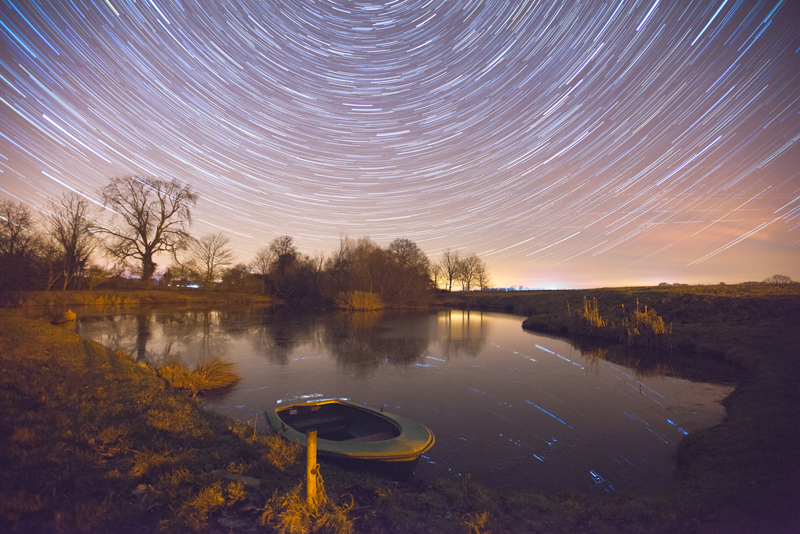
Boat Pond Startrails by Nick Atkin, on Flickr

This is 137 photos stacked together using Adobe Photoshop CS5 to create the final startrails shot.

Each shot was at the following settings: Canon 5D MK II, Canon EF 16-35mm f/2.8L USM MK II @ 16mm, 15 seconds, f/2.8, ISO 3200 with a 3 second interval between them.
 
Last edited:
Love that one Nick the reflection of the stars on the water just adds that something extra to it.

Why the 3 second interval between the shots though?
 
I'm loving that star shot Nick!

Clicked on this as I've toyed with star shots myself.

I can see the stack method being the obvious choice for 'easy' results but has anyone got tips and examples of it working on a long exposure? 15 mins + ?

I have it in my head that the long exposure method is best suited out of town with minimal light pollution - ISO right down to 100/200, aperture wide open?
 
If you want the single exposure way then a good starting point would be around f/8, ISO 100 and a 1 hour exposure time. With a single exposure you will find that any light pollution on the horizon will be a lot more noticeable than when stacking multiple short exposure shots.
 
Last edited:
Surely the 5D has a buffer that allows another exposure to start while the previous one is being writ to the card?

It does but when you are shooting continuous for an hour or two you find that the odd shot here and there doesn't get written to the card if you go quicker than 3 second intervals. I stick to a 3 sec min interval for my timelapse shots as a missed fame stands out once you make the video.
 
Back
Top