Star trails - how long ???

DG Phototraining

Woof
Suspended / Banned
Messages
5,064
Name
Dave
Edit My Images
Yes
Just off to The Lakes in a few days time (for 3 days) and obviously there's not much to do on an evening except stare at the night sky (many more stars to see than in Barnsley :D)

Now I've shot lots of night stuff before, and next week will still be a full/close to full Moon so if its fairly cloud free there will be some light to shoot by, but I've never tried for a long enough exposure to get stars to actually move enough to create a star trail - so a simple question...

How long does it take to create an exposure with obvious movement in the heavens ??? :shrug:

I'm not talking about full circles, just a few minutes of arc will do

10 mins, 30 mins, an hour ??? :thinking:

All help (and any good locations) appreciated :thumbs:

Even post an example or two if you will :)

Cheers

Dave
 
Theres a star trails guide on TP, that may provide the answers you need. BTW when i was shooting star trails, i was advised a full moon was not desirable.

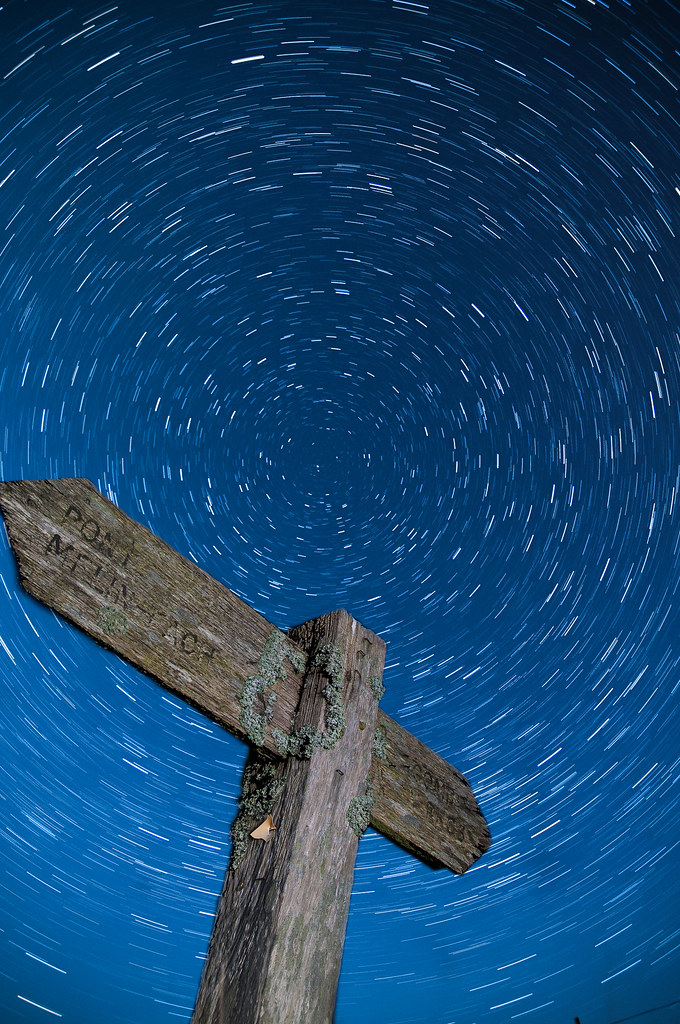
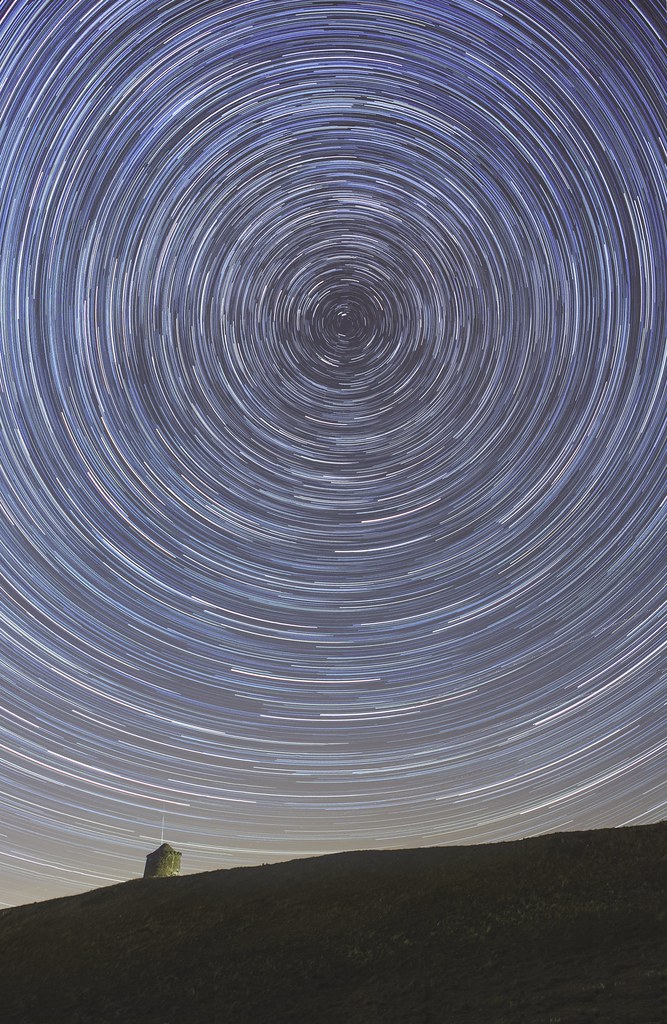
This shot was 33 exposures of 30s at 17mm on crop.


Startrails - Maen Llia by /Cud, on Flickr
 
Oh b****r - a guide and I didn't look first :bonk::bonk::bonk:

A pal just gave me this link too... http://www.lightstalking.com/how-to-photograph-star-trails and yes you're right, a full Moon is not necessarily your pal

Oh well - I'll just do my usual muck about a bit then :D

Nice pic btw, and thanks for the reply :thumbs:

Dave
 
Point the camera roughly north - with a 24mm lens I reckon about 20mins produces an acceptable trail. Less than that kinda looks like the tripod got kicked during the exposure.
If you can wait an hour then it will look even better. Personally, I find little improvement in going longer than an hour unless you are after the full dawn to dusk set in which case you get a whole new set of problems like battery life.

With a full moon taking a single long exposure won't get star trails, but the stacked 30s technique still produces OK results.
I did a star trails workshop in the middle of a town during a full moon with a 70% overcast. Mainly as a demonstration of technique, but we were all a bit shocked when the results looked quite good and had star trail in them.

With the moon, visibility is important (check the met office forecast).
With average visibility (or less) then the moonlight will reduce the contrast to the point where only the brightest stars will be recorded.
See the Milky Way with the unaided eye takes excellent visibility and you should be able to get some cracking shots, moon or no moon :)
 
Point the camera roughly north - with a 24mm lens I reckon about 20mins produces an acceptable trail. Less than that kinda looks like the tripod got kicked during the exposure.
If you can wait an hour then it will look even better. Personally, I find little improvement in going longer than an hour unless you are after the full dawn to dusk set in which case you get a whole new set of problems like battery life.

With a full moon taking a single long exposure won't get star trails, but the stacked 30s technique still produces OK results.
I did a star trails workshop in the middle of a town during a full moon with a 70% overcast. Mainly as a demonstration of technique, but we were all a bit shocked when the results looked quite good and had star trail in them.

With the moon, visibility is important (check the met office forecast).
With average visibility (or less) then the moonlight will reduce the contrast to the point where only the brightest stars will be recorded.
See the Milky Way with the unaided eye takes excellent visibility and you should be able to get some cracking shots, moon or no moon :)

All points readily absorbed, thanks :thumbs:

My major concern is how to get wifey & kids to stand around for an hour or two in January, in the dark & cold, while I muck about having a go :D

Might be one where they drop me off and come back later :lol:

Dave
 
Oh...
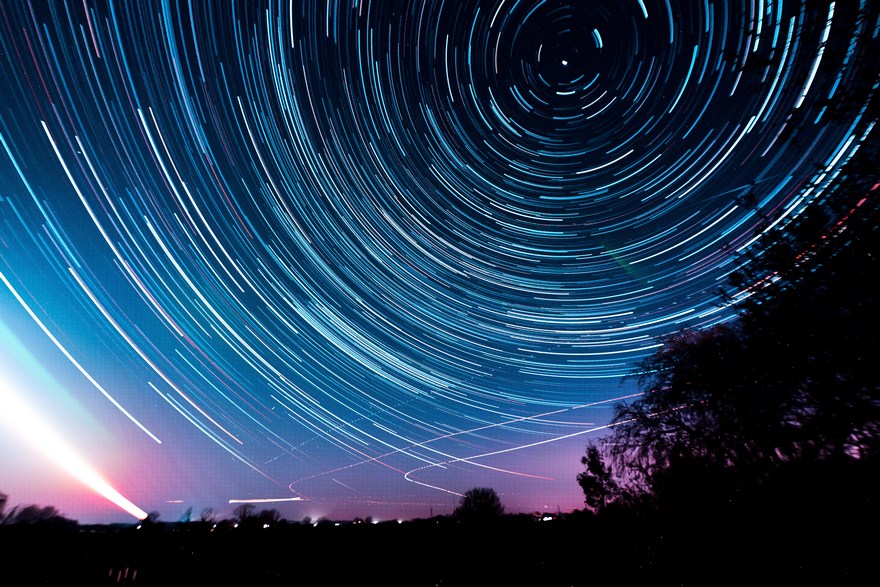
Here's one I prepared earlier :D

Fully charged battery dropped into the 5DIII firing exposures until the battery died less than three hours later.
Camera was propped on the window ledge inside my open bedroom window - thank goodness for the 5DIII 'silent' mode! 24mm TSE wide open at f3.5.
20120619-142232-Startrails-L.jpg
 
Last edited:
Oh...
Here's one I prepared earlier :D

Fully charged battery dropped into the 5DIII firing exposures until the battery died less than three hours later.
Camera was propped on the window ledge inside my open bedroom window - thank goodness for the 5DIII 'silent' mode! 24mm TSE wide open at f3.5.
20120619-142232-Startrails-L.jpg

Good stuff - but what created the dotted line that runs top left diagonally through the image ??? Planet maybe ???

Dave
 
Nothing so glamourous Dave - Aircraft :lol:


Have fun and make sure you wrap up warm and have a flask of tea/coffee to hand. Due to light pollution here in the SE, I experimented earlier this year using the technique of lots of shorter exposures and then stacked them together using a bit of free software, which also gives great results. ;)
 
I've got a full tutorial on star tails linked in my signature if you want to give it a ready, actually you'll see noticeable movement in under a minute and a reasonable effect in 5 minutes, nothing wrong with shooting on a night with full moon it just can limit your compositions dependant on time of year ;) but its fantastic for foreground illumination :thumbs:

I ran a star trails tutorial as part of the recent north yorkshire meet I put on since it was clar out that night :thumbs:

Anyway read my guide :thumbs: then ask any questions you may have :thumbs: happy to help :thumbs:
 
I've got a couple of old Russian viewfinders which I've kept for very long exposures. Not had the health or inclination to use them recently! Might take one and a WA on holiday next year - North Crete coast is pretty light pollution free. There's also a spot at the top of the hill where I can get a pretty good view Northwards (with very little LP) through some twiggy branches. At this time of year, I can pretty much guarantee a few aircraft passing through the shot as well.
 
CarregSamsonStartrails.jpg


45 mins - full moon lit the foreground


DrewBuckley_Startrails.jpg


1hour
 
Last edited:
One thing you will probably have noticed form the shots posted above is that the stars nearest to Polaris (North star) have the smallest amount of recorded movement compared to the stars that are further away.
 
This was just over an hour and a half...


Recommendations...
1) charged batteries
2) use battery grip to allow extra batteries
3) use in camera 'long exposure noise reduction'
4) for '3' to work, work out capacity of batteries and set shutter speed to about 45% of that time (noise reduction uses a second 'dark' exposure to evaluate noise)
5) shoot raw to let you tweak afterwards
6) composition is key; interesting foreground in front of rough northerly direction
7) keep lens clean of dew/condensation during exposure (easier said than done!)
 
Although I haven't got a shot to demonstrate myself as I'm still in planning/praying for a clear night and somewhere with no light pollution, I have found that the stars move roughly 15 degrees an hour.
So for a full circle (if desired) it would take 6 hours or just work around the times to however much movement you would like.

Good luck :)
 
I have found that the stars move roughly 15 degrees an hour. So for a full circle (if desired) it would take 6 hours ...
Err...no. A full circle takes 24 hours, for reasons which should be obvious.

15 degrees per hour is exactly right, but remember that's 15 degrees of rotation around the axis, not necessarily 15 degrees of movement across your field of view. Stars on the celestial equator (e.g. Orion), do move pretty much 15 degrees per hour across your viewfinder, and their trails aren't very curved. But stars near the pole barely move in your viewfinder.
 
PS Here's a little practical demonstration of some of the problems. This image was constructed from 45 x 1-minute exposures. About 20 minutes in the lens started fogging up a bit, and that shows on the trail of Jupiter (the brightest object, a bit half way up on the left) which becomes more and more diffuse as time passes. After about 30 minutes I wiped the lens to try to clear the condensation, but you can see that [a] it wasn't very effective, and I disturbed the lens - zoomed it slightly - causing a little step in the star trails.

It isn't easy!

300079_518002111558372_188064195_n.jpg
 
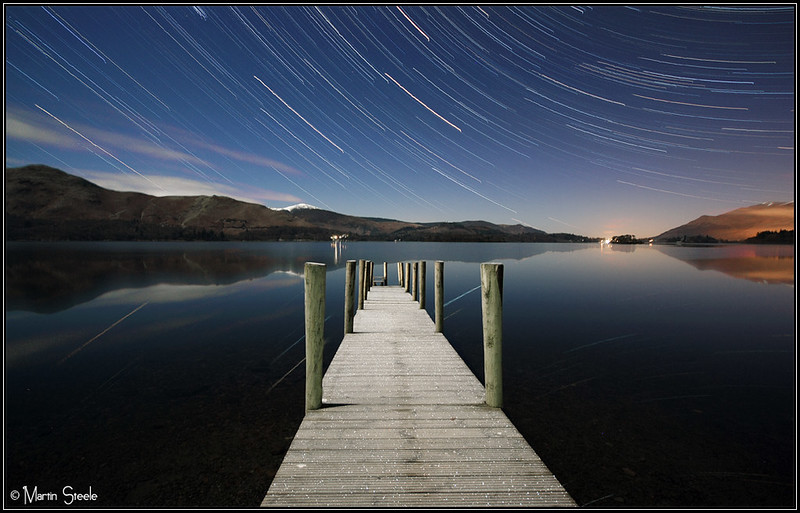
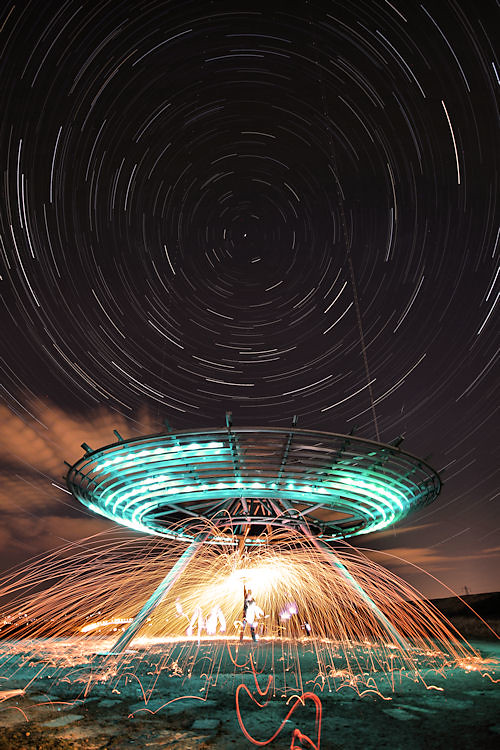
This is still my first and only star trail shot, must do more. This was made all the more difficult by my cheap remote release not working (should have checked before), as a result required me to press the shutter after each 30 second exposure for an hour. This is the output from 103 images (including one used to light the structure by torch)

6709554415_375b63838e_z_d.jpg
 
This was just over an hour and a half...


Recommendations...
1) charged batteries
2) use battery grip to allow extra batteries
3) use in camera 'long exposure noise reduction'
4) for '3' to work, work out capacity of batteries and set shutter speed to about 45% of that time (noise reduction uses a second 'dark' exposure to evaluate noise)
5) shoot raw to let you tweak afterwards
6) composition is key; interesting foreground in front of rough northerly direction
7) keep lens clean of dew/condensation during exposure (easier said than done!)

For the OP - only use 'long exposure noise reduction' if you are shooting a single image. If you use it while stacking, you will get gaps in your trails!
 
The main problem i always seem to get is finding the north star in the shot. Although i can see it clearly with my own eyes, locating on the viewfinder or live view is pretty much pot luck.

Unless its a full moon ive also found 2 exposures, 1 for foreground and a separate for stars works best and layer merge in PS.

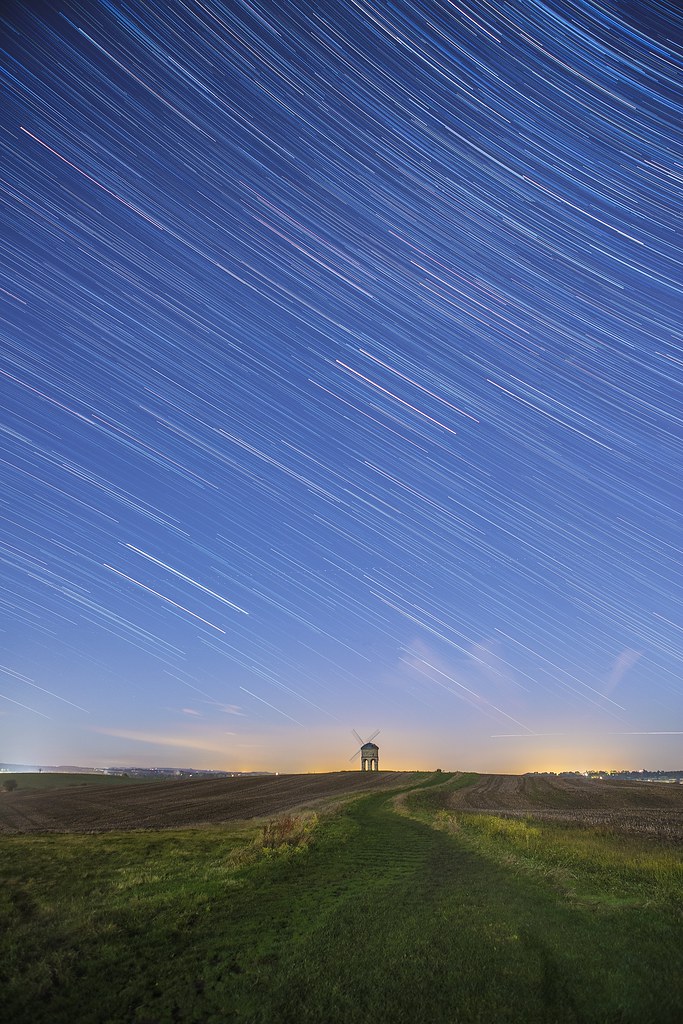
The moon will drastically effect how many you "see". This for example was taken at lunar "noon" in summer at about 1am:- f/3.5 @ 10mm ISO200. No separate foreground/background exposures. And yes, i know the horizon is skewed!


Star trails around the stationary pole star with a desert villa in the foreground by WhitcombeRD, on Flickr

This one was a moonless night, separate exposure foreground/background only this time due to no moon i needed 3 stops higher on the ISO but a vastly different sky:-


Garden star trails looking north by WhitcombeRD, on Flickr
 
Just to prove what is possible, in some of the worst light polluted areas in the UK, with partial and full moon illumination

This was a partial moon :thumbs:


323/366 (688) by mwhcvt, on Flickr

and this was a near full moon


307/366 (672) (Explored) by mwhcvt, on Flickr

Matt
 
Some excellent images being posted! I have only tried star trails once and used a long exposure. I'm going to try stacking next time
 
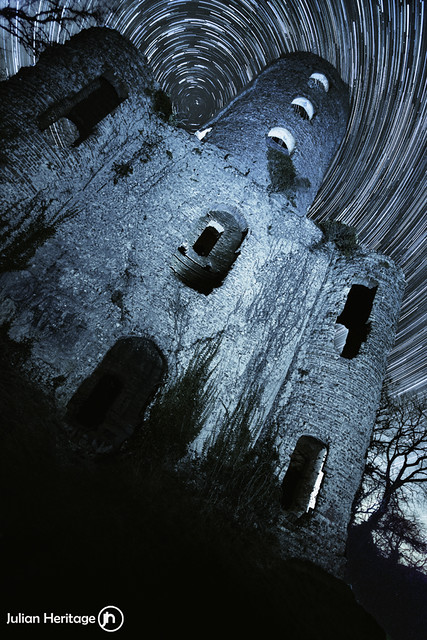
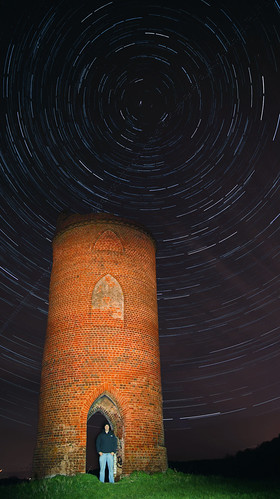
Here was my first attempt at trails this was taken over 2 hours and you can see some light pollution and cloud crept in but I managed to stand still the whole time.... Alternatively you could use the last couple of frames to light your scene and chuck yourself in if you so choose.


Folly by robinecs, on Flickr
 
Last edited:
Thanks for all the help/advice guys :thumbs:

Just back from the Lakes and none of it happened :lol:

Total cloud cover and lots of rain meant by the 'end' of the 2nd day we camped in a pub too long and drank too much - then on the way back to the hotel we noticed the skies were indeed clear and crisp - b****r :bang::bang::bang:

So an early morning start to catch it before Sun up (joke) and back to total cloud cover again - oh well, next time maybe

Dave
 
Back
Top