

Stained negatives

FujiLove

Suspended / Banned
Messages
3,923
Edit My Images
No
I processed a few rolls of B&W film this weekend and some of them are completely or partially stained yellow. The 35mm Double X is fine, neutral grey, but I have one roll of TriX which is all slightly yellowed, one partially yellowed and a roll of Delta 400 which is completely 'stained'.

They were all processed with HC110, dilution H (1:63) for about 9 minutes, and fixed for about four minutes. I used Ilford stop bath and Ilford fixer. The fixer wasn't mixed fresh, but I clip tested it and it cleared the film in 60 seconds or so.

The photo attached is from one of the rolls of TriX. This is all yellow apart from the last two frames and along the edges of the entire roll. All the film was fresh, refrigerated after use and processed within two months of exposure.

Any ideas?

BTW, ignore the diagonal lines. They are caused by my iPad screen which I use as a lightbox.
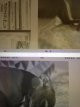
ImageUploadedByTalk Photography Forums1456432422.214175.jpg
 
Last edited:
Is it noticeable when the image is converted to mono?

Has something from the double x contaminated the fix?
 
No, I don't think it really affects the density. I'm just using my phone to invert the image at the moment but it looks okay. I did run the Double X first before the 120 films, but I've never had this issue before after developing XX.

Dodgy fixer was my first thought, but wouldn't that have affected the entire roll?
 
Yeah probably. I'm not sure why it would only affect bits.
 
Somewhat strange.....i've had stained negs, usually pink, and it has always been à fixer issue but the wholke film has been affected.
Trying à refix probably won't hurt anything and would eliminate that possibly.
If it isn't that then i'm at à loss
 
I'll re-fix them tomorrow and report back. I'm still confused as to why this has only affected part of the negative, but I can't think of anything else that could have caused this.
 
Just following up...

I finally got around to re-fixing the negatives yesterday, and they have come out fine. So it looks like it was a case of dead fixer. I still don't understand why the entire film wasn't affected, but I'll chalk it up to experience.
 
Just following up...

I finally got around to re-fixing the negatives yesterday, and they have come out fine. So it looks like it was a case of dead fixer. I still don't understand why the entire film wasn't affected, but I'll chalk it up to experience.

Yay..good news.
 
Just following up...

I finally got around to re-fixing the negatives yesterday, and they have come out fine. So it looks like it was a case of dead fixer. I still don't understand why the entire film wasn't affected, but I'll chalk it up to experience.

That's just weird...
 
That's just weird...
Not really if you give it some thought.

The chemical is practicaly dead but does have a little bit of umphh left in it.
When stood between gitation the stonger parts of the solution will seperate from the not so strong / dead parts and effect the film accordingly.
Even with agitation, the stronger parts of the solution are only going to be able to do a limited job on any given part of the film


Perhaps I'm talking b****x and a ten year old could probably explain better what it is I'm trying to say.:confused::D

Either way, good news that new fixer has resolved the problem and the pics haven't been lost(y)
 
Nearly all the problems people have when developing and printing film is beacuse they don't stick to the basics. They try to save money and try to use special techniques during the process. It is better to stick to the basics with correct times,agitation and 20 deg c temps and get that right.
 
Nearly all the problems people have when developing and printing film is beacuse they don't stick to the basics. They try to save money and try to use special techniques during the process. It is better to stick to the basics with correct times,agitation and 20 deg c temps and get that right.

:agree: and use fresh chemicals..........
 
I would say my problem was actually caused by poor note taking. I forgot to note when I mixed that batch of fixer and I didn't properly record how many rolls had gone through it. Clearly my memory isn't what it was...and it was always a bit dodgy.
 
My "mixed fixer" jar has a date on it... the date of the very first batch of fixer I mixed! Oh dear. Must do better!:runaway:
 
I make a fresh batch of fix whenever I open a new 2 1/2 lt. bottle of distilled water.

Easy to remember.
 
Just a thought...

I wonder if the water it's mixed with makes a difference.

The water here is made of northern granite.

Well 'ard.
 
Just a thought...

I wonder if the water it's mixed with makes a difference.

The water here is made of northern granite.

Well 'ard.
''n darn sarf it'll be like them suverners.........not so 'ard:D:D

I mix mine with alpine spring water........so much more palatable:D
 
Mine gets changed when fixing times begin to resemble geological ages.
 
The water here is made of northern granite.

Well 'ard.

Not quite sure of my ground here, but IIRC granite gives pretty nice soft water, limestone gives hard water... ;) (I know, that's not quite what you were saying...)
 
:)

Yes, you're quite right Chris, but 'ard as limestone doesn't have quite the same ring to it.
 
I would say my problem was actually caused by poor note taking. I forgot to note when I mixed that batch of fixer and I didn't properly record how many rolls had gone through it. Clearly my memory isn't what it was...and it was always a bit dodgy.
i have found that it is better to use fresh fixer every time you develope a film at say 1+4 for a short time fix.Then use that fixer for the prints and add water to make it about 1+7. then discard. If you are not going to print after developing the neg then use a higher dilution 1+7, 1+9 and a longer time.that way you are always using fresh fixer and saving some money. I did the "keep notes of how many times fixer has been used" and found it to inacurate.
 
i have found that it is better to use fresh fixer every time you develope a film at say 1+4 for a short time fix.Then use that fixer for the prints and add water to make it about 1+7. then discard. If you are not going to print after developing the neg then use a higher dilution 1+7, 1+9 and a longer time.that way you are always using fresh fixer and saving some money. I did the "keep notes of how many times fixer has been used" and found it to inacurate.

Personally I think this is a bit of a waste given how easily fixer issues are resolved, another quick dunk in fresh fixer, long fixing times don't really bother me I generally get the developer tidied away etc while it's fixing regardless how long it should take.
 
i have found that it is better to use fresh fixer every time you develope a film at say 1+4 for a short time fix.Then use that fixer for the prints and add water to make it about 1+7. then discard. If you are not going to print after developing the neg then use a higher dilution 1+7, 1+9 and a longer time.that way you are always using fresh fixer and saving some money. I did the "keep notes of how many times fixer has been used" and found it to inacurate.

That's an interesting idea for a film and print workflow, but incredibly wasteful when only developing film. The Ilford data sheet (http://www.ilfordphoto.com/Webfiles/2006130218312091.pdf) states that a 1:4 batch of rapid fixer is good for 24 films, and that's likely to be a conservative estimate.
 
Back
Top