Spot Metering?

james-bailey

Suspended / Banned
Messages
49
Name
James
Edit My Images
No
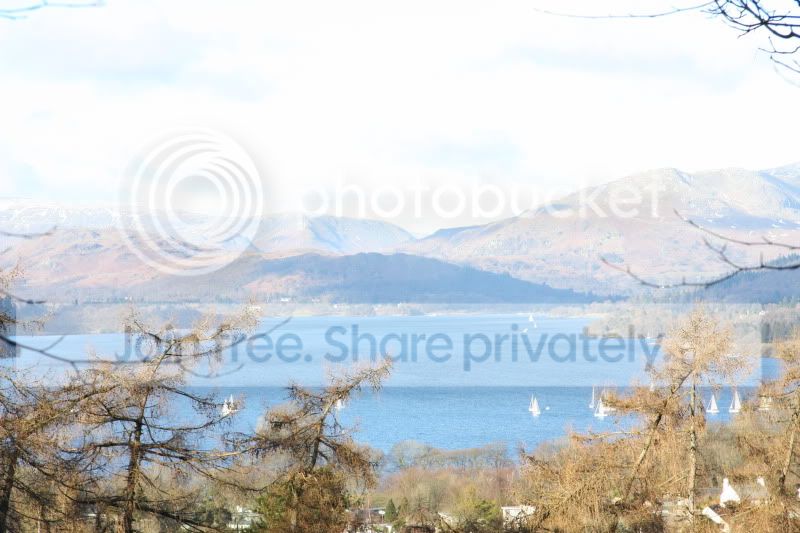
Okay im not quite sure what the Term Spot metering means but im hoping that by doing it properly, would of made this picture turn out better!

PostKnott002.jpg


The mountains in the background are far too bright (over exposed is it?)

How could I of made those turn out the colour the looked to the naked eye on this very bright sunny day in the lakes!?

Thanks

James
 
I think I understand the different mettering methods.
Spot looks at the centra spot area for its metering to expose the image as per what is in that area.
The others evaluate different sized areas for the exposure level, so if you want a whole frame metered correctly your better with anything other than spot.
 
Shoot raw and set a manual exposure by spot metering off the brightest part of the sky at +3 stops. Since the 40D meter only goes to +2 you will need to get yourself that far with the meter and then simply increase the exposure by one more stop to make it to +3. You can then adjust the look of the picture in your raw software. If you shoot at 100 ISO it will be no problem (as far as noise is concerned) if you need to brighten the foreground a bit.

That would be about the best you could do in one shot without using filters. Obvious alternatives would be to use an ND grad to tame the sky a bit or to bracket exposures and then combine the images so that overall you get a good exposure for everything.

You can always review the histogram and look for blinking highlight clipping warnings, adjust and reshoot if you have to. A hint of clipping is (IMHO) a good sign. It means you're right on the threshold of maximising the dynamic range captured by the camera, wihtout losing important highlight details. Do not use HTP.

Here is a before/after example of an image of mine which I shot to just hold enough details in the highlights, but adjusted to bring out details in the shadows. It was a simple but effective fix....

20100408_000011_LR.jpg
 
Those filters could be my next buy and explained well in that link thanks!

Bit too complicated to take in at the minute tdodd but will have an experiement
 
Bit too complicated to take in at the minute tdodd but will have an experiement

+3 stops is pretty much the clipping point of the camera. If you meter and expose your brightest details within the scene at +3 then you will retain as much detail as possible in the rest of the scene without wasting dynamic range.

It may help to have a look at the sequence of images in this album....

http://picasaweb.google.com/EezyTiger/Exposure?authkey=Gv1sRgCOui54easIX-LQ#

The first was shot by spot metering off the white shirt at 0 on the meter. The shirt looks a dull grey. I then take further shots at +1 on the meter, +2 on the meter, +3 and +4. At +3 you start to see the first hints of highlight clipping, easily recoverable and not a problem at all. At +4 the shirt looks very overexposed, yet in the next two shots we see how much hidden detail there was that can be recovered from the raw file - quite a bit.

All I am suggesting is that you meter and expose the white clouds at +3, in the same way that I metered and exposed the white shirt at +3. That will give you what is known as an "Expose To The Right" or ETTR exposure. That is a great technique for capturing as much detail in a scene as you can. The resulting image might not look right to begin with, but you can adjust it to maximise visual appeal. You can read more about ETTR here....

http://www.luminous-landscape.com/tutorials/expose-right.shtml
http://www.ophrysphotography.co.uk/pages/exposingtoright.htm
 
I'm not a big fan of spot metering. Unless you understand every word of Tim's post above, it will get you into more trouble.

I don't know what you have done there, but with respect I think it's user error. Were you on manual? Or have some exposure compensation dialled in by accident? If you use one of the auto modes (Av, Tv, or P) with the camera set for evaluative metering, with a regular scene like that it should get you pretty close. Then I'm afraid you just have to learn how to read the LCD, with blinkies enabled (over-exposure warning as Tim suggests) and the histogram.

Of course the sky looks bright because it is bright - much brighter than the foreground. For that shot, I think a polarising filter would do the trick nicely. They only work on blue skies and reflections, but that's exactly what you've got there. Some landscapers never shoot without it.

An alternative is an ND Grad, or learn HDR technique if you're handy at post processing - basically taking a couple of shots at different exposures - so you capture the full dynamic range - then merge them in post.

But if that's a typical shot for you, I think if you use an auto mode, evaluative metering, and a polarising filter you'll get an ace result :thumbs:
 
I'm not a big fan of spot metering. Unless you understand every word of Tim's post above, it will get you into more trouble.
Having looked at the EXIF for this I would think that spot metering will indeed be a step too far. Given the settings used - basically full auto, with flash!?!?! - I'm surprised the camera delivered such a poor result. Even so, there was little help from the photographer here.

- Why all focus points active?
- Why AI Focus?
- Why flash?
- Why 400 ISO (I'm guessing it was set to auto ISO, but maybe not)?

The conditions appear to be a bright, sunny day, with some clouds in the sky, yet the exposure chosen here (by the camera) was 1/250, f/10, 400 ISO, which is for light conditions 2 stops dimmer than full sunshine. Given the choice of 85mm focal length and the extreme range of DOF required I'd estimate that 1/200, f/16, 200 ISO would be a more suitable starting point for this scene, and no flash. I wouldn't normally recommend f/16 on an APS-C body, but then people don't often shoot scenes with a large DOF requirement at 85mm. f/11 might cut it, but the scene would need quite careful focus distance setting to maximise DOF.

More here for those who don't know - http://www.dofmaster.com/dofjs.html

Evaluative metering was used and EC was at 0, which to my mind should not have resulted in an overexposed shot for this bright scene. It looks like use of the flash (again, why?) has limited the shutter speed to no more than 1/250, but I would have thought the camera would deal with that by stopping down further, which in turn would have rendered the flash even more worthless. All in all it's a very odd combination of camera settings yet, despite that, I would have expected a better result from the camera. Maybe it is because evaluative metering biases the exposure towards the active focus point, and with the active focus point being nothing more than a lottery it's anybody's guess what the camera would make of the scene. This thread covers the topic....

http://www.openphotographyforums.com/forums/showthread.php?t=8526

Clearly, without the knowledge to use it properly, simply switching from evaluative to spot metering would have been of no help here at all, other, perhaps, than by shear fluke. There are more fundamental concerns to be addressed in setup and operation of the camera, judging results in the field and making adjustments if necessary.

With all that said, shooting raw, spot metering off the brightest part of the sky and setting a manual exposure of +3 would have worked pretty well. Using an ND grad would be a good solution too, but it raises the question of how strong and how to meter correctly for the grad.
 
For those who think that frame was metered using matrix or centre-weighted, you're wrong.
The large expanse of bright sky would have 'fooled' the meter into underexposing the image - not overexposing it.

In ye olden days of filme, when we only had centre-weighted metering, photographers would learn to point the camera towards the ground, thus excluding the large skies then take a meter reading, then re-compose and shoot...

Matrix metering (or the Canon equivalent) should take that into acccount - the camera's brain will recognise that there is a large expanse of sky in the shot and compensate for it.

Spot metering would be largely useless for this scene - it's better suited for images where the main subject is either very dark compared to the surrounding or very bright...
A good example would be a performer on stage, lit by spotlights while the background is almost black...
 
Having now seen the Exif, I don't think this is anything more than user error. Sorry.

Enabling flash switches in all sorts of different exposure algorithms, so that is one likely cause. Another might be some degree of focus-recompose used, whereby the exposure has been accidentally locked for a darker framing (foreground?) resulting in over-exposure for the final shot.

Unless you know what you're doing, spot metering is a dangerous game. Evaluative metering should get a scene like that right 100% of the time and a polarising filter would enhance it further.
 
For those who think that frame was metered using matrix or centre-weighted, you're wrong.

If that's true then I need a new EXIF viewer, because this is the EXIF for the image....

20100408_113208_LR.jpg


Plainly the exposure was metered in Evaluative mode.
 
...Plainly the exposure was metered in Evaluative mode...

I stand corrected - I'm frankly astonished by that. I'm assuming that Evaluative is the Canon equivalent of Nikon's Matrix-metering?
There's no way it should be that over-exposed using that metering method and Program-AE exposure...
Something badly wrong happening there...
 
Yes - the camera is biasing the exposure to what it deems to be the "subject", which is where the "active" focus point is, which is almost certainly the branches in the foreground. Relatively speaking the sky is being ignored.
 
Yes - the camera is biasing the exposure to what it deems to be the "subject", which is where the "active" focus point is, which is almost certainly the branches in the foreground. Relatively speaking the sky is being ignored.

Which would mean that 'evaluative' isn't really working as it should - if the camera is only taking a reading from the active focus-point then the OP may just as well have selected 'spot-metering' for all the good it's doing...
 
Not just the active focus point on it own, but biased towards the active focus point and the metering segments closest to it. I didn't say the sky was being ignored altogether, but that relatively speaking it was being ignored. This was all discussed in the link I posted to the openphotography forums in post #10.

I think evaluative metering was working exactly as designed, but because of the way it works the photographer needs to understand the potential to be tripped up. Some people deliberately choose to use centre weight average metering rather than evaluative because it gives more easily predicted results and makes judging the correct EC a bit easier.

A simple test to demonstrate evaluative metering's foibles..... Fill the frame half with black/dark and half with white/bright. Using an autoexposure mode, select a focus point which is positioned fully over the dark area and take a shot. Now switch the focus point to one over the white area. Focus and take the shot. The exposures should appear quite different. Do the same with any other metering mode and the exposure should not change at all.
 
Hi Rob,

My Exif reader shows this:

Camera Make: Canon
Camera Model: Canon EOS 40D
Image Date: 2010:01:31 13:52:41
Flash Used: Yes (Manual)
Focal Length: 85.0mm
CCD Width: 22.25mm
Exposure Time: 0.0040 s (1/250)
Aperture: f/10.0
ISO equiv: 400
White Balance: Auto
Metering Mode: Matrix
Exposure: program (Auto)

So yes it is Matrix metering.

Picture definitely seems odd though I agree.

Regards

Chris
 
Not just the active focus point on it own, but biased towards the active focus point and the metering segments closest to it. I didn't say the sky was being ignored altogether, but that relatively speaking it was being ignored. This was all discussed in the link I posted to the openphotography forums in post #10.

I read all that - surely evaluative-metering should take that into account?
There's a huge difference in the EV between foreground and sky that any decent evaluative/matrix metering system should account for...
 
I read all that - surely evaluative-metering should take that into account?
There's a huge difference in the EV between foreground and sky that any decent evaluative/matrix metering system should account for...

Yes, evaluative metering would sort that no probs at all. The Exif only tells you what the camera did, not why it did it.

It's user-error. Enabling flash is the most likely culprit IMHO, which has confused the heck out of the camera. I'm thinking maybe the f/number wasn't raised by the camera because the flash was already maxxed out, and with flash the exposure is always biased towards that.

The flash exposure algorithms are completely different, biasing towards focus points (which may or may not have been where we think, eg focus-recompose, either accidentally or not) and focusing distance if the lens reports that. It's something along those lines I'm sure :)
 
Rob, the problem is that the flash is popped up. The camera would probably like to expose at 1/1000 or something, put can only flash sync at 1/250, hence it's several stops overexposed.

The flash use is the real culprit here.
 
Here's an example shot in Av mode showing the difference in exposure calculation when changing nothing other than the selected focus point. First shot was focused on the dark fence. Second shot was focused on the bright wall. Evaluative metering adjusted the exposure to suit the "subject". Since this was shot with a 7D, maybe the algorithm is improved. Possibly the 40D metering would be more unbalanced.

20100408_122717_LR.jpg


Given it's a bright, sunny day, with clear blue skies, I would expect a manual exposure of 1/1600 to be correct for f/5.6 and 200 ISO.

Metering off the fence once more, but this time adding a white tea towel to the scene, the camera has come up with 1/1000 as the shutter speed. Unfortunately this has led to highlight clipping in the whites, which might be recoverable in raw but which would be a death sentence for JPEG. Imagine that overexposure applied to backlit clouds, or people wearing whites, or animals with white fur or feathers, or white paintwork on a house, boat or car, and it's game over.

20100408_124415_LR.jpg


This is why DSLRs offer the option of different metering modes, different exposure modes, exposure compensation and a histogram and highlight warning indicator. Expecting to leave the thing on autopilot and to turn out perfect results is not the answer. If it was, we wouldn't need all those other features and options.
 
oh man, when I saw the first post, and the picture, and what he was asking, I thought I knew what would be said.

But I'm now completely confused. And I'm wondering if the OP is too? It's made me realise I've got so much to learn :(:'(
 
That's an interesting comparison Tim, but again, the use of flash means that the camera will not expose any quicker than 1/250s, despite probably metering around 1/1000 for f/10, resulting in over exposure.
 
Cheers Tim - I find that pretty shocking...lol
Although with experience, you can overcome that disparity by knowing your camera's preferences in different shooting situations and different lighting.

I'm so glad I shoot on manual!
 
That's an interesting comparison Tim, but again, the use of flash means that the camera will not expose any quicker than 1/250s, despite probably metering around 1/1000 for f/10, resulting in over exposure.

True, but my demonstration was not about flash, just the fact that evaluative metering biases the exposure depending on the tones found at and near the active focus point.

It wouldn't surprise me to find that throwing flash into the mix does indeed only add to the confusion. Someone else can perform those tests. :)
 
oh man, when I saw the first post, and the picture, and what he was asking, I thought I knew what would be said.

But I'm now completely confused. And I'm wondering if the OP is too? It's made me realise I've got so much to learn :(:'(

Possibly the simplest lesson to take from this, if you are not yet ready to perfect your metering and exposure techniques at first press of the button is to make sure you review your histogram and look for blinking warnings of clipped highlights. Do not attempt to judge your exposure from the appearance of the image itself on the LCD of the camera. If you see problems of under or overexposure, and you have time to try again, then make some adjustments and reshoot. If you are using an autoexposure mode then the adjustment is probably as simple as dialing in some exposure compensation. With practice and experience you will become better at judging how much adjustment to make.
 
Some really good advice on this thread, thanks to all the old hands.

Regards

Chris
 
If I thought it would serve a useful purpose then I might be inclined, but I'm not going to waste my time using the popup flash in a front lit, daytime scene, when it is no doubt several meters to the closest part of the scene, and I'm at f/10 and 400 ISO. A flash with a GN of 13m ain't gonna do sh!t on a landscape scene like that.
 
Possibly the simplest lesson to take from this, if you are not yet ready to perfect your metering and exposure techniques at first press of the button is to make sure you review your histogram and look for blinking warnings of clipped highlights. Do not attempt to judge your exposure from the appearance of the image itself on the LCD of the camera. If you see problems of under or overexposure, and you have time to try again, then make some adjustments and reshoot. If you are using an autoexposure mode then the adjustment is probably as simple as dialing in some exposure compensation. With practice and experience you will become better at judging how much adjustment to make.

Yeah, thanks. I understand most of that, but am a little unsure on metering and stuff. I think the thread got quite technical so lost it a bit. Hope the OP got the answer he was looking for!

I'm starting to shoot more and more in manual, so making sure the 'line is in the middle' depending what aperture I shoot at. It's just knowing where to meter/focus that's the thing I'm going to start looking into
 
If I thought it would serve a useful purpose then I might be inclined, but I'm not going to waste my time using the popup flash in a front lit, daytime scene, when it is no doubt several meters to the closest part of the scene, and I'm at f/10 and 400 ISO. A flash with a GN of 13m ain't gonna do sh!t on a landscape scene like that.

:lol: :)
 
Thanks Tim, learned a LOT from your posts in this thread. Just as a slight tweak for Nikon cameras, (well certainly the D3) I would recommend +2 1/3. 2 2/3 at a stretch, but certainly not 3. I've just been taking a lot of cloud shots now just to test the limits of recovery from RAW, and + 2 1/3 is the limit where this is pretty much no change to tones. 2 2/3 there is a very small change, and +3 induces a noticable change where whites cannot be recovered. Just my 2p..
 
I'm not a big fan of spot metering. Unless you understand every word of Tim's post above, it will get you into more trouble.

I don't know what you have done there, but with respect I think it's user error. Were you on manual? Or have some exposure compensation dialled in by accident? If you use one of the auto modes (Av, Tv, or P) with the camera set for evaluative metering, with a regular scene like that it should get you pretty close. Then I'm afraid you just have to learn how to read the LCD, with blinkies enabled (over-exposure warning as Tim suggests) and the histogram.

Of course the sky looks bright because it is bright - much brighter than the foreground. For that shot, I think a polarising filter would do the trick nicely. They only work on blue skies and reflections, but that's exactly what you've got there. Some landscapers never shoot without it.

An alternative is an ND Grad, or learn HDR technique if you're handy at post processing - basically taking a couple of shots at different exposures - so you capture the full dynamic range - then merge them in post.

But if that's a typical shot for you, I think if you use an auto mode, evaluative metering, and a polarising filter you'll get an ace result :thumbs:


I was using centre weighted metering for a while (some situations still require it) and have recently returned to using the Matrix metering on my little D40, and the exposure of my photos have improved notiably....

Even lazy an leave it on Matrix metering for filter us :cuckoo:
 
I'm so glad I shoot on manual!

why? if you ever look at the cameras meter for guidance then your in the same boat as when using the semi automatic modes. I appreciate from your response you dont look at the meter and take it as doctrine, but thats what we are talking about how most effectively do get what you want from the cameras metering, its just quicker in the semi automatic modes once you understand how to control it. (I do a lot of night shots and am recently playing with manual flashes so again use manual for these scenarios but the semi automatic modes are great for a lot of occasions).
 
I'm starting to shoot more and more in manual, so making sure the 'line is in the middle' depending what aperture I shoot at. It's just knowing where to meter/focus that's the thing I'm going to start looking into

If all you are doing is chasing the meter needle back to the middle then you may as well stick with autoexposure, as it can do the job of adjusting values far quicker than you can. The main advantage of shooting with a manual exposure is so that once you have established an exposure setting that is correct for the incident/ambient light upon the subject and scene it then remains locked and will not waver from the values you chose. It is like having an infinite exposure lock, changing only when you want it to. There is nothing at all to suggest that you should be aiming to centre the needle when shooting manual. You should be aiming to get the needle positioned to just exactly where it should be, which might be in the middle if you are metering from a perfect mid tone such as a grey card, but could just as easily be something completely different. I will commonly meter from my own outstretched palm at + 1.3 stops and fix an exposure manually at that setting. Unless the light changes then that's me done. No more worrying about what the camera's meter is picking up, or what metering mode I'm in, or how much EC to dial in. The meter can bob about all it likes, and the beauty of shooting manual is that I don't care.

In contrast, using autoexposure, the camera is going to repeatedly re-meter the subject/scene each and every time you half press the shutter button, probably changing exposure values depending upon just how you frame the subject/scene and just what the subject is. That can be very tedious to deal with. You might have an AE lock button, but the lock only lasts a few seconds, and then you have to start again.

Take a look at the two examples below. These were shot with a manual exposure that was identical for both. If I had chosen to use autoexposure I think there is a very good chance that the camera would have decided the white car was too light, thus reducing the exposure, and the black car was too dark, thus increasing the exposure. In both cases the camera would have been wrong, unless I was riding the exposure compensation dial like a twirling Dervish and getting lucky with each and every guess at how much EC to dial in. By shooting in manual mode I was able to set an exposure that was suited to the LIGHT (a grey day, just about to rain, no changes in light levels expected for many minutes to come) and did not care two hoots about the tone of my subject, and was not in any way thrown off by it.

20100408_171807_LR.jpg


A similar example, this time in bright sunshine. My exposure here is actually 1/3 stop brighter than "Sunny 16" and there was a little recoverable clipping on the white car, so I just pulled the exposure down by 1/3 in post. By exerting manual control over my exposures there was never any danger of the metering getting all confused and throwing me a curved ball....

20100408_174838_LR.jpg


Another advantage of shooting manual, if your meter and EC capability only goes to +/- 2 stops, is that you can indeed meter and set an exposure that places the highlights right at the clipping point, which is +3 stops in all six of my Canon bodies.

I'm quite surprised to discover that Nikons don't lilke taking the exposure that far, but it's no biggy - just work to the limits of your own equipment. The important thing is to know what those limits are. By the way, it is neither good, nor bad, if Nikons can't be taken to +3. It's simply that the metering is set up differently. Or, it might be that the software used to process the files is working in a different way from Lightroom, or an unusually aggressive tone curve is in use. If shooting to JPEG then I accept that taking highlights to +3 might be just a tad too far, but certainly it's no problem when shooting raw with my Canons.

 
..., its just quicker in the semi automatic modes once you understand how to control it. (I do a lot of night shots and am recently playing with manual flashes so again use manual for these scenarios but the semi automatic modes are great for a lot of occasions).

No it isn't.
 
Thanks Tim, learned a LOT from your posts in this thread. Just as a slight tweak for Nikon cameras, (well certainly the D3) I would recommend +2 1/3. 2 2/3 at a stretch, but certainly not 3. I've just been taking a lot of cloud shots now just to test the limits of recovery from RAW, and + 2 1/3 is the limit where this is pretty much no change to tones. 2 2/3 there is a very small change, and +3 induces a noticable change where whites cannot be recovered. Just my 2p..

Were you spot metering from the brightest part of the clouds, or something else? It may well be that Nikon's metering is set up a little different to Canon, or maybe that your software is not so good at dealing with highlight clipping, or maybe that you are merely metering off the clouds in general and not spot metering off the brightest part of the clouds. If you looked at my album of exposures of the white shirt....

http://picasaweb.google.com/EezyTiger/Exposure?authkey=Gv1sRgCOui54easIX-LQ#

you would note that Lightroom did a great job of recovering blown highlights, even from an exposure at +4, with no real ill-effects. Of course, I wouldn't recommend pushing things that far on purpose. It won't work every time, and I consider it my buffer zone for little surprises, not something to be used on purpose. Metering highlights at up to +3, when shooting raw, is absolutely fine with any of my bodies.

In fact, the review by DPReview of the D3 suggests that it is more than capable of holding details beyond +3 and there is bags of room for highlight recovery. Take a look at this page and especially scroll down the page to the section on raw headroom....

http://www.dpreview.com/reviews/NikonD3/page20.asp

The highlight recovery on that blown out hair is remarkable.
 
Back
Top