Speeding -- it's not just the fine and/or the ban

I guess. And I'll be the first to admit that the court heard far more details than I have the patience for so I wouldn't seriously consider disagreeing with their verdict. However, I'd look at the possible/likely consequences. If something unexpected had happened I suspect he would have been unable to do anything other than watch.

IIRC the fastest I've ever driven is 147mph. And I certainly wasn't in control at the time. We were practically airborne.

Fastest I've gone is 155mph. I was in control in that I could brake, change lane and steer the car through the slight curve in the road (not all autobhans are straight). I've frequently driven at speeds of 140plus without any issue at all.

However I totally concede you need a quiet, clear well sighted bit of road for these speeds as braking distances are massive and sudden steering actions will upset the car to the point of an off and the distance then carried again, huge.

I maintain as he was driving at night his main beam wouldn't have given him the visibility to see the distance he could stop the car in, plus the deer risk is significant on that road. At 40 to 60 you brake, take evasive action, and on impact the forces with a deer collision much more manageable than ar 127mph. The a96 has sued roads joining, and another road user just won't anticipate an oncoming car at that speed.

That's why it's sec2. The road, conditions were just not the place for it. If it was on the m1 and deserted and ambient light I'd say it's a bit much, but my views Irrelevent, it's the judges and the careful competent driver test that matters
 
I maintain as he was driving at night his main beam wouldn't have given him the visibility to see the distance he could stop the car in, plus the deer risk is significant on that road. At 40 to 60 you brake, take evasive action, and on impact the forces with a deer collision much more manageable than ar 127mph. The a96 has sued roads joining, and another road user just won't anticipate an oncoming car at that speed.

That's why it's sec2. The road, conditions were just not the place for it. If it was on the m1 and deserted and ambient light I'd say it's a bit much, but my views Irrelevent, it's the judges and the careful competent driver test that matters

This is exactly the reason. I know what its like to drive at nearly 200 mph and the stopping distances involved. It's also really hard to judge just how far you'll need at that speed.
 

Fast forward to about 16min into the video, it's a bit bloody boring.

I've done 150mph on the A7 in my 730d weekends are best no HGV's unless perishable goods.

If you want to drive fast then go to a track day great fun and no chance of being caught speeding.
 
  • Like
Reactions: ST4
I don't get it, how come so many people in the far right lane speed on the motorway? I'm new to this county and barely ever see a sign marking the speed limit on motorways. Yet people drive at ludicrous speeds. Iv done my share of track days too and never speed on the roads but that's just me a granny driver.
 
OK guys Before this goes down the inevitable route,
Yes we know that ST4 went faster.
Yes we know he got caught, yes we know he did the crime and is now doing the time.
All that is irrelevant, to this discussion.

Lets try and keep at least one discussion, about the subject matter.
And not get side tracked.

Big brother is watching ;)

Fastest I've gone is 155mph. I was in control in that I could brake, change lane and steer the car through the slight curve in the road (not all autobhans are straight). I've frequently driven at speeds of 140plus without any issue at all.

However I totally concede you need a quiet, clear well sighted bit of road for these speeds as braking distances are massive and sudden steering actions will upset the car to the point of an off and the distance then carried again, huge.

I maintain as he was driving at night his main beam wouldn't have given him the visibility to see the distance he could stop the car in, plus the deer risk is significant on that road. At 40 to 60 you brake, take evasive action, and on impact the forces with a deer collision much more manageable than ar 127mph. The a96 has sued roads joining, and another road user just won't anticipate an oncoming car at that speed.

That's why it's sec2. The road, conditions were just not the place for it. If it was on the m1 and deserted and ambient light I'd say it's a bit much, but my views Irrelevent, it's the judges and the careful competent driver test that matters

:ty: :rolleyes:
Could of put money on that happening :ROFLMAO:
 
I don't get it, how come so many people in the far right lane speed on the motorway? I'm new to this county and barely ever see a sign marking the speed limit on motorways. Yet people drive at ludicrous speeds. Iv done my share of track days too and never speed on the roads but that's just me a granny driver.

Just incase you don't know unless signed otherwise the speed limit is 70mph on motorways and it's not normally signed, they avoid as many signs as possible on motorways to avoid high speed distractions :)

Any yeah a lot speed, myself included, the far right lane is also know as the fast lane not that there's any difference to limits bases on lanes but because you can only overtake on the right it goes hand in hand with higher speeds ;)

Welcome to the UK BTW :wave:
 
This is exactly the reason. I know what its like to drive at nearly 200 mph and the stopping distances involved. It's also really hard to judge just how far you'll need at that speed.
I agree.
What were you driving?
I saw an indicated 159mph on a Civic Type R (supposed to be limited to 155mph I think?) that I had a few years back, and 160mph on my Ducati 996.
 
@mercmanuk

Inner geek aside that's 240kmph up and just over 3000rpm on the clock. Incredibly gearing these ZF boxes have. Video shows just how undangerous high speed can be. On the right roads when it's quiet.

And I bet it was returning 50mpg :D
 
That's a sweeping generalisation that your not qualified to make.

Is that right?! I see very poor high speed driving every day. A couple of short trips on dual carriageways isn't the training needed. No one except emergency services is trained to drive on UK roads at speeds higher than the limit in any case.

Police are humans and make the same wrong decisions that non police make, however they are consistently excused. This was the same with this case. There's actually little difference between a racing driver doing 127mph on a straight empty road at night, or a trained police driver doing the excessive speeds mark Milton was doing on a jolly especially on residential roads. The roads and risks are the same.

Had he been on his way to a call then possibly yes he would have had a reason to speed, however he was on an unauthorised jolly. He'd just taken the car out to test was the excuse. The response from various parts of the police was to stand by him and try to excuse it.

We also talked about perceptions. Here we have another example of people assuming. I've explained the reasons, which you have decided without evidence to call a 'jolly'. The alternative is that he would have been driving at that speed on a call for the first time in that car. Is that the time to find out it doesn't do what it should? No. Simple common sense tells you otherwise if you take the blinkers off.

The risks are mitigated in the case of a police driver by training AND familiarisation in driving at those speeds on the roads they use in the cars they use, be they motorways or residential streets.

Unauthorised? It's authorised in law, a police vehicle being used for police purposes can be driven in excess of the speed limit. So thats that point disposed of. Yes Police officers stood by him, for the reasons I've given you. And because we have all had to do it, and none of us would want to find ourselves at speed and find out the car does something it shouldn't. It's simple practical common sense. A track would be great, but there's availability cost and practicality to take into account. It isn't really much use anyway, so at some point what he did would still be what happened.

One rule for the police, one rule for others this was seen as by many. My whole point to the comparison.

And this is the crux of the matter in reality, the old favorite of 'yer, but he didn't get done, it's so unfair' When you invent part of the story, 'it's a jolly', it was 'unauthorsied' etc take those out of the equation, becuase you don't know that to be the case, they just help in the sense of misplaced outrage . But then you don't have to answer emergency calls do you? When you do you can make out a case for being able to train at high speed, exceed speed limits, along with treating red lights and stop signs as give way lines.

But your right, it is one rule for the public and another for Police, although it's actually Police, Fire, Ambulance and a few other groups as well, it's enshrined in law.
 
Last edited:
I agree.
What were you driving?
I saw an indicated 159mph on a Civic Type R (supposed to be limited to 155mph I think?) that I had a few years back, and 160mph on my Ducati 996.

Never catch me going fast on the bike. It's just uncomfortable over 120-130.

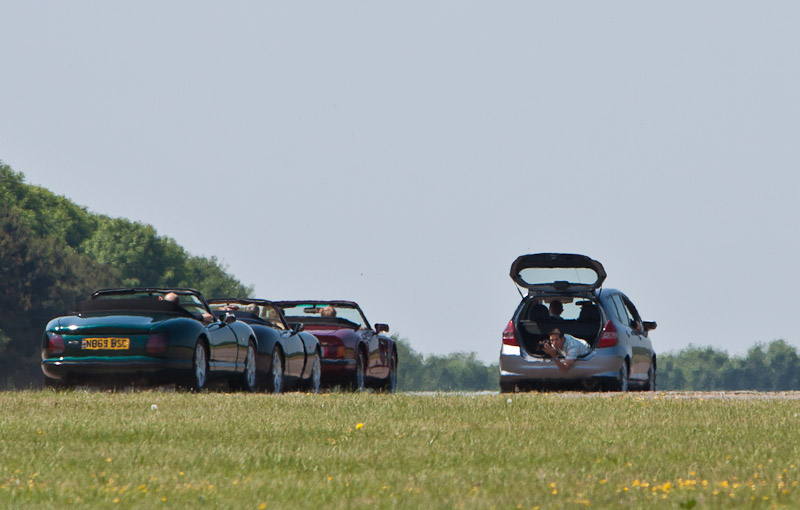
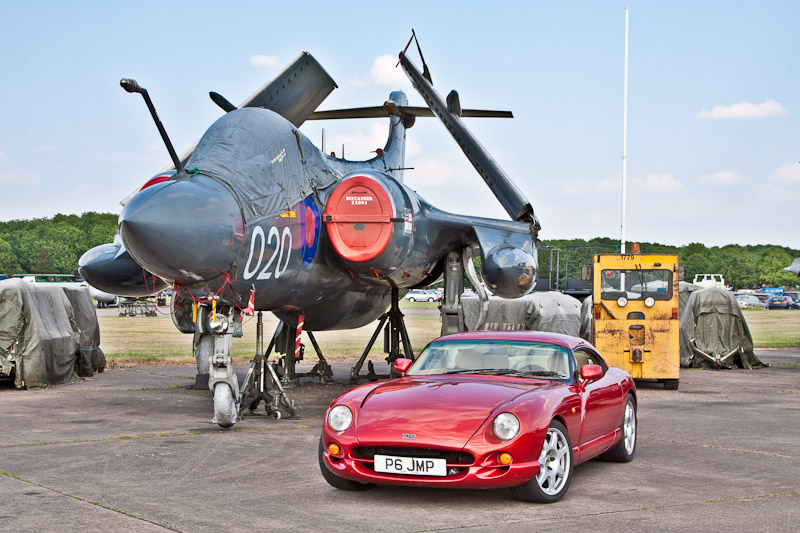
Bruntingthorpe runway, a sensible place to be doing speeds. We were doing a shoot for Octane magazine
125528098.jpg


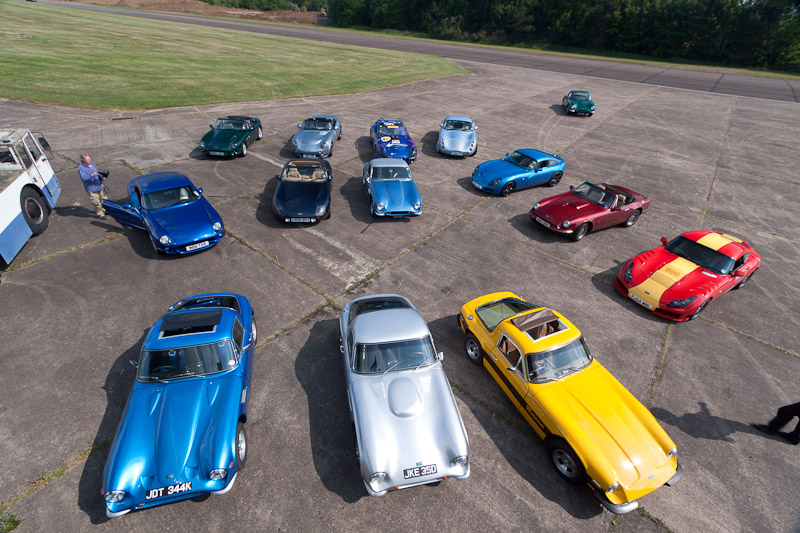
we had one of every model there
125528194.jpg


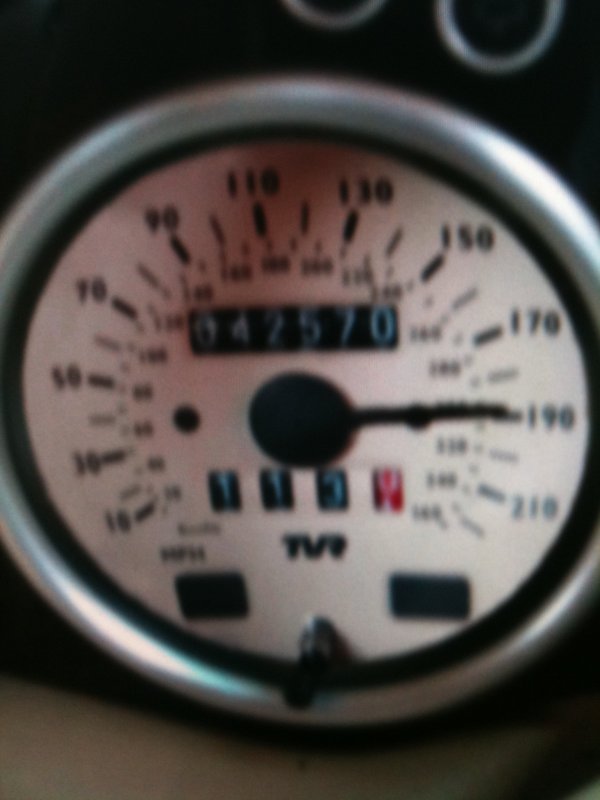
Took this on the phone whilst still accelerating
140256548.jpg

125528206.jpg
 
Is that right?! I see very poor high speed driving every day. A couple of short trips on dual carriageways isn't the training needed. No one except emergency services is trained to drive on UK roads at speeds higher than the limit in any case.


We also talked about perceptions. Here we have another example of people assuming. I've explained the reasons, which you have decided without evidence to call a 'jolly'. The alternative is that he would have been driving at that speed on a call for the first time in that car. Is that the time to find out it doesn't do what it should? No. Simple common sense tells you otherwise if you take the blinkers off.

The risks are mitigated in the case of a police driver by training AND familiarisation in driving at those speeds on the roads they use in the cars they use, be they motorways or residential streets.

Unauthorised? It's authorised in law, a police vehicle being used for police purposes can be driven in excess of the speed limit. So thats that point disposed of. Yes Police officers stood by him, for the reasons I've given you. And because we have all had to do it, and none of us would want to find ourselves at speed and find out the car does something it shouldn't. It's simple practical common sense. A track would be great, but there's availability cost and practicality to take into account. It isn't really much use anyway, so at some point what he did would still be what happened.


And this is the crux of the matter in reality, the old favorite of 'yer, but he didn't get done, it's so unfair' When you invent part of the story, 'it's a jolly', it was 'unauthorsied' etc take those out of the equation, becuase you don't know that to be the case, they just help in the sense of misplaced outrage . But then you don't have to answer emergency calls do you? When you do you can make out a case for being able to train at high speed, exceed speed limits, along with treating red lights and stop signs as give way lines.

But your right, it is one rule for the public and another for Police, although it's actually Police, Fire, Ambulance and a few other groups as well, it's enshrined in law.

Did he really have to drive it 80mph through an urban area, assumingly unlit up. Don't the police do training drives with an instructor present and the cars tested and approved for police use. What was he hoping to find out what it had or didn't have. A steering wheel, brakes, fuel tank?
 
No one except emergency services is trained to drive on UK roads at speeds higher than the limit in any case.

Wrong Bernie. There are others trained but I won't elaborate.

And again we are talking about perceptions and comparisons between cases. For one highly trained and experienced driver he was found guilty of an appalling misjudgement of his abilities, for the other it's acceptable practice.

You do know he was taken to court again after crashing at 108mph in a 40 zone, saying he was dazzled by an oncoming vehicle light. He testified in court that crash was nothing to do with excessive speed.
 
And again we are talking about perceptions and comparisons between cases. For one highly trained and experienced driver he was found guilty of an appalling misjudgement of his abilities, for the other it's acceptable practice.

Better put

For one not trained to drive fast on public roads, without any lawful reason was found guilty of poor driving judgment.

The other, was found guilty of the same offence. Although you concede it would be acceptable on a call, somehow it becomes less safe when done for training.

None one in the Judiciary said either was acceptable to them.


Those fans of the motoring press seem to think one is OK, but the other isn't, mostly because every driver should be able to drive at whatever speed they think, because they are all great drivers.

Those who have or do drive emergency vehicles for a living see one for what it was. But as the first had no lawful reason for driving at speed, can't see why his fans think, it's all ok then, having seen a fair few results of these ace drivers who think they can drive at speed.

These in the middle just want to know who got voted out on strictly come up the jungle brother factor.
 
Did he really have to drive it 80mph through an urban area, assumingly unlit up. Don't the police do training drives with an instructor present and the cars tested and approved for police use. What was he hoping to find out what it had or didn't have. A steering wheel, brakes, fuel tank?

The last part of that why you aren't allowed to drive at 150+!

The question is Steve, had he been on a call, would he having been doing that speed. Answer, yes if the road conditions were right to do it. If not no. He was doing training and famil in that car, would he need to be doing what he would on a call? yes, if it was to be useful training and famil.

The idea of emergency driving is to go as fast as it is safe to do so, if 80 was safe, given all of the conditions then it was safe. The difference is that he is trained to drive fast, and was taking into account much more than the steering wheel, brakes and tank!

Don't the police do training drives with an instructor present and the cars tested and approved for police use.

Yes, i did most of my early training in a Hillman Hunter and a 1.1 Allegro. They are not representative of cars I drove in my career. In fact, they were representative of nothing. We had a Hunter at my station, but it tuned left when you braked at 60+. When I say turned left, it turned left! So even cars of the same model don't behave the same way.

As for the Hunter, we drove it at 50 max, until we all refused to drive it, and eventually they took it away. The cause was found, eventually, it'd been T boned and was badly bent under the body. BL, as was thought that was an acceptable car to repair and return to us.
 
Last edited:


There's a chance that the blue Chimaera is actually my old car. It's hard to tell the exact shade, but it was the only TVR ever made in that colour. Plus it has custom non leather upholstery in that colour.

Plate would have been changed because I kept it when I sold the car.
 
I thought speed was only the 7th most contributory cause to deaths on the roads. Given the number of daily speed limit breaches and speeds like this are an everyday occurance on the roads yet so few accidents are reported because if events like this versus the actual number of events like this I maintain the belief that speed is quite unlikely to kill.

FWIW I believe that tiredness/lack of sleep is possibly the number one cause oif RTAs.The majority of us would not even consider driving after a drink but would not think twice about driving after a bad nights sleep
 
FWIW I believe that tiredness/lack of sleep is possibly the number one cause oif RTAs.The majority of us would not even consider driving after a drink but would not think twice about driving after a bad nights sleep

There is that. Which is an aggravating factor. Hence tyres a 15month disqual rather than the statutory minimum of 12 months. The fines heavy but it's means tested.
 
I don't get it, how come so many people in the far right lane speed on the motorway? I'm new to this county and barely ever see a sign marking the speed limit on motorways. Yet people drive at ludicrous speeds. Iv done my share of track days too and never speed on the roads but that's just me a granny driver.
As motorways are automatically national speed limit roads - unless there are posted lower limits - there are no requirements for periodic speed repeater signs. This is no different to any other national speed limit road, BTW.

Oops, I see I was beaten to it. Must remember to finish reading the whole thread before jumping in :)
 
Last edited:
Not sure speed has ever killed, its the sudden stopping that's usually the problem...

Yeah, I know, I'll get my coat.

Are you Clarkson in disguise?


There's a chance that the blue Chimaera is actually my old car. It's hard to tell the exact shade, but it was the only TVR ever made in that colour. Plus it has custom non leather upholstery in that colour.

Plate would have been changed because I kept it when I sold the car.

I have lots of other pics of it. I took around 600 that day, I'll sort them out tomorrow.
 
Re PC Mark Milton and his 159mph episode.

There was a widespread adverse reaction at the time which I think centred on the legitimacy of what he had been doing. And I don't think the police handled it very well, which made things worse.

The issue to my mind hinges around authorisation. At the time it was widely reported that PC Milton had been authorised to drive at these high speeds for training purposes. I think many people smelt a rat there. It didn't look like an "authorised" act. Now Bernie174 has pointed out that there is effectively a "blanket" authorisation in place for driving at high speed on police business. I wasn't aware of that and I imagine a lot of other people weren't either. I think the adverse reaction might have been less if the police spokespeople had got that point across.

But also, I was surprised and disappointed that the police didn't seem to have any oversight procedures or risk management in place. I would have expected that driving at those sorts of speeds on a non-emergency situation would have required some sort of explicit approval, or at least the filing of some sort of "flight plan" before doing it. That would be absolutely normal in pretty much every other walk of life and at the very least it would confirm that the high speed driving was on police business. Perhaps they have these procedures but completely failed to explain them. Perhaps there's a good reason why the police don't, or didn't, do this, and if so then perhaps Bernie174 would be able to enlighten us. But either way it was a poor PR failure.
 
But also, I was surprised and disappointed that the police didn't seem to have any oversight procedures or risk management in place. I would have expected that driving at those sorts of speeds on a non-emergency situation would have required some sort of explicit approval, or at least the filing of some sort of "flight plan" before doing it. That would be absolutely normal in pretty much every other walk of life and at the very least it would confirm that the high speed driving was on police business. Perhaps they have these procedures but completely failed to explain them. Perhaps there's a good reason why the police don't, or didn't, do this, and if so then perhaps Bernie174 would be able to enlighten us. But either way it was a poor PR failure.

Your last point is well made. The Police PR machine exists simply to say sorry these days, and in the past was there to tell people to pee off and mind your own business.

The error has been that the Police need to be less of the taking the blame for every ill since the French invasion of 1066, and more to explanation, it's not going to happen for a long time though.

Anyway, to answer your first point, you need to understand 2 things. Firstly the status of Constable. It's an independent officer appointed under the Crown, it is not the same as an employee or member of the forces, in that for example, a Police officer cannot be ordered to arrest without a warrant. It's an independent decision, like the majority of decisions they make. It isn't like working in Industry.

The second thing you need to know is that Road traffic law allows a vehicle (doesn't have to be a police owned vehicle) being driven by a police officer (I use Police Officer, but it applies to the other emergency services and some other services as well) to exceed a speed limit, if obeying it would hinder that purpose. But again, the onus is on the driver of the vehicle to show that purpose.

There is case law that extends that to training, and familiarisation.. Thats why PC Milton could not be charged with speeding.

When driving, I could not, for example be ordered to drive faster, slower or to take a particular course through traffic, I also didn't need anyone else's say so to drive fast, either on a call, to catch up with another car, or for famil/training I could and did 'self authorise', and it was my responsibility when if it went wrong. Afterall, it would be me in the box, either witness or wooden!

I would base that a decision on famil on what I needed to achieve, so if I knew that I could do 90 down Clapham Common South Side (which I did often!), then I'd need to know how a car I'd not driven before would behave at that speed. We didn't always drive the same vehicles, and sometimes drove more than 1 in a shift, the most I did was 6. All cars are different, even the same make and model vary. So an Avenger for example, might take longer to stop than an SD1 Rover. If I hit a pot hole in Panda1, it would lurch differently from Panda2, even though both were Allegros. So common sense says you need to know how each vehicle reacts if you need to drive at speed. The last thing you want to do is find that out when on a call when you are navigating, planning ahead as to how to deal with what you are going to as well as driving.

So, we did famil, if possible on nights (like PC Milton did), when there's not much traffic about, (Like PC Milton), on roads we policed (like PC Milton). The responsibility for doing it was mine, the training requirement was mine to decide, the consequences, if any were mine to bare. The 'risk' assessment was mine to make given the road conditions in front of me, not for someone else in a control room miles away, or a Section Sergent in the Station. Other walks of life are neither here nor there, Police Officers in the past were treated as adults, I work in Industry now, and frankly even very senior managers have no where near the discretion and responsibility I had. The 2 things are not comparable.

As a result of the PC Milton case, authorisation has now got to be given, a frankly stupid step as far as I am concerned, and one that doesn't do safety any good. Sergeants and above now are extremely risk adverse, and who are they to decide what training I need? The danger is that where it's needed training and famil, it isn't going to happen, and that means peoples lives really being put in danger as a result. Thats something that happened because of uniformed public opinion, which goes back to your point on PR, and panic from not very bright senior police officers who have never done any operation police duty, so have no idea of the realities, but are terrified of a PC doing something that ruins their chances of the next rank.

 
Stewart
Just for the record, Home Office guidelines state that police drivers should obtain prior authorisation to break the limit, or permission from a senior officer afterwards. West Mercia Constabulary confirmed that Pc Milton received neither. Those guidelines state: "Forces have to have in place an administrative process which requires a senior officer to certify that the use of a statutory exemption was necessary. Where that cannot be shown, the normal enforcement process will ensue."


Officers are deemed to be in an emergency response when they are using emergency warning equipment to facilitate progress, at which time they may make use of exemptions afforded to them by legislation.

Drivers who are trained to nationally agreed police driver training programme standards are entitled to make use of legal exemptions. However, it is essential that these are appropriate and used only in circumstances that can be justified. There is no legal definition of what would or would not constitute justification for making use of police exemptions.

Section 87 of the Road Traffic Regulation Act 1984: no statutory provision imposing a speed limit on motor vehicles shall apply to any vehicle on an occasion when it is being used for police purposes if the observance of that provision would be likely to hinder the use of the vehicle for the purpose for which it is being used on that occasion.

The law does not place a maximum speed by which the limit may be exceeded, but no exemption exists for driving at a speed or in a manner which is dangerous or which would amount to driving without due care and attention. Should an incident occur, the individual may have to justify their decisions and actions regarding issues of speed. Drivers must be able to stop their vehicle within the distance that they can see to be clear.

Response drivers should be mindful that exceeding the speed limit or driving at inappropriate speeds may be observed by members of the public. Inappropriate speed or the misuse of exemptions is likely to result in an adverse public perception of police response driving.

PC Mark milton was taken to court on 5 counts of speeding and one of dangerous driving.

This case was presented as a balance after ST4 said: The driving failed the careful competent driver test for a Sec2 prosecution.

I agree it's an inappropriate place and time to travel at that speed, however a trained police office maxing out a vehicle on an unauthorised test flight has been defended as acceptable. At the time several other forces stated this would not be acceptable in their force.

Pc Milton, reached 60mph in Telford and 84mph on another road, both in 30mph zones. His speed on the A5 was recorded at 131mph and he hit 159mph on the M54. He is a grade 1 trained driver, who later mounted a kerb and crashed another police vehicle for which he was again taken to court. He testified in court that he was dazzled by lights and his speed of 84mph in a 30 zone speed was not a factor in the accident.
 
Typing at the same moment :)

It's clear we are going to disagree over this one :D
 
We are when you quote guidelines that are as they are in force now, which we seem to agree on, and those at the time, which didn't exist.

Oh, and just for completeness. You forgot to mention that PC Milton was cleared by a Jury of Dangerous driving in the second incident you mention.

I am sure you just forgot to mention it, wanting as you do to provide all the facts, didn't you?

It's important that you mention that, given that you imply guilty, and as we all know, allegations that can't be substantiated can and should be pursued through the Civil Courts
 
Last edited:
Bernie, I'm not suggesting guilt at all but reporting facts.
For the record, PC Mark Milton was cleared of 5 counts of speeding and one of dangerous driving after appeal.
He was also cleared of a second count of dangerous driving after a second court appearance a few years later. PC Milton was a grade 1 qualified police driver at the time.

The Home office guidance was in place in 2005 when he was sentenced. Unfortunately the Govt website has been amended, however.
http://www.telegraph.co.uk/news/ukn...at-159mph-was-breaking-Home-Office-rules.html

I also agree with the sentencing for Mildenhall, for his poor lack of judgement
 
Thanks :) Now I feel like an idiot. Not only is the blue one the wrong colour (that looks like the stock blue - mine was a colour from a Corvette), but the blue one is, err, a Griff :D The Chimaera is green.

LOLs. The thing is, there's not many around so when you see a particular colour scheme...
 
The guideline was

That Forces have to have a process in place. West Mercia apparently didn't. It is the force that breached the HO Guideline therefore not the driver.

In any case, Guidelines are just that, they are not tram lines, and are not legislative.

The legislation however permits what he did in terms of speed. As you now concede, the PC is in fact innocent of any criminal matter. A court has decided what he did wasn't dangerous, so it was pointless whoever it was who did, bringing it up!

So to sum it up, in both cases the Judiciary have looked at the evidence, and decided that a trained Police Officer had a defence and an untrained in high speed journalist didn't. Which brings us back to the beginning!
 
So to sum it up, in both cases the Judiciary have looked at the evidence, and decided that a trained Police Officer had a defence and an untrained in high speed journalist didn't. Which brings us back to the beginning!

An interesting post. Police have exemption from speed limits for police duties/training etc. On that we are all agreed. What they do not have exemption from is sections 3 and 2 of the road traffic act. i.e. they can be done for dangerous and/or careless offences as well as any causing death/injury by the prior mentioned offences. They are not exempt from drink drive laws either.

So, in the case of section 2 dangerous driving where the careful competent driver test is applied (it makes NO mention of additional training or duties) a police officer could be found guilty of sec 2. To ascertain danger the judiciary only need to "deem the driving to have fallen far below the standard of a careful competent driver". No-where does it mention the training of the accused be considered.

If it is deemed that speed alone is dangerous in itself (127mph on an A road at night, 159mph on a motorway or whatever he did) then the drivers training is surely not considered in the careful competent driver. Indeed, lets say Barry Chav is in a beemer 530d and is rattling along a deserted bit of mway at 135mph. Bill Constaple gives chase in his police 530d and catches up with him and needs to hit and sustain 150mph to close in. The accused is found guilty of sec 2 purely on the basis of speed. However, the police officer will have travelled faster to catch them and isn't even charged. However, other than one car being driven by a Civvie, the other by Police, both have gone at speeds that are deemed to be dangerous purely because they are deemed dangerous by the panel of "careful competent drivers" (who ever they are). Technically therefore the police officer, through his duties could face sec 2 charges. The police officer would site his training, duties, experience, additional sirens and lighting but if we go down the route of speed purely in itself as being dangerous - then none of that matters. What if a tyre blew out, what if a deer stepped out blah blah is what our panel of "careful competent drivers" (who ever they are) would pontificate.

What's a careful competent driver anyway, a traffic police officer, joe bloggs with a clean licence and 8yrs NCB, wilma smith with 5yrs NCB and 6 points on it, Barry chav who's been driving 2yrs has already had an off and done speeding in their short time on the roads. It's such a generic phrase it encourages conjecture rather than logical thinking.

The careful competent driver test is fairly generic and wide sweeping. What might be deemed dangerous to one driver may not be deemed dangerous by another. As a police officer will frequently use speeds in their day to day driving which are alien to the vast majority of people who've probably only gone a ton once in their car and scared themselves silly, the judiciary would probably percieve the speeds used as dangerous whereas a skilled police officer will know better. I think it's a dangerous game, when non experts like judges (who on the whole won't have done any driver training other than the L test) and the judiciary gets to decide guilt purely on their opinion of the driving.

There should ideally be panels of experts (ex police drivers etc) on a panel to decide whether a sec 2 charge whenever it is charged to decide whether it is justified looking at ALL the facts of the crime from car, experience and training, conditions, road, etc. There are of course special hearings so even if the police officer pleads guilty they might get off free, but they are shafted with a criminal record which is a bit crap for them.
 
In the circumstances you describe no, it wouldn't alone be evidence of dangerous driving, but I, and I'm sure most police drivers will have got to the point of thinking, sod that, I'm not following it at that speed.

That was before the rules on vehicle pursuits came in, and some civvie in the control room who's never been near a police car got the power to call it all off. As I said, risk adverse!

Anyway, the test you mention does not mean driving fast as a Police officer is judged in the same way as say you. It's a comparative, and if its a Police Officer driving at speed, that an average driver wouldn't drive at then that driving should in my opinion be compared adding the words 'Police Trained' into the equation, which is what I believe happens. Although of course Magistrates/Jury's aren't so trained, so how would they know!

By using a panel of say Police drivers there's an even bigger threat of allegations of bias, you could say OK, it's a Police Driver, so we'll use Fire Service drivers, or a fire engine, so we'll use Ambulance drivers and so on, but there's still going to be an allegation of bias, as all 3 services tend to be pally.
 
Another example of a police car being driven "safely" at speed in an urban environment. http://www.bbc.co.uk/news/uk-england-bristol-30266011

However well trained you might be, speeding in that environment is (and CANNOT BE) safe. The unexpected can happen (and all too often does.)
 
Ok before we get all carried away, there is a huge difference to a police car in a pursuit situation and a familiarisation run. In a pursuit situation, the police car will have sirens and lights going to warn other road users. As such the excessive speed is justified and lawful and I wouldn't suggest it was changed.

The rules on calling off pursuits was changed after several high profile incidents and was agreed by the acpo's. (Fatal police persuit report of 2002) As far as I'm aware it's not a civvie who calls off the pursuit as authority to continue has to be sought from the officer in charge in the control room. As such they consider the risk and take the appropriate decision.

I don't always agree with some, especially with motorcycle thefts, especially if no helmet is worn.
 
Last edited:
[QUOTE="Bernie174, post: 6600021, member: ]


By using a panel of say Police drivers there's an even bigger threat of allegations of bias, you could say OK, it's a Police Driver, so we'll use Fire Service drivers, or a fire engine, so we'll use Ambulance drivers and so on, but there's still going to be an allegation of bias, as all 3 services tend to be pally.[/QUOTE]

Maybe. It's something I had not thought of. Perhaps officers from different forces, IPCC or an independent body made up of road traffic specialists and driving specialists.

It just seems odd that a judge with no additional training on driving makes the call on what's dangerous and what isn't. And that applies to civvies as well as police and emergency services.
 
Bernie a question.

Are ALL police personnel (trying not to be sexist) trained in high speed driving?
 
Chas

No.

The force I was there were 4 levels of driver, it's most likely changed a bit since.
1.Basic - No course, just a DfT Licence needed, sometimes a check test given. Can drive a 'panda' type car, not supposed to use Blue Lights while moving (although thats guideline again, not legislation based)
2. Standard - 3 week course, nearly all practical. Introduction to skid pan, high speed ish.
3. Standard van. 2 day course, mostly going backwards, with some towing...That bit was going forward. I understand this is no longer a course.
4. Advanced - used to be 10 weeks, in 2 parts. Lord only knows how long now.

Not everyone is a driver, A guy I knew couldn't drive at all, and never bothered to learn.

Byker
As far as I'm aware it's not a civvie who calls off the pursuit as authority to continue has to be sought from the officer in charge in the control room

It is the control room supervisor, who can be a civvie.

The rules on calling off pursuits was changed after several high profile incidents and was agreed by the acpo's

The rules were changed when some idiot forgot that people who nick cars don't just drive like a knob when police cars are behind them. Also, it made it easier to blame a police officer, not the true villian, the driver of the nicked car. Although after the decision by a Jury at Guilford Crown Court, the IPCC/CPS have lost their appetite for that one. Most of the accidents where people where killed in car chases were after they'd been lost by police.

In a pursuit situation, the police car will have sirens and lights going to warn other road users.

Not always, and not always on calls either.


Nod

Another example of a police car being driven "safely" at speed in an urban environment. http://www.bbc.co.uk/news/uk-england-bristol-30266011

However well trained you might be, speeding in that environment is (and CANNOT BE) safe.

Nothing like pre judging what happened is there? For example, there you are driving along at 30, when someone runs out from behind a parked van, and you kill them. You'd be happy that was your fault would you?

Can I suggest you do some research? How many calls are there a year where an emergency response is needed? How many accidents are there where emergency type driving is required?

Then look at the urban driving accident rates for joe public. You're in for a shock if you do. Joe Public rates (in terms of %), is far far far higher. So in reality, Joe Public should be taken off the road as not safe. In 18 years of driving Police vehicles I had 4 accidents. One you wouldn't call an accident, it was a touch reversing in the station yard. 2. I was reversed into by an HGV. 3. as a result of mechanical defect during manufacture in the braking system, I hit a bollard. 4. Was on an emergency call. So if it was so dangerous, why only one minor incident out of more emergency calls than I could possibly remember?

High speed driving (although to be fair its not that often you get above 60 in London in day time!), is safe, provided you are properly trained, in practice and in car that's capable of stopping properly. Of course driving to the standard trained goes without saying. Of course there are going to be accidents, but given the environment, and the type of driving very very few.
 
Back
Top