Solved, me thinks: Strange Bokeh on new Nikon 70-300mm VR

Basket Case

Suspended / Banned
Messages
91
Name
Adam
Edit My Images
Yes
(Page two for problem solved)

Nikon AF-S 70-300mm f/4.5-5.6 VR: Having recently acquired this lens I have only had the chance to use it a couple of times. First was in the Forest of Dean on Saturday. Taking some shots of mountain bikers on the downhill tracks this lens was superb and sharp and the out of focus bokeh was very pleasing. I used VR for all of my shots as the light under the trees was pretty dull - plus it was cloudy.

Anyway, I used the lens again today shooting (pictures not guns!) birds and insects and I've noticed that the bokeh in a fair few of the shots is pretty awful. Same camera, the only difference being this time I had VR turned OFF as I was using a tripod.

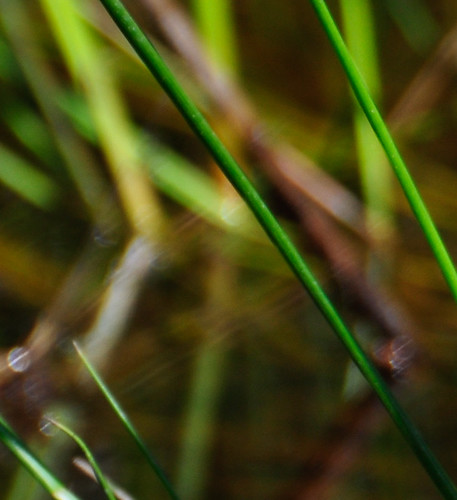
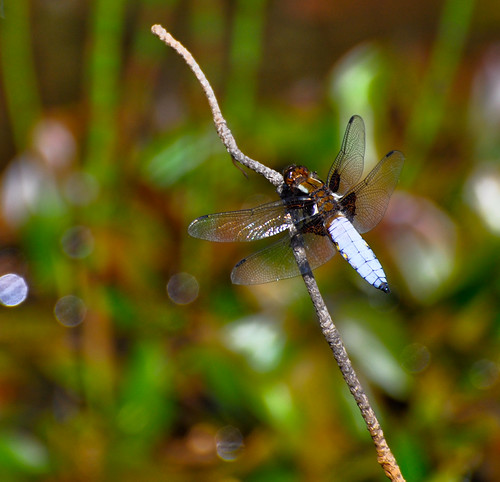
Here's what the bokeh looks like: (click for larger)
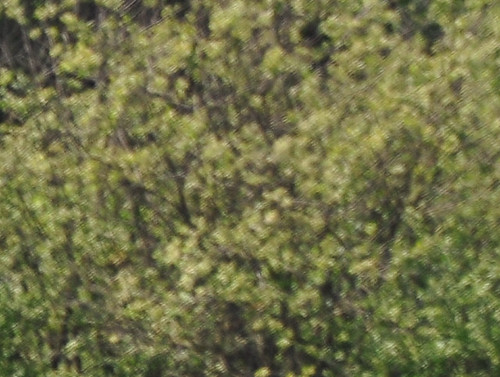


Now I can definitely see diagonal lines running bottom-left to top-right in the bokeh areas of these images.

All shots were wide open at there respective focal lengths (so f/5.6 at 300mm).

I'm aware that VR can effect the bokeh, but only when it is turned on. So what is causing this? :shrug:
 
You seem to be getting some odd effects form the lens. Is there any marking on the elements that you can see?

I never noticed effects like this when I had a 70-300mm VR, but then I didn't really take any similar pictures to the ones you posted.

Hopefully someone will pop up with an explanation, should there be one.
 
No, there doesn't seem to be any marks or scratches of any kind on the front or rear elements. I've had a good look around and it seems optically sound (to my eyes anyway).

I was wondering perhaps if the VR did not settle properly when I turned the VR off. VR includes a glass element that moves so is it possible that this VR glass element didn't sit back into it's default position when I turned VR off? :thinking:
 
I get that too

testfaf.jpg


It's my body and not the lens, only with long 200-300mm shots and always with green backgrounds.
 
VR can and does degrade IQ at fast shutter speeds.

Its your case its the UV filter - filters also degrade IQ, so use a lens hood and take the filter off.
 
I have one of these and as said before dump the filter and put the hood on, worked for me. Bloody good lens for the money too.
 
It's NOT necessarily the UV filter... this is another case of internet rumour repeated as 'fact'...we've had this discussion on the Forum at least a dozen times now - do a quick search and you'll see how much fun these threads get... so after this I'm dropping out - you can argue about it all day and make your own minds up. I'm sick and tired of repeating myself about this...

Some of the newer lenses (over 200mm) with VR or IS seem to exhibit this trait with bokeh on out-of focus subjects containing straight lines and irregular patterns such as grass and leaves...

We never had this with film cameras, with or without filters or with with non-VR/IS lenses up to 600mm and it's a relatively new phenomenon that people are starting to notice.

Until recently I was convinced it was a Canon-only problem as most of the examples came from their lenses, but even in Nikon's own promotional images, these 'repeat-patterns' have appeared.
It's most common in wildlife photography where the subject is typically in sharp focus against a medium or distant background containing the items described above.

A poor (cheap) filter can and will degrade your images up to a point, but not so much that you'd notice at normal viewing sizes.

A good filter will barely affect IQ even at 100%, if at all...

If you could try and replicate these shots, please do some with and without the filter attached with the same aperture and focus settings, with and without VR.

So far no-one has actually shown evidence of this despite all of the 'it works for me' claims...
 
If the Bokeh is affected, wouldn't this imply that the aperature blades are directly involved?
 
If the Bokeh is affected, wouldn't this imply that the aperature blades are directly involved?

:thumbs:

I'm still convinced in my mind that it's an internal lens problem - something to do with the arrangement of the floating groups inside the lenses and the way the VR/IS stabilises them is causing this abberation effect on OOF details.

If it were purely an external-optical problem (i.e. a screw-on filter), then all straight lines would have these 'shadow-images' not just the OOF ones...
And the manufacturers would have issued a press-release to that effect to counter all the bloody complaints they'll have been getting...
 
Interesting point re the IS or VR!

Never thought about that, so it might not be my body. :thinking:
 
Looks verymuch like interference patterns, which you get when you use gratings. However, these are most likley induced by the edge of the apeture blades.

Putting 2 and 2 together to make 5... perhaps the result is a combination of the small interfeerence fringes creating by the apeture blades creating Moire as the light passes into the sensor. Would be interesting to put that lens on one of my Kodak's which doesnt have an anti-aliasing filter, or a film camera

optically, to get Moire, light need to pass through 2 fairly regular patterns - and in this instance we have 2 regular patterns - the geometry of the photosites on the sensor, and the apeture blades
 
I'm convinced it's a function of the IS/VR. I had it on my canon 100-400, occasionally see it with my Nikon 70-200 VR but have yet to see it with the Nikon 300 F4.
 
Looks verymuch like interference patterns, which you get when you use gratings. However, these are most likley induced by the edge of the apeture blades.

Putting 2 and 2 together to make 5... perhaps the result is a combination of the small interfeerence fringes creating by the apeture blades creating Moire as the light passes into the sensor. Would be interesting to put that lens on one of my Kodak's which doesnt have an anti-aliasing filter, or a film camera

optically, to get Moire, light need to pass through 2 fairly regular patterns - and in this instance we have 2 regular patterns - the geometry of the photosites on the sensor, and the apeture blades

That's starting to make more sense, to me at any rate...:lol:

Like I said, we never got this with film - and I shot a lot of telephoto stuff on film in the 80's and 90's...
 
noted - lens flare in images

This could also be a result of a crazed AR coating in one of the elements in the lens

to craze a AR coating you need to either flex or squeeze the lens, get the lens hot (causing expansion and inter coating delamination)

With the abundance of plastics lenses used in camera optics (it used to be glass) this may be quite a likley scenario. If you have never seen a crazed lens before, it looks a lot like the pattern exhibited
 
I'm convinced it's a function of the IS/VR. I had it on my canon 100-400, occasionally see it with my Nikon 70-200 VR but have yet to see it with the Nikon 300 F4.

I would hope the lenses had stopped moving in any axis/direction as the suhtter was released, otherwise, there would be all sorts of detrimental issues with the resolving power of the lens
 
Did anyone actually bother to read that the guy took this images with VR turned OFF?

If the lens is wearing a filter, I'd like to see it taken off and some more tests done.
 
Did anyone actually bother to read that the guy took this images with VR turned OFF?

If the lens is wearing a filter, I'd like to see it taken off and some more tests done.

I'm sorry, but you are trencheel303 and by definition know nothing about photography....:lol:
 
If the Bokeh is affected, wouldn't this imply that the aperature blades are directly involved?

Could well be a factor.
Some lenses use more blades than others and the blade shape can vary.
 
That's starting to make more sense, to me at any rate...:lol:

Like I said, we never got this with film - and I shot a lot of telephoto stuff on film in the 80's and 90's...

Nor do I recall it from my film days. Using a telephoto on a close subject at a wide aperture produced a fine evenly blurred background (some of the current effects are quite distracting).
However the real test would be to compare results between an old film SLR and one of the older telephotos with the same lens on a digital SLR.
 
I'm convinced it's a function of the IS/VR. I had it on my canon 100-400, occasionally see it with my Nikon 70-200 VR but have yet to see it with the Nikon 300 F4.

It does, and this isn't something that needs debated really.

See:


http://www.naturfotograf.com/AFS70-200VR_rev04.html#top_page

Clearly seen also is that VR mode does have a bearing on bokeh. The more active the VR, the less attractive the bokeh.

And:

http://bythom.com/Nikkor16-85lensreview.htm

VR being active can create a "busy" and slightly false look to the bokeh

Two highly regarded Nikon reviewers. 'Nuff said.

OP does say VR is Off, but there should be no debate regarding VR impacting IQ, as it simply does. End.off.
 
I'm not seeing anything wrong with the third of the three images posted. The Bokeh isn't particularly attractive, but it's purely down to the linear nature of some of those background stalks and the distance from the subject to the background.

I've seen this from time to time with the Canon 100-400L IS - and a typical situation where you get this effect is photographing birds on the ground where there are grasses very close behind the bird, with those grasses being strangely affected, and I've also noticed it's most prevalent in contrasty light.

I never use filters and I rarely switch off IS .I can't say I've tried without IS on, but the OP in this thread sayss VR was off so it's obviously not to blame in this instance at least.

It was such an occasional problem for me that it never bothered me unduly, but I can't say I recall getting anything like the effect with a prime lens and I use those most of the time, so I wonder if this is just down to zoom lenes and the way they behave at certain camera to subject, and subject to background distances?

Certainly it's a fact that any lens under certain conditions can produce 'donut' OOF specular highlights. If this is a regular problem with this VR lens I'd want it checking out, but as an occasional problem I wouldn't be worrying about it unduly at all.
 
It does, and this isn't something that needs debated really.

See:
http://www.naturfotograf.com/AFS70-200VR_rev04.html#top_page

Clearly seen also is that VR mode does have a bearing on bokeh. The more active the VR, the less attractive the bokeh.

And:

http://bythom.com/Nikkor16-85lensreview.htm

VR being active can create a "busy" and slightly false look to the bokeh

Two highly regarded Nikon reviewers. 'Nuff said.

OP does say VR is Off, but there should be no debate regarding VR impacting IQ, as it simply does. End.off.

I'm not entirely disagreeing with either of those reviews (but TBH I can barely see any difference in the examples shown there - maybe I'm just not 'bokeh-aware' enough :shrug:), but neither of them were relevant to this discussion...a slightly less 'creamy' bokeh isn't the same as the 'ghost' ot 'repeat' patterns witnessed here.

In the OPs case VR was off anyway...

Neither my AF-S ED-Nikkor 70-200 f/2.8G VR-I or my issued (non-VR) AF-S Nikkor 80-200 f/2.8 D produce this effect at any aperture or zoom-setting.
Both have UV filters attached.

For now, it does seem to be a characteristic of zooms with higher ratios than the 70-200...
 
How has Hoppy not seen this one yet?! :D

As said above, it's not the VR as it was off, which means it's the filter or the lens. Try again without the filter, and you'll have your answer!

Chris

Edit: OR, it's the very technical explanation involving interferance and 'moire' which had made my head hurt the last few times I've read it. Either way, if it's not a filter problem, I think it's just something you'll have to get used to?
 
How has Hoppy not seen this one yet?! :D

As said above, it's not the VR as it was off, which means it's the filter or the lens. Try again without the filter, and you'll have your answer!

Chris

Edit: OR, it's the very technical explanation involving interferance and 'moire' which had made my head hurt the last few times I've read it. Either way, if it's not a filter problem, I think it's just something you'll have to get used to?

Less tech explaination - net curtains - when they cross over, you get wierd patterns

(this wierd pattern is due to an effect called diffraction and then constuctive and destructive wave interference).

I was noting that this same effect may be due to a similar interaction between the edges of the of the apeture blades (causing patterned diffraction effects), and the grid layout of the sensor

Moire is often seen with a digital camera, when photographing a pattern - especially tight patterns like woven fabrics, it exhibits as rainbow banding, in what should essentially be a clear evenly textured area on the image


To get Moire you need 2 things - one pattern interacting with another e.g. image of fabric + layout of the sensor. Or one pattern: net curtain + slightly skewed netcurtain

If your apeture rings are causing what is essentially a uniform pattern of very slight interference, the sensor may then be additionally inducing Moire from that pattern
 
Everything I'm seeing here and elsewhere (and dragging my ass through the effin' mire that is DPReview is going 'above and beyond' IMO) indicates that it's a problem associated with fast-ish OEM zooms in the 70-300mm/100-300mm range or longer...

Pro zooms (70-200) don't get it, nor do the OEM fast-primes of 300mm or longer...
Not many of us have 300mm f/2.8 lenses, so we generally don't see images from those as much as we do from those with the 'cheaper' long tele-zooms...

If anyone out there with some fast long primes wants to chip in, I'd be very interested...
 
Everything I'm seeing here and elsewhere (and dragging my ass through the effin' mire that is DPReview is going 'above and beyond' IMO) indicates that it's a problem associated with fast-ish OEM zooms in the 70-300mm/100-300mm range or longer...

Pro zooms (70-200) don't get it, nor do the OEM fast-primes of 300mm or longer...
Not many of us have 300mm f/2.8 lenses, so we generally don't see images from those as much as we do from those with the 'cheaper' long tele-zooms...

If anyone out there with some fast long primes wants to chip in, I'd be very interested...

I thought you were making one post and ducking out :nono:. As soon as I read that I knew there would be a few more to follow :naughty:.

Its a world of information on here!
 
If anyone out there with some fast long primes wants to chip in, I'd be very interested...

I've got a Nikon 300mm f/2.8 AF-S, but it doesn't have VR.

Never seen anything like that one it, or from a Nikon 300mm f/4 either.

I also don't see that with a Sony 70-400 SSM, which has in-body stabilisation.

The 70-300 VR degrades if VR is left on at high shutter speeds (loss of micro contrast) I don't recall seeing the very pronounced effect as in example 2. I don't use filters.
 
After reading through the thread, I'm leaning towards the filter. There is differences between filters (obviously or they would all be the same price;)), and having a cheap one on a big zoom lens can show up the defects at maximum zoom of the filter. I had Jacobs/Cokin Polarizer on a Sigma 70-300mm and the camera was unable to focus at 200-300mm, :eek: and the image in the viewfinder was distorted. More extreme than what Basket Case has had, but it is an example of the Filter affecting the image.
 
I'm not convinced it's a VR-specific problem either TBH...OP stated his was switched off and several other users of this lens and the Canon-equivalent (100-300?) have reported that they tried with VR/IS on and off and it made no difference....

Seems more pronounced at wider apertures.
 
After reading through the thread, I'm leaning towards the filter. There is differences between filters (obviously or they would all be the same price;)), and having a cheap one on a big zoom lens can show up the defects at maximum zoom of the filter. I had Jacobs/Cokin Polarizer on a Sigma 70-300mm and the camera was unable to focus at 200-300mm, :eek: and the image in the viewfinder was distorted. More extreme than what Basket Case has had, but it is an example of the Filter affecting the image.

We've established here and elsewhere that it's not a filter problem - it occurs whether a filter is fitted or not...try to keep up please - dropping posts like this in only serves to muddy the waters...
 
We've established here and elsewhere that it's not a filter problem - it occurs whether a filter is fitted or not...try to keep up please - dropping posts like this in only serves to muddy the waters...

I stand corrected then.
 
I thought you were making one post and ducking out :nono:. As soon as I read that I knew there would be a few more to follow :naughty:.

Its a world of information on here!

Couldn't help it - as soon as someone posted the 'it's all the filter's fault' without offering any evidence, I went rampaging across the boards...

Lots of people on DPR are having this problem with these lenses (and the Canon equivalent)...most have tried with and without filters, with and without VR/IS and at a variety of apertures...
Took me ages to wade through all the carp on that forum as well...my bloody head's spinning....
 
Less tech explaination - net curtains - when they cross over, you get wierd patterns

(this wierd pattern is due to an effect called diffraction and then constuctive and destructive wave interference).

That reminded me of that strange pattern that used to show up on old tube colour tellies. When someone on the telly wore a lined patterned jacket, that pattern often used to clash with the tri-colour dots on the screen itself and you get that wavy line effect.
TV programmes producers used to forget such an effect would occur if someone wore a garish patterned jacket on the telly! Although that effect didn't show up on black and white tellies as they simply used horizontal lines.
 
LOL. Well I've trawled through all my old images trying to find an example from the 100-400L. I can't find exactly the effect I'm looking for - I must have deleted the images, what few there were - but this one is pretty similar?

4663592094_a0440abc49_b.jpg


Definitely no filter used and almost certainly taken at 400mm (full zoom). The original file has long gone, but this is a typical situation where I encountered the problem - low viewpoint, grasses or other foliage right close up behind the bird and usually very contrasty light.

Taken with a 1DMK2 n -not that I think the camera is relevant to the problem in any way.
 
Everything I'm seeing here and elsewhere (and dragging my ass through the effin' mire that is DPReview is going 'above and beyond' IMO) indicates that it's a problem associated with fast-ish OEM zooms in the 70-300mm/100-300mm range or longer...

Pro zooms (70-200) don't get it, nor do the OEM fast-primes of 300mm or longer...
Not many of us have 300mm f/2.8 lenses, so we generally don't see images from those as much as we do from those with the 'cheaper' long tele-zooms...

If anyone out there with some fast long primes wants to chip in, I'd be very interested...

I havent noticed any strange bokeh so far on either the 400 or the 70-200VRII
 
After reading through the thread, I'm leaning towards the filter. There is differences between filters (obviously or they would all be the same price;)), and having a cheap one on a big zoom lens can show up the defects at maximum zoom of the filter. I had Jacobs/Cokin Polarizer on a Sigma 70-300mm and the camera was unable to focus at 200-300mm, :eek: and the image in the viewfinder was distorted. More extreme than what Basket Case has had, but it is an example of the Filter affecting the image.

Sounds like something very wrong with that filter!
 
Everything I'm seeing here and elsewhere (and dragging my ass through the effin' mire that is DPReview is going 'above and beyond' IMO) indicates that it's a problem associated with fast-ish OEM zooms in the 70-300mm/100-300mm range or longer...

Pro zooms (70-200) don't get it, nor do the OEM fast-primes of 300mm or longer...
Not many of us have 300mm f/2.8 lenses, so we generally don't see images from those as much as we do from those with the 'cheaper' long tele-zooms...

If anyone out there with some fast long primes wants to chip in, I'd be very interested...

Almost all my shooting these days is done with the 500mm f4L IS or the 300mm 2.8L IS, both with and without converters and Ive never seen this strange bokeh in a shot - only ever with the 100-400L IS.

I've never seen the effect with the 70-200 2.8L although to be fair it's not my most used lens. About the only time I switch IS off on any of my lenses is if I'm using a trpod and remote release, and I never use filters with the occasional exception of a polariser.
 
Sounds like something very wrong with that filter!
Trying not to take this thread off topic, just replying to a specific question, my problem was rectified by trying a Hoya CPL filter (about £30-40) in the shop after the sales assistant tried to blame my camera for the fault. He said he had never seen the problem before so it may have been that individual filter, rather than the entire Jacobs/Cokin range. :shrug:
 
Back
Top