
and please use their services
You are using an out of date browser. It may not display this or other websites correctly.
You should upgrade or use an alternative browser.
You should upgrade or use an alternative browser.
Solar eclipse
- Thread starter taff63
- Start date


kendo1
Suspended / Banned
- Messages
- 7,574
- Name
- Ken
- Edit My Images
- Yes
Welding glass is a bout 10 stops and has a colour cast- usually green.
The colour cast can be removed by altering the white balance, but I don't think 10 stops is enough to protect your eyes or the sensor.
I think closer to 20 stops is preferable. 10 stops is about a factor of 1000 and you need a factor of 100000.
Solar filters are available.
The colour cast can be removed by altering the white balance, but I don't think 10 stops is enough to protect your eyes or the sensor.
I think closer to 20 stops is preferable. 10 stops is about a factor of 1000 and you need a factor of 100000.
Solar filters are available.
Last edited:
Buy this: http://www.amazon.co.uk/Baader-Astro-Solar-filter-observing-telescopes/dp/B0039ZDXLQ
Fix it to a UV filter (or just tape it directly onto the lens).
Fix it to a UV filter (or just tape it directly onto the lens).

- Messages
- 49,339
- Name
- Nod (UK)
- Edit My Images
- Yes
Welding glass might be enough to protect a sensor but it is NOT suitable for viewing the Sun with the old Mk I eyeballs. It'll block some of the visible light but lets far too much of the damaging stuff through. It's easy enough to replace a camera but (as yet) impossible to replace your eyes.

- Messages
- 1,575
- Name
- Ian
- Edit My Images
- No
You need something like this:-
Marumi introduces ND100,000 for solar shooting
Feb 18, 2015
By Damien Demolder
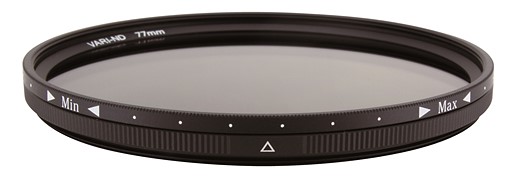
Japanese filter brand Marumi has introduced a collection of neutral density filters for its DHG (Digital High Grade) range.
The company has announced a ND 100,000 filter for shooting solar eclipses. This model cuts light by 16.5 stops, so will also be useful for extreme long exposures in normal conditions.
Marumi's DHG range uses low reflectance coatings on the rear face to reduce flare and reflections from the surface of the lens, and the rim of the glass is blackened to prevent internal reflections.
For more information see the Marumi website
Except they are now getting in short supply with only three weeks to go.

Marumi introduces ND100,000 for solar shooting
Feb 18, 2015
By Damien Demolder

Japanese filter brand Marumi has introduced a collection of neutral density filters for its DHG (Digital High Grade) range.
The company has announced a ND 100,000 filter for shooting solar eclipses. This model cuts light by 16.5 stops, so will also be useful for extreme long exposures in normal conditions.
Marumi's DHG range uses low reflectance coatings on the rear face to reduce flare and reflections from the surface of the lens, and the rim of the glass is blackened to prevent internal reflections.
For more information see the Marumi website
Except they are now getting in short supply with only three weeks to go.


SnEm
Suspended / Banned
- Messages
- 71
- Edit My Images
- No
I am getting a bit confused on how to shoot this partial eclipse safely??? Some people say you have to protect your lenses with special foil and other say it's safe to shoot as long as you use your live view?
Anyone some clear instructions? I'll be at work during the eclipse, but I hope to squeeze out during the climax, so I have to get it right, who can tell me more about camera settings???
Thx heaps!!!!
Anyone some clear instructions? I'll be at work during the eclipse, but I hope to squeeze out during the climax, so I have to get it right, who can tell me more about camera settings???
Thx heaps!!!!

chuckles
Suspended / Banned
- Messages
- 4,470
- Name
- Barry
- Edit My Images
- Yes
ND100,000 that'll make for some extreme long exposure photography
will need to look into those
That's what I thought.... in fact, I'm sure the shutter will still be open when the next eclipse comes along

johnnypanic
Suspended / Banned
- Messages
- 3,579
- Name
- John
- Edit My Images
- Yes
Try these -
http://www.firstlightoptics.com/solar-filters/baader-astrosolar-safety-film-nd-50.html
or slight cheaper option (which has more than doubled in price in the last 2 days!)
http://www.amazon.co.uk/Solar-Filte..._sim_ph_1?ie=UTF8&refRID=03NTHAD0ZWYT8YSR9WKP
http://www.firstlightoptics.com/solar-filters/baader-astrosolar-safety-film-nd-50.html
or slight cheaper option (which has more than doubled in price in the last 2 days!)
http://www.amazon.co.uk/Solar-Filte..._sim_ph_1?ie=UTF8&refRID=03NTHAD0ZWYT8YSR9WKP

Tori_T
Admin
- Messages
- 6,888
- Edit My Images
- Yes
It may be "safe", but take a look at the photos in this article to see what just a bit of sunlight can do to a camera. Then imagine all that energy focused directly on to your sensor...and other say it's safe to shoot as long as you use your live view?


StewartR
Suspended / Banned
- Messages
- 11,513
- Name
- Stewart
- Edit My Images
- Yes
If you're using a big enough lens, you can spot meter off the sun (once you've got your solar filter in place of course). Apart from that it's hard to say because it depends so much on exactly what filter you're using, and on how clear the sky is on the day.And any tips on the camera settings?


- Messages
- 9,277
- Edit My Images
- No
I think closer to 20 stops is preferable. 10 stops is about a factor of 1000 and you need a factor of 100000..
20 stops would be 1,000,000.
Would an infra red filter work for this?
Steve.
Last edited:
kendo1
Suspended / Banned
- Messages
- 7,574
- Name
- Ken
- Edit My Images
- Yes
I said closer. 10 stops at a factor of 1000 is not nearly enough.20 stops would be 1,000,000.
Would an infra red filter work for this?
Steve.
If I remember correctly the value should be about 16, which comes out at about 100000.
I very much doubt that an infra red filter would be of the correct magnitude. (just Googled and they are about 7 stops ish)
Custom made filters are available to keep eyes and cameras safe quite cheaply- somewhere about £15 to £20- which is a lot cheaper than a new camera or going blind.
- Messages
- 9,277
- Edit My Images
- No
10 stops is 1024.
16 stops is 65,536
16 2/3 stops is 1,040,449 (which is very close to your 16 stop suggestion for 100,000)
20 stops is 1,048,576
I read somewhere that the light reflected from the moon is 1/1,000,000 of that from the sun directly. So you can take shots in moonlight using the sunny 16 rule + 20 stops (or should that be moony 16?!).
Steve.
16 stops is 65,536
16 2/3 stops is 1,040,449 (which is very close to your 16 stop suggestion for 100,000)
20 stops is 1,048,576
I read somewhere that the light reflected from the moon is 1/1,000,000 of that from the sun directly. So you can take shots in moonlight using the sunny 16 rule + 20 stops (or should that be moony 16?!).
Steve.
Last edited:
StewartR
Suspended / Banned
- Messages
- 11,513
- Name
- Stewart
- Edit My Images
- Yes
Yes.I read somewhere that the light reflected from the moon is 1/1,000,000 of that from the sun directly. So you can take shots in moonlight using the sunny 16 rule + 20 stops (or should that be moony 16?!).
kendo1
Suspended / Banned
- Messages
- 7,574
- Name
- Ken
- Edit My Images
- Yes
10 stops is 1024.
16 stops is 65,536
16 2/3 stops is 1,040,449 (which is very close to your 16 stop suggestion for 100,000)
20 stops is 1,048,576
I read somewhere that the light reflected from the moon is 1/1,000,000 of that from the sun directly. So you can take shots in moonlight using the sunny 16 rule + 20 stops (or should that be moony 16?!).
Steve.
I doubt it, maybe a typo

- Messages
- 9,277
- Edit My Images
- No
I doubt it, maybe a typo
If 10 stops is 1024, 20 stops is 1024 x 1024 = 1,048,576.
It's the 16 2/3 stops I got wrong. It should have been 104,044 (or 104,044.9 to be far too accurate).
Steve.
Last edited:

Farmerjim
Suspended / Banned
- Messages
- 1,756
- Name
- Jim
- Edit My Images
- Yes
For the price of a sheet of Baader film (I ordered mine on Monday night, it arrived today) why risk damaging your camera, lens and possibly your eyesight as well????
 It's cheap as chips, works 100% without any colour cast and it's safe. I made a filter in about 10 mins, I figured that I wasn't going to become a solar tog so why spend £££s on a glass based filter.
kendo1
Suspended / Banned
- Messages
- 7,574
- Name
- Ken
- Edit My Images
- Yes
Oops, I had a typo! I got the right one wrong.If 10 stops is 1024, 20 stops is 1024 x 1024 = 1,048,576.
It's the 16 2/3 stops I got wrong. It should have been 104,044 (or 104,044.9 to be far too accurate).
Steve.

mata.morrison
Suspended / Banned
- Messages
- 1,033
- Name
- Matthew
- Edit My Images
- Yes
Going to throw this in here as its about the Eclipse. I'm lucky enough to be on the Isle of Lewis so will see a 95-97% eclipse, however I only have a 23mm lens at the mo so going to shoot a wide shot of this to be different. I'm guessing pointing that towards the sun is all right as its pretty much the same as a sunset right?
StewartR
Suspended / Banned
- Messages
- 11,513
- Name
- Stewart
- Edit My Images
- Yes
Yes, except that the little bit of the sun which you can still see will be much brighter than at sunset. It's the intensity of the sun that's potentially harmful, not the total amount of illumination, so you still need to take precautions.I'm guessing pointing that towards the sun is all right as its pretty much the same as a sunset right?
mata.morrison
Suspended / Banned
- Messages
- 1,033
- Name
- Matthew
- Edit My Images
- Yes
Its a Fuji X-E1 so crop factor has to be taken into account. I've seen a fair few photos from previous eclipses that were taken at wide angles basically giving you a dim landscape with bright sun and black dot in the middle. Ah well will see what happens/what I come up with. I have a piece of welding glass I could use but that's pointless at that focal range as I wouldn't get any thing else but a tiny dot.

bass_junkie83
Suspended / Banned
- Messages
- 4,367
- Name
- Dave
- Edit My Images
- Yes
Anyone know where you can get solar filter film on next day delivery? All I have found has been on amazon with an estimated delivery of the 27th March. May have left it a little late......
