Software or not?

hashcake

Gone to pot!
Suspended / Banned
Messages
5,943
Name
Darran, Daz or ****
Edit My Images
Yes
Okay, I am probably opening a can of worms here so here goes.
Before I am shot down in flames, I say each to their own, I am not saying we should all agree or disagree or one way or the other is right or wrong.

Personally I am not a fan of using software to rectify problems with digital photos.
I admit that I have used lightroom to rectify suchh issues as WB, lighten / darken and over exposure issues.
If I have taken a picture and I can solve these type of problems I am happy, however, if it a photo I have taken needs heavier modifying in something like photoshop such as cloning out an object, I delete the pictures and try another attempt at taking them if possible.

I've looked at lots of HDR work but for me, I prefer the natural look of a photo and too be honest, I don't think I've ever looked at a HDR and found that I liked it.

As I said at the start of the topic, it's each to their own so I am interested if the majority is a yay or nay with regard to heavy photoshop manipulation.
 
I think it depends on how you view your photography... art, or an acurate representation of what you viewed. As you say, I don't think there is a right or wrong, just a view-point on what your photography is for you.
 
Yep - ANY post-production is a cheat

All those years those idiots spent over the last 150 years or so in a darkroom doing all those amazing things to a negative to improve a shot is all cheating, they should have done it all in-camera

And as for digital processing... well, don't get me started there

Oh, just realised, the idea of doing no-pp is :nuts: - but if you feel really strongly that way, you need to buy a film camera and shoot slides ONLY to get close (and don't forget you shouldn't be using filters either)

:thumbs:

DD
 
The only place for 'purists' in photography is in forensic or medical photography and journalism.

For the rest of us, if there's an object in the image that shouldn't be there, you either didn't frame it right it the first place or you couldn't get the angle. In the first instance you should have paid more attention, in the second 'shop' it because when it comes down to it it's about making the image that you visualised. There is not one professional photographer who would not or has not manipulated or edited an image to get the result they wanted.
 
There's no right or wrong about it. Sometimes going back and taking the shot again isn't possible. Sometimes it's not something you can correct in camera. For example, a wedding I shot last month one of the bridesmaids dress was a little short so I needed to extend it so it matched the others.
 
I'm afraid I use photoshop as a tool, there is something to be said for getting it right in camera, but theres also artistic impression too, and why shouldn't we use the new technoligy available to move forward? and make our pictures better. Do you drive to where you shoot pictures or do you go by horse and cart, should you be using digital or a plate camera? how far do you want to take it. You have switched to digital so your already getting what Canon/Nikon or whatever thinks is real from the internal processing the camera does, probably not exactly what your seeing.
I'm a wedding photographer, I have to shoot in all kind of places, some are lovely and I'm spoilt for choice of backgrounds, others are a disaster, cracked walls, wires hanging all kinds of crap going on in the backgrounds, should I leave them there (as they were on the day) and and give horrid pics to my customers, or should I remove them and make the couple happy? I know what I'm going to do.
As others have said it's each to his own, if it works for you great. Wayne
 
Depends what your after, but i suppose if you dead against software, you'd need to shoot faithfully, (as the camera uses its onboard software to sharpen etc) no cropping etc expect lots of dull flat images in that case.

Everything is altered some at some point, personally i try to frame the shot as i want, but always apply a standard raw conversion for contrast settings, sharpeness, w/b (i only shoot raw) etc in CS3, that generally it, as some have noticed sensor dust before. That dosnt really effect me, unless i am printing, or the shot is being used for something.

In things like sport there are sometimes things you can not control i.e marshells in the background, at times like that like i say if asked i may try to remove them, although for my use i dont normally bother, havent got the time really.
 
The way the camera sees a scene is not the way we do, nor does an unprocessed photograph typically arouse the same feelings in the viewer as those felt by the photographer he saw the scene (which after all is the aim of photography). To not post-process is a bizarre, arbitrary and potentially impossible limitation to put on yourself.
 
A camera does not see the world as I see it - it can't.

The brain is much better at dealing with white balance, contrast and dynamic range. However, a camera also can see things in ways that I can't - wide angles, telephoto compression and depth of field.

A photo straight from the camera is a sketch, a starting point, given the limitations of the equipment. The final print / image is my interpretation of what I saw or want to present, not the camera's.

Having said that, less is more IMHO, but if I was giving customers the results straight from the camera I pretty soon wouldn't have any customers.
 
lol rob, snap
 
Honestly!! :suspect:

Yes. I think there'd been a mix up shoes and the bridesmaid ended up in higher shoes than during the fitting. Her dress was a good 3 or 4 inches shorter than the others and it stood out like a sore thumb. Making it match in post makes for a very happy client :thumbs:
 
I think there is a professional need to enhance or repair an image given the cost of retaking the shot having unwanted features in it.

On a more base level I consider that there's a difference between a photograph and a created image. As a hobbiest, I like to take photographs and use PP sparingly to alter the camera's output or clone out an intrusive but undesirable feature.

I hope Tucker will forgive me, as there's certainly no criticism of his winning entry in last month's competition, but I'd love to see the "photograph" that formed the basis of the final image. I feel that an image like Tucker's could be created without recourse to a camera if one's creative skills were sufficiently high...as we frequently see in movie based special effects and game animation. Again, this is in no way a criticism of any posted images on here.

Bob
 
Hard to say where to draw the line. It's probably a 'per photo' basis. Some photos need it to get the desired effect, and some don't. Also depends on what the tog wants to show.

I generally like photoshopping. I'm finding that the only thing I really dislike is when nips and tucks start happening in photos of people. For me there's a huge difference between an HDR, Contrast Mapped, Leveled/Curved image and a photo where someone's spare tire around their waste magically has disappeared. Now that's going over the top.
 
Yes. I think there'd been a mix up shoes and the bridesmaid ended up in higher shoes than during the fitting. Her dress was a good 3 or 4 inches shorter than the others and it stood out like a sore thumb. Making it match in post makes for a very happy client :thumbs:

That was "honestly!!", not "honestly??".

But I see your point....:)
 
Well, as an amateur, you get out of the hobby what you want. In the days of pure film, photographers divided up into all sorts of groups such as :


  • Kit collectors
  • Chemists
  • Printers
  • Artists etc. etc.

I know some never printed anything because they were after the 'perfect neg' and never achieved it, if they had, they would have then gone on a quest for a 'perfect print'.

I guess digital amateurs fall into similar groups


  • Kit collectors
  • PS dabblers
  • Web contributors
  • Printers
  • Artists etc. etc.

I guess many of us fall into more than one group. :nuts:

Pros, however, have to consider time/money - the less farting about before you get your money the better.
 
An awful lot of the software tools in photoshop etc. are named after darkroom techniques.

It is nothing new.
 
I try not to do more in PP than I used to be able to do in the darkroom but that doesn't leave much out! (Apart from some of the "artistic" filters...)

I'm not a fan of HDR but I have been known to cut a mask to burn in detail on an almost blown sky as well as dodge a foreground to let a little detail into the shadows. I've also (on occasion) dropped a different sky in behind a scene but never managed to dodge an element out of a scene and burn in a replacement, although I know it can be done. With PP software, it's just SO much easier AND any mistakes can be rectified before printing.
 
I try to do as little PP as possible, but as I shoot in RAW, it's virtually impossible. There does seem to be a misconception when it comes to digital images in that people process them whereas with film they did not. The truth of course is that there has to be some PP even with film. Therefore I don't see processing of a digital image as cheating, especially when processing is within the "rules", if there are such things.

That said, it's your image, you can do what you like with it!:thumbs:
 
I use some form of software as I am still learning so some of my shots suck, but with a little work I can make them nice (well, ncie by my standards and ok by others :p ) but that is only with some, the majority I dont touch at all.
 
The way the camera sees a scene is not the way we do, nor does an unprocessed photograph typically arouse the same feelings in the viewer as those felt by the photographer he saw the scene (which after all is the aim of photography). To not post-process is a bizarre, arbitrary and potentially impossible limitation to put on yourself.

Totally agree Rob. How many times have we seen the beautiful countryside with a bright blue sky and tons of streaming light, knowing fully well that we didn't have a chance in hell of exposing it in one shot!

If no PP existing then glamor models wouldn't be so 'glamorous'...lol

That said, when the barbie doll skin comes out then it's just going too far.
 
Hmm.
Not an easy question to answer, and not one I can answer, but I do feel that a photograph is about capturing a moment. If a lot of processing is done, it may still be a very good image, but does it still retain the 'spirit' of a photograph. Darkrooms allowed some manipulation, but not what can be done with photoshop.
Interesting what Canon Bob said about Tucker's competition winning picture - was it ever shown ? As Bob says, no criticism meant, more a question of curiosity. I am a total novice at any sort of proccessing, but it would be interesting to see the before-and-after..
As for kalibre's comment about glamour models - do they need to look so unreal ?
 
Well since my photoshop skills are on a par with my photography I think it would be good to see more pictures that are straight from the camera (other than slight sharpening for RAW ones) so that I would have more idea of what I'm aiming at pre processing! Thing it as others have said, without some pp the colours would not look as good and the subject would be very bland and boring.
Personally I don't like HDR or pictures that are processed to the point where they look like 3D almost as if the subject has been cut from one picture and put onto the one shown, but then a lot of people would not like pictures that I think are good. If we all liked the same thing it would be very repetitive looking through pictures that were all done in the same style :lol:
 
Its all art whichever way you look at it and there's no right or wrong.

what I can't stand is people who look down at you or get all snobby because you use photoshop. And people who try to tell you that extreme photoshopping is fine because 'its their artistic vision' Ok, fine. That it may be, but then it becomes photo-art rather than photography. HDR is a good example of this.

My general take on the whole thing is that yes, we used to do crazy stuff to enhance our photos in the darkroom and now we do it photoshop in the daylight and without chemicals. BUT, you can't polish a turd. No matter how hard you try, in the darkroom OR in photoshop. A crap photo is still a crap photo. All the darkroom work and photoshop usage just enhances a shot. It doesn't make or break or it.
 
Having spent more time than I care to think about in a red lit gloomy room waggling bits of card stuck to pieces of wire to get the best out of a promising negative I can testify to the fact that PP is not a new thing!

With film, PP was a time-consuming and costly exercise which required accurate record keeping as well in case one wanted to make another print a few months later. This was a real disincentive which meant that most people tried to get the image as close as possible to what was wanted in camera. That is not to say that it wasn't fun and satisfying to improve something in the darkroom.

For most of my serious colour work I used slide film anyway which meant that if I wanted the image to be projected rather than printed there was no option other than to get it right in the camera.

With digital photography a certain amount of tweaking of an image is quick and simple using software (and the results are instantly viewable) which to me means that I can get more photographs just as I would like them with very little effort. A bonus is that I don't have to lock myself away to do it and can stop in the middle and walk away to make a coffee any time I like and come back later.

Having only recently started to do more than dabble with digital photography my main issue with PP is that I am finding the learning curve a tad on the steep side. Being rather lazy, I am disinclined to invest the time required in front of the computer screen and prefer to just take more photographs.
 
I also don't see why people complain about photoshop when so many famous and now classic film photographers and photos were heavily manipulated in the dark room.
Photoshop is just the equivalent except you don't have to use any of those nasty chemicals.

Jpg output from cameras are actually already manipulated by the camera in most cases as well! Usually a sharpening pass and a contrast curve alteration, and often a noise reduction routine.
 
I've looked at lots of HDR work but for me, I prefer the natural look of a photo and too be honest, I don't think I've ever looked at a HDR and found that I liked it.

How do you know the stuff you liked wasn't HDR if the processing method wasn't mentioned? I for one usually dont mention my processing method unless it's specifically asked for and my images feature a wide range of processing some it's simply a raw convert while others have had more significant adjustments.

Ansel Adams used a method very similar to HDR in the darkroom where he layered up slides to bring out more detail than a single slide was capable off.
 
i agree in a sense

all i ever do is run a batch on my pics to make borders and add a copyright logo

never do PP on those images

re the HDR, i to wasnt keen but like it more now i have tried it. give it a go and see how it goes
 
The days are long gone when an image has to stay as it was taken. Photoshop allows photographers to enhance and correct images, which is perfectly acceptable in my opinion. If you were to show a member of a public two photos - One original and one sharpened, levels tweaked slightly and perhaps some brightness/contrast editing, the chances are they're going to prefer the processed version.

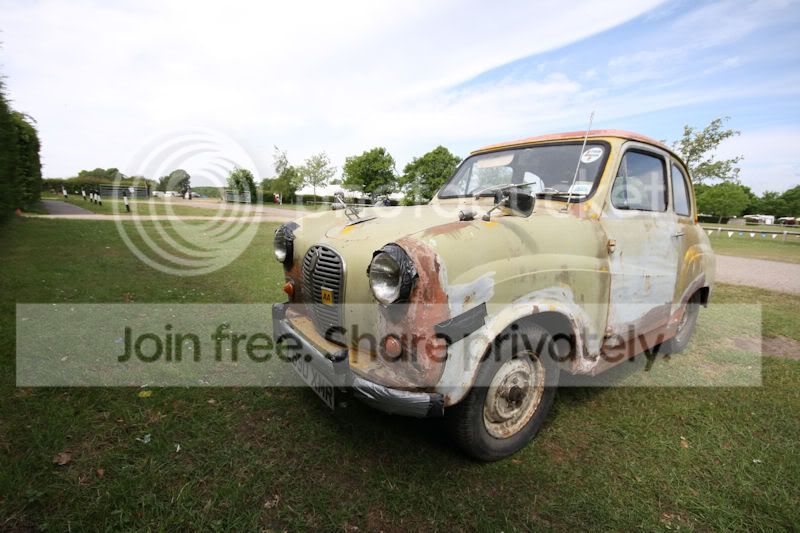
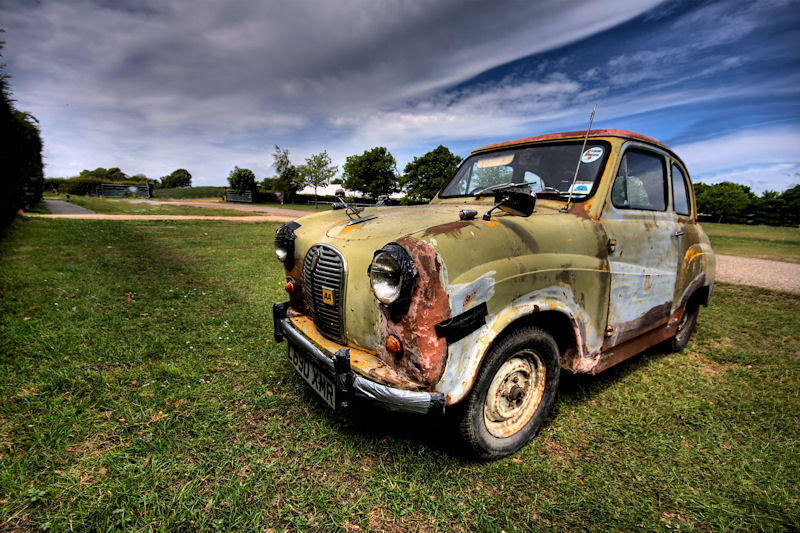
Photoshop skills are what separates some photographers - again, in my opinion. It's becoming increasingly easier for anyone to take a good photo, but it's how you make it stand out that sets them apart. I'm going to take an example from the PP section of the forum (hope you don't mind, Jimmy):

Tonemap-beforeandafter.jpg


And Joe:

IMG_8146_1.jpg

2523859167_23b9148b30_o.jpg


In both examples, the processed picture is obviously the second one. I know which one I would rather have on my wall, do you?
 
Back
Top