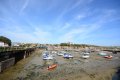
Sigma 10-20....f4-5-6

wallyboy

Suspended / Banned
Messages
2,805
Name
walter
Edit My Images
Yes
Been reading reviews on this Lens, some say great lens, others not so great, i know opinions in most things differ, trouble is it leaves the reader ie me dazed and confused,
Any owners of lens who have had one a while like to share there experience.
Looking to use with Landscape mainly, on a Nikon 7200,
 
I've just bought one. Not used it much, but been pleased so far with it. Using it on my D7000
 
Is this the variable aperture f4-5.6 or did I miss a version? If so, I had a copy on Pentax and really liked it - it was a fun lens! I sold it when I got a Pentax 15mm Limited lens. In hindsight, the sigma was both sharper at 15mm and had the advantage of going to 10mm so I should have kept it, but the build quality and size of the Pentax 15mm was a strong draw!
 
Is this the variable aperture f4-5.6 or did I miss a version? If so, I had a copy on Pentax and really liked it - it was a fun lens! I sold it when I got a Pentax 15mm Limited lens. In hindsight, the sigma was both sharper at 15mm and had the advantage of going to 10mm so I should have kept it, but the build quality and size of the Pentax 15mm was a strong draw!
What was the iq when using this lens, most reviews i have seen say its good at centre, then drops of on corners, did you notice softness, or is it one of those you have got to look hard to see a big difference, must say i have been looking at some images on Flickr, and most images seem pretty good
 
I had one, it produced ok results, better than the later one, but distorts like hell at the edges, so needs careful use.
 
Walter, I used the lens for landscapes for many years and never had any issues. Do not filter through the review details to much as they can become anal.

Try to embrace the content of an image, rather than how sharp it is
 
Wise words, picking one up later.
Cool- you'll enjoy it. At 10mm there's distortion at the edges of the frame. It's not necessarily that the lens isn't sharp, it just is rendering the geometry differently. Have fun!
 
It's a cracking lens for the money! I would recommend it to anyone wanting a UWA for an aps-c body.
 
Great lens on a crop, few dodgy copies out there with one side a lot softer than the other.

These days if I was after an uwa on a crop I'd go for a canon 10-18mm it's a great lens at a great price.
 
Great lens on a crop, few dodgy copies out there with one side a lot softer than the other.

These days if I was after an uwa on a crop I'd go for a canon 10-18mm it's a great lens at a great price.
Not much good on a nikon though... :D
 
I've one for my Canon body and am pleased with it, does what I want it to (y)

Enjoy your new lens
 
I had one for years on a D7000. Brilliant landscape lens for the money although at the time there seemed to be some QC issues at Sigma so quality varied. Luckily mine was a goodun. Sold it to a chap on here when I got rid of my crop gear. Hopefully he's still very happy with it.
 
Some AF systems have difficulty getting good focus with very wide angle lenses. Since the DoF is so large at wide angles it's easy to do a careful manual focus on the your typical critical distance of the moment (such as across the street) and leave it there. For general landscape purposes just memorise or mark the setting for infinity (or hyperfocal infiinity if you're really fussy).

There are two kinds of distortion on wide angle lenses. There is the natural inescapable "distortion" of a wide rectilinear perpective projection viewed at a narrowe angle (e.g. an A4 print 18" away from your eyes). This vanishes if you shut one eye anf bring the other close enough to the centre of the image to give the same angle of view. It's a feature of accurate rectlinear perspective projection and is the same for every lens of the sme focal length. It makes people at the edges of a wide angle group shot look fatter.

The other kind of distortion is the departure of a specific lens model from perfect rectlineariy, often barrel or mustache. This will make straight lines near the edges of the image look a bit curved. It's usually slight enough to be unnoticeable unless there are really straight lines near the edges of the image, not usually the case with landscapes, often the case with cityscapes or architecture. This distortion is very easily removed by an image editor which incorporates lens geometry corrections based on models of the distortions of specific lenses.

In the case of the Sigma 10-20mm it's mustache distortion. This has a linearly corrected centre and a slight droop from linearity at the edges. Some photographers prefer this because it makes people at the edges of a group less exaggeratedly fatter.

I used mine mostly for cityscapes and architecture. I found f8 a good compromise between good centre sharpness and pretty sharp edges. I found f11 gave sharper edges at the cost of slightly reduced centre sharpness -- a more even sharpness from centre to edge. I found the images needed a little more sharpening than longer focal length lenses. I'd probably still be happily using it if a nasty accident with a severe gust of wind on a tripod hadn't given me the perfect excuse to upgrade to the even better and wider Sigma 8-16mm :-)
 
Some AF systems have difficulty getting good focus with very wide angle lenses. Since the DoF is so large at wide angles it's easy to do a careful manual focus on the your typical critical distance of the moment (such as across the street) and leave it there. For general landscape purposes just memorise or mark the setting for infinity (or hyperfocal infiinity if you're really fussy).

There are two kinds of distortion on wide angle lenses. There is the natural inescapable "distortion" of a wide rectilinear perpective projection viewed at a narrowe angle (e.g. an A4 print 18" away from your eyes). This vanishes if you shut one eye anf bring the other close enough to the centre of the image to give the same angle of view. It's a feature of accurate rectlinear perspective projection and is the same for every lens of the sme focal length. It makes people at the edges of a wide angle group shot look fatter.

The other kind of distortion is the departure of a specific lens model from perfect rectlineariy, often barrel or mustache. This will make straight lines near the edges of the image look a bit curved. It's usually slight enough to be unnoticeable unless there are really straight lines near the edges of the image, not usually the case with landscapes, often the case with cityscapes or architecture. This distortion is very easily removed by an image editor which incorporates lens geometry corrections based on models of the distortions of specific lenses.

In the case of the Sigma 10-20mm it's mustache distortion. This has a linearly corrected centre and a slight droop from linearity at the edges. Some photographers prefer this because it makes people at the edges of a group less exaggeratedly fatter.

I used mine mostly for cityscapes and architecture. I found f8 a good compromise between good centre sharpness and pretty sharp edges. I found f11 gave sharper edges at the cost of slightly reduced centre sharpness -- a more even sharpness from centre to edge. I found the images needed a little more sharpening than longer focal length lenses. I'd probably still be happily using it if a nasty accident with a severe gust of wind on a tripod hadn't given me the perfect excuse to upgrade to the even better and wider Sigma 8-16mm :)

Interesting and imformative read,
Only had lens just over a day, and i am finding F8 the place to be,
After looking at images yesterday taken with my 5200, there seemed to be some smudging on pics, so i was keen today to try it out on my 7200 must say the images are a vast improvement a lot cleaner, i can see myself exploring and enjoying this lens, examples below.
image.jpeg
Below is a big crop taken from pic, quite plesed with results, 95% of pic was cropped out.

image.jpeg
 
Back
Top