Show us yer film shots then!

Frustratingly, the document states a range of development times and the resulting gamma values for the competitor developers, but not its own!

Page 5 has times for the Foma developers at gamma .65.
 
Last edited:
Page 5 has times for the Foma developers.

Thanks for that trypdal,

I am particularly interested in the gamma values at specific development times as its something I have been reading about. As an example, Tetenal Emofin (powder) is listed as giving a gamma range of ,55 to ,70 which is huge compared to many of the other developers. This suggests to me that its a very flexible developer with a need to control development times with precision.

Whereas if I look at lford Microphen (1+1) shows only a spread between ,62 and ,64 for its temperature range and should be very "forgiving".

For the RO9. all we can ascertain is 4* = ,65
 
Thanks for that trypdal,

I am particularly interested in the gamma values at specific development times as its something I have been reading about. As an example, Tetenal Emofin (powder) is listed as giving a gamma range of ,55 to ,70 which is huge compared to many of the other developers. This suggests to me that its a very flexible developer with a need to control development times with precision.

Whereas if I look at lford Microphen (1+1) shows only a spread between ,62 and ,64 for its temperature range and should be very "forgiving".

For the RO9. all we can ascertain is 4* = ,65

What is the planned usage for your negatives?

IME, aim for lower gamma values (.55-58) if you plan on printing with a condenser enlarger or scanning. For a diffuser enlarger a contrastier negative will be better (.65 or roundabout that)
 
Last edited:
What is the planned usage for your negatives?

IME, aim for lower gamma values (.55-58) if you plan on printing with a condenser enlarger or scanning. For a diffuser enlarger a contrastive negative will be better (.65 or roundabout that)

Thanks for trying to help trypdal,

I will be scanning and then printing if I consider the image appealing enough. I am still enjoying being on the learning curve.

I have the 100 film and RO9 what dilutions and time would you suggest for .55-58.
 
Thanks for trying to help trypdal,

I will be scanning and then printing if I consider the image appealing enough. I am still enjoying being on the learning curve.

I have the 100 film and RO9 what dilutions and time would you suggest for .55-58.

I agree with Fishy and Mr Allen in that this film in my workflow works well exposed somewhere between 50 and 100 ISO. Err towards the lower iso for contrastier scenes (e.g. full sun day) or towards 100 for less contrasty scenes (e.g. overcast days, soft shadows). Use the quoted times on page 5 if you expose at ISO 100, do 1 or 2 minutes less than that if you expose at 50. Refine based on results/taste. Just a starting point.

Apologies, on mobile, will comment better later.
 
Horseman 45HD, Schneider Angulon 120mm, Fomapan 200 developed in HC110 Dilution H.


Duddo Stones, Northumberland
by Kevin Allan, on Flickr

As mentioned above in respect of Foma 400, this 4x5 Foma 200 negative has lots of white speckles and a few other artefacts. Even after a lot of use of the clone brush in Photoshop, it's still visible.

I often say that the cost of film is not my main expense in photography, it's petrol. So after a 2.5 hours round trip to this scene, I wish I'd shot in FP4+ rather than using up my last sheets of Fomapan 200. Apart from a few sheets of Foma 100 remaining in half-plate size, I'll be sticking to FP4+ and HP5+ from now on.

 
Horseman 45HD, Schneider Angulon 120mm, Fomapan 200 developed in HC110 Dilution H.


Duddo Stones, Northumberland by Kevin Allan, on Flickr

As mentioned above in respect of Foma 400, this 4x5 Foma 200 negative has lots of white speckles and a few other artefacts. Even after a lot of use of the clone brush in Photoshop, it's still visible.

I often say that the cost of film is not my main expense in photography, it's petrol. So after a 2.5 hours round trip to this scene, I wish I'd shot in FP4+ rather than using up my last sheets of Fomapan 200. Apart from a few sheets of Foma 100 remaining in half-plate size, I'll be sticking to FP4+ and HP5+ from now on.


A thought provoking perspective!
 
Thanks Nige. I did wonder if I was just not seeing it, I specialise in not being able to see things that are right in front of me.
 
That is amazing Fraser!
 
Birkenhead; Rolleiflex 6008i with 6 x 4.5 back, Zeiss 50mm (Earth shot lens), Kodak Ektar (10 Stop NISI ND Filter) Home developed & Scanned:


Birkenhead by Fraser White, on Flickr

I live not far from these. Took me a couple of seconds to work out what was different. ;)

(Can’t put my versions on here, they’re digital :exit:)
 
Last edited:
Thanks for that trypdal,

I am particularly interested in the gamma values at specific development times as its something I have been reading about.

Well Foma does give you curves for you to derive development time and target EI based on a chosen gamma level. It only does it for 4 tested developers though: ID11/D76, Fomadon Excel (Foma's Xtol clone), Microphen and Fomadon LQN. See screenshot below.

The way I'd use these graphs is to start from a planned Gamma/contrast index you want to achieve. Let's say you're planning to use ID11 at 20 degrees and are happy with a Gamma=.6.

Navigate to the ID11 graph, place your finger on the vertical axis (the one on the right of the plot) on the tick for Gamma=.6. Then, draw a horizontal line and stop when you intersect the film's gamma curve.

Now draw a vertical line up towards the S curve. Here you'll find that at Gamma=.6 in ID11 used stock at 20 degrees your EI will be just about 200. Follow the same vertical curve down to the horizontal axis. You'll find that the development time needed to achieve all of the above is little more than 6 minutes.

7eFCzTM.png


Here is the pdf with the curves. Note that with none of the tested developers will box speed (400 ISO) be reached - you can only reach 250/320 at pretty high contrast indices with speed increasing developers Microphen or LQN. In ID11, at normal contrast indices, this is more or less a 200 EI film - less so in Rodinal or HC110, where the sweet spot is probably 125-160 EI.

 
Last edited:
@trypdal

Thank you for your effort in relaying that information AND providing a noddy guide on how to interpret what at first seems mumbo jumbo.

That is ............ BRILLIANT................(nearly swore then)
 
I often say that the cost of film is not my main expense in photography, it's petrol.

This ^ - always makes me laugh when people whinge about the subscription costs of Lightroom/Photoshop yet will drive hundreds of miles on photographic adventures - no doubt buying expensive roadside coffee on the way!!!!

Petrol is certainly my biggest day to say running expense for photography
 
Lets get todays show on the road eh/

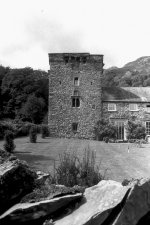
My thinking for this was that whilst in the lakes I would visit Kentmere and that it would be quite nice to photograph the oldest part of Kentmere with the newest film of that name Kentmere 200. :)

I found Kentmere Hall.

Kentmere Hall is a stunning 14th century tunnel-vaulted pele tower with five-foot thick walls. The turrets, one of the original windows and the spiral staircase remain. The tower was extended in the 15th or 16th century into a residence and is now a farmhouse. Kentmere Hall’s claim to fame, is that Bernard Gilpin, was born there in 1517. Bernard Gilpin was a famous preacher in Henry VIII’s time.

Olympus OM2 with 28mm
Incident meter
Kentmere 200 at box developed in HC110

kentmere hall-2.jpg
 
Another paypal invoice of joy this morning.

Couple from the Vito C minox clone thingy.

Rustival 2025 on kodak colorplus by Suzy Richards, on Flickr

Rustival 2025 on kodak colorplus by Suzy Richards, on Flickr

First roll with the Nikon since it broke after I mangled the battery door a bit by mistake and had to have it repaired.

NT Erddig on colorplus by Suzy Richards, on Flickr

NT Erddig on colorplus by Suzy Richards, on Flickr
Love the colours on those photos Suz, very natural looking to my eye.
 
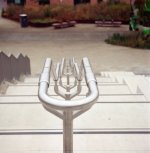
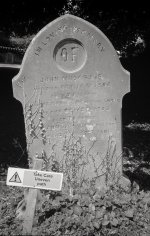
Two from my Frugal Film Photography roll for August. Taken on an Agfa Isollette II with Kodak Gold 200. Focus and exposure were both guessed at as there is no rangefinder or exposure meter.

If you like film photography maybe join the Frugal Film Photogrpahy project on FB. Either jump on now or wait for the New Year.


001937720009.jpg001937720002.jpg
 
8x10 pinhole paper negative images made on Kodabrome II RC paper.


Jesmond Dene by Kevin Allan, on Flickr


Jesmond Dene by Kevin Allan, on Flickr
Like most of your pictures Kevin I cant stop looking at and admiring them.

In the first photo the leaves rustling in the breeze at the LHS give me a subtle sense of movement and time, whilst the highlights on the trees down by the river on the right are spectacular in my view. The alignment of the roof gently taking us through the image making us pause to consider the wheel and the handrail overgrown with vines and creepers flowing down to the river is sublime. The land and plants being fed into the river by waterwheel, phew.

If you don't want that photo I will have it, please.
 
Two from my Frugal Film Photography roll for August. Taken on an Agfa Isollette II with Kodak Gold 200. Focus and exposure were both guessed at as there is no rangefinder or exposure meter.

If you like film photography maybe join the Frugal Film Photogrpahy project on FB. Either jump on now or wait for the New Year.


View attachment 462757View attachment 462756
The Frugal Photographer looks like fun....
 
Back
Top