Show us yer film shots then!

A lot of photographers will probably be unaware of Bill Brandt's Halifax work, much less anyone else, so the location is more of a curio / footnote in history.
:(
 
Nikon F90X, 20-35 2.8, spot meter
Kentmere 200 at box
Adox HC 110 Dilution B, five and half mins @20.6 finish 21.7

Another from the Kentmere 200 test strip.

STOP

Stop-2.jpg
 
Last edited:
Bronica ETRS @50mm
Incident meter
Kentmere 200 at box developed in HC110
home scan

Whalley Abbey

Whalley Abbey.jpg
 
Bronica ETRSi @ 75mm
Incident meter
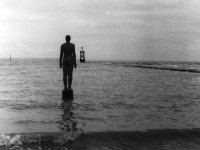
Fomapan 200creative in HC110 stressed at 23deg for 6mins

Crosby.jpg
 
Last edited:
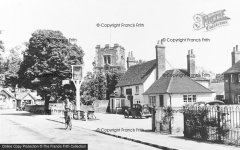
...another then and now shot, Fulmer.....erm lady on the bicycle could be about 90 +? now.
1756725995072.jpeg

Viv 28mm
n0AF3pv.jpg
 
Last edited:
Nikon F90X, 20-35 2.8, spot meter
Kentmere 200 at box
Adox HC 110 Dilution B, five and half mins @20.6 finish 21.7

Another from the Kentmere 200 test strip.

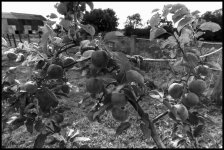
This image was taken about a month ago, the prolific fruit had burdened the tree to such an extent that it needed support. The rope used suggested restraint, but it was tender, careful restraint.

Burden.jpg
 
Last edited:
I shouldn't like this really, with all the marks and blobs etc, but I think it's great.
Pleased you like it Jack,

I sometimes read about problems with Fomapan, but its giving me old world looks which I enjoy. I think much like looking at old photos, you have to look past what we consider imperfections.
 
Last edited:
I wish I had developed this in Rodinal instead of HC110

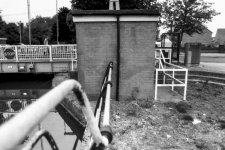
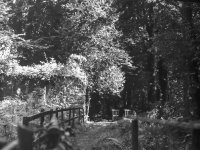
When on a riverside walk I was stopped in my tracks, the leaves on the trees ahead were illuminated by the sunshine, the light cascading through them lit up the handrails of the footbridge and gave a beautiful glow.

Lakes.jpg
 
Nikon F90X, 20-35 2.8, spot meter
Kentmere 200 at box
Adox HC 110 Dilution B, five and half mins @20.6 finish 21.7


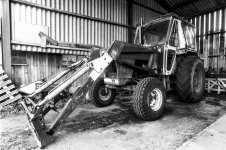
An owd un but a good un

rusty old thing.jpg
 
Fujica GW690
Fomapan 400
Adox Rodinal 1+100. Semi-Stand @ 20° 60mins

Another roll of Fomapan with the dreaded white speckles issue. I also got bromide drag on the roll when developing (although that isn't the fault of the film, and I managed to correct the worst of it in post-processing), which is something I've not encountered with previous semi-stand development sessions done the same way (and with the same film stock on one occasion).


St. Nicholas' Church, Askham by fishyfish_arcade, on Flickr


The road to Askham by fishyfish_arcade, on Flickr
 
Fujica GW690
Fomapan 400
Adox Rodinal 1+100. Semi-Stand @ 20° 60mins

Another roll of Fomapan with the dreaded white speckles issue. I also got bromide drag on the roll when developing (although that isn't the fault of the film, and I managed to correct the worst of it in post-processing), which is something I've not encountered with previous semi-stand development sessions done the same way (and with the same film stock on one occasion).
If it's any consolation, I find your white speckles to be only noticable on Flickr when I look at the sizes bigger than 1024 pixels wide. At smaller sizes, the grain in the sky is what I notice.
 
If it's any consolation, I find your white speckles to be only noticable on Flickr when I look at the sizes bigger than 1024 pixels wide. At smaller sizes, the grain in the sky is what I notice.
..and despeckle in Photoshops helps.
 
If it's any consolation, I find your white speckles to be only noticable on Flickr when I look at the sizes bigger than 1024 pixels wide. At smaller sizes, the grain in the sky is what I notice.
Thanks Kevin. It's more the fact that I know they're there (and that they shouldn't be). I'm going to try using a water stop for the next roll I develop to see if that makes any difference.
..and despeckle in Photoshops helps.
Unfortunately it doesn't make a jot of difference in this case. A tool that automatically removes dust spots on film scans (positive and negative) in Lightroom or Photoshop would be very welcome. I know I can use Digital ICE at the scanning stage, but it won't work with B&W sadly.
 
I've been lucky so far with Foma 400 in 120. Of all their film in roll format, the 400 is the one that gives me the smallest amount of problems. I've noticed no white specks so far, but I haven't used this film for a while - maybe it's an issue that comes and goes across batches.

I don't think stand development, or semi-stand development in Rodinal does Foma film any favours. I'd stick with Foma's official guidelines to start with, they're really reliable - here they are

Foma Product Catalogue

(page 5 for Rodinal/Fomadon R09)

Here's Foma 400 exposed at 250 with an incident meter, in a Rolleicord Va, developed in Foma R09 1:50, continuous gentle inversions first minute, then 1 inversion per minute, 11 minutes in total. Fresh stop bath and fresh fixer. Final wash in distilled water and fotoflo.

Scan is straight out of Vuescan - no grain removal, vignetting, curves, toning applied beyond what Vuescan did. You can see a couple of white specks but that's just dust on the negative.

It's a quite sharp film I found, but it doesn't like being underexposed or overdeveloped. The 400 ISO label is pure marketing and a curse, I think, because its speed is not 400 iso, at least in my own tests (I own and use a densitometer).

I like it for some things but I sadly I don't use it as much as I'd like, because it has a red extended spectral response, which means if I use it to take portraits of white people they'll render looking like corpses (pale face, pale lips).


8cARsOU.jpg
 
I've been lucky so far with Foma 400 in 120. Of all their film in roll format, the 400 is the one that gives me the smallest amount of problems. I've noticed no white specks so far, but I haven't used this film for a while - maybe it's an issue that comes and goes across batches.

I don't think stand development, or semi-stand development in Rodinal does Foma film any favours. I'd stick with Foma's official guidelines to start with, they're really reliable - here they are

Foma Product Catalogue

(page 5 for Rodinal/Fomadon R09)

Here's Foma 400 exposed at 250 with an incident meter, in a Rolleicord Va, developed in Foma R09 1:50, continuous gentle inversions first minute, then 1 inversion per minute, 11 minutes in total. Fresh stop bath and fresh fixer. Final wash in distilled water and fotoflo.

Scan is straight out of Vuescan - no grain removal, vignetting, curves, toning applied beyond what Vuescan did. You can see a couple of white specks but that's just dust on the negative.

It's a quite sharp film I found, but it doesn't like being underexposed or overdeveloped. The 400 ISO label is pure marketing and a curse, I think, because its speed is not 400 iso, at least in my own tests (I own and use a densitometer).

I like it for some things but I sadly I don't use it as much as I'd like, because it has a red extended spectral response, which means if I use it to take portraits of white people they'll render looking like corpses (pale face, pale lips).

I've developed it in a variety of ways, sometimes I get the speckles, sometimes not. I've had the speckles on Fomapan 100 too in both 120 and 4x5 format, using Fomadon R09, Rodinal and Ilfotec DD-X. It's a shame that these bad batches occur as I really like the way Fomapan looks, and I've had plenty of rolls with no issues at all.

This is an earlier shot using exactly the same semi-stand development in Rodinal 1+100 with no speckles or defects (apart from some scratches, courtesy of my Holga :) ). It was these results that led me to try semi-stand again with Fomapan 400, especially as I can shoot it at 400ASA this way.


Thai Boxing by fishyfish_arcade, on Flickr
 
Guys just in case you haven't thought of it.....if you have a decent modern tv you can log in the browser, to talkphotography and then can view large pictures in "show us your film shots" .......on my 3 year old 55" LG oled tv they are excellent, of course from the normal viewing distance.
 
Well on your shot I did upload it to photoshop and it smoothed it out a bit?

I couldn't see any noticeable difference on the original version. I also tried the remove dust and scratches option (or whatever it's called) and that did make a difference, but it also made the entire image soft at the same time unfortunately.
 
I've developed it in a variety of ways, sometimes I get the speckles, sometimes not. I've had the speckles on Fomapan 100 too in both 120 and 4x5 format, using Fomadon R09, Rodinal and Ilfotec DD-X. It's a shame that these bad batches occur as I really like the way Fomapan looks, and I've had plenty of rolls with no issues at all.

Yeah I know very well the speckles you're talking about. I was getting them all the time with Foma 100 in 120. Interestingly I've yet to stumble on them with Foma 400.

In any case, with Foma 100 they looked like tiny purple spots when observed directly on the negative. According to Foma they are undissolved bits of anti-halation layer, and when I contacted them they recommended me to wash my film in a solution of isopropyl alcohol for 30mins to get rid of them.

Honestly I decided I couldn't be bothered with this additional step in my process and basically stopped using Foma 100. Which is a shame, it can be a fantastic film as you said. Oh well.
 
I have two rolls of Foma 100 in 120 these observations are making want to use a roll. I will fire one up tomorrow while its forecast sunny. Is box speed accurate?
 
Horseman L45, Kodak Ektar 203mm lens, Carestream Industrex MX 125 Xray film, developed in Ilford Multigrade print developer at half normal strength.

I was looking for a subject to test Xray film with and this papier-mache head made by my son came to hand.


Papier-mache head on XRay film
by Kevin Allan, on Flickr
 
With all varieties of Foma film, I prefer to shoot at half box speed.

Yes, box speed is accurate for Foma 100. It's the 400asa version that tends to want extra exposure.

Checking the document Trypdal provided, it States that 100 can be exposed at 50-400 without changes to development. I have some Foma R09. Data sheet suggests Gamma of 0.65.

Thanks for helping!
 
Checking the document Trypdal provided, it States that 100 can be exposed at 50-400 without changes to development. I have some Foma R09. Data sheet suggests Gamma of 0.65.

Thanks for helping!

I would be cautious about underexposing it, although I'd be curious as to the results. The same datasheet says that Fomapan 400 can be shot between 200asa & 1600asa(!). My own experience with that film has been that shooting it at box speed tends to result in underexposed results, so I can imagine underexposing it by two stops would produce very thin negs.
 
Frustratingly, the document states a range of development times, and the resulting gamma values, for the competitor developers, but not its own!

Today's subject will be "Rocks", I am going to try and look at each potential subject candidate for a minimum of 10 minutes checking angles and perspectives before looking through the viewfinder and taking the snap. I might sneak another look at the lonely gate as well.

Better take two rolls.
 
Last edited:
Back
Top