Show us yer film shots then!

I used to work at 95 Southwark Street which is at the junction with Great Suffolk Street (amazingly, the building, and my window on the first floor corner, can still be seen on Google street view) before the office moved to St Thomas Street in 1984, so I'm finding your photos of an area I once knew well (and now don't recognise) very interesting.
 
I used to work at 95 Southwark Street which is at the junction with Great Suffolk Street (amazingly, the building, and my window on the first floor corner, can still be seen on Google street view) before the office moved to St Thomas Street in 1984, so I'm finding your photos of an area I once knew well (and now don't recognise) very interesting.

It must have changed beyond recognition now. Back in the early 80s a lot of that part of London was yet to be developed and was full of derelict wharves and docks wasn't it? Shad London with the criss-crossing bridges featured in a Doctor Who story back in the 80s with the place infested with Daleks! The Daleks have obviously been forced out by gentrification. :)
 
It must have changed beyond recognition now. Back in the early 80s a lot of that part of London was yet to be developed and was full of derelict wharves and docks wasn't it? Shad London with the criss-crossing bridges featured in a Doctor Who story back in the 80s with the place infested with Daleks! The Daleks have obviously been forced out by gentrification. :)
I wondered if that was where they filmed it. The Daleks wouldn't be able to afford an invasion there these days. :D
 
It must have changed beyond recognition now. Back in the early 80s a lot of that part of London was yet to be developed and was full of derelict wharves and docks wasn't it? Shad London with the criss-crossing bridges featured in a Doctor Who story back in the 80s with the place infested with Daleks! The Daleks have obviously been forced out by gentrification. :)

Indeed it has. A few months back, I used street view to do a virtual walk from London Bridge Station (itself redeveloped since I first knew it in 1971) down to my old office along Southwark Street. I think after the first bridge, the first building that I recognised was Granby House, my old office. Everything else seemed to have been swept away.

My time in St Thomas Street was one when there was no Shard...

On a similar topic, according to one website I looked at a couple of weeks ago, in my home village only 25% of the houses were from before the 1960s... Fields are now housing estates, a lot of the older houses have been demolished. The penalty of growing old and having a memory.
 
Last edited:
It must have changed beyond recognition now. Back in the early 80s a lot of that part of London was yet to be developed and was full of derelict wharves and docks wasn't it? Shad London with the criss-crossing bridges featured in a Doctor Who story back in the 80s with the place infested with Daleks! The Daleks have obviously been forced out by gentrification. :)
Back in the days when people paid me to take pictures (late 80's), I did some property shots for a Arab bank looking to invest in the area, though the warehouses had been unused for a decade you could still smell the spices that was once stored in them, I remember it well. We also did a lot of photos on the Isle of Dogs when it was still mostly undeveloped, I wish I had retained those negatives.
 
A series of photographs taken on the Bermondsey/Southwark riverside in 1979. I'm posting these now due to the interest shown around Nige's excellent photos of this area taken recently. I intend to do some 'nows' using the same camera/lens combo (Pentax ES and a Tamron Adaptall zoom), and have recently revisted the sites and taken some phone 'nows', but obviously can't show them on this thread. It is a very different place now, even where the buildings have survived.

Bb8HHY.jpg

Reed's Wharf, St. Saviour's Dock entrance, Butler's Wharf

42E9a1.jpg

Reed's Wharf. Warehouse A was sadly demolished, but the warehouses on each side, with Warehouse B closest to the camera and below, now house expensive apartments.

QgB3ql.jpg


67LzyW.jpg


St.Saviour's Wharf, all now apartment conversions. It was decidely gloomy back in 1979/80, but very atmospheric.
 
Last edited:
cwsMiv.jpg

Hay's Wharf, now Hay's Galleria, the dock filled in to form a paved concours, covered by a distinctive curved glass roof.

ky9V95.jpg

Hay's Lane towards Tooley Street. The service entrances to the shops in Hay's Galleria are now to the left at street level, with offices on the floors above. The slam-door trains and the 1960s office blocks are now long gone, the view now taking in instead The Shard. Sadly the cast iron bridge crossing the lane is also gone, with new office buildings to the right. I've never been entirely convinced by the Hay's Wharf conversion, I think it could have been 'done better', but can only be thankful that the buildings survived where so many didn't.
 
Last edited:
These are from the area between London Bridge and Cannon Street railway arches - Cathedral Street & Clink Street.
PpPqQb.jpg

Looking along Cathedral Lane towards St.Mary Overy's Dock (now home to the Golden Hinde replica) and Cole & Carey Wharf. All that survives are the granite setts.

1v6Hpc.jpg

Cole & Carey's Wharf (also known as St.Mary Overy's Wharf) from the undercroft of the former New Hibernia Wharf during demolition of the latter. St.Mary Overy's Dock lies between, beyond the wall at the end of the cellar.

BPHW94.jpg

From St. Mary Overy's warehouse onto Clink Street.

KJYWQs.jpg

Hrn6bB.jpg

The warehouse on the opposite side of Clink Street to St. Mary Overy's and Pickford's Wharves incorporated within its structure the surviving parts of Winchester Palace.
1V22xW.jpg

A fire in 1979 had destroyed part of the roof of St. Mary Overy's Wharf.
qQU7Cc.jpg

And there was considerable water ingress in other areas. The building was demolished, along with the neighbouring Pickford's Wharf, in 1982/83. Pickfords was rebuilt as an office block in a somewhat bulky rendition of its predecessor. St.Mary Overy's/Cole & Carey's was not replaced, though the new Pickfords intrudes to an extent on its footprint.

One could wander around these extremely unsafe buildings and demolitions with absolute impunity. The whole area had an atmosphere of complete abandonment, and in some 3 years of exploring London's old dock's and riverside wharves, access was largely unbarred, and I wasn't challenged once.
 
Last edited:
6Zxtzg.jpg

Looking across the rooftops of Clink Wharf towards St.Paul's.

9FlpAJ.jpg

Looking along the roof of Clink Wharf, Pickford's and St. Mary Overy's warehouses and the end wall of Winchester Palace's great hall, Clink Street between, and London Bridge to the left. The foreground rooftops survive, and can be viewed on the advanced GE from almost this angle. A substantial new residential building has gone up between Clink Wharf and the rebuilt Pickford's Wharf.
 
Last edited:
Toby, you have a very good collection of B&W photographs, well taken and very interesting.

Thank you for posting them.(y)
 
6Zxtzg.jpg

Looking across the rooftops of Clink Wharf towards St.Paul's.

9FlpAJ.jpg

Looking along the roof of Clink Wharf, Pickford's and St. Mary Overy's warehouses and the end wall of Winchester Palace's great hall, Clink Street between, and London Bridge to the left. The foreground rooftops survive, and can be viewed on the advanced GE from almost this angle. A substantial new residential building has gone up between Clink Wharf and the rebuilt Pickford's Wharf.

Brilliant images Toby :)
 
In the 80s and early 90s I worked in Redcross way, so know the area quite well and as you say some massive changes have taken place since then.
 
6Zxtzg.jpg

Looking across the rooftops of Clink Wharf towards St.Paul's.

9FlpAJ.jpg

Looking along the roof of Clink Wharf, Pickford's and St. Mary Overy's warehouses and the end wall of Winchester Palace's great hall, Clink Street between, and London Bridge to the left. The foreground rooftops survive, and can be viewed on the advanced GE from almost this angle. A substantial new residential building has gone up between Clink Wharf and the rebuilt Pickford's Wharf.
What is the extraordinary round window to the right of the frame?
 
These are from the area between London Bridge and Cannon Street railway arches - Cathedral Street & Clink Street.
PpPqQb.jpg

Looking along Cathedral Lane towards St.Mary Overy's Dock (now home to the Golden Hinde replica) and Cole & Carey Wharf. All that survives are the granite setts.

1v6Hpc.jpg

Cole & Carey's Wharf (also known as St.Mary Overy's Wharf) from the undercroft of the former New Hibernia Wharf during demolition of the latter. St.Mary Overy's Dock lies between, beyond the wall at the end of the cellar.

BPHW94.jpg

From St. Mary Overy's warehouse onto Clink Street.

KJYWQs.jpg

Hrn6bB.jpg
Thank you for transporting us to the world of Oliver Twist !
 
Thanks all for the very generous comments and 'likes'.

I lost these negatives for 30 years, and thought they had been thrown away. I found them only last March in an outbuilding.

There are many regrets for the photos I didn't take, and for not having been able to get there earlier, but so pleased to have rediscovered them.

Those are really interesting @horrocks

Have you ever considered submitting them to Cafe Royal Books. They might be something they'd be interested in publishing.


Thank you, Nige. Someone suggested this on the DMF forum as well. I'll get in touch with them this year. I've got lots of the London Dock in Wapping during its tragic demolition too. I can't remember whether I've already posted them here or not.

What is the extraordinary round window to the right of the frame?

It's the stone frame of the stained glass light in the end wall of the great hall of Winchester Palace, and survives, though the warehouse into which it was incorporated for 150 years is gone.
 
Not had much of an urge to shoot outdoors recently, but I got to have some fun inside.

Canon EOS-30 probably with the 100mm f/2.8 macro on Eastman 5222 Double-X at 400. Dev in Diafine.

2023-02-01-eos30-doublex-05.jpg
 
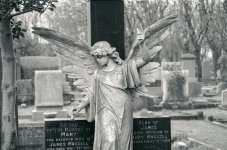
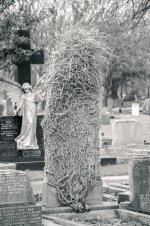
I was determined to get out and take photos today, so I loaded the EOS 3000N with HP5 Plus, and mounted the EF 90-300mm 4.5/5.6. When I went for the first photo, I set shutter priority at 1/250th and it was too dark! To rescue the day I decided to push the film to 1600 and expected grainy mushy s***. Even pushing two stops I was wide open at 1/60th (monopod used) most shots. The film was developed in LC29 for 14 minutes and ...... wow!

whitley cemetery angel 2.jpgwhitley cemetery ihs.jpgwhitley cemetery overgrown.jpg
 
Yeah, HP5+ works extremely well when pushed. Some shots show more grain than others, but there's far less than if you were to use a fast film like Delta 3200 or Kodak Tmax P3200.

Yes, I'm aware of that. I'd sooner use pushed HP5 than even pulled Delta 3200.

However, that photo has almost 120 grain. V impressive.
 
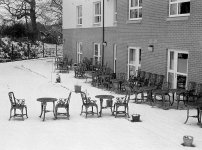
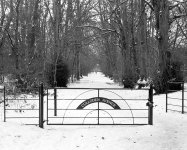
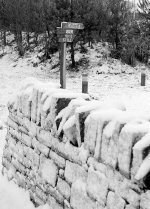
A few shots taken for the Nifty Fifty Challenge in December, but not posted in that thread. Chinon CM-4S, 50mm f1.9, first trial of Kentmere 100, replenished Xtol.

#1 No-one sitting out today!

2022-12-19-0021-copy-tp-nifty.jpg

#2 Snowy Culloden Avenue

2022-12-19-0018-copy-spotted-copy-tp.jpg

#3 The quiet path

2022-12-19-0003-copy-tp.jpg

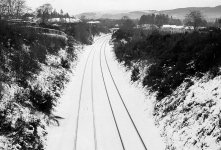
#4 Snowy tracks

2022-12-19-0020-copy-tp.jpg
 
You got the exposure spot on to ensure white snow Peter…..(y):clap:
Thanks Asha. The Chinon (£5 with lens) has a green light for correct exposure and red ones for over and under exposure, but only the overexposure light actually works. This means adjusting between lit and unlit, with no idea of whether it is even accurate, so definitely not skill! :cool:
 
Back
Top