Shooting in Manual mode is easy and best!

That's a good example Joe - and for that situation I think I'd probably switch to AV too.

RE: Auto exposure not being manual, I seem to have different opinions on that.. but ultimately who cares!

The only thing I will say is that IMO everybody should know how to use manual, just in case it's needed - but that possibly applies to all your camera settings actually. I've had a quick go on A, S and P to check which settings they effect so if I choose to use any I can.
 
Last edited:
Shutter Priority for action
Aperture Priority for static or slow moving subjects where shutter speed is not an issue
Manual for difficult lighting conditions or when I am trying to be artistic
Programme when I am just wandering around in case a grab shot comes up
 
I think the best thing is to learn manual. Try it for a while and learn how it works, by using the Zone System if necessary... so you actually know what you are doing and why you are doing it. Conquer it.

Then, use whatever program you like. As said, its the end that matters, but it really is best to know HOW to manage your camera in manual if the occasion arises. :thumbs:
 
That's a good example Joe - and for that situation I think I'd probably switch to AV too.

RE: Auto exposure not being manual, I seem to have different opinions on that.. but ultimately who cares!

The only thing I will say is that IMO everybody should know how to use manual, just in case it's needed - but that possibly applies to all your camera settings actually. I've had a quick go on A, S and P to check which settings they effect so if I choose to use any I can.

This whole everyone should know how to use manual thing is strange though - to me if you know how to use AV then you know how to use manual. Manual isn't a difficult thing to know how to use. When you are using Av you are looking at your shutter always to make sure it doesn't drop below a rate that would cause motion or subject blur and then adjusting the ISO, Aperture or exposure bias accordingly. This is no different to manual. Just taking away the need to turn the dial - you are still making the decisions on the exposure.

If you can look at a scene without using a light meter or the meter on the camera, dial in all the settings on manual and nail the exposure 1st time then that's impressive and I would say that is a skill.

using the light meter on your camera to pick your shutter or looking at the histogram from a test shot to decide what your shutter should be is just a different way of using Av - both very simple to do :thumbs:
 
I don't have a real preference for one or the other, although I do like using manual. I aim to deliver the client between 15 and 20 images of their kids from any one shoot, so I can take my time and use manual for the whole shoot if I feel like it and very often I do. If I sense that the child is going to dash off into a much brighter/darker area, I'll get there first, I've had enough experience of doing this with my own kids for long enough as they're a nightmare to pin down, it becomes second nature as you do it more and more. A quick flick of the thumb and index finger and you're there in no time. I could just use AP and track them, but I'm one of these people who likes to do things the hard way as I think it helps to be able to shoot in all different modes in all different conditions.

Is manual easiest? In general then no it isn't, otherwise we wouldn't have all these wonderful auto modes. Is it worth learning how to use? Most definitely.
 
A quick flick of the thumb and index finger and you're there in no time.

do you really think this?

Care to comment on my above example - switching constantly between 1/250 to 1/8000 and back again? Is that a quick flick? also what gives you the sign you will correctly exposed - are you someone who can look at the scene and know without using the meter or the histogram or are you firing a test shot/ checking the light meter as you make your change?
 
If you are getting crap results from anything other than manual then you possibly don't understand the metering settings 100%. There is more to metering than "auto", your D300 has 3 different settings and setting those to the right choice is as important as knowing whether shutter or aperture priority is the way to go.

In the duck example earlier, spot metering can give you bogus results. In particular if you land the spot on something very light or very dark thats not the overall average colour of the entire subject (say a person wearing a dark brown hat). Spot metering tends to work best when you have a static subject and some time to think about it - a small child dashing around probably wouldn't be that situation, but equally as you said above, manual wouldn't be right either.

Everything depends on the situation and you need to use a variety of techniques to cope with all the variables.

I'd also chuck in that your D300 over exposes somewhere between +0.3 and +0.7 EV with factory defaults, so you might want to consider using the permanent exposure comp feature to dial in down - I use -0.7EV and only override that in very particular circumstances (see, even that is situation specific). The comment about the wildlife dude and him saying to turn the exposure UP is waaay wrong - well, unless you like washed out photos.
 
Last edited:
It seems silly to limit yourself to only one mode. The others are not cheating and are useful in different situations. I use manual, shutter and aperture whenever required!
 
In the duck example earlier, spot metering can give you bogus results. In particular if you land the spot on something very light or very dark thats not the overall average colour of the entire subject (say a person wearing a dark brown hat). Spot metering tends to work best when you have a static subject and some time to think about it - a small child dashing around probably wouldn't be that situation, but equally as you said above, manual wouldn't be right either.

I find spot metering in the conditions to give perfect results. Because I do the spot metering on the child's face - thats where I am focussing also so it becomes very easy. My small child was dashing around at the weekend at Dunham Massey through the light and shade of the trees and I spot metered the whole time on her face and every shot was perfectly exposed. :shrug:
 
do you really think this?

I don't think this, I know this, as I said in my previous post. Just because you may not find it easy, it doesn't mean others don't find it fairly straightforward, maybe with a bit of practice, you would too? As for 'switching constantly between 1/250 to 1/8000 and back again?', well I'm not trigger happy so that wouldn't really be an issue anyway. Your duck example wouldn't be too relevant to how I work, as I wouldn't choose a tight spot with such contrasting light for a portrait shoot.

I use the camera meter to check exposure, but I'm using manual mode so as far as I'm concerned I'm shooting manual. However, that's an argument I couldn't care less about as it's the end result that concerns me.

Different strokes for different folks at the end of the day, I'll use AP if I'm just messing around with the kids, I'll use manual if on a job and wanting to make sure I get the best out of it.
 
Last edited:
I don't think this, I know this, as I said in my previous post. Just because you may not find it easy, it doesn't mean others don't find it fairly straightforward, maybe with a bit of practice, you would too? As for 'switching constantly between 1/250 to 1/8000 and back again?', well I'm not trigger happy so that wouldn't really be an issue anyway. Your duck example wouldn't be too relevant to how I work, as I wouldn't choose a tight spot with such contrasting light for a portrait shoot.

I use the camera meter to check exposure, but I'm using manual mode so as far as I'm concerned I'm shooting manual. However, that's an argument I couldn't care less about as it's the end result that concerns me.

Different strokes for different folks at the end of the day, I'll use AP if I'm just messing around with the kids, I'll use manual if on a job and wanting to make sure I get the best out of it.

well I had said earlier in the thread that I actually shot manual exclusively for a year when I first got my dSLR, but since discovering Av and being able to understand the camera properly I only shoot manual if the conditions aren't changing. It's not hard to use manual, just makes life more difficult in changeable environments.

I wouldn't say I was trigger happy either, but I like to be prepared to get whatever moment I want and not have to change a setting on the camera resulting in a missed opportunity. I think this is where switching to AV has improved my shots. The quality hasn't improved at all - I just don't miss those moments anymore that I used to whilst dialing in shutter speeds.

Ironically this was why I started experimenting in Av, as my daughter started to become more mobile. Whilst she was static I could manual it up all day. As soon as she started walking from one environment to the next - having to constantly change shutter speeds left me missing moments. This no longer happens.

Manual has it's place - Av has it's place. Having shot in both for a year each I'd say both require the same amount of knowledge of your camera and skill level - particularly if you are using the light meter
 
Manual has it's place - Av has it's place.

Indeed, there's absolutely nothing wrong with either. I shoot shutter priority when doing my local running events, it's simply a case of whatever works for you is best for you.
 
My main cameras are rangefinders, the digital one has built in metering and I normally have that active and adjust the aperture to suit.

My Leica is all manual, I have the light meter but to be honest I like to do it all myself as the pleasure of photography for me is interacting with the scene as much as possible, and the sense of accomplishment when you get it spot on. I guess it's kind of like painting a watercolour scene or painting by numbers (well not really but hopefully you see what I mean, I'm certainly not trying to 'diss' anyone who uses auto in any way at all)

On my DSLR though I normally use Av because I drag that out when I need an 'image' rather than a picture (again IMHO!)

ped
 
Last edited:
I find spot metering in the conditions to give perfect results. Because I do the spot metering on the child's face - thats where I am focussing also so it becomes very easy. My small child was dashing around at the weekend at Dunham Massey through the light and shade of the trees and I spot metered the whole time on her face and every shot was perfectly exposed. :shrug:

How big is the spot it uses to meter?

How big is that spot terms of actual subject size at varying distances? Metering off of a freckle for a closeup is one thing, someone standing further back the "spot" could be as large as their entire upper body.

Does it follow the focus point or just use the centre focus point? Some Canon gear I owned previously, the "spot" was always the centre...

If you understand that about spot metering, then you can use it as its intended, without that knowledge you are just hitting and hoping.

An awful lot of people make big mistakes with spot metering.
 
I'm surprised with all the talk about the benefits or otherwise of the different modes that no one has mentioned checking the histogram (apologies if I've missed it in the thread). I prefer to use manual, set the exposure according to the camera meter and my chosen aperture or shutter speed, check the histogram and adjust if necessary.

This would work equally well using aperture or shutter priority first, then switching to manual only if the exposure needs adjusting.
 
Last edited:
I tend to use Av more than any other mode, but adjust the exposure according to the histogram and / or blinkies.

Will give full manual a go at the weekend and see if I get better shots.


(Also never realised until recently that switching VR off when using a tripod will give better results, but that's another thread altogether !)
 
I'm surprised with all the talk about the benefits or otherwise of the different modes that no one has mentioned checking the histogram (apologies if I've missed it in the thread). I prefer to use manual, set the exposure according to the camera meter and my chosen aperture or shutter speed, check the histogram and adjust if necessary.

This would work equally well using aperture or shutter priority first, then switching to manual only if the exposure needs adjusting.


or leaving it in Av and just using exposure compensation with you thumb on the dial at the back, saves having to change modes and then you are still set for changeable conditions without missing the moment checking your light meter
 
How big is the spot it uses to meter?

How big is that spot terms of actual subject size at varying distances? Metering off of a freckle for a closeup is one thing, someone standing further back the "spot" could be as large as their entire upper body.

Does it follow the focus point or just use the centre focus point? Some Canon gear I owned previously, the "spot" was always the centre...

If you understand that about spot metering, then you can use it as its intended, without that knowledge you are just hitting and hoping.

An awful lot of people make big mistakes with spot metering.

I think I still have a lot to learn about spot metering myself, only started using it very recently. It's the centre point only on my 5d, but I use back button focus so can lock the exposure if I need to move the focus point.

How big is it? the size of the af point I assume. the person would have to be very far away for their whole upper body to encompass the af point.
 
or leaving it in Av and just using exposure compensation with you thumb on the dial at the back, saves having to change modes and then you are still set for changeable conditions without missing the moment checking your light meter

:plusone:

I understand manual, I can use manual, but it seems to me that some are very elitist about it. Does it matter what mode you use as long as you get a sharp, correctly exposed image ?

Steve
 
How big is it? the size of the af point I assume. the person would have to be very far away for their whole upper body to encompass the af point.

According to the 5D MkII manual, its that centre circle on the viewfinder... thats quite big.
 
According to the 5D MkII manual, its that centre circle on the viewfinder... thats quite big.

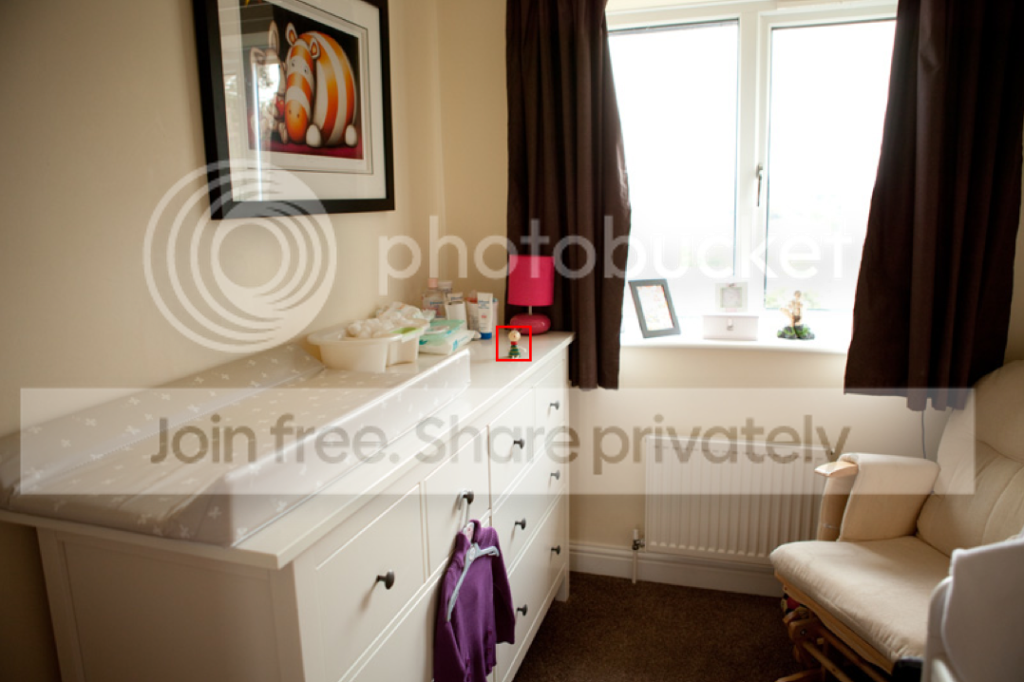
ok maths isn't exactly my strong point so tell me if I got this wrong but take a look at this image I just took.

Picture2.png


At 24mm this character filled the centre af point and according to my exif data he is 1.89m away from the camera. He's 5cm tall.

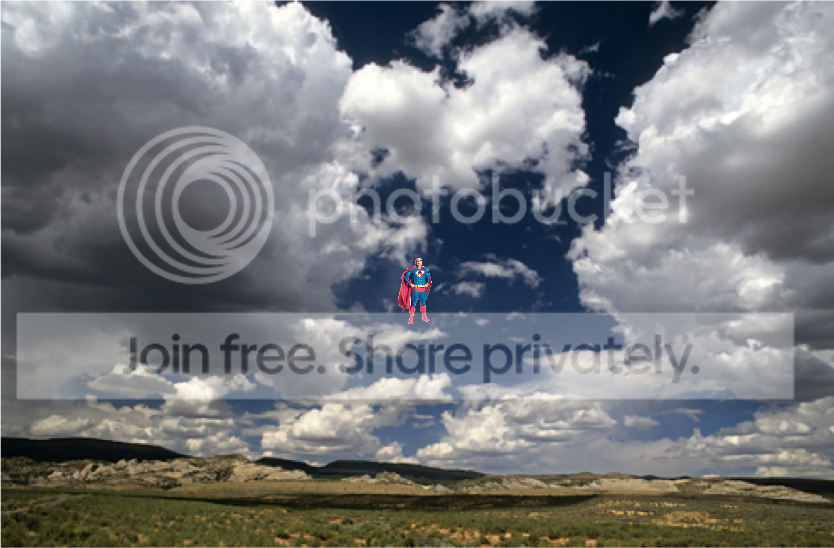
An average man is 170cm tall so his torso would be say half that at 85cm. Thats 17 times taller than my little character. So the man would have to be standing 17 times further away at 24mm for his torso to fill that centre point. which is 32m away from me at 24mm. Thats pretty far away at 24mm focal range i would say. Here's how small he would look at in a standard landscape shot at 24mm. Thats tiny, no? If the guy is this small the chances are he's not my subject, so I'd be spot metering of something else

Picture3-1.png
 
Last edited:
Back
Top