Shooting in Manual mode is easy and best!

I use AV most of the time as I'm normally taking all sorts of different shots, adjusting aperture on the front dial and exposure comp on the rear dial as I've been taking pics for a long time and can make an instant judgement as to whether I need comp or not. I'll use manual if I'm using flash as my flashguns are ancient and won't allow anything else! or with severe backlighting.
Manual distracts me too much from the subject.
 
I use manual all the time currently - I find it quick and easy.

Don't think it matters though so long as you have images you're happy with!

I have auto ISO set to a max of 800 most of the time so it can change a bit if needed if I'm moving faster though. If shooting birds for instance though it depends where, as sometimes obviously surroundings can effect the meter too much, so it's often on full manual then. Likewise for landscapes I do it all manually, or anywhere the exposure may trick the camera.

I wouldn't say I'd never use others - if I found it easier I would, I fail to see the issue.


I will say, regarding the comment about Nikons always needing exp. comp - not a problem I've had except for the ocassional thing like getting whites white etc if following the meter.
 
I use manual all the time currently - I find it quick and easy.

Don't think it matters though so long as you have images you're happy with!

I have auto ISO set to a max of 800 most of the time so it can change a bit if needed if I'm moving faster though. If shooting birds for instance though it depends where, as sometimes obviously surroundings can effect the meter too much, so it's often on full manual then. Likewise for landscapes I do it all manually, or anywhere the exposure may trick the camera.

I wouldn't say I'd never use others - if I found it easier I would, I fail to see the issue.


I will say, regarding the comment about Nikons always needing exp. comp - not a problem I've had except for the ocassional thing like getting whites white etc if following the meter.

lol, well if you are using auto iso then you aren't using manual, thats rhe same as using av except you are letting the camera pick the iso instead of the shutter
 
Depends on the situation for me. In the studio I shoot manual and use a light meter. I used to shoot weddings in manual using a light meter but found it takes too long. Through experience I now use Aperture priority for weddings and manually compensate based on the conditions (Ie. shooting into a bright background / sky etc). I find this quicker then getting the meter out of the bag!
Once you know your camera and its limitations it becomes second nature!
 
This is a fascinating debate on the comparison of Manual, AV and TV and very timely as I’m part way through Understanding Exposure – an interesting read.

When using manual, do you use the camera's light meter i.e. adjust the exposure with chosen combinations of shutter, aperture and ISO setting until the meter indicatess your chosen exposure?

If that is the preferred method, I assume you have a preferred aperture or shutter setting in mind, based on the type of shot (DoF v movement etc.) - so what's the difference in say, selecting a chosen aperture value in AV mode compared to selecting the same value in manual?

I'm not arguing for or against manual, I'm interested in getting a good understanding of different techniques and keen to learn from everyone here.

Chris
 
Last edited:
I shoot so many varied things/ways that I'll use whatever mode I consider to be best for the job.

I do like shooting 1/125th f8 in the studio though and adjusting the flashguns appropriately.
 
I went through a couple of years shooting manual all the time. I now tend to shoot in Av, selecting the aperture I need for the shot, and let the camera worry about the shutter. With the rear thumb wheel it's very easy to change the exposure bias. I just keep checking the shutter speed to see if I need to increase the ISO to get the shot.

In the studio it's easy. Set the camera up for ISO 100, 1/125 @ f8 and then modify the lights accordingly. When you're outside, you don't have much chance of controlling the light yourself :D

Steve
 
Hmm, it seems I do things a little differently to most. :nuts:
I shoot mainly in Av or bulb, 99 times out of 100 with a tripod and very rarely is my iso off the 160 mark (star trails is the only time I can recall moving iso except, for rare indoor shots).
Sometimes I manually compensate but usually I end up using an ND grad or HDRing the image. I've found moving the AF around the image can get the exposure setting I require normally.
Only times I move to shutter is during motorsport, varying between 100 and 500 depending on motion blur.
But then, I've never done any photography in a studio, not sure I'd want to ;)
 
out of curiosity why is 125 over 250 preferred in the studio, surely the amount of flash and speed it fires makes no difference to the exposure. What i mean by that is with a given amount of flash at 125 or 250 the same amount of flash is going to hit the shutter because it's so fast - thats what i thought anyway
 
out of curiosity why is 125 over 250 preferred in the studio, surely the amount of flash and speed it fires makes no difference to the exposure. What i mean by that is with a given amount of flash at 125 or 250 the same amount of flash is going to hit the shutter because it's so fast - thats what i thought anyway


Changing the shutter speed when using studio flash just alters the amount of ambient light recorded - the flash duration and output remains the same. Exposure is determined according to the subject-flash distance and camera aperture.

With newer iTTL stobes it's slightly different - I think the output changes according the aperture set while the duration is constant though I can't swear to that...

Using 250th simply means that there's less chance of camera shake, I guess, though with my older Bowens lights, I've occasionally found that at 250th I get a slight cut-off at the bottom of the image. So I usually select 200th sec and lock it in for studio shoots.
 
Last edited:
out of curiosity why is 125 over 250 preferred in the studio, surely the amount of flash and speed it fires makes no difference to the exposure. What i mean by that is with a given amount of flash at 125 or 250 the same amount of flash is going to hit the shutter because it's so fast - thats what i thought anyway

Not all cameras will work at 1/250 with studio flash. My A300 wouldn't, fastest it would sync with was either 1/160 or 1/200 (don't remember which, defintely not 1/250 though).
 
depends on the flash sync speed of the flash head.

out of curiosity why is 125 over 250 preferred in the studio, surely the amount of flash and speed it fires makes no difference to the exposure. What i mean by that is with a given amount of flash at 125 or 250 the same amount of flash is going to hit the shutter because it's so fast - thats what i thought anyway
 
ok, so sounds like people are using 125 because they need to go to that for syncing rather than a preference. makes sense then
 
Mainly babies/children and portraits

And that is why manual will probably suite your needs better. But to say manual is best is a load of crap as far as I am concerned:shrug: But that is just my opinion ;)
 
And that is why manual will probably suite your needs better. But to say manual is best is a load of crap as far as I am concerned:shrug: But that is just my opinion ;)

bit strong. If someone thinks that one mode is best then that's their opinion to which they are entitled. there's no fact for which mode is best, just for which mode suits a person in the environment they use thats best for them
 
I shoot in manual only it was a rapid learning curve I can tell you ;)
 
bit strong. If someone thinks that one mode is best then that's their opinion to which they are entitled. there's no fact for which mode is best, just for which mode suits a person in the environment they use thats best for them

But I think that was his point Joe. The phrase "is best" can be construed as being a statement of fact rather than opinion. If he had said "is best for me" or "suits me best", then it may have been a little clearer that it was opinion. :shrug:
 
What about metering - do many people use a separate meter, or is the built-in meter good enough?

Chris
 
But I think that was his point Joe. The phrase "is best" can be construed as being a statement of fact rather than opinion. If he had said "is best for me" or "suits me best", then it may have been a little clearer that it was opinion. :shrug:

well I suppose it depends if you take just the thread title or the posts in the thread as basis. I find thread titles can be misleading. From reading the OPs posts within the thread including where he said in very changeable conditions he would still use Av then I think it's clear this was an opinion rather than a fact.

:clap:
 
well I suppose it depends if you take just the thread title or the posts in the thread as basis. I find thread titles can be misleading. From reading the OPs posts within the thread including where he said in very changeable conditions he would still use Av then I think it's clear this was an opinion rather than a fact.

:clap:

I'm sure you're right, but thread titles are the first thing that people see and they're in bold. ;)
 
I'm sure you're right, but thread titles are the first thing that people see and they're in bold. ;)

very true, and often people post before reading the whole thread, especially when it is more than a page long
 
well I suppose it depends if you take just the thread title or the posts in the thread as basis. I find thread titles can be misleading. From reading the OPs posts within the thread including where he said in very changeable conditions he would still use Av then I think it's clear this was an opinion rather than a fact.

:clap:

For your information Joe I did read the whole thread through, maybe my mistake but I read the Op`s reply as going back on what he said in the original post,and I will stick by what I said ;) If you are doing portrait studio work then manual would be used more I would assume. I am sure the average wildlife/bird photographer would shoot A/V or T/V as it suites their needs, but I would not come out a say A/V is best give it a try.I learnt manual back in the days of film so I would have no problem switching tomorrow if I felt the need to. However to me this manual thing keeps cropping up too often, it`s like if you dont shoot manual your not in the in crowd :lol::lol: I am always eager to learn so here are a couple of examples of AV mode, maybe someone could explain where I would have benefited by shooting these in manual :shrug: Thats my rant over till my next cycle ;) :thumbs:


IMG_0073.jpg


7-1.jpg
 
For your information Joe I did read the whole thread through, maybe my mistake but I read the Op`s reply as going back on what he said in the original post,and I will stick by what I said ;) If you are doing portrait studio work then manual would be used more I would assume. I am sure the average wildlife/bird photographer would shoot A/V or T/V as it suites their needs, but I would not come out a say A/V is best give it a try.I learnt manual back in the days of film so I would have no problem switching tomorrow if I felt the need to. However to me this manual thing keeps cropping up too often, it`s like if you dont shoot manual your not in the in crowd :lol::lol: I am always eager to learn so here are a couple of examples of AV mode, maybe someone could explain where I would have benefited by shooting these in manual :shrug: Thats my rant over till my next

cambs, perhaps you could clarify if you were speaking purely from opinion or from fact? then we can clear that up and roll on :thumbs:
 
I was always Aperture priority but with so much dodgy lighting and exposure comping I decided to go Manual and now find it easier to get the right exposure fully manual.

it is all personal pref though, Shutter and Aperture priority most definately have their place and can help you out in quick thinking situations.
 
cambs, perhaps you could clarify if you were speaking purely from opinion or from fact? then we can clear that up and roll on :thumbs:

Both! I started playing with manual purely because I thought the shutter speeds were not right in A mode. I found that manual shooting was just as easy as A mode, I was getting less wasted shots, and that I was having to do less PP with them.
 
Both! I started playing with manual purely because I thought the shutter speeds were not right in A mode. I found that manual shooting was just as easy as A mode, I was getting less wasted shots, and that I was having to do less PP with them.

hmmm then i'm with fabs and u8 then. saying manual is best and easiest is certainly not fact. if you find it easiest personally then thats opinion. you definitely can't claim that manual is easier and better by fact.
 
Don't forget you get more man points if you shoot manual and look down on all those who don't, especially if your just adjusting settings so the lightmeter says you have the right exposure.


Just put it in manual and Auto ISO, camera sets the exposure for you, but when folk read the exif data they think your a clever dick.;):)
 
hmmm then i'm with fabs and u8 then. saying manual is best and easiest is certainly not fact. if you find it easiest personally then thats opinion. you definitely can't claim that manual is easier and better by fact.

If its that important for people I could add 'for me' in the title, but being pedantic I think it is fact... FOR ME! The facts are that I have less wasted shots, less PP to do so it is fact and opinion!
 
Actually, it could still be classed as best overall for these reasons:

- You are in control, so you cant blame the camera for getting things wrong.
- Shooting in manual makes me think more, which is a good thing if you want to improve. In the same way that I like primes - I find myself a bit more lazy with zooms and primes too make you think about the shot more, so I think using manual (and primes) will develop technique quicker.

But like anything like bodies, lenses, lighting etc... everyone has a different opinion. My point was mainly aimed at those who may be a bit scared to give M a try... just do it!

Despite all that, I hate manual focussing! :)
 
If its that important for people I could add 'for me' in the title, but being pedantic I think it is fact... FOR ME! The facts are that I have less wasted shots, less PP to do so it is fact and opinion!

you're right, you are definitely being pedantic :lol:
 
you're right, you are definitely being pedantic :lol:

As an example shooting birds I use A/V. If I have a subject that is relatively calm and not flitting about all over the place then I will go with an aperture of my choice, as I know I can get away with a slow shutter. If the subject is moving around like hell then I will need to give way to a faster shutter. Depending on camera to subject distance I would still have to keep an eye on the aperture, shooting small subjects at close range gives you very little dof, you are talking centimetres. I will need to change ISO to give me either just a faster shutter speed or a shutter and aperture of what I think I can get away with. I can do all the above in whatever combination I want to and still dial in +/- depending on histrogram.

You know what I think the Op was right in saying that manual is easy :lol:
People say they like to use manual so they get it right, I like to think I have got it right shooting in A/V, and having to think and react quickly is the exciting part of photography imo.
But seriously, are the differences that great between any of the modes other than auto :shrug: I dont think so ;)
 
I also find manual gives the best results with exposure lock :thumbs::thumbs:

By that do you mean manual exposure lock gives you a better result than exposure lock in A/V? If so, and out of me not knowing :D do you know why that is?
 
The original thread title was "Shooting in Manual mode is easy and best!"

I agree with the first statement. There wasn't any other option until the 70s IIRC, and I got the hang of it pretty quickly when I was about 10 or 11. None of my early cameras had a meter, let alone TTL metering, and I had to cock the shutter separately on one of them. Quite easy.

This doesn't mean that I hanker for those days. I can still shoot manual without giving it a great deal of thought - and use my F2 and FM occasionally - but I'm happy to take advantage of the newer technology most of the time. I don't agree that manual is "best" as a generalisation.

FWIW, I drove cars with manual transmission for about 35 years, then I bought an automatic. I have no desire to go back to manual at all, but I still drive them whenever its necessary.
 
Actually, it could still be classed as best overall for these reasons:

- You are in control, so you cant blame the camera for getting things wrong.
- Shooting in manual makes me think more, which is a good thing if you want to improve. In the same way that I like primes - I find myself a bit more lazy with zooms and primes too make you think about the shot more, so I think using manual (and primes) will develop technique quicker.

Nothing there that you can't do in Av or Tv with exposure compensation. You moving the shutter speed or aperture in manual is no different from me adding or subtracting Ev bias - in fact on my camera (7D) it uses the same controls....

Using a camera in either Av or Tv means that the base settings are where you want them when you look down the viewfinder, something that may not be the case with manual.

I shot manual for years but have more recently gone back towards Av, it seems to give me the creativity I need/want. It doesn't matter how you shoot, as long as you get the right exposure at the right settings, who cares :shrug:

Steve
 
I think shooting manual is easy enough even with young kids running round, you just have to anticipate the changes in light and be quick off the mark. AP will work just fine though, I spend 95% of my time shooting people and more often that not use spot metering, I find the results are pretty much spot on each time.
 
I think shooting manual is easy enough even with young kids running round, you just have to anticipate the changes in light and be quick off the mark.

this is the part I find interesting. When I shot manual I found being quick off the mark virtually impossible in any dramatic light changes.

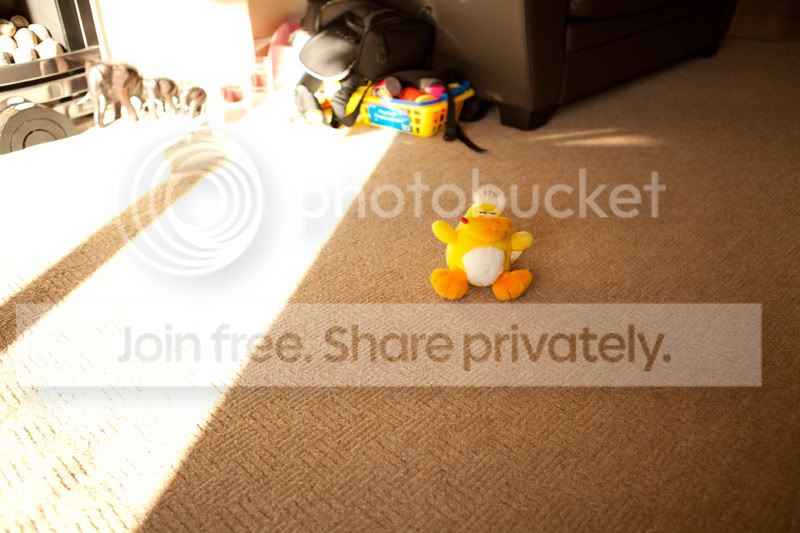
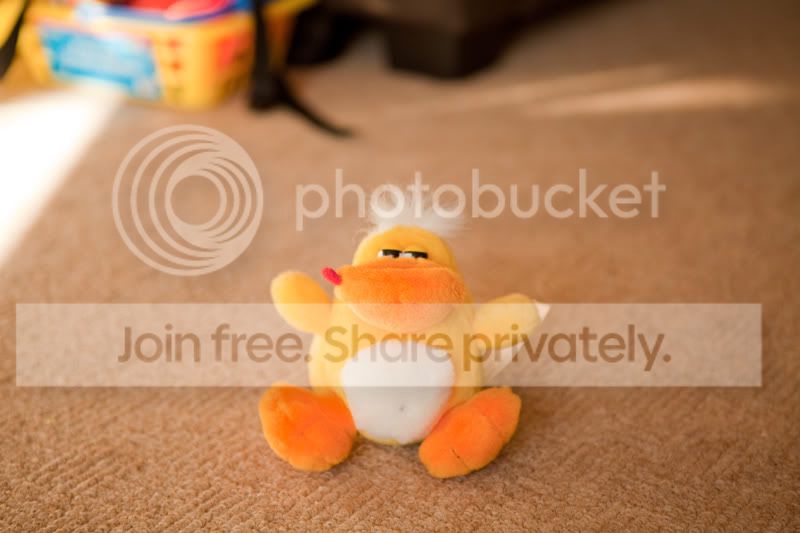
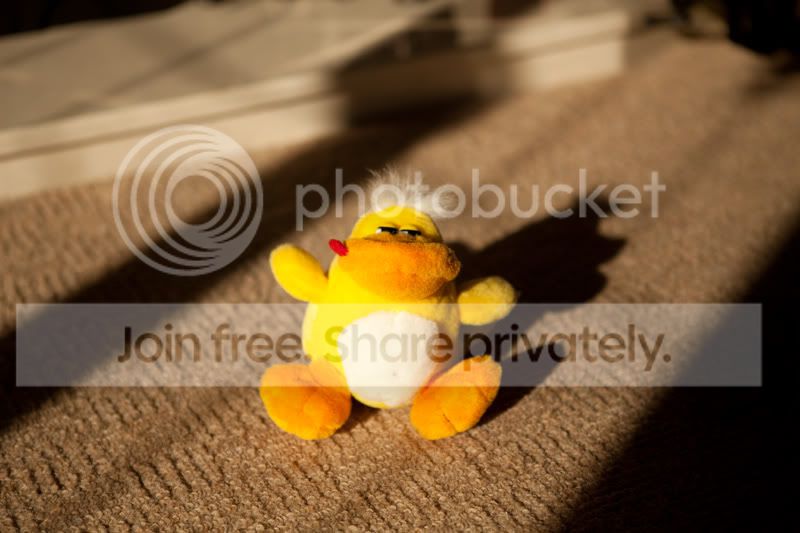
Consider the example below I just took to simulate a condition. I'm using my daughters duck to represent a young kid. The scene below you can see that a step from the shade to very bright light is less than a second away. Using AV on spot metering the difference in shutter speed needed to correctly expose both images in the shade and light differ dramatically. In the shade the shutter is 1/250, in the light the shutter is 1/8000. It is physically impossible to change your shutter from 1/250 to 1/8000 in less that a second despite the fact that there would be no way of knowing that 1/8000 is what was needed in that one second you have to make your decision. I have to roll my finger across the shutter toggle 4 times to get from 1/250 to 1/8000.

In Av I do nothing and I get the exposure bang on both times plus I don't miss the moment. In manual by the time I have looked at my light meter and got the right shutter, the duck has jumped back into the shade, I've missed the moment and now I am on the wrong shutter speed again.

How is this easier or better than using Av?

the scene
1-4.jpg


1/250
2-4.jpg


1/8000
3-4.jpg
 
Last edited:
this is the part I find interesting. When I shot manual I found being quick off the mark virtually impossible in any dramatic light changes.

Consider the example below I just took to simulate a condition. I'm using my daughters duck to represent a young kid. The scene below you can see that a step from the shade to very bright light is less than a second away. Using AV on spot metering the difference in shutter speed needed to correctly expose both images in the shade and light differ dramatically. In the shade the shutter is 1/250, in the light the shutter is 1/8000. It is physically impossible to change your shutter from 1/250 to 1/8000 in less that a second despite the fact that there would be no way of knowing that 1/8000 is what was needed in that one second you have to make your decision. I have to roll my finger across the shutter toggle 4 times to get from 1/250 to 1/8000.

In Av I do nothing and I get the exposure bang on both times plus I don't miss the moment. In manual by the time I have looked at my light meter and got the right shutter, the duck has jumped back into the shade, I've missed the moment and now I am on the wrong shutter speed again.

How is this easier or better than using Av?

I`m Ducked if I know :D
 
Back
Top