Shooting commercial aircraft on approach

Matthew F

Suspended / Banned
Messages
37
Name
Matthew
Edit My Images
Yes
I plan on attempting to shoot some aircraft on approach to the local airport when the wind is blowing in the right direction and lighting isn't awful but I was looking for recommendations of setting to use.

I have a Canon EOS 1000d, and intending on using my 55-250mm f/4-5.6 IS lens.

The spot I was planning on shooting from is about 3.5 miles from touchdown at the top of a hill, so the planes pass quite low overhead. I should be able to set camera up right in the middle of the localiser so I can get some head on shots. 737 minimum approach speed is about 145 knots (166mph if I remember correctly) so what mode/settings would you tend to go for setting up a shot?

I am aware that it's very much a case of adjusting the settings to the conditions but it would be quite nice to have a starting point.

For a start I would presume you would go for a time-priority mode so TV, but metering modes, a rough idea of exposure times and any other shooting tips would be appreciated.

Cheers,
Matthew
 
If you're shooting into the sky or taking shots that involve a lot of sky you may want to try manual mode. The sky is very bright so it'll cause the camera to underexpose the planes if you leave it to its own devices.
I haven't taken photos of planes for a while but I seem to remember it needing more than +2 Ev of exposure compensation so Av and Tv were no good, though I imagine this depends on what the weather is like.
 
I would just stick it on Shutter priority and see if you can get it up around a 1000th.

I always use centre weighted average metering with centre focus point.

Never been too successful at Dyce, but then I don't know the surrounding area too well.
 
It got darker a lot quicker than I thought, so I was soon shooting in much darker conditions than I intended, meaning the only useable photos tended to be silhouettes against the sky. I also ended up shooting from a different position than I wanted but thats another story.


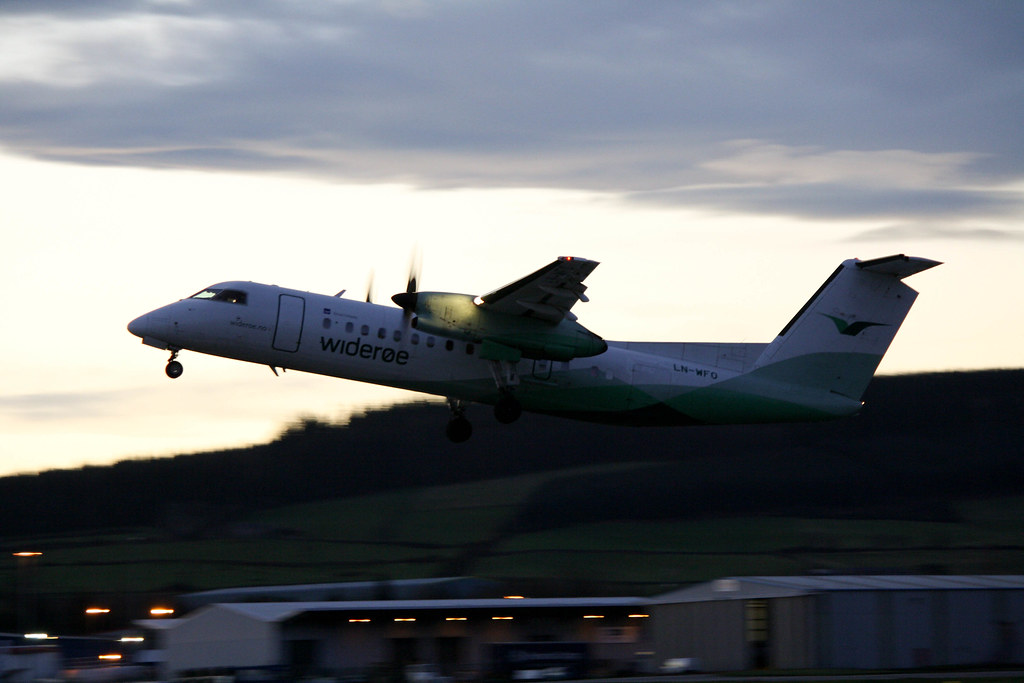
6615253899_6ec53b29a0_b.jpg

(1/100, f/5.6, 131mm, ISO 640)
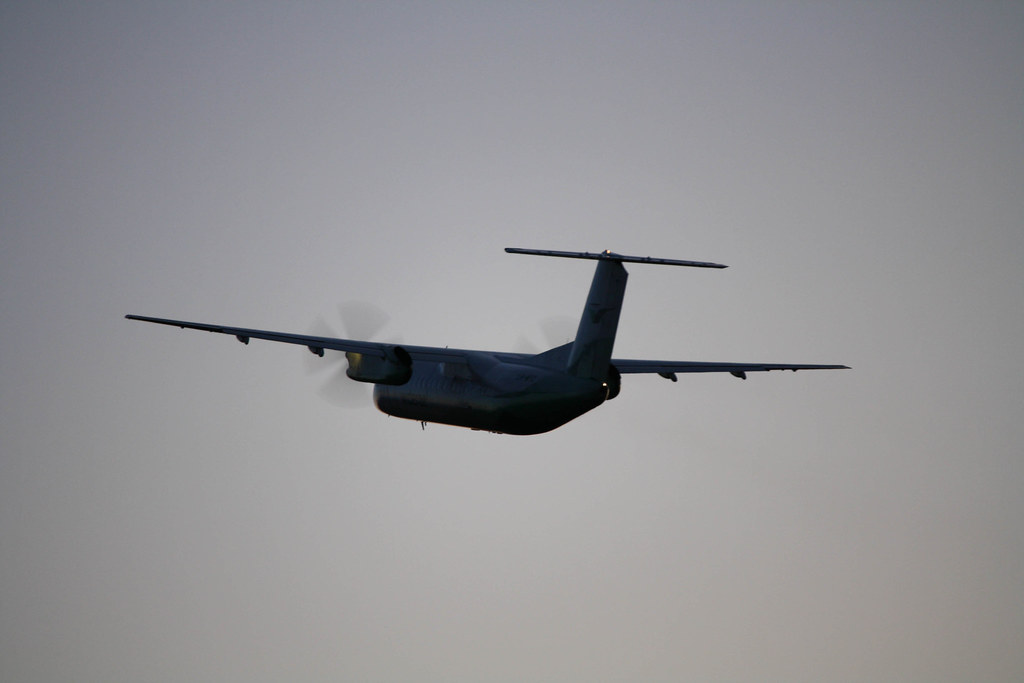
6615257251_5d348d5592_b.jpg

(1/100, f/5.6, 250mm, ISO 250)
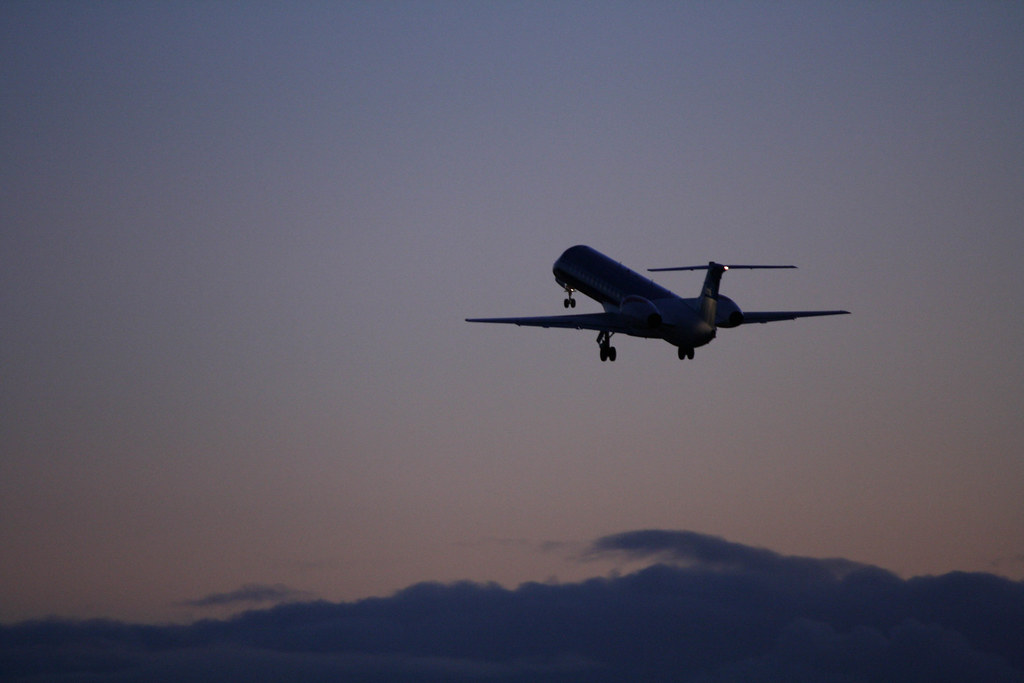
6615274003_bd648da918_b.jpg

(1/100, f/6.4, 250mm, ISO 800)


I shall have to go back when it is a bit sunnier and hopefully can get some better results.

Mike, they were all shot at 1/100, and I think I would have struggled with anything less than that due to the general lack of light. I am right in thinking, the more ambient light about, the more I can cut the exposure time whilst not affecting the aperture.
 
Good shots but as you already said.. It got dark, sure they will be great in lighter conditions mate
 
If you're shooting into the sky or taking shots that involve a lot of sky you may want to try manual mode. The sky is very bright so it'll cause the camera to underexpose the planes if you leave it to its own devices.
I haven't taken photos of planes for a while but I seem to remember it needing more than +2 Ev of exposure compensation so Av and Tv were no good, though I imagine this depends on what the weather is like.

Hi there,

I would respectfully disagree with this method as there are several things you can do to make the process of getting properly exposed images a little more accurate and easy.

Personally for standard aviation photography like the images we see here I think full manual's possibly the most inappropriate mode to use, the reason being as you track an aircraft through the sky it's not unreasonable to expect the light your lens sees to shift around by 1EV or more, and as you generally don't have time to correct you can very easily end up with images that are under or overexposed by quite a way; exactly what you're trying to avoid. The real trick, to me at least, is to keep a very close eye on your histogram and adjust exposure compensation appropriately for the conditions as you shoot, naturally keeping in mind how doing so affects shutter speed (so if dialling in + exposure compensation you may need to increase ISO in order to maintain a quick enough shutter speed). Keeping the exposure as far to the right as possible without blowing highlights makes the most of the information your camera can record, which is particularly useful if shooting JPEG (as long as you remember that recovering blown highlights on a JPEG image generally looks awful so keep a really, really close eye on it!)

Another hugely important factor is to use the light you have as well as you can. If you're shooting aircraft in a dull, uniformly grey sky (as we in the UK often see!) then there may simply be no way of making the images look pleasant. Regardless of how technically correct the exposure is, if the fuselage is blending into the sky then it's probably time to pack up and head to the pub! If you do have some light then try move around the airport to find a spot where you're not shooting into the direction most of the light is coming from. The little Widerøe Dash 8 is quite backlit, so there's simply no way of exposing the aircraft without severely blowing the sky. Had it been shot from the other side of the runway the light would have been with you, making exposure much easier. This can be a massive pain in the bum but as aviation photographers it's just something we must accept and live with.

What's your local airport? If you let me know I'll try do a little research to find the best places to go and the best times of day to shoot to make the most of the light. :)

Paul
 
Personally for standard aviation photography like the images we see here I think full manual's possibly the most inappropriate mode to use,

Is it a shutter time priority mode you would favour then, adjusting exposure settings dependant on light?

The little Widerøe Dash 8 is quite backlit, so there's simply no way of exposing the aircraft without severely blowing the sky. Had it been shot from the other side of the runway the light would have been with you, making exposure much easier.
Yeah, had I been more forward thinking I would have setup across the other side of the field. The location I shot from here is the same one the photos in my "Aircraft 2nd Attempt" thread, but for the other shots I took them in morning, rather than late afternoon so it seemed to work okay.


What's your local airport? If you let me know I'll try do a little research to find the best places to go and the best times of day to shoot to make the most of the light.

My local airport is Aberdeen (ABZ / EGPD). I have since managed to acquire a list of shooting positions slightly further back from the perimeter fence which allow perpendicular approach photos for when either runway is active so I may give these a tryout next time I am out. Any additional information would be a help though,

Cheers,
Matthew
 
Is it a shutter time priority mode you would favour then, adjusting exposure settings dependant on light?

Hi Matthew,

I generally only use Tv when shooting prop aircraft as it gives more control when trying to blur the props. When shooting jets I pretty much exclusively use Av because I prefer to keep control of depth of field, altering the exposure compensation and ISO as I go along and as the conditions change to try make sure I maintain a quick enough shutter speed to avoid blur. :)

Paul
 
Back
Top