Raw and JPEG. Why?

Comus

Suspended / Banned
Messages
109
Edit My Images
Yes
Hi all,

I'm still experimenting with my D80 and from reading posts on the forum I now understand that I should be shooting in RAW.

I've seen that my camera allows me to shoot pictures in JPEG, RAW or JPEG and RAW. I wondered why I would need to ever shoot in both. Are two images taken and stored on the SD card?

Thanks,

Comus
 
i would use it so that you can use the JPEG as a reference to the RAW ..

to view the raw file you must open it in photoshop or whatever you use..jpeg to scan through your pics then when you find one you want to play with you know which RAW to click
 
Yes two images are stored.

The main reason is for the whitebalance.

If you get it spot on then you shouldn't need to do any PP. If not then its best to work on the RAW file rather than theJPEG simply due to the quality. Its a time saving thing really, although I personally would just shoot the RAW to save space on the card.

Some people use the Jpeg and RAW option to get small thumbnails for quick reference ie small Jpegs with RAW. This can save space on your computer and makes reviewing photos quicker when using some software. Helpful because both files have the same name.
 
It only takes one shot and stores it as a jpeg and a raw image. This means that for your images that don't need any work you can just use the jpeg. Nice and quick, but for other images you can recover them from the RAW files. Down side to this is that it slows down the writing to the flash card and so you can shoot less shots consecutively and it swallows more space on the SD card.
 
Hello Comus

This is a subject of huge and sometimes hot debate and so I will only tell you my experience and what I do.

I shoot simultaneous RAW + Jpeg with the jpeg on camera size settings at the smallest possible worst quality setting the camera will do.

The jpegs are easily viewed and transported over many platforms.

The RAW files (NEF in your case) are huge by comparison, they are opened with special software and therefore do not transport well over different platforms.

The benefit of the RAW file is the quality and the number of options in post processing. When you are done in post you save the file as a jpeg for printing anyway.

HTH, shout if you would like any part explained in more detail:thumbs:
 
Thanks as ever for the advice all.

I've played with the settings and found that whereas I can currently save 311 images to my 4GB card in NEF only, I can still save 275 in NEF and JPEG(Basic).

As I'm still in the very experimental stages then this is more than enough for me, so I'll have a play with that. I've not used any processing software yet. Just downloaded a trial of Aperture 2 for my MacBook and will look at Elements next. (Can't justify the cost of CS3)

Thanks again,

Comus
 
If the jpeg's good enough, there's no need to process the raw file.

You might want to look into other threads as well, such as http://www.talkphotography.co.uk/forums/showthread.php?t=69081&highlight=raw+jpeg

I absolutely agree.

If your Jpeg is of sufficient size, correctly exposed, colour is balanced correctly, and the image is sharp, there is absolutely no neeed whatsoever to shoot in RAW.

I'm going to be contentious, and say that some (and only some) photographers use RAW as a crutch for poor technique. They use RAW to make up for either a lack of skill, or poor technique.

I came to digital photography from a film background, and I pay as much attention to each exposure now as I did then.

There is no doubt that RAW has it's place in modern photography, especially when it is vitally important that exposures are not compromised by difficult lighting conditions, or when the final image is paramount. In these cases it makes sense to use RAW, indeed, it is a very useful technique.
 
Pro's sometimes use the JPEGs as backups (like the 1D writing to SD card) or to have quick proofs that they can give customers (like burning a cd with photos on at the end of a wedding day).

I think it's good that the functionality is there, but I don't personally use it!
 
If your Jpeg is of sufficient size, correctly exposed, colour is balanced correctly, and the image is sharp, there is absolutely no neeed whatsoever to shoot in RAW.

Images shot from raw are sharper. Not a whole lot, but the best algorithms for converting the bayer matrix data into pixel data are cpu intensive and can't run on a camera.

Raw files contain a lot more data, which can give superior results if you do postprocessing of any kind. Changing contrast is a good example, or changing saturation, or sharpening. For ultimate image quality you should probably be exposing to the right to expand your tonal data too, and you can't really do that with jpeg.

The camera will apply sharpening to the jpeg for you, but that's not really what you want. Images should only be sharpened when you know what size they will be viewed at.

I'm not saying that jpeg isn't good enough for many purposes; it is. However there are many good reasons to shoot raw that don't involve fixing screw-ups.
 
From what i'd read, and how I understood it, was that to shoot in RAW and then convert to JPEG, would give you a much better quality photo than just a normal JPEG would?

So, going off some of these replies, if you shoot RAW + JPEG, the JPEG's are only going to be the same quality as they would be if you opened the file in RAW, and converted it?
 
to confuse things more(and to find out if i should be doing somthing different) I have iphoto setup to download images when i connect a camera, the raw files go straight on to my external drive , with the date(so i can find them) then i can play with the images in iphoto,but anything special goes through ps;)
 
From what i'd read, and how I understood it, was that to shoot in RAW and then convert to JPEG, would give you a much better quality photo than just a normal JPEG would?

So, going off some of these replies, if you shoot RAW + JPEG, the JPEG's are only going to be the same quality as they would be if you opened the file in RAW, and converted it?

That's not how I read it. If you want convenience and do not have the time to do the post processing AND and be sure that the exposure and colour balance is perfect, then JPGs are fine. If you have the time and the experience to work on the RAW image to make perfect then the reslts will be better.
 
Dont forget JPEG is a lossy format - every time you make a change to a jpeg however small you will lose image quality when you save the image as it will be compressed again. If you shoot raw and convert to PSD or TIFF (lossles) you will retain all the image data when a edited image is saved, these formats will also retain layer info - i cant see any reason why you would shoot jpeg on a DSLR (unless you wanted a high speed burst) if you want the camera to process your pictures a Highend PS would be cheaper and probably give very similar results.
 
I absolutely agree.

If your Jpeg is of sufficient size, correctly exposed, colour is balanced correctly, and the image is sharp, there is absolutely no neeed whatsoever to shoot in RAW.

A couple of years ago I'd have agreed with that but having gone from shooting jpeg to shooting raw+jpeg and now raw only - I wouldn't go back. I hate 'advanced' editing and never use photoshop etc. but I do process raws through lightroom to best jpegs and the result is consistently better than camera jpegs.... and getting it right in camera is always my priority so I'm not thinking about sorting problems out later.
 
Images shot from raw are sharper. Not a whole lot, but the best algorithms for converting the bayer matrix data into pixel data are cpu intensive and can't run on a camera.

Raw files contain a lot more data, which can give superior results if you do postprocessing of any kind. Changing contrast is a good example, or changing saturation, or sharpening. For ultimate image quality you should probably be exposing to the right to expand your tonal data too, and you can't really do that with jpeg.

The camera will apply sharpening to the jpeg for you, but that's not really what you want. Images should only be sharpened when you know what size they will be viewed at.

I'm not saying that jpeg isn't good enough for many purposes; it is. However there are many good reasons to shoot raw that don't involve fixing screw-ups.


Not So!!

Any in camera sharpening algorhythms can be disabled.

Remember, Jpegs can also be sharpened post processing, It is only when images are enlarged to well beyond normal, that any difference really becomes necessary.

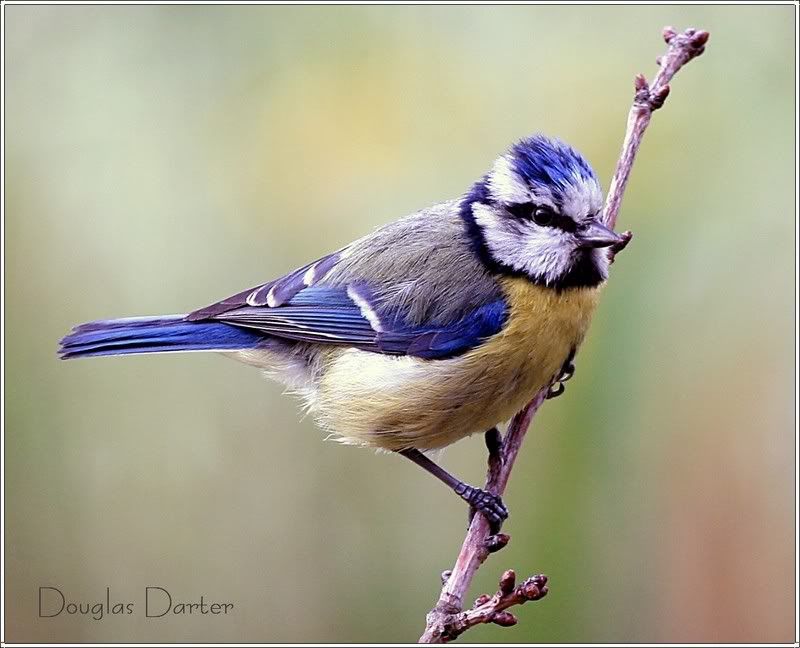
This is a crop taken from a Jpeg shot at 400mm - not the best recipe for a sharp pic, but sharp nonetheless, and I doubt a RAW conversion would be any better!!

zzzbluetit.jpg
 
Back
Top