Question for the Plane people!

Phal

Suspended / Banned
Messages
1,297
Name
Etienne
Edit My Images
Yes
Not plain people ;P

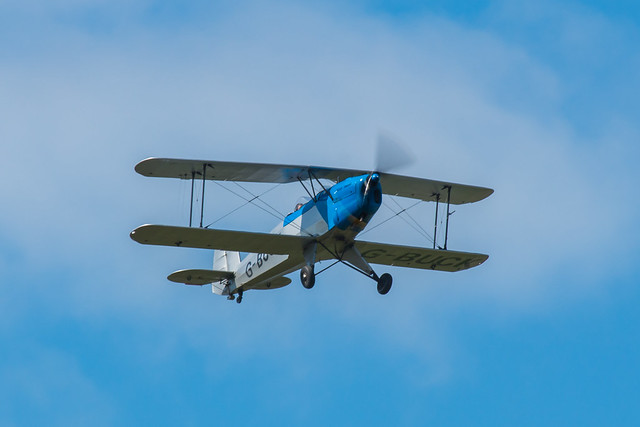
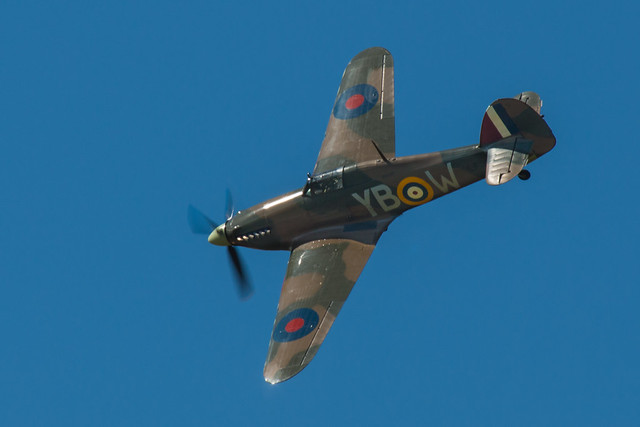
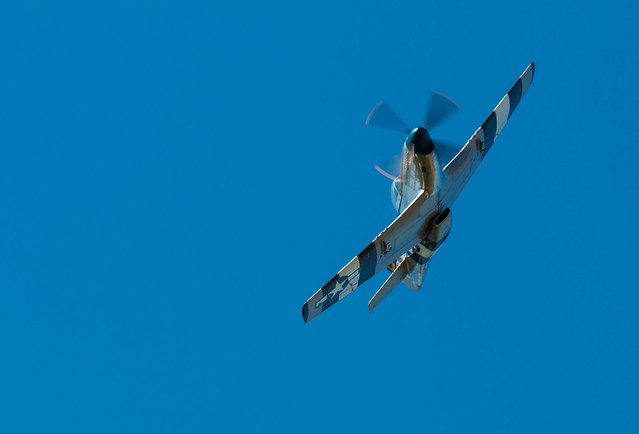
When taking shots of prop driver flying devices, do you guys have ND filters or at least a polarised filter on in order to darken it up? The reason I ask is that I find my 100-400mm lens has to go up to F20 or higher quite often just to get me a long enough exposure so that there's some prop blur!
 
Not plain people ;P

When taking shots of prop driver flying devices, do you guys have ND filters or at least a polarised filter on in order to darken it up? The reason I ask is that I find my 100-400mm lens has to go up to F20 or higher quite often just to get me a long enough exposure so that there's some prop blur!

If you've got your ISO to the lowest and your still having to stop down that much then basically yes your need a ND filter..that said don't forget you'll be able to get away with faster shutter speeds on take off vs landing as on take off the throttle will be much high hence props spinning faster
 
Yeah its ISO 100 so the only option is to decrease the aperture to get slower shutter speeds.

What kind of shutter speeds do people generally use for prop blur? I find it has to be quite slow for the older planes, at around 1/200 or lower? The more modern ones with higher power engines etc can give good blur at 1/400 but it does seem to vary.
 
Yeah its ISO 100 so the only option is to decrease the aperture to get slower shutter speeds.

What kind of shutter speeds do people generally use for prop blur? I find it has to be quite slow for the older planes, at around 1/200 or lower? The more modern ones with higher power engines etc can give good blur at 1/400 but it does seem to vary.

As I said its going to very depending on the speed the prop is turning at...also if your trying to get a full prop disk as such then you'll find it easier on aircraft with a lot of prop blades such as say the A400M that from memory has 6 blades over say a classic C130 that has 4 blades as the former need 60 degrees of rotation over the later needing 90 degrees to create a full disk..thus the great time the shutter needs to be open

Using a tiny aperture say over about f/13-16 or smaller will also seriously start to degrade the image as you'll start to distort the light that is passing through the aperture to hit the sensor, another reason why your better served using a filter to slow the shutter speed
 
Yeah today was the first time I've been out in a sunny airshow and I've tried to get prop blur on the prop planes (last time I just shot everything as fast as I could because I was a noob over a year ago lol)

Anyway, as expected, anything too near the sun went sky high (pun intended) with the F numbers and the shots are crap.

I guess a filter would be a requirement!
 
1/125 is usually about right for propellers so at ISO 100, the highest F No. required in daylight will be f16.

If you are relying on the in camera metering without any exposure compensation it will probably be confused by the excess of sky and/or sun in the frame and try to set a higher F No.

I don't see why an ND filter would be required.


Steve.
 
Last edited:
1/125 is usually about right for propellers so at ISO 100, the highest F No. required in daylight will be f16.

If you are relying on the in camera metering without any exposure compensation it will probably be confused by the excess of sky and/or sun in the frame and try to set a higher F No.

I don't see why an ND filter would be required.


Steve.me

Well it was a rather bright day and the sun wasn't really in the right place either.

A lot of the shots went between F16-30 even with ISO 100 and this was with a 1/200 exposure

The lens is sharpest around F5.6 to maybe F9 or F10 so if I wanted to stay in that sweet spot, surely it would need a filter? Sky would be v v bright otherwise :/
 
1/125 is usually about right for propellers so at ISO 100, the highest F No. required in daylight will be f16.

If you are relying on the in camera metering without any exposure compensation it will probably be confused by the excess of sky and/or sun in the frame and try to set a higher F No.

I don't see why an ND filter would be required.


Steve.me

:agree:
 
The lens is sharpest around F5.6 to maybe F9 or F10 so if I wanted to stay in that sweet spot, surely it would need a filter? Sky would be v v bright otherwise :/

Just use the sunny 16 rule. For a bright sunny day, f16 at 1/125 for ISO 100. The same exposure will be obtained from f11 and 1/250 or f8 and 1/500 or f5.6 and 1/1000.

No filters required.

If you want just the right amount of propeller blur, stick to f16 and 1/125. There is no detriment to having the extra depth of field as there is nothing there to make use of it. It does give you a bit more leeway with your focusing though.

I assume you are hand holding. If so, I don't think you have anything to gain in sharpness at f5.6 to f11 compared with f16 at a shutter speed of 1/125.


Steve.
 
Last edited:
I have a mix of shots with and without the tripod but mostly with the tripod as I wasn't directly in the airshow area but nearby on a hill where the planes turn.

A lot of the shots that were F16 and up weren't really all that sharp compared to larger aperture shots taken of the jets etc.

I guess a polarised filter wouldn't be a bad idea as it'll darken things a little but also help with the sky and glare of planes etc?
 
A polariser will help reduce the glare and will also darken up the sky BUT they can cause some odd effects on the glass of aircraft canopies, having never used one I didn't really understand this until I recently bought a pair of polarised sunglasses and now I'll make sure I don't point a polariser anywhere near an aircraft!!
 
Yeah I see the same effects with my polarised sunglasses hehe :)
 
TBH, I'm not a great fan of completely disked props - I like to see a slight distinction between the blades. Even more so on helicopter rotors.

Many years ago, we had to use more than one body to accommodate the need for slower film to allow prop blur and faster to make panning on jets easier!
 
Since I don't have the steadiest hands I have to use the fastest shutter I can get away with when it comes to props so full discs are never an option! I was shooting a Spit at Sywell the other day and in the air 1/320 was getting just enough blur when he was clogging it which worked out below at ISO100, f10, 1/320, Spot metered - using Tv on a very bright afternoon. I think that's plenty of blur but others might prefer more.

dep1.jpg
 
phal

Camera shake is an unfortunate result of slow shutter speeds, so you will get a lot of blurred pictures that get binned.
Back to exposure, no, I have never used, or needed to use an ND filter, besides this is the UK, so the sun and airshows are a very rare combination!
The same goes for polarizers.
The simple way is stick the camera on TV, set the speed at between 1/80 and 1/250, and off you go.
 
phal

Camera shake is an unfortunate result of slow shutter speeds, so you will get a lot of blurred pictures that get binned.
Back to exposure, no, I have never used, or needed to use an ND filter, besides this is the UK, so the sun and airshows are a very rare combination!
The same goes for polarizers.
The simple way is stick the camera on TV, set the speed at between 1/80 and 1/250, and off you go.
 
They were the good shots but I don't get the impression the bad shots were due to camera shake. Obviously some were but some were just soft due to the abnormally small aperture that the camera used when I left it to it's own devices. It could be because of the evaluative metering I was using? Perhaps it was metering too much for the sky instead of just for the aircraft? That being said, spot metering might not be the best idea for fast jets and stuff whizzing by lol.

I'll try to post some later just to show what I mean.
 
Back
Top