Product photography?

Grasshopper

Suspended / Banned
Messages
111
Name
John
Edit My Images
No
I am looking to get into what I guess you would call product photography. Basically I would like to start getting the sort of shots you see of individual items in light boxes and close-up pet portraits ect, for things like greeting cards.

My question is for help on a decent set-up. I have a Nikon D90 with the 18-105 kit lens. I also have a SB-600 flash and a soft box. I have been looking at the Nikon 50mm 1.4 or 50mm 1.8, am I looking at the right sort of lens or are there better lenses for the sort of thing I am looking at? Also can anybody help with good lighting for my soft box, I have used a desk lamp but I don't seem to be able to get the light I want, do I just need more lamps or something a bit better?

I would really appreciate any help anyone has, Thanks
 
A macro lens is a nicer lens for doing product shots I feel as I often shoot at 100-200mm when doing my own product shots due to compressing the background so I don't get any unwanted light in there. Makes controlling the image vastly easier.

I also wouldn't use a lightbox/light tent either and 1 off camera flash is all you need to produce some rather nice shots as long as you remember the basics of flash photography.

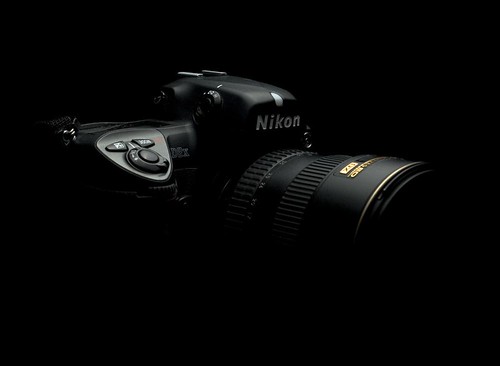
Having no shadows on an image due to using too many lights just looks tacky imo and its so overly done it doesn't stand out anymore. I do mostly low key stuff or simply "dark" product shots depending on my mood as they suit my processing style and equipment far more.

Example of one of my shots:


Latte by jjohnson2012, on Flickr

Just used 1 off camera flash (SB 900 in ttl) and the rest was natural ambient light. Didn't even need to use my reflector, let alone my lencarta 250w studio light and enormous softbox (140x70cm!)

Keep things simple pretty much always ends up with the nicest results!
 
Try getting a basic 2 light kit which you can pick up for about £500. forget the light tent and instead get a good quality backdrop from colorama or similar. If you are shooting with studio lights you will have to shoot on f8+ so your kit lens may be ok for now until you need some better glass.

-Patrick Procter-
 
Thats great, thanks for the help. James, that shot you put up is great and just the sort of thing I am thinking of so I will deff try out some ideas with your advice.
 
John - what products are you shooting? The size of product will ultimately be one of the factors in the type of light and light modifiers you require....

I do a lot of product photography for magazines against white (I hate it against white BTW) and for thing like fishing reels, small bags, bait - I work on angling mags - then two lights with 60cm soft boxes and a white roll does just fine. It's not groundbreaking light but it does a job and you can get some half-decent control over creating something that doesn't necessarily look flay and boring.

A single soft box can be effective - this was done with a single soft box overhead:


My Partner In Crime.... (Explored) by Pat MacInnes, on Flickr

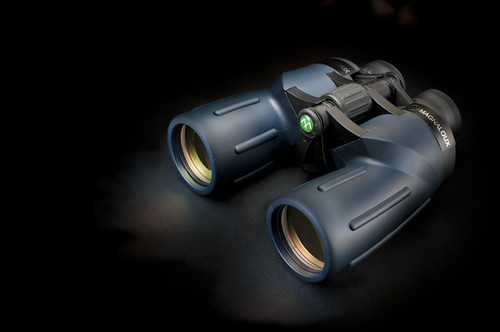
Have you tried light painting? I do a fair bit of this for product shots that I want to look a bit classier, especially on black or dark backgrounds. I do a lot with my phone set to a white background but something like an iPad or an LED torch might also work well. Apparent light size is the key, as with all lighting...

Here are couple I've done using the phone:


Lightpainted bottle by Pat MacInnes, on Flickr


Binoculars by Pat MacInnes, on Flickr

As you can tell, I like shooting against black :)
 
Great shots speciaman, how far from the black bg are the objects?
 
Rico said:
Great shots speciaman, how far from the black bg are the objects?

From memory, about 18-24". I'm working at max sync and the lights are very close to the subjects to help 'blacken' the background and kill the ambient
 
I love those shots speciaman, just the sort of thing I'm trying for. Lighting lighting lighting then. Any good cheap lamps I can get, or cheats for the same affect?
 
Light, Science & Magic - it's the bible for this sort of thing, although my edition is slightly older and I'm not sure if they've caught up with lightpainting. Once you know how to light it will be easier to identify useful cheap lights.
 
Agreed, "light,science..." is a great book to help understand the theory behind how light works, but there is nothing like actually doing it for real...

I learned a lot from the strobist 101 and 102 tutorials because they say it in plain English. Yes, knowing your soft box from your shoot-through does help, but I just experiment all the time to see what I can do. That's how I got into using a phone as my light source - nothing new but it was new to me and not something that was heavily documented, so I had to kind of work it out for myself. That's the fun bit :)

Understanding apparent light size and in turn, diffusion, is key to knowing what you can do with a light source and how it will help you create a photograph to your requirements. A single soft box (or even a angle poise lamp with some tracing paper over it) is a powerful tool, especially when it comes to inanimate objects that you spend a lot longer photographing.
 
Last edited:
The strobist 101 and 102 are very good, but LSM does go through the "why" a lot better, and is better for helping identify the nature of surfaces (shiny, reflective). It sets some very good exercises if you follow through each diagram (I'm nowhere near having done all of them yet).
 
Looks like I need to pick up a copy of LSM then. Thanks again to you all for you help. It's much better to ask a quick question on here to people who know what they are talking about rather than go out and buy a load of kit I don't need.
 
Back
Top