

You are using an out of date browser. It may not display this or other websites correctly.
You should upgrade or use an alternative browser.
You should upgrade or use an alternative browser.
Product photography - kits
- Thread starter =ReBeL=
- Start date
OP

=ReBeL=
Suspended / Banned
- Messages
- 1,095
- Name
- Adrian
- Edit My Images
- No
I think some 'clients' are confusing camera owners and photographers!
Even Ansel Adams had to start from the scratch at some point. You can call me whatever you like BTW
Seems like a pretty good summary to me. Especially #6
Since you have the budget, get started with a couple of Lencarta Smartflashes (or any other entry-level outfit - eg Bowens, Elinchrom - though they'll push your budget) and a softbox, preferably on a boom.
They will do the light tent thing (you can make one in five minutes with a couple of bits of grease-proof paper) and once you get the hang of things, most of the creative stuff too. You can build from there and they'll be wonderfully useful for any other studio work you might want to do.
I keep looking at Lencarta website, but it's down atm. Will come back later tonight or tomorrow.
Now the light tent is out of my list, I think I will have to build my own using white paper. I still need to figure a way to be able to easily take it down and put it back up whenever needed.
Thank you Richard

specialman
Suspended / Banned
- Messages
- 8,193
- Name
- Pat MacInnes
- Edit My Images
- Yes
Thank you very much for your recommandations, Pat. I will have a look around to see what can I find and for what prices.
Much appreciated.
No worries. Flash In The Pan (FITP) on here and a few other chaps seem to know the ins and outs of the Yongnuo flashes, but I think i'm right in saying they all have a manual mode - I think the models vary as to the number of power increments, and more recently, how they work with TTL. A basic flash with a manual mode will work as well as a 580EX when it's on a standard, non-TTL wireless trigger system.

I use Phottix Stratos triggers but the RF-602/603 triggers have a big following because they're cheap and have a half-decent working range. Look on the bay and you'll see there are packs for sale of 2,3,4 or even 5 units that vary in price as to how many flashes you want triggers for. Think I paid about £35 for a set two receiver + one trigger set for my Nikons. Think they act as tranceivers so any unit can be used to trigger the rest. My Stratos' are hooked up to a variety of flashguns; one SB28, one SB24 and two SB800s and all work seemlessly. Been shooting food today with a chef and using a few softbox on stands, brought so much more light to the party than was available through windows and having a mobile studio just helped me get what I wanted. Plus it packed up into one bag at the end, easily carried to any location.
Anyway, I'm off on a tangent here...


Garry Edwards
Moderator
- Messages
- 13,475
- Name
- Garry Edwards
- Edit My Images
- No
Wrong approach. You won't have time for extensive PS work, what you need to do is to get the shots as close to perfect in camera as possible.I should also mention I am more photoshop junkee than photographer.
I suspect that it's all about marketing and nothing about quality.Ozei, that looks interesting. I wonder why there is such a massive price difference 75£ vs 240£. It must be something to do with quality of that equipement?
It has nothing to do with flooding the place with light and everything to do with using light well, to create shadows that make the products look real and which make people want to touch them - and they can only touch them by buying them. I'm not saying that it can't be done with hotshoe flashes but, for a beginner, it's a very hard work way of doing it.Studio flashes are great but even our small Bowens heads are overkill for things like fishing reels, fly-tying sequences, bait and other items that I can just as easily light with two speedlights and a reflector. The power only comes into it when we work with larger items like luggagge where we need to flood the place with light....
I am in a similar boat, although not yet at the point where we're opening a web shop. My partner wants to sell handmade home decorations - table runners and the like. Because they are hand made, they are relatively expensive, so will need to be photographed appropriately to make people want to buy them. When I asked about this (thanks Garry and Richard for helping) the key thing was lighting them so that the texture and colour of the material was inviting. The impression I got was that just surrounding them with light wouldn't do that and you had to be creative with your lighting - white background or not.
My concern (without any hard and fast knowledge - please correct me if I'm wrong those that know) is that lighting them in a light tent will certainly light the product but you won't get a "wow" image, but a lit from all sides type shot. Again, the impression I have from my other thread is that to sell the things you are selling at any premium requires a "wow" image of the product.
Yes, you may well get better images than you currently have but it still may not work as you don't have good/enticing enough images to persuade people to buy the product at any form of premium without touching the object as you would in a shop. I think this is what a couple of people have been referring to above...

Light: Science & Magic - or my Photolearn still life tutorialOff to find a good book about product photography
The Lencarta website is down at the moment with technical probs, when it's working again I'll post links to the stuff you need - a small product photography table, with a boom arm and a couple of lights is all you need and the table will do everything that a light tent can do, but much better. And it can be taken down and put up in a few seconds.I keep looking at Lencarta website, but it's down atm. Will come back later tonight or tomorrow.
Now the light tent is out of my list, I think I will have to build my own using white paper. I still need to figure a way to be able to easily take it down and put it back up whenever needed.
Product photography isn't hard but it's a pretty steep learning curve. It's been good to me, it's provided me with a very good living for many years.
Like many specialities, it's pretty easy to become quite good at photographing a limited range of products - in other words, it may take a lifetime to become expert at photographing all types of products well, but it doesn't take long to learn how to photograph products that have similar qualities, and after a while it becomes a simple production line, so it will be well within your capabilities.
Basically you need just two things. Knowledge and the right equipment, and there is no substitute for either of those.
OP
=ReBeL=
Suspended / Banned
- Messages
- 1,095
- Name
- Adrian
- Edit My Images
- No
No worries. Flash In The Pan (FITP) on here and a few other chaps seem to know the ins and outs of the Yongnuo flashes, but I think i'm right in saying they all have a manual mode - I think the models vary as to the number of power increments, and more recently, how they work with TTL. A basic flash with a manual mode will work as well as a 580EX when it's on a standard, non-TTL wireless trigger system.
I use Phottix Stratos triggers but the RF-602/603 triggers have a big following because they're cheap and have a half-decent working range. Look on the bay and you'll see there are packs for sale of 2,3,4 or even 5 units that vary in price as to how many flashes you want triggers for. Think I paid about £35 for a set two receiver + one trigger set for my Nikons. Think they act as tranceivers so any unit can be used to trigger the rest. My Stratos' are hooked up to a variety of flashguns; one SB28, one SB24 and two SB800s and all work seemlessly. Been shooting food today with a chef and using a few softbox on stands, brought so much more light to the party than was available through windows and having a mobile studio just helped me get what I wanted. Plus it packed up into one bag at the end, easily carried to any location.
Anyway, I'm off on a tangent here...
Thanks once again Pat.
Had a look around and I think this is sort of kit I need
http://www.backdropsource.co.uk/Pro...white-muslin-backdrop-with-3-flash-light-kits
I'm not saying this is the brand or even the company I will buy from, but I think this is roughly what I need:
- 1 x backdrop
- 1 x backdrop stand
- 3 x flash lights
- 3 x sofbox for flash lights
- 3 x light stand
- wireless set of triggers
Anything else I need to add to that?
I will have a look on Lencarta when their website will be back.
EDIT:
once I got my complete list of stuff needed, I will look around for best value for money deals, but I fear my 400£ won't be enough (at least not for 3 flash set up)
Last edited:
Garry Edwards
Moderator
- Messages
- 13,475
- Name
- Garry Edwards
- Edit My Images
- No
Thanks once again Pat.
Had a look around and I think this is sort of kit I need
http://www.backdropsource.co.uk/Pro...white-muslin-backdrop-with-3-flash-light-kits
I'm not saying this is the brand or even the company I will buy from, but I think this is roughly what I need:
- 1 x backdrop
- 1 x backdrop stand
- 3 x flash lights
- 3 x sofbox for flash lights
- 3 x light stand
- wireless set of triggers
Anything else I need to add to that?
I will have a look on Lencarta when their website will be back.
Other people have been selling that same 'professional kit' for £300 - including VAT...
You can do much better for the same moneyList Price : £1,038.00
Sale Price : £519.00
You Save : £519.00 ( 50 %)
OP
=ReBeL=
Suspended / Banned
- Messages
- 1,095
- Name
- Adrian
- Edit My Images
- No
Other people have been selling that same 'professional kit' for £300 - including VAT...
You can do much better for the same money
Garry I linked that just as an example. That was the first result I got from Google. Plenty more to look through, but I will leave the rest for tomorrow. I still have a normal full-time job and first baby due in few days... I have to save my energy
.... Ozei, that looks interesting. I wonder why there is such a massive price difference 75£ vs 240£. It must be something to do with quality of that equipement?....
Adrian - I don't think there's likely to be much difference (equipment quality-wise) between this kit on ebay http://cgi.ebay.co.uk/Pro-Photo-Stu...tem27abf7a41d&clk_rvr_id=236637535172&afsrc=1 and this kit from Tabletop http://www.tabletopstudio.co.uk/Pages/Universal Kit 30.htm. The ebay seller has a large (5,085) 100% feedback and offers returns within 7 days - so you could order one send it back if you're not happy with the build quality. The worst that can happen with the ebay CFL/tent kit is you'll have spent £79.99 + p&p of your budget.
If I were you I'd try and do some testing on the different lighting systems (continuous/flash/CFL) & (tent/no tent) and establish which you're comfortable with. Garry is right though when he talks about light modifiers - you'll need them whichever type of lighting you choose.
OP
=ReBeL=
Suspended / Banned
- Messages
- 1,095
- Name
- Adrian
- Edit My Images
- No
Wrong approach. You won't have time for extensive PS work, what you need to do is to get the shots as close to perfect in camera as possible.
I suspect that it's all about marketing and nothing about quality.
It has nothing to do with flooding the place with light and everything to do with using light well, to create shadows that make the products look real and which make people want to touch them - and they can only touch them by buying them. I'm not saying that it can't be done with hotshoe flashes but, for a beginner, it's a very hard work way of doing it.
Light: Science & Magic - or my Photolearn still life tutorial
The Lencarta website is down at the moment with technical probs, when it's working again I'll post links to the stuff you need - a small product photography table, with a boom arm and a couple of lights is all you need and the table will do everything that a light tent can do, but much better. And it can be taken down and put up in a few seconds.
Product photography isn't hard but it's a pretty steep learning curve. It's been good to me, it's provided me with a very good living for many years.
Like many specialities, it's pretty easy to become quite good at photographing a limited range of products - in other words, it may take a lifetime to become expert at photographing all types of products well, but it doesn't take long to learn how to photograph products that have similar qualities, and after a while it becomes a simple production line, so it will be well within your capabilities.
Basically you need just two things. Knowledge and the right equipment, and there is no substitute for either of those.
That sounds great. I look forward to see Lencarta products.
I like to think I am a quick learner. Everything I know about photography I learned myself. I'm pretty sure I can learn product photography as well... or at least try.
Thanks for your help Garry
OP
=ReBeL=
Suspended / Banned
- Messages
- 1,095
- Name
- Adrian
- Edit My Images
- No
Adrian - I don't think there's likely to be much difference (equipment quality-wise) between this kit on ebay http://cgi.ebay.co.uk/Pro-Photo-Stu...tem27abf7a41d&clk_rvr_id=236637535172&afsrc=1 and this kit from Tabletop http://www.tabletopstudio.co.uk/Pages/Universal Kit 30.htm. The ebay seller has a large (5,085) 100% feedback and offers returns within 7 days - so you could order one send it back if you're not happy with the build quality. The worst that can happen with the ebay CFL/tent kit is you'll have spent £79.99 + p&p of your budget.
If I were you I'd try and do some testing on the different lighting systems (continuous/flash/CFL) & (tent/no tent) and establish which you're comfortable with. Garry is right though when he talks about light modifiers - you'll need them whichever type of lighting you choose.
Thanks Ozei
I don't think I will have the option to try each of those system before I buy one, so I have to chose wisely and invest in the most future-proof system. By future-proof I mean the one that will last for some time without the need to upgrade. One thing for sure, I want to create as good photos as possible, so I need as good system as I can afford.
Maybe at some point in future it will be me complaining here at bl**dy amateurs working for free


- Messages
- 1,863
- Name
- Mike
- Edit My Images
- Yes
Before splashing out on any equipment it may be worth going on one of the Lencarta studio flash training days run by Garry or Jonathan Ryan. Although you're shooting models it's a good insight into how studio flashes and modifiers work.
Perhaps also see if you can get along to a strobist meet close to you to have a play with off camera flash using speedlights.
Perhaps also see if you can get along to a strobist meet close to you to have a play with off camera flash using speedlights.
specialman
Suspended / Banned
- Messages
- 8,193
- Name
- Pat MacInnes
- Edit My Images
- Yes
.....
It has nothing to do with flooding the place with light and everything to do with using light well, to create shadows that make the products look real and which make people want to touch them - and they can only touch them by buying them....
You're right in a sense Garry; product shots are often the teaser to make the viewer go and buy the product but in many cases (as in my experience at work) the shots are better received by viewers (in my case advertisers AND readers) when they're shot pretty flat, i.e; with very even light..... unfortunately, I work in an industry where the creative individuals are far outnumbered by those who just want safe, plain and simple, and more often than not, that means very basic lighting that only serves the purpose of showing an item as clearly as possible and not showing it in a 'WOW!' sense....
Regards the 'flooding' comment, I meant to say the Bowens heads come into play more for me when more light = greater DoF/higher f-stop. That's where speedlights just can't cut it I feel. With diffusers like snoots and honeycombs they (studio heads) are brilliantly effective to do what you're saying, creating depth and dynamic shadows, but the chances for really creative work at my place is so limited the rarely get an airing. Sad but that's the reality....
Garry Edwards
Moderator
- Messages
- 13,475
- Name
- Garry Edwards
- Edit My Images
- No
Sadly, you're right - there are a lot of number crunchers making the wrong decisions for the right reasons and just about everyone except the largest Companies tend to play safe and go for bland rather than creative, but in my experience creative wins every time in terms of sales, except of course when the shots are purely illustrative, i.e. just showing what a widget actually looks like so that buyers are sure that they're buying the bit they really need to mend their lefthanded whatsit. As an example of what I think is good practice, take a look at the Logitech website. Simple, clean but not flat.You're right in a sense Garry; product shots are often the teaser to make the viewer go and buy the product but in many cases (as in my experience at work) the shots are better received by viewers (in my case advertisers AND readers) when they're shot pretty flat, i.e; with very even light..... unfortunately, I work in an industry where the creative individuals are far outnumbered by those who just want safe, plain and simple, and more often than not, that means very basic lighting that only serves the purpose of showing an item as clearly as possible and not showing it in a 'WOW!' sense....
Regards the 'flooding' comment, I meant to say the Bowens heads come into play more for me when more light = greater DoF/higher f-stop. That's where speedlights just can't cut it I feel. With diffusers like snoots and honeycombs they (studio heads) are brilliantly effective to do what you're saying, creating depth and dynamic shadows, but the chances for really creative work at my place is so limited the rarely get an airing. Sad but that's the reality....
One of the most successful shots I ever took was of a car safety harness. I had to photograph it on a horrible little terrier that shed its hair all over the seat of my nice new car. I showed the client the unretouched proofs, intending to retouch out all the hairs but he just stood there, trying to pick the hairs off of the print
So the hairs stayed, even though they were technically distracting they made the product look real and made people engage with the photo.
OP
=ReBeL=
Suspended / Banned
- Messages
- 1,095
- Name
- Adrian
- Edit My Images
- No
In case of modifiers, what set would you go for for 3 flash light set up? 2 umbrelas and 1 softbox?
I'm trying to make a complete shopping list of all the stuff I need before I start checking prices for specific products.
I'm trying to make a complete shopping list of all the stuff I need before I start checking prices for specific products.
Garry Edwards
Moderator
- Messages
- 13,475
- Name
- Garry Edwards
- Edit My Images
- No
There's no specific toolkit as a lot depends on the type of product being shot, whether it is shiny, has texture, complex curves etc.In case of modifiers, what set would you go for for 3 flash light set up? 2 umbrelas and 1 softbox?
I'm trying to make a complete shopping list of all the stuff I need before I start checking prices for specific products.
But a useful setup for a 3 head kit would be:
1 large square or rectangular softbox, normally used overhead on a boom arm
1 smaller softbox or beauty dish, for frontal (more or less) lighting
1 standard reflector with 10 or 20 degree honeycomb (both would be better, 10 degrees if only 1 is available) to create texture where needed, or backlighting
1 umbella, better to have both shoot through and reflective, for on-axis fill
specialman
Suspended / Banned
- Messages
- 8,193
- Name
- Pat MacInnes
- Edit My Images
- Yes
Sadly, you're right - there are a lot of number crunchers making the wrong decisions for the right reasons and just about everyone except the largest Companies tend to play safe and go for bland rather than creative, but in my experience creative wins every time in terms of sales, except of course when the shots are purely illustrative, i.e. just showing what a widget actually looks like so that buyers are sure that they're buying the bit they really need to mend their lefthanded whatsit. As an example of what I think is good practice, take a look at the Logitech website. Simple, clean but not flat....
I'm like the Logitech shots - the variation in shadow and reflection looks great. Slick but not over complicated.
Yep, being asked to take images that I wouldn't normally shoot is just part and parcel of my job these days and despite trying to educate other staff and trying to encourage a wider use of creative techniques, I don't win through as many times as I'd like.
This is one exception lately that I was pleased made it to print, albeit with a dodgy crop by the designer to crop most of the cannister out of shot; shot as a lead image for a carp fishing magazine's test on stoves, the brief was to shoot a lit stove yet leave room for titles and text placement in various locations. They didn't even think about using shadow to basically 'make' the image, but I was pleased they went along with my idea. I actually used the Bowens heads this timeand at low power they were surprising easy to control, although I'm sure the softboxes helped me the most...
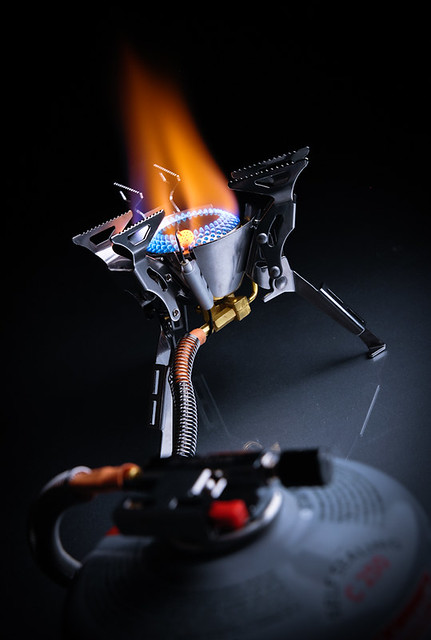
Stove by Pat MacInnes, on Flickr
Last edited:

HoppyUK
Suspended / Banned
- Messages
- 23,200
- Name
- Richard
- Edit My Images
- No
I'm like the Logitech shots - the variation in shadow and reflection looks great. Slick but not over complicated.
<snip>
Those Logitech images are good, but ironically, they've been heavily retouched and the background/shadows have been photoshopped in.
OP
=ReBeL=
Suspended / Banned
- Messages
- 1,095
- Name
- Adrian
- Edit My Images
- No
There's no specific toolkit as a lot depends on the type of product being shot, whether it is shiny, has texture, complex curves etc.
But a useful setup for a 3 head kit would be:
1 large square or rectangular softbox, normally used overhead on a boom arm
1 smaller softbox or beauty dish, for frontal (more or less) lighting
1 standard reflector with 10 or 20 degree honeycomb (both would be better, 10 degrees if only 1 is available) to create texture where needed, or backlighting
1 umbella, better to have both shoot through and reflective, for on-axis fill
Thanks Garry.
The list is rather long so far and I'm sure this is still not the final version. I feel there is no way I can afford it all with my 400£ budget.
So far on my list I have:
all the stuff you have mentioned in the post above, plus:
1 x backdrop
1 x backdrop stand
3 x flash lights
3 x light stands
Plus some sort of wired or wireless trigger control.
Just 3 x flash light will probably be more than 400£
Edit: 420£ here: http://www.photomart.co.uk/ProductDetail.asp?ProductCatalogue=FLA0018&CatID=
This seems to have most of the stuff I need included: http://www.123photosupply.co.uk/lencarta-200ws-smart-flash-3-head-kit-387-p.asp
440£ though and I still need a backdrop and bacdrop stand.
Last edited:
HoppyUK
Suspended / Banned
- Messages
- 23,200
- Name
- Richard
- Edit My Images
- No
Two lights, smallish square softbox and a honeycomb accent/effect light, maybe a snoot. Remember that a carefully positioned reflector is like another light, often better.
You can do that for £400.
I would even advise against three lights initially, you'll just get confused and have conflicting shadows going on which look terrible. I'm a great believer in 'less is more' whenever possible (up to a point). You can do a heck of a lot with just one light, and even if you've got several more on the go, the main key light will be doing 75% of the work.
You can do that for £400.
I would even advise against three lights initially, you'll just get confused and have conflicting shadows going on which look terrible. I'm a great believer in 'less is more' whenever possible (up to a point). You can do a heck of a lot with just one light, and even if you've got several more on the go, the main key light will be doing 75% of the work.
Garry Edwards
Moderator
- Messages
- 13,475
- Name
- Garry Edwards
- Edit My Images
- No
I was going to suggest a 2 head setup too, before Richard beat me to it
The fact is, that there's no right and complete answer. Some still life shots may benefit from 6 or 7 lights. Sometimes, 1 + a reflector will do perfectly well. Mostly, it's 2, often it's 3. Rarely more.
So, start with 2 plus the bits you need, you can always get another one later.
BTW, as I think I said earlier, you won't find much use for a background and background support for the shots you want to take.
The fact is, that there's no right and complete answer. Some still life shots may benefit from 6 or 7 lights. Sometimes, 1 + a reflector will do perfectly well. Mostly, it's 2, often it's 3. Rarely more.
So, start with 2 plus the bits you need, you can always get another one later.
BTW, as I think I said earlier, you won't find much use for a background and background support for the shots you want to take.
OP
=ReBeL=
Suspended / Banned
- Messages
- 1,095
- Name
- Adrian
- Edit My Images
- No
Thanks Garry. 2 lights it is then.
But you got me confused there, no light tent and no backdrop? So what will my background be then?
I agreed to white background. I can always make it white in PS thats not a problem, but it would be easier to make use of white background and then only modify it slightly in PS to be RGB 255.255.255
But you got me confused there, no light tent and no backdrop? So what will my background be then?
I agreed to white background. I can always make it white in PS thats not a problem, but it would be easier to make use of white background and then only modify it slightly in PS to be RGB 255.255.255
Last edited:
Garry Edwards
Moderator
- Messages
- 13,475
- Name
- Garry Edwards
- Edit My Images
- No
Small product shooting table - which I can't link to as the site is still downThanks Garry. 2 lights it is then.
But you got me confused there, no light tent and no backdrop? So what will my background be then?
I agreed to white background. I can always make it white in PS thats not a problem, but it would be easier to make use of white background and then only modify it slightly in PS to be RGB 255.255.255
 - for £60, will replace a background for all small items.
When it isn't big enough, use clipping paths in PS instead and introduce a shadow.

Garry Edwards
Moderator
- Messages
- 13,475
- Name
- Garry Edwards
- Edit My Images
- No
You can, but there isn't a lot of room unless you increase the height by putting it on blocks.Slight thread hijack but can you put a light under the shooting table and get uplighting through it?
I shall be annoyed if it is £60 as it was £49.99 last time I looked!
Not actually sure about the price, because of the website problems. But the price hasn't changed, so if it was £50 then it still is
Garry Edwards
Moderator
- Messages
- 13,475
- Name
- Garry Edwards
- Edit My Images
- No
err... Last Monday.Thanks Garry. Any word when Lencarta website might be back and running?
As that didn't happen, hopefully later today.
specialman
Suspended / Banned
- Messages
- 8,193
- Name
- Pat MacInnes
- Edit My Images
- Yes
Those Logitech images are good, but ironically, they've been heavily retouched and the background/shadows have been photoshopped in.
Noticed the drop shadows - works though
If you decide to go for flashes, I can recommend the Lastolite Ezybox Hotshoe Kits. I use them instead of a tent to shoot small things. Also, there is now available a Speedlight kit from Viewfinder Photography which I have written up here:
http://blog.digitaldepot.co.uk/
It has a bundle of goodies for modifying speedlights for under £100
http://blog.digitaldepot.co.uk/
It has a bundle of goodies for modifying speedlights for under £100
OP
=ReBeL=
Suspended / Banned
- Messages
- 1,095
- Name
- Adrian
- Edit My Images
- No
If you decide to go for flashes, I can recommend the Lastolite Ezybox Hotshoe Kits. I use them instead of a tent to shoot small things. Also, there is now available a Speedlight kit from Viewfinder Photography which I have written up here:
http://blog.digitaldepot.co.uk/
It has a bundle of goodies for modifying speedlights for under £100
Thank you, will have a look
I'm definately not an expert...but i am trying to learn a little about product photography..as already mentioned earlier in the thread smick stuff seems to be pretty good.
I've the table top kit..here are a couple of the shots i've taken recently..sorry about the subject matter...i make decorative knives..
All in all i really would recommend their stuff...
Hope i've been of help to you.
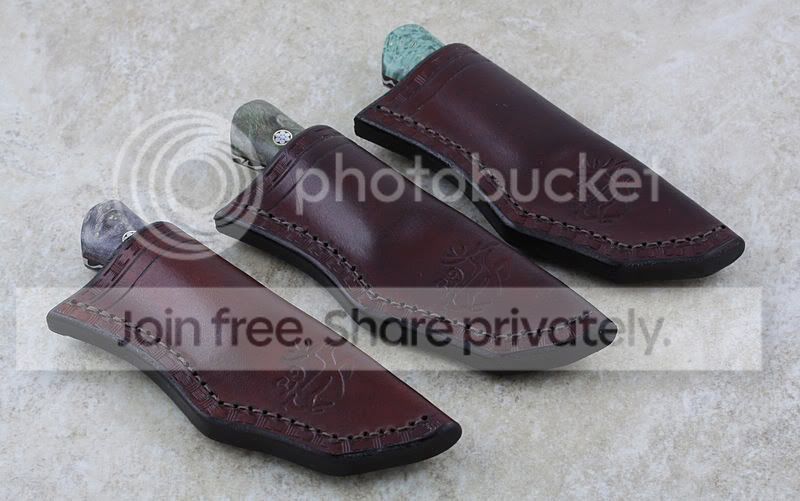
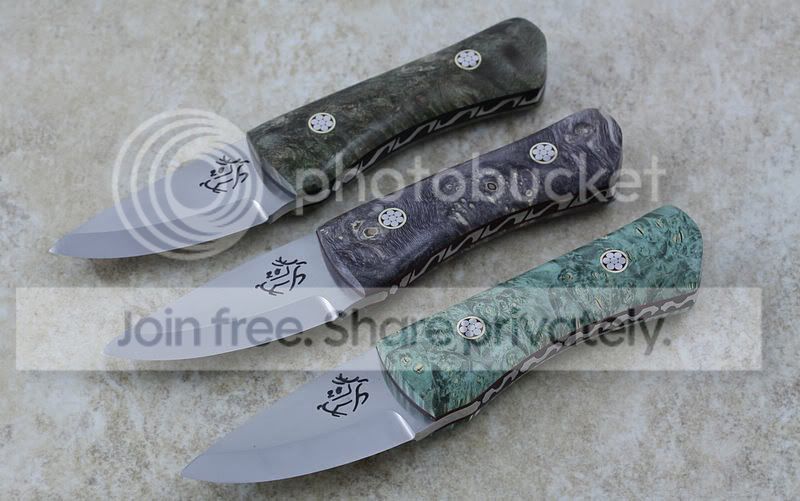
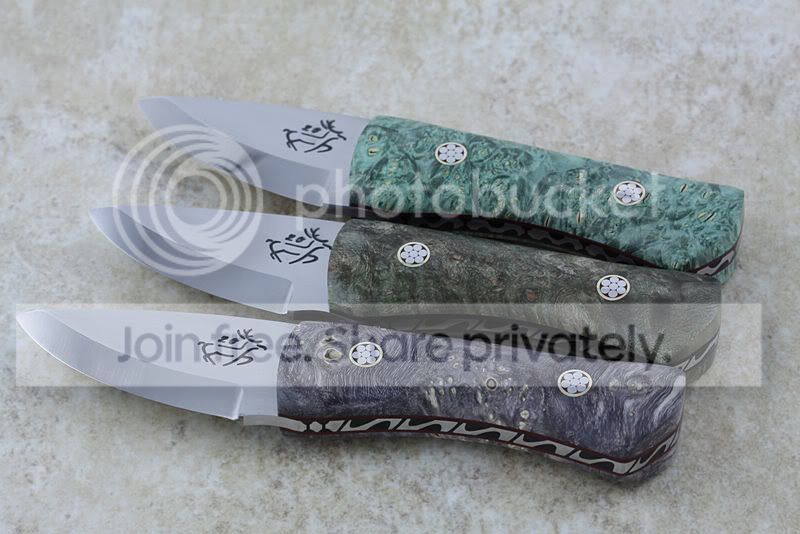
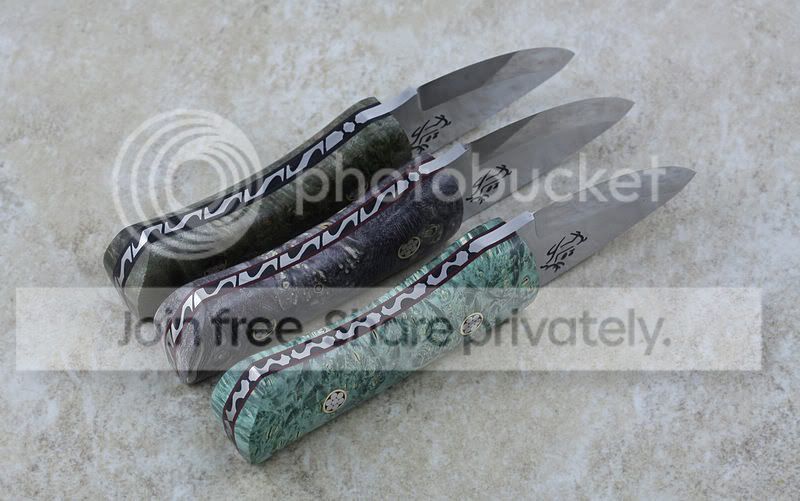
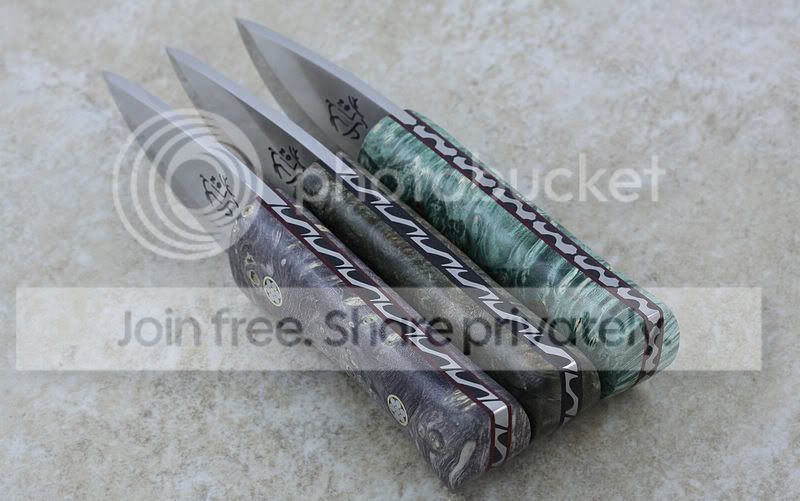
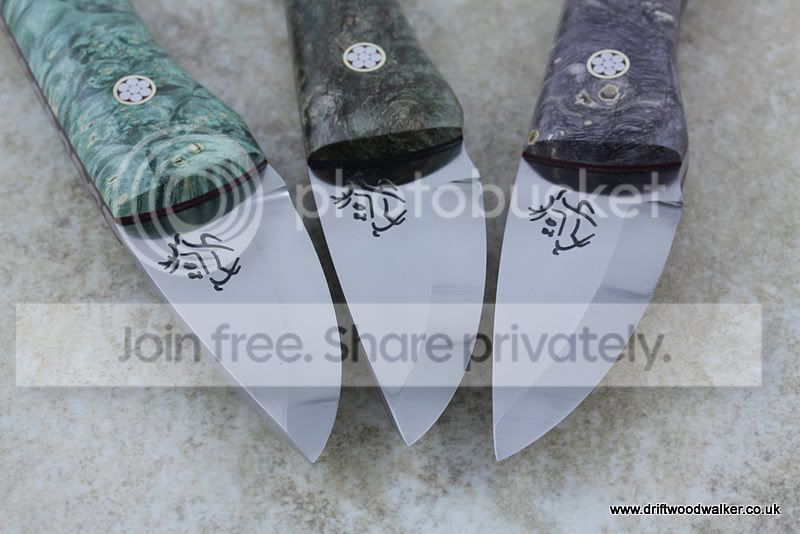
I've the table top kit..here are a couple of the shots i've taken recently..sorry about the subject matter...i make decorative knives..
All in all i really would recommend their stuff...
Hope i've been of help to you.
OP
=ReBeL=
Suspended / Banned
- Messages
- 1,095
- Name
- Adrian
- Edit My Images
- No
Thank you Lance, all help is much appreciated
I really hope that you don't mind. I love your pictures, but I thought that the Levels are a bit out, so I corrected them in PS


Say a word and I'll take those pictures down... I just could not stop my inner PS-geek :bonk:
I really hope that you don't mind. I love your pictures, but I thought that the Levels are a bit out, so I corrected them in PS
Say a word and I'll take those pictures down... I just could not stop my inner PS-geek :bonk:
Last edited:
Garry Edwards
Moderator
- Messages
- 13,475
- Name
- Garry Edwards
- Edit My Images
- No
With the greatest possible respect, those photos do not even begin to come close to showing the quality of your knives.
According to your website, the knives are all made from tool steel.
What the photos show indicates that some are made from soft alloy, some from stainless steel, and some from good quality tool steel.
Why?
It isn't to do with the levels, it isn't to do with the varying colour temperature of the various shots, it's to do with the fact that you used a light tent (on some of them) and that doesn't allow you to control reflections - it just kills them and turns an interesting, beautifully crafted product into something that looks bland and mass produced.
That's the difference between using a light tent for product photography and product photography.
According to your website, the knives are all made from tool steel.
What the photos show indicates that some are made from soft alloy, some from stainless steel, and some from good quality tool steel.
Why?
It isn't to do with the levels, it isn't to do with the varying colour temperature of the various shots, it's to do with the fact that you used a light tent (on some of them) and that doesn't allow you to control reflections - it just kills them and turns an interesting, beautifully crafted product into something that looks bland and mass produced.
That's the difference between using a light tent for product photography and product photography.

Not wishing to hijack the thread..in reply to the above..i do agree with you..
I am new to photography of any kind, let alone product photography..lol.
Photoshop is completely new to me..very confusing.
I've taken on board your comments and will only use them to try and improve but i think the light tent allows me to control the lighting when the natural light is naff..i fully understand that putting the tent on the garden table in the summer and taking pictures is much better than using tent lighting..
I've long way to go and thanks for your comments...
Good luck to the chap who started this thread, have fun as i do.
thankyou.
I am new to photography of any kind, let alone product photography..lol.
Photoshop is completely new to me..very confusing.
I've taken on board your comments and will only use them to try and improve but i think the light tent allows me to control the lighting when the natural light is naff..i fully understand that putting the tent on the garden table in the summer and taking pictures is much better than using tent lighting..
I've long way to go and thanks for your comments...
Good luck to the chap who started this thread, have fun as i do.
thankyou.
Garry Edwards
Moderator
- Messages
- 13,475
- Name
- Garry Edwards
- Edit My Images
- No
Lance,Not wishing to hijack the thread..in reply to the above..i do agree with you..
I am new to photography of any kind, let alone product photography..lol.
Photoshop is completely new to me..very confusing.
I've taken on board your comments and will only use them to try and improve but i think the light tent allows me to control the lighting when the natural light is naff..i fully understand that putting the tent on the garden table in the summer and taking pictures is much better than using tent lighting..
I've long way to go and thanks for your comments...
Good luck to the chap who started this thread, have fun as i do.
thankyou.
You're not hijacking the thread IMO, you're adding to it, because your photos illustrate exactly why several people have said that light tents can't do justice to most products, and why proper control of light is essential.
It isn't about the type of light that the light tent buggers up, even though any type of artificial continuous lighting available for home use does produce wildly different colours, it's about the fact that you're producing what I'm sure are excellent products but your light tent is making them look like something you'd buy from a £1 shop...i fully understand that putting the tent on the garden table in the summer and taking pictures is much better than using tent lighting..
You really do need to learn your way around Photoshop, it's an essential tool - but the function of PS is to turn excellent shots into outstanding ones, it can't turn a bad shot into a good one.Photoshop is completely new to me..very confusing.
Personally, I haven't photographed knives very often, they are a difficult subject for anyone, and a very specialised one. But having done it a few times, I am able to recognise the problems and overcome them. And the only way to overcome them is to totally control the light, which in your case involves creating controlled reflections on the shiny steel, and at the same time showing the texture of the handle, the stitching and decoration on the sheaf, and so on - and that can only be done if both the direction and the diffusion of the light can be controlled. All that a light tent does is to diffuse and mix up the light so that it's coming from all directions, with absolutely no control.
Now, this knife on your website interests me

but what is it?
It looks a bit like Damascus, but maybe it's just beautifully decorated, I really can't tell so I won't consider buying it - which is what this thread is all about.
OP
=ReBeL=
Suspended / Banned
- Messages
- 1,095
- Name
- Adrian
- Edit My Images
- No
Garry Edwards said:...which is what this thread is all about.
I can't see a problem with other people using this thread to ask questions about product photography. If it helps them, it also helps me
HoppyUK
Suspended / Banned
- Messages
- 23,200
- Name
- Richard
- Edit My Images
- No
Light tents are like an overast day - the light comes from everywhere, all over, totally even. Dead flat, with zero shadows. No chance of any variation at all. Good for some things, but not many.
You need highlights, specular reflections and shadows to show shape and texture. With different sizes and types of light source, the permutations are endless.
Having said that, as a very rough guide (or when all else fails) for many popular product shots the starting point is often a medium sized softbox, above the subject on a boom and slightly behind, pointing forward. This bounces specular reflections towards the camera, with a softish shadow for the subject to sit on. Take it from there.
You need highlights, specular reflections and shadows to show shape and texture. With different sizes and types of light source, the permutations are endless.
Having said that, as a very rough guide (or when all else fails
) for many popular product shots the starting point is often a medium sized softbox, above the subject on a boom and slightly behind, pointing forward. This bounces specular reflections towards the camera, with a softish shadow for the subject to sit on. Take it from there.squarepeas
Suspended / Banned
- Messages
- 857
- Edit My Images
- No
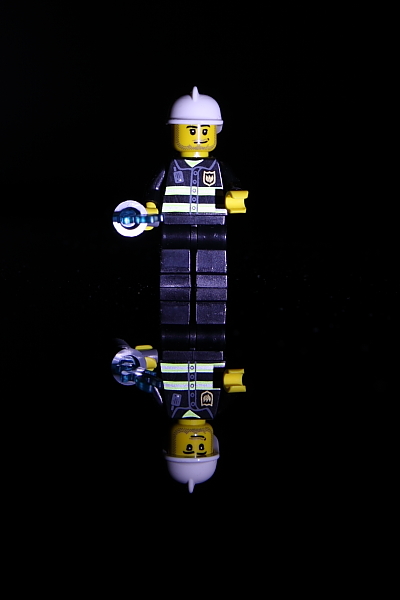
Done this with my boy for a project we are working on, using a £1 torch. I think those knives will look miles better lighting in a similar way
Last edited:
Garry Edwards
Moderator
- Messages
- 13,475
- Name
- Garry Edwards
- Edit My Images
- No
Now that the Lencarta website is up again (sort of) I can hotlink this photo
It shows a product shooting table with an overhead softbox supported by a boom arm.
There's no such animal as an 'ideal' lighting arrangement for anything, but that type of arrangement is basic for most product shots.
Want the sort of soft, shadowless lighting that light tents produce? Get the softbox really close and surround the subject with reflectors.
Want a bit of backlighting? Increase the tilt of the softbox.
Want a semi-reflection of the subject without messing around in PS? Get the camera a bit lower.
And so on
I can hotlink this photoIt shows a product shooting table with an overhead softbox supported by a boom arm.
There's no such animal as an 'ideal' lighting arrangement for anything, but that type of arrangement is basic for most product shots.
Want the sort of soft, shadowless lighting that light tents produce? Get the softbox really close and surround the subject with reflectors.
Want a bit of backlighting? Increase the tilt of the softbox.
Want a semi-reflection of the subject without messing around in PS? Get the camera a bit lower.
And so on