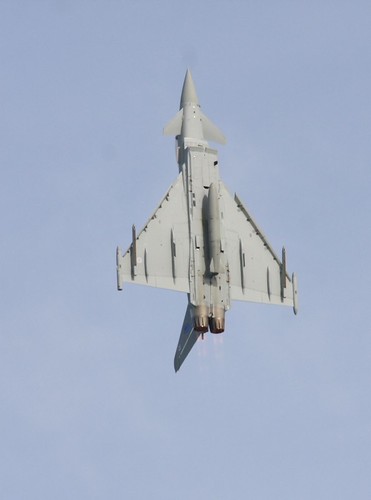
poor airshow pics

Flying giraffe

Suspended / Banned
Messages
1,189
Name
Neil
Edit My Images
No
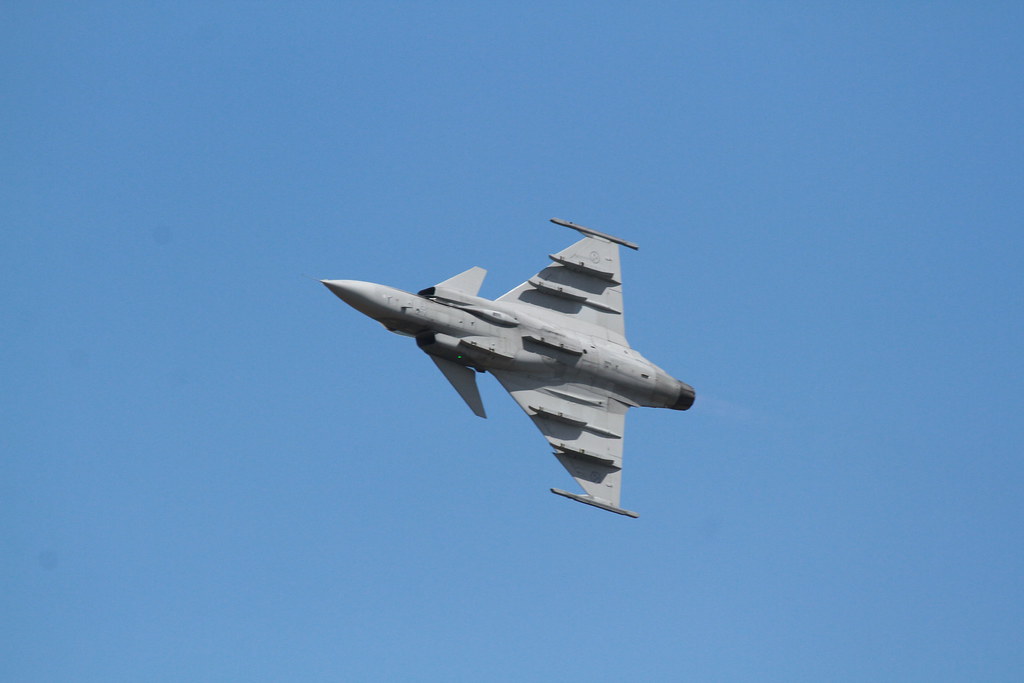
what if anything am i doing wrong, i know the weather was cloudy yesterday at riat, but i was shocked how alot of my shots where noisy and and very soft, i was using a 7d with a 100-400, was it me or was it the best i could expect with my equipment?, thanks in advance for any help?
most look like the pic below


IMG_1738 by flying giraffe, on Flickr
 
what settings where you useing???
 
Only thing I'd say is to do a bit of mask sharpening and run it through noise reduction in photoshop.
I'd hazard a guess at maybe when panning the plane you were very slightly slower or faster than the speed it was travelling at hence being a little soft
 
jets 1600/2000, 7.1 to 8 and auto iso, no sharpening as yet, i do have some really good ones so i think the conditions caused alot of it
i spent ages trying to get the dust off the sensor yesterday lol
 
Only thing I'd say is to do a bit of mask sharpening and run it through noise reduction in photoshop.
I'd hazard a guess at maybe when panning the plane you were very slightly slower or faster than the speed it was travelling at hence being a little soft

that sounds about right, thanks
 
Let us see the excif data and we might be able to see how you took the image
 
I would say just camera shake is possible, even at 1/2000 at 400*1.6mm
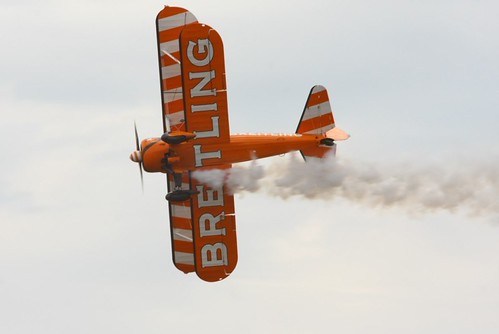
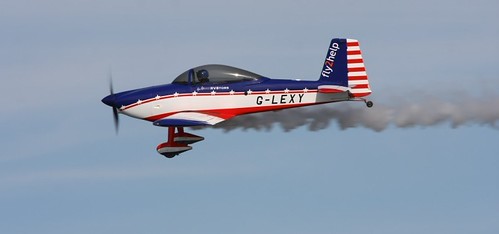
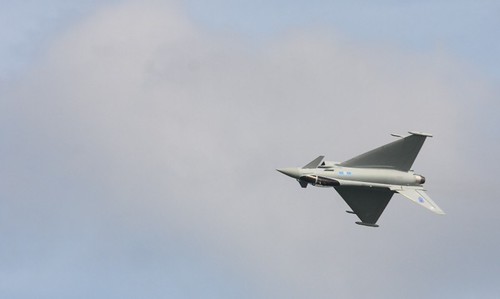
here are some I took with a 70-200 and a 2xTC, which is around the same focal length give or take,
I think that the slower planes are okay, but the fast jets are definitely weaker on mine too as you can see below.
Maybe because you're tracking so quickly that it's harder to hold the camera steady.

One thought....It would be interesting to see if IS was on setting2 which tries to limit horizontal and vertical motion at the same time.
For panning shots, which is effectively what you might be doing if you're tracking a jet, then it might be trying to stabilise which will make things worse!
For 1/2000, if you have a monopod, I'd turn IS off tbh
http://www.flickr.com/photos/dizmatt/sets/72157630851910188/

IMG_9084 by DizMatt, on Flickr

IMG_7930 by DizMatt, on Flickr

IMG_8081 by DizMatt, on Flickr

IMG_8205 by DizMatt, on Flickr
 
Last edited:
Looking at the full size image on Flickr it appears that there is some subject blur, where even at 1/2000 the panning motion has not matched the movement of the plane. This is evident from the front fin at the bottom of the image where you can see blurring fore and aft of the fin, but very little at the edge of the tip. I don't know whether you used IS or not, but for shutter speeds over 1/500 its value is highly questionable and it may even do more harm than good. If you had IS enabled that might also account for the fore-aft blur. Turn it off for jets at 1/800 and faster. For choppers and prop planes at 1/80-1/250 then by all means use IS in the appropriate mode.

This blurring makes it difficult to conclude what else might be wrong, but I suspect some misfocus too, or general lens softness. At f/8 lens IQ ought not to be a problem, so I think maybe there is an AF calibration problem over great distance OR perhaps there is a UV filter fitted. If you have a filter fitted then lose it. The 100-400 does not like them. Use it in extreme conditions for protection, but not on a lovely sunny day when the lens is safe from flying debris, salt spray etc..

Personally I'd have halved the shutter speed and ISO for lower noise and relied upon better panning skills and luck to net me a crisp image to begin with. If you have a sharp image to work with then dealing with noise becomes easier too. If you have to deal with a soft/blurry image and noise at the same time you're going to struggle. Firing in short bursts should improve your chances of a sharper shot within the burst, but luck improves the more you practice.

Final comment - it looks like this was shot at quite a distance and on a hot, dry day the atmosphere can heat up and become turbulent (think heat haze) and can be full of dust and pollen which degrades IQ. If you can pick your positioning or time your shots for when the plane is closer then results should improve. Not only that, but being bigger in the frame means less cropping and that will also improve matters in terms of noise, detail and sharpness.

 
The pics in your other thread are superb. Clearly both you and your gear are well up to the job. It makes me wonder why you started this thread at all. We all get duffers from time to time.
 
i was a little miffed sunday hence the thread, i do still have a lot to learn so just wanted some pointers, i was also surprised how much i could rescue some of my others too with a little sharpening etc
 
I reckon you should be giving out the advice. :D
 
Nothing much wrong with your pictures on the other thread. I always expect a fairly high bin rate and every time I go to an airshow my shots improve each time. Practice is the key and your panning skills improve with time. Mine have, plus I wouldn't bother with a monopod, they just get in the way and you can't keep up with fast jets if you use one.
 
thanks guys, ill remove the camera and lens from the classifieds lol, seriously i was doubting with all my failures, esp the copters and props, but as i go through there are some really good ones, all this means is ill have to do better next year
 
I still haven't mastered copters yet. I don't think I have ever taken a decent shot of one yet. Your gear is better than mine and looking at your shots posted, I would be very happy.

Mind you if there is a 7D and 100-400mm going cheap...
 
You should have the 500+ photos I took over the weekend........you really would have something to complain about :p :lol:

I think I'll manage to get about a dozen that aren't too bad. I was using a sigma 70-300, with no VR or whatever sigmas alternative is and a 55-200 VR on my D3100, all hand held

Reading some of the replies above though makes me think I too was struggling with panning the camera at the same speed as the aircraft :thinking: I also struggled with exposure because I wanted to shoot everything on manual

Btw some of the photos in your other threads from the RIAT are cracking :thumbs:, want to swap a few with me :whistling: :lol:
 
alot of mine is down to Photoshop tbh, soft otherwise, shooting in raw helps too, perhaps we need a riat convention next year, a few like minded people with knowledge to share etc?
 
Atmospherics can play a role as well.
Even a moderately warm day will create heat haze which can cause havoc when using longer focal lengths and there's nothing you can do about it.
 
You've also got dust on your sensor.

How can you tell?

You can see the dust spots.

On the first photo, there's one in front of the nose of the plane, about half way between the plane and the edge of the frame. Then there are two more, roughly evenly spaced, between that one and the lower left corner of the image.

Now you know what to look for, maybe you can see more of them?
 
Ahhh yes i see them. I was just looking mainly at the plane. Can also see one to the right of the right wing (lower wing) below the thruster.

Thanks for the reply
 
Back
Top