

Polarizing filters - not just for skies.

hollis_f

Suspended / Banned
Messages
3,696
Name
Frank
Edit My Images
Yes
I've seen several posts recently asking about CPLs - Circular Polarizers. These are the only filters that have an effect that is totally impossible to reproduce during post-processing and, therefore, really should be part of every photographer's kit.

There are thousands of examples that show the effect a CPL can have on the sky, but I've hardly seen any examples that show the other great use of a CPL - to cut out reflections. All examples show the results with a CPL attached - just rotated to different positions.

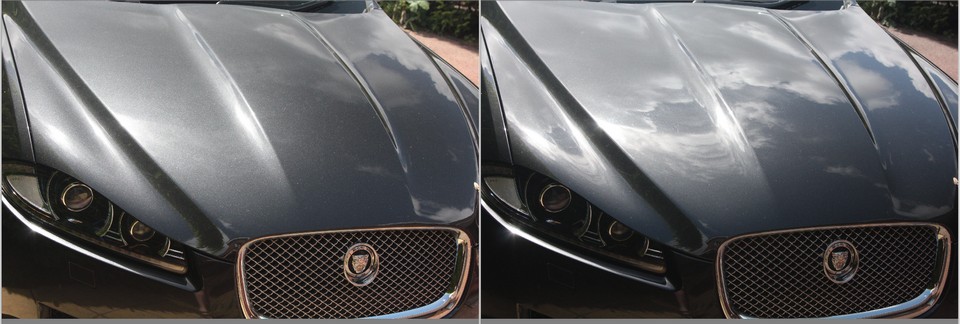
First example is a car - the CPL cuts out the reflection of the sky on most of the body. They're also great for enabling the camera see through windscreens.
CPL%20Car.jpg


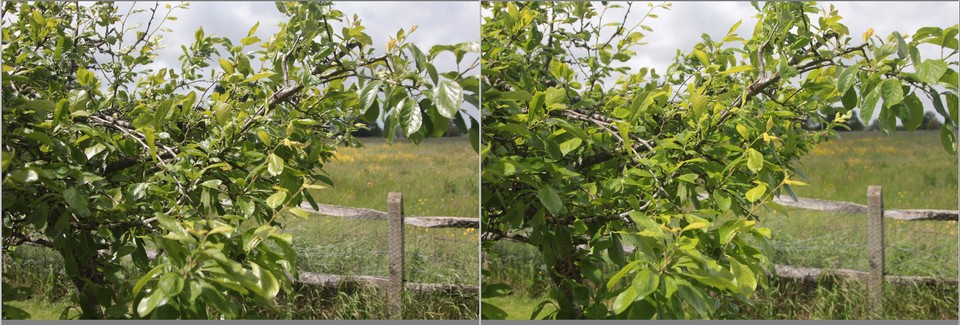
Next, a slightly more subtle effect with foliage. Some might prefer the 'shiny' look that you get with the reflections, but I prefer the 'clean' look without them.
CPL%20Leaves.jpg


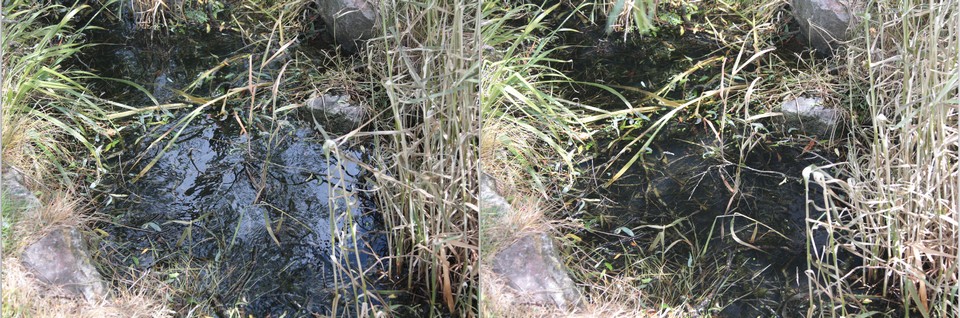
Finally, what can be the most dramatic effect - the removal of reflection on water. Unfortunately I've not got any nice examples of fish as out pond is a bit murky after the recent rains. But I reckon the pictures of our back-garden stream are good enough to show the potential.
CPL%20Water.jpg
 
Just remember it will not work on metallic objects, such as chrome, polished alloy etc.
 
Thanks good explanation
I've seen several posts recently asking about CPLs - Circular Polarizers. These are the only filters that have an effect that is totally impossible to reproduce during post-processing and, therefore, really should be part of every photographer's kit.

There are thousands of examples that show the effect a CPL can have on the sky, but I've hardly seen any examples that show the other great use of a CPL - to cut out reflections. All examples show the results with a CPL attached - just rotated to different positions.

First example is a car - the CPL cuts out the reflection of the sky on most of the body. They're also great for enabling the camera see through windscreens.

CPL%20Car.jpg


Next, a slightly more subtle effect with foliage. Some might prefer the 'shiny' look that you get with the reflections, but I prefer the 'clean' look without them.

CPL%20Leaves.jpg


Finally, what can be the most dramatic effect - the removal of reflection on water. Unfortunately I've not got any nice examples of fish as out pond is a bit murky after the recent rains. But I reckon the pictures of our back-garden stream are good enough to show the potential.

CPL%20Water.jpg
 
As Frank's car images show, a polariser helps cut some reflections but can't deal with any that are from the metallic flakes in the XF's paintjob (or any metallic paints). Hence the sharpish reflections of the sky in the polarised image.
 
I know you have already posted a foliage shot but the most dramatic change I have seen is when you see long green grass in bright sunlight. You think it is all green until you look carefully and you see that half of it looks white.

A polariser makes it all look green again.


Steve.
 
I know you have already posted a foliage shot but the most dramatic change I have seen is when you see long green grass in bright sunlight. You think it is all green until you look carefully and you see that half of it looks white.

A polariser makes it all look green again.


Steve.

Cool. I'd try that, but I think we've had our sunshine for the year in the UK.
 
Does anyone know why polarising filters for camera lenses have to be rotated to gain the maximum effect yet polarising eyewear does not?
 
Does anyone know why polarising filters for camera lenses have to be rotated to gain the maximum effect yet polarising eyewear does not?
They come pre-rotated so that it's at the correct angle (Brewster's Angle) to eliminate reflected glare from horizontal surfaces.
 
Does anyone know why polarising filters for camera lenses have to be rotated to gain the maximum effect yet polarising eyewear does not?

Next time you have polarised glasses on, look at a car window or reflections on water and tilt your head to side.

You might look a prat doing it, but you will see a the reflections fade the more you tilt your head.
 
They come pre-rotated so that it's at the correct angle (Brewster's Angle) to eliminate reflected glare from horizontal surfaces.

Brewster's Angle cannot be pre-set - it's the angle to the reflective surface (rule of thumb, approx 30-40 degrees) so varies with position.

Sunglasses are pre-set at the equivalent of the index mark on a filter at the top. Good for blue skies and for driving Brewster's Angle works well to remove glare from shiny/wet roads.

Next time you have polarised glasses on, look at a car window or reflections on water and tilt your head to side.

You might look a prat doing it, but you will see a the reflections fade the more you tilt your head.

Shiny car is just the job for checking Brewster's Angle, standing at 3/4 front view (no camera required). With the index mark around the top, reflections on the bonnet and roof will go, then rotate 90 degrees and they will vanish from the sides and return to the bonnet. Then walk up/down the car and the polarising effect will move down the side with you, always at that 30-40 degrees angle.
 
Last edited:
Is there a downside to having one on permanently? (assuming you're not trying to take shots of reflections!)
 
Is there a downside to having one on permanently? (assuming you're not trying to take shots of reflections!)

Yes, the most obvious downside is you'll lose 1.5-2 stops of light, plus all filters can degrade image quality in some situations.

However, my polariser is more on my more on the 17-40 super-wide than off it.
 
Shop windows... a great application.

There have been a few situations where I actually wanted to ensure I maximised the reflection and I think it helped. I was using film then so too mean to do a with and without to confirm it.
 
Great for killing reflections in lakes etc too when taking landscapes if you want to include detail from the lake/river bed...

The 2 stops light loss can also be an advantage, it might be all you need to blur that waterfall shot if you're not carrying an ND filter:thumbs:

Simon
 
So I have a quick question, I have a CPL and was wondering if there are different grades (shades) of them? I have just started to use them and was wondering what would be a good set to start out with if there was, same with the ND filters?? Thanks :)
 
So I have a quick question, I have a CPL and was wondering if there are different grades (shades) of them? I have just started to use them and was wondering what would be a good set to start out with if there was, same with the ND filters?? Thanks :)

Just the one type of polariser...the "effect" is changed by rotating the filter or changing your angle to the sun, strongest at 90degrees.


Simon
 
Back
Top