

Lunkwill Fouk
Suspended / Banned
- Messages
- 84
- Name
- Lunkwill
- Edit My Images
- No
I demand that my opinion may or may not be valid.
I believe that's my line.

I demand that my opinion may or may not be valid.

That should've been 'can be'.It all comes down to whether you accept that Photography is art.
You have a point!The results some call photography involve compositing multiple images (swapping skies, adding in a moon etc) even when I like these I feel they are graphic art rather than photography.
To clarify, works may have been produced under religious patronage, but great artwork transcends that patronage - the badge is not the content ...A couple of hundred years ago a painting had to be a religious work (as did most music).

You may call the last group Graphic art but that is not what FIAP, PSA, RPS, PAGB think and they represent millions of photographers around the world, But there is a specific distinction between photography and Graphic art. That is a photograph, even if it is a composite, all elements must be a photograph or part of one. Generally Graphic Art is computer originated images which may be drawn or automatically generated but are not base on photographs (though presumably could be). I do some infrared as well but because you can set the false colours as you wish to suit you they cannot be said to show what is there.Photography doesn't have to have any relation to what the eye sees.
I do a fair bit of infrared photography, shooting things that are there but in a way the eye can't detect, a similar field would be x-rays. In both cases the photographs are showing what is there just not being limited to what our feeble eye's can manage.
I have to agree that many over processed images look awful, and I'm sure many will find my false colour IR images hideous. My processing is nearly all using global controls, contrast, hue brightness etc. but I will also crop & clone out sensor muck.
The results some call photography involve compositing multiple images (swapping skies, adding in a moon etc) even when I like these I feel they are graphic art rather than photography.

You may call the last group Graphic art but that is not what FIAP, PSA, RPS, PAGB think and they represent millions of photographers around the world, But there is a specific distinction between photography and Graphic art. That is a photograph, even if it is a composite, all elements must be a photograph or part of one. Generally Graphic Art is computer originated images which may be drawn or automatically generated but are not base on photographs (though presumably could be). I do some infrared as well but because you can set the false colours as you wish to suit you they cannot be said to show what is there.
I know each generation has a right to question definitions etc. but this debate was done to death 20 years ago.
Dave
Nonsense - graphic art has been done from long before computers existed. Also it can use photographs and derivations thereof as it will, freely.Generally Graphic Art is computer originated images which may be drawn or automatically generated but are not base on photographs (though presumably could be).

Just like the definition of Macro was set over 50 years ago to be 1:1 & greater on the sensor, but has since been evolved to include 1:4 (by many lens manufacturers).You may call the last group Graphic art but that is not what FIAP, PSA, RPS, PAGB think and they represent millions of photographers around the world, But there is a specific distinction between photography and Graphic art. That is a photograph, even if it is a composite, all elements must be a photograph or part of one. Generally Graphic Art is computer originated images which may be drawn or automatically generated but are not base on photographs (though presumably could be). I do some infrared as well but because you can set the false colours as you wish to suit you they cannot be said to show what is there.
I know each generation has a right to question definitions etc. but this debate was done to death 20 years ago.
Dave

Slightly out of touch with the reality. Just because you can buy precooked Tesco edible package it doesn't make it nor degrade real cooked food. Your claim equates that all meals with same description as Tesco readies no longer may be appreciated as gourmet or whatever.You might believe this debate was done to death 20 years ago but I disagree. Never has it been easier to replace skies (for example) than it is now. The unique selling point now of some software is how easy it is to do it. You can go on the internet and buy "331 skies for just £2.99" or whatever the current offer is. I can't say how objectionable I find this sort of thing. Many younger photographers growing up in the digital age will assume that it has always been this way, when it clearly hasn't. I would argue that it is a good idea to educate these people into trying to find their own landscapes and gain the satisfaction that us old fogeys have always done when we get it right.
As for what to call these composites......definitely not photographs, nor "art" when you consider that most of the work has been done by software designers. But as you suggest graphic art doesn't really cover them either. I honestly believe it would be useful to find a term to describe them and make sure it gets out there into general circulation.
This in fact couldn't be further away from history. Perhaps you meant 600-700 years ago and Renaissance?A couple of hundred years ago a painting had to be a religious work (as did most music). Fortunately, some artists broke away and impressionism became popular.

Which it demonstrably has.
I find that extremely curious, Toni, and wonder if you might elaborate on the psychology involved
So the emotion attendant on the roses images was invested in them by you, and involves personal associations. That's understandable, & sounds quite involving. But surely an image can equally have inherent qualities that can be read emotionally by someone who wasn't in on its making - generated by its framing, tonalities, subject matter etc that make it a message from its maker able to be freely interpreted by others.I'm not sure I have sufficient understanding to explain well.
A couple of years back I took pictures of some roses that had gone over. They reminded me of my mother's skin, both the silky texture of the petals and the way something of beauty had aged, decayed and become ready to be discarded. The pictures weren't especially great, but I had put a lot of my feelings and emotions into them and might still feel a little of that reviewing today. But others pictures - they just show the thing they wanted them to (or not if they're poor pics).
So the emotion attendant on the roses images was invested in them by you, and involves personal associations. That's understandable, & sounds quite involving. But surely an image can equally have inherent qualities that can be read emotionally by someone who wasn't in on its making - generated by its framing, tonalities, subject matter etc that make it a message from its maker able to be freely interpreted by others.

True. Under processed photo look just as awful.I have to agree that many over processed images look awful

How do you know when an image hasn't been post-processed? Done well you can't tell so there in lies the real skill in using Photoshop or Lightroom.I love viewing pictures especially those that exhibit the skill of the photographer as opposed the the skill of using Photoshop or lightroom!
Replacing sky using LR/PS is not something I would do because all images must be your own work for international competitions. Ok you can replace a sky with one of your own but not a sky by someone else. I tried replacing skies 15 years ago but it is never very satisfactory because it may not then match the rest of the scene. Most my composites are surreal images and not pretending to be straight captures. Whether or not you agree, these composites are accepted as photographs throughout the world.You might believe this debate was done to death 20 years ago but I disagree. Never has it been easier to replace skies (for example) than it is now. The unique selling point now of some software is how easy it is to do it. You can go on the internet and buy "331 skies for just £2.99" or whatever the current offer is. I can't say how objectionable I find this sort of thing. Many younger photographers growing up in the digital age will assume that it has always been this way, when it clearly hasn't. I would argue that it is a good idea to educate these people into trying to find their own landscapes and gain the satisfaction that us old fogeys have always done when we get it right.
As for what to call these composites......definitely not photographs, nor "art" when you consider that most of the work has been done by software designers. But as you suggest graphic art doesn't really cover them either. I honestly believe it would be useful to find a term to describe them and make sure it gets out there into general circulation.
How do you know when an image hasn't been post-processed? Done well you can't tell so there in lies the real skill in using Photoshop or Lightroom.
In fact I would go so far as to say that pretty much every really good photograph must have been post processed in some way and the more skilful the photographer the less likely you are to notice. Anyone can point and shoot...
Friday night, a few sherbets in caveat but ...Either the photographer has processed it or the software inside the camera has done it for them........



A camera is a multifunctional tool and as such can be used for different purposes leading to different outcomes,. A medical x-ray or a journalistic photo is mostly not art. Much of what is going on in the art world is about marketing so getting something classified as art gains access to a market in which photos may be sold.The answer may be that all Photography should be classed as a subset of Art like Drama.
Or perhaps we need to get away from the Human need/requirement that things have to put into one category or another, that is just a hangup that we have adopted from the ancient Greeks. An image just is.
Whether or not you agree, these composites are accepted as photographs throughout the world.

... presumably with authenticity verification by some fact checker organisation. Login to ap or Reuters fake news if that's what you like
Obviously you cannot enter a creative composite in Landscape or Wildlife but nor could you with the major international Salons but many have a creative section to encourage such entries. I thought one of the most prestigious UK competitions is Masters of Print and the rule is as I suggested above; as long as it is all your own work and based on photographic images.Except the prestigious competitions that I'm aware of........... eg LPOTY, WPOTY, BWPA.....
Obviously you cannot enter a creative composite in Landscape or Wildlife but nor could you with the major international Salons but many have a creative section to encourage such entries. I thought one of the most prestigious UK competitions is Masters of Print and the rule is as I suggested above; as long as it is all your own work and based on photographic images.
Dave
A line from a radio play I heard many decades ago: "You can sell anything if you lie with a straight face". I long ago forgot the title of the play but that line stuck.Much of what is going on in the art world is about marketing

And if you repeat the lie often enough......A line from a radio play I heard many decades ago: "You can sell anything if you lie with a straight face". I long ago forgot the title of the play but that line stuck.
As a member of a team that runs an international Salon, I can state that your information above is a little misleading. It is only for sections such as Natural History or photo journalism where it is made clear that almost no editing is allowed and no cloning or composites. For these we can demand to see Raw files or multiple JPEG files to check for cheating. As I stated previously obvious surreal composites are not masquerading as straight shots (and normally entered in the Creative section) so these disqualifications are usually due to cloning when not allowed. Even then the rules are gradually being relaxed in that for Nature, they will now allow a little cloning providing it does not distort the truth. So you could remove an extraneous leaf at the edge of an image but must not clone out scientific band or radio collar.I'm not a great one for competitions myself, although I have entered a few and been "highly commended " three times..... (Just blowing my own trumpet there......). I believe potential winners are asked to supply a RAW file to prevent composites from being selected by mistake. Some winners have been controversially disqualified when it was discovered too late that they have entered a composite. I believe that some of these major competitions employ a judge specifically to look for evidence of such misdemeanors.
I don't have a problem with competitions having a separate section for composites or otherwise drastically manipulated images. I just feel that the essence of photography is responding to the moment in a visual sense. I do find it ironic that the genre of photography that is most prone to the use of composites and other technological fixes etc (landscape) is the one I've spent most of my life engaged in!

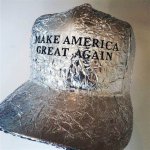
Your hat has just been returned from being steamed sir, i'll leave it in the cloakroom....
View attachment 336085
As the target of his so-called "valid point of view" I found it insulting and incoherent.
Then reply with decency.
I believe 'Roberts' to be operated by a member of the TP team, since having an alias is against the rules for ordinary members.
Imitation Imaging.As for what to call these composites......definitely not photographs, nor "art" when you consider that most of the work has been done by software designers. But as you suggest graphic art doesn't really cover them either. I honestly believe it would be useful to find a term to describe them and make sure it gets out there into general circulation.
It seems that some of you do not like composites which is fine but are you also wishing to ban them? You can say they are not photographs or art often as you like but all of the major international Amateur Photographic organisations do not agree with you. So I guess you are now resorting to insults. I am also considering dumping this forum as it is far less friendly and tolerant than it used to be.
Dave

Nothing wrong with composites to me. Compositing is one of main methods for night sky landscapes - eg tracked sky, static ground. Like any method can be overused to different tastes.It seems that some of you do not like composites which is fine but are you also wishing to ban them? You can say they are not photographs or art often as you like but all of the major international Amateur Photographic organisations do not agree with you. So I guess you are now resorting to insults. I am also considering dumping this forum as it is far less friendly and tolerant than it used to be.
Dave
I think you must have been reading a different thread to me, Dave.It seems that some of you do not like composites which is fine but are you also wishing to ban them? You can say they are not photographs or art often as you like but all of the major international Amateur Photographic organisations do not agree with you. So I guess you are now resorting to insults. I am also considering dumping this forum as it is far less friendly and tolerant than it used to be.
Dave

I believe 'Roberts' to be operated by a member of the TP team, since having an alias is against the rules for ordinary members.

We have discussed replacing skies before and you know I'm indifferent to people replacing them, if that's what they want to do. But I don't follow the broader point about composites where you suggest the software designers are doing most of the work,As for what to call these composites......definitely not photographs, nor "art" when you consider that most of the work has been done by software designers. But as you suggest graphic art doesn't really cover them either. I honestly believe it would be useful to find a term to describe them and make sure it gets out there into general circulation.
