Olympus OM-D E-M5, E-M1, E-M10 - Mk1, Mk2 & Mk3 Owners Thread

In contrast to this, I've seen little "personal" evidence of M43 being all that popular for birding (even though I've posted several links in this thread to people who have switched)

My experience is from going to RSPB Ham Wall two to five times a month since Spring 2018, and I very rarely see anything other than Canon/Nikon DSLRs.

I think I've seen Olympus half a dozen times (with 300mm f4), Panasonic G9 (with 100-300) twice and a Panasonic a7/a9 with a "long lens" twice. I've been "looking out" for people using Olympus as I have an interest in switching. Or expanding, as I already have an EM5-II.

I see at least two Nikon/Canon DSLRs, with the usual Tamron/Sigma 150-600 zooms, Nikon 200-500, canon 100-400 or a "big" prime every time I go. There are sometimes up to a dozen people wandering around with long lenses

I was out looking for Crossbills on Monday afternoon this week (not at Ham Wall) and there were four of us in the wood (not as a group, just by coincidence) and everyone was using a DSLR.

I'm not disputing your experiences of course, just adding some experiences from a different place.

.... Hi Graham. I go to Ham Wall occasionally but not yet since owning my Olympus M1X. Being retired I go there at any time when I think the light is good enough - I am about 50 miles away but love driving. It would be nice to meet you - PM to discuss possibly meeting?
 
Ah well I can only post things that I see .. I’m out virtually daily and know a hell of a lot of people .. even Andy rouse has switched to Olympus of his own volition and he buys his own gear . ..

Personally I can’t fault the system but in reality the best “birding “ cameras in the system are the e.mix,omd1-mkii and Panasonic g9 .. and once the new 150-400 with inbuilt 1.4 tc comes out I predict a lot more peeps will change .

And looking at it logically my omd1-mkii with 100-400 lens weighs less than 1.5kg and gives a 800mm full frame reach and shoots at up to 15fps with deadly accuracy usually hand held FREEDOM
 
IIRC, he even posted some super images from the humble Panasonic GX8 before that (unless I've got things mixed up ?)

Not forgetting the G9 that came after the GX8, so thats 5 cameras in just over a year. :D He's having fun though by the looks of it.
 
I could be up the creek well and truly. I own Olly and Nikon and both have rumours about failing camera businesses and going down the pan :(

As a Pentax user (as well as Nikon) I have had to live with such rumours for the past 11 years (infact when I bought my first Pentax body I found this forum and proudly announced my purchase to be told I had wasted my money as the brand would be dead within 12 months). I really wondered what I had done but 8 new bodies later and numerous quality lenses I still see the same things almost daily on forums and now couldn't give a jot what anyone else thinks as I just carry on enjoying my hobby.
 
Just bought another lens to add to my ever growing collection a samyang 100mm f2.8 macro in MFT fit .. that hopefully should give a nice distance for macro work come the spring , manual focus only so going to have to learn that aspect of the system . Don’t think I will be out much this week as the weather is crap so time to research it’s use
 
Just bought another lens to add to my ever growing collection a samyang 100mm f2.8 macro in MFT fit .. that hopefully should give a nice distance for macro work come the spring , manual focus only so going to have to learn that aspect of the system . Don’t think I will be out much this week as the weather is crap so time to research it’s use

.... I have always found that manual focus is more reliable than autofocus when shooting macro and particularly when you activate visible focus peaking. What you do need though is image stabilisation.
 
Just bought another lens to add to my ever growing collection a samyang 100mm f2.8 macro in MFT fit .. that hopefully should give a nice distance for macro work come the spring , manual focus only so going to have to learn that aspect of the system . Don’t think I will be out much this week as the weather is crap so time to research it’s use
Tbh the Oly 60mm macro is the to go lens, especially as it is compatable with the in camera focus stacking and merging.
 
.... I have always found that manual focus is more reliable than autofocus when shooting macro and particularly when you activate visible focus peaking. What you do need though is image stabilisation.
I would think that ibis will still be engaged robin it’s only the focus that’s manual ...
 
Tbh the Oly 60mm macro is the to go lens, especially as it is compatable with the in camera focus stacking and merging.
Had one in the past Pete and tbh I wasn’t that impressed with it .. Time will tell
 
I would think that ibis will still be engaged robin it’s only the focus that’s manual ...

.... The other day (I have spent 6 full days out shooting this month so far) I accidentally switched off the IS on my ED 300mm PRO (with 1.4x mounted) and then also learnt that either or both IBIS and IS are only activated when the shutter button is half pressed, which is a very good thing because it saves battery.

On the M1X, and I would expect also on the M1 II, in Menu > Cog < C2 tab you can set the IBIS to prioritise either the IS or the fps. Given that the fps is so fast anyway I have set it to prioritise IS, at least for now.

At first I thought the shutter button was far too sensitive but now I am used to it I love it!
 
Ah well I can only post things that I see .. I’m out virtually daily and know a hell of a lot of people .. even Andy rouse has switched to Olympus of his own volition and he buys his own gear . ..

Yes, of course and it sounds as if you may well be seeing more people than I am. Andy Rouse was included in the list I posted earlier of people who had switched.
 
Tbh the Oly 60mm macro is the to go lens, especially as it is compatable with the in camera focus stacking and merging.
Had one in the past Pete and tbh I wasn’t that impressed with it .. Time will tell

.... What didn't impress you about the Oly 60mm Macro please Jeff? I don't know how much macro work you have done but it's always much trickier unless the subject is inanimate in a studio on a tripod.

I had missed that in-camera focus stacking & merging is an option < That's potentially very useful indeed. This isn't helping me to hang onto my Canon EOS-R full-frame + 100mm Macro !!
 
Definitely Canon and Nikon are by far the most popular I see for nature and sports, and DSLRs at that yet some would have you believe DSLRs are dead ;)

I suspect this because both these systems are so well established in these areas, photographers being used to using what they have, and the vast amounts of money invested in long primes, which until recently, mirrorless in general, couldn't compete against. And if you can cope with the size and weight, a 600mm f4 on a D5 still gives you more iso flexibility than a 300mm f4 on an EM1x.

It's only recently that mirrorless cameras have crept into the publications from big wildlife competitions, but it seems reasonable to assume this will change. I've noticed in some of the wildlife based blogs/Vlogs that I follow Nikon Z7s/Z6s are being used a fair amount, even though they were originally bought for "video" to supplement existing D5s, D850s.
 
.... On the M1X, and I would expect also on the M1 II, in Menu > Cog < C2 tab you can set the IBIS to prioritise either the IS or the fps. Given that the fps is so fast anyway I have set it to prioritise IS, at least for now.

.... There are a number of different settings options under Menu > Cog > C2 tab which are potentially an advantage to set. So RTFM!! :D

I have now reset most of mine which by default were set to Off.
 
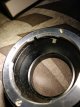
Bit of a warning for others, just had a lens mount adapter arrive today from Gobe. Wanted to play with a manual OM lens on my OMD, but they package it in a cotton bag! Sending it back for a refund as covered in lint. (Sorry for the quick poor quality mobile phone photo) Won't buy from them again.IMG_20191121_093451.jpg
 
I suspect this because both these systems are so well established in these areas, photographers being used to using what they have, and the vast amounts of money invested in long primes, which until recently, mirrorless in general, couldn't compete against. And if you can cope with the size and weight, a 600mm f4 on a D5 still gives you more iso flexibility than a 300mm f4 on an EM1x.

It's only recently that mirrorless cameras have crept into the publications from big wildlife competitions, but it seems reasonable to assume this will change. I've noticed in some of the wildlife based blogs/Vlogs that I follow Nikon Z7s/Z6s are being used a fair amount, even though they were originally bought for "video" to supplement existing D5s, D850s.

.... I agree and am definitely finding that there is less ISO flexibility of low noise choices on my M1X than on my Canon 1DX-2 and other Canon D-SLR bodies I have had. I think it's the full-frame size of the sensor which offers an ISO advantage and this also applies to my Canon FF EOS-R. Both Canon bodies regularly mounted on an EF 500mm F/4L II, now sold even before I had advertised it - Phew! In fact the sale of just my big 500mm lens has totally paid for my M1X plus 2 ED PRO lenses plus MC-14 Teleconverter.

However, my workaround for such m4/3 ISO limitations is to apply Topaz intelligent noise-reduction in post-processing. I exclusively shoot RAW anyway and so this is easy-peasy. I am not inclined to try any in-camera noise reduction because doing it in post, or choosing not to, offers far more control.
 
Last edited:
Just been reading elsewhere about a field test with photos between a 300mm f4 ,a 75-300,and a 50-200swd all Olympus lenses and although looking at the results the 300 f4 came out on top ,tbh looking at the photos there was very little between any of them ,slight differences in colour rendition and Bokeh .. the main conclusion being that shooting distance to target is the prime concern ... something that I totally agree with .. as quite often I take shots that in reality should never have been taken then try to pull them back with pp
 
However, my workaround for such m4/3 ISO limitations is to apply Topaz intelligent noise-reduction in post-processing.

I don't think my old Mac can run the new Topaz AI software (even though I have free upgrades to them, through owning previous Topaz software). I should really give it a go and see.

As a previous enthusiast of Nikon1s ( the most underrated cameras ever made), I have spent a lot of time with noise reduction software and still follow reviews on them and occasionally test them. DXO Prime is generally considered the best NR choice, even compared to the Topaz AI stuff, its the go-to for Tom Stirr and Dan Cox. I, however, struggled with it, for although it gave great results, it also seemed to add weird artefacts.

The big issue I had with the Nikon 1, and to a lesser extent with my Panasonic GX7 and now my Oly EM5 II is Dynamic range and optimal exposure.

Underexposing with the smaller sensors all too easily lifts the noise, and if I use full ETTR it's easy to underexpose the shadows and even mid-tones. It's much easier to get away with less than optimal exposure on My Nikons or Fuji.

But its all a case of balancing the pros and cons of each system/format and from all accounts the m1-II and M1x sensors (and now EM5-III) are a worthwhile step up from my GX7/EM5-II . sensors.

Edit: I realise my ETTR comment doesn't make sense, what I really meant was that if you avoid clipping highlights then its easy to underexpose the rest of the image
 
Last edited:
Bit of a warning for others, just had a lens mount adapter arrive today from Gobe. Wanted to play with a manual OM lens on my OMD, but they package it in a cotton bag! Sending it back for a refund as covered in lint. (Sorry for the quick poor quality mobile phone photo) Won't buy from them again.View attachment 260908
Wow that’s really bad .
 
My first birds-in-flight shot on my M1X was in fact rather a lot of birds photographed in flight! It was a very grey cloudy day and almost colourless.

A flock of Godwits with a few of the much smaller Dunlin amongst them.

Info on Flickr.

GODWITS SPOOKED INTO TAKEOFF by Robin Procter, on Flickr
 
I suspect this because both these systems are so well established in these areas, photographers being used to using what they have, and the vast amounts of money invested in long primes, which until recently, mirrorless in general, couldn't compete against. And if you can cope with the size and weight, a 600mm f4 on a D5 still gives you more iso flexibility than a 300mm f4 on an EM1x.

It's only recently that mirrorless cameras have crept into the publications from big wildlife competitions, but it seems reasonable to assume this will change. I've noticed in some of the wildlife based blogs/Vlogs that I follow Nikon Z7s/Z6s are being used a fair amount, even though they were originally bought for "video" to supplement existing D5s, D850s.
Yep Canikon are so well ingrained into ‘society’, especially Canon. I deal a lot with Joe Public on a day to day basis and quite often talk about photography, also some even ask me for advice. The usual question I get is “should I get Canon or Nikon”, or “which Canon should I get as they’re the best aren’t they?” Also another common response I get when mentioning Olympus is “oh do they still make cameras, I thought they stopped years ago”. Similarly with Sony people don’t see them as a serious camera maker, and again assume if you want a “proper” camera you need to buy Canikon.

Another thing I notice is that people buy mirrorless thinking they’ve bought a DSLR and have no idea of the difference. At the end of the day none of this really matters, as long as the user is happy that’s all that counts. It’s just interesting how we as photographers see things compared to Joe Public who just wants a camera.
 
I suspect this because both these systems are so well established in these areas, photographers being used to using what they have, and the vast amounts of money invested in long primes, which until recently, mirrorless in general, couldn't compete against. And if you can cope with the size and weight, a 600mm f4 on a D5 still gives you more iso flexibility than a 300mm f4 on an EM1x.

It's only recently that mirrorless cameras have crept into the publications from big wildlife competitions, but it seems reasonable to assume this will change. I've noticed in some of the wildlife based blogs/Vlogs that I follow Nikon Z7s/Z6s are being used a fair amount, even though they were originally bought for "video" to supplement existing D5s, D850s.
Yep Canikon are so well ingrained into ‘society’, especially Canon. I deal a lot with Joe Public on a day to day basis and quite often talk about photography, also some even ask me for advice. The usual question I get is “should I get Canon or Nikon”, or “which Canon should I get as they’re the best aren’t they?” Also another common response I get when mentioning Olympus is “oh do they still make cameras, I thought they stopped years ago”. Similarly with Sony people don’t see them as a serious camera maker, and again assume if you want a “proper” camera you need to buy Canikon.

Another thing I notice is that people buy mirrorless thinking they’ve bought a DSLR and have no idea of the difference. At the end of the day none of this really matters, as long as the user is happy that’s all that counts. It’s just interesting how we as photographers see things compared to Joe Public who just wants a camera.
 
I don't think my old Mac can run the new Topaz AI software (even though I have free upgrades to them, through owning previous Topaz software). I should really give it a go and see.

.... This may help re system requirements : https://help.topazlabs.com/hc/en-us/articles/360031217791

I run Topaz Denoise AI as a CS6 plugin filter and on macOS 10.14.6. I am currently trialling it but have now decided it is definitely worth buying as it really helps many of my M1X images.
 
Last edited:
Another thing I notice is that people buy mirrorless thinking they’ve bought a DSLR and have no idea of the difference. At the end of the day none of this really matters, as long as the user is happy that’s all that counts. It’s just interesting how we as photographers see things compared to Joe Public who just wants a camera.

Agreed, and not all photographers see things the same way either.
 
I don't think my old Mac can run the new Topaz AI software (even though I have free upgrades to them, through owning previous Topaz software). I should really give it a go and see.

As a previous enthusiast of Nikon1s ( the most underrated cameras ever made), I have spent a lot of time with noise reduction software and still follow reviews on them and occasionally test them. DXO Prime is generally considered the best NR choice, even compared to the Topaz AI stuff, its the go-to for Tom Stirr and Dan Cox. I, however, struggled with it, for although it gave great results, it also seemed to add weird artefacts.

The big issue I had with the Nikon 1, and to a lesser extent with my Panasonic GX7 and now my Oly EM5 II is Dynamic range and optimal exposure.

Underexposing with the smaller sensors all too easily lifts the noise, and if I use full ETTR it's easy to underexpose the shadows and even mid-tones. It's much easier to get away with less than optimal exposure on My Nikons or Fuji.

But its all a case of balancing the pros and cons of each system/format and from all accounts the m1-II and M1x sensors (and now EM5-III) are a worthwhile step up from my GX7/EM5-II . sensors.

Edit: I realise my ETTR comment doesn't make sense, what I really meant was that if you avoid clipping highlights then its easy to underexpose the rest of the image


I use imageonic as a N/R photoshop plug in I find it works well in my p/p regime .. but each to there own . but yes noise can be a problem with these smaller sensors and I have been playing around with a touch or ETTR it does improve things to a degree but I only go a third or at most two thirds of a stop up unless the bird is in a clear blue sky . it does bring it down a fair bit though at the cost of shutter speed .

I also tend to shoot in a/v mode and wonder if switching manual mode might help .

another thing to be looked at is whether spot metering would make any difference ,just need to remember to try these different approaches out ... its still a learning curve to try and get the best from this gear
 
I use imageonic as a N/R photoshop plug in I find it works well in my p/p regime .. but each to there own . but yes noise can be a problem with these smaller sensors and I have been playing around with a touch or ETTR it does improve things to a degree but I only go a third or at most two thirds of a stop up unless the bird is in a clear blue sky . it does bring it down a fair bit though at the cost of shutter speed .

I also tend to shoot in a/v mode and wonder if switching manual mode might help .

another thing to be looked at is whether spot metering would make any difference ,just need to remember to try these different approaches out ... its still a learning curve to try and get the best from this gear

.... I have been using Imageonic as a N/R Photoshop plugin too, probably because you recommended it to me a long time ago when you taught me the basics of post-processing.

I find that Topaz Denoise AI is smarter in how it reads an image but that Imageonic has more settings (which I keep simple). For the Oly images I prefer Topaz as it looks more natural and I hate that unnatural waxy plumage look which overdoing N/R does.

I shoot full Manual-mode and it's easier with the advantage of seeing the histogram in the viewfinder < Set it to display at the bottom and not masking the image.

Changing settings on the fly via the buttons on the M1X is far easier and more intuitive than on Canon's flagship 1DX-2 < Go figure!! Canon ergonomics are good but Olympus M1X are better!

:canon: < I still do, but now :olympus: more!
 
Last edited:
I use imageonic as a N/R photoshop plug in I find it works well in my p/p regime .. but each to there own .

I also use Imagenomic Noiseware, or Neat Image as PS plugins.

And like you, still learning about managing exposure with birds, but in my case with a D500 so no histogram in the viewfinder, which makes it that much more difficult to see what is happening.

My less than perfect approach is matrix metering and manual exposure with auto ISO, and a lot exposure compensation control, which is a bit of pain as you need to hold down the exposure compensation button while adjusting the dial. The Nikon seems to underexpose so I find myself with +2/3 stop added a lot of the time, but also have a function key set up for the Nikon highlight weighted metering option which seems to work well when things like egrets suddenly take off from the shadows into bright sunlight.

On flat days, I can easily add 3 stops exposure compensation without blowing any highlights.

But still very much learning.
 
one from Monday . it looks like its missed focus slightly and gone for the red berry but still acceptable
peep o&#x27; by jeff and jan cohen, on Flickr
 
I think I have made my mind up and probably out of the frying pan into the fire so to speak, I didn't want to have lots of cash in camera gear again but its looking like a EM M1 II
Question, are the two mode dials on the top for shutter speed and aperture
 
Last edited:
If you mean the front and rear dials ,in a.v mode rear for aperture front for compensation
 
I think I have made my mind up and probably out of the frying pan into the fire so to speak, I didn't want to have lots of cash in camera gear again but its looking like a EM M1 II
Question, are the two mode dials on the top for shutter speed and aperture

You can set them up to suit your own preference.
 
I think I have made my mind up and probably out of the frying pan into the fire so to speak, I didn't want to have lots of cash in camera gear again but its looking like a EM M1 II
Question, are the two mode dials on the top for shutter speed and aperture
As above you can set them how you want. By default in Aperture and Shutter priority the rear dial controls aperture/shutter respectively and the front exp comp. In manual shutter is controlled by the rear and aperture the front.
 
E-M1 or E-M1 II would I really notice the difference, I don't print so the 4mp isn't a worry, the price is quite different though
 
E-M1 or E-M1 II would I really notice the difference, I don't print so the 4mp isn't a worry, the price is quite different though

If you're going to photograph moving subjects you will definitely notice the difference when you use CAF.

If you only use SAF the difference is not as outspoken; the E-M1II also has better dynamic range and (to my eye) nicer colours.

Having said all this I was pretty happy with my E-M1; I only upgraded because of the much better CAF on the E-M1II
 
E-M1 or E-M1 II would I really notice the difference, I don't print so the 4mp isn't a worry, the price is quite different though
In terms of continuous autofocus and tracking there’s no comparison, in terms of the final image there’s little in it, although the EM1-II has better skin tones imo, and it also handles noise better, especially on long exposures. Oh the EM1-II has dual card slots which may or may not be important.
 
Help! E-M1 locks up/shuts down immediately after start-up!

Hope someone here might have some insight:

1 - I recently bought an E-M1, used from a private seller

2 - did quite a few test shots with the 12-40/2.8 Pro - all OK

3 - went out today for a proper shoot to get to know the camera with the 12-40

4 - at King's Lynn, cold but still above freezing

5 - switch on for the first time, camera boots as normal

6 - first test shot, shutter fires but no image appears and camera shuts down

7 - I switch off and back on - and from now on, it always acts up and shuts down

8 - the camera and lens wake up, the EVF flashes with light, LCD backlight comes on such that the LCD looks dark grey, but then the whole camera shuts down

9 - all buttons unresponsive at all times in the process

9 - swapped battery - still the same

10 - back home and swapped lens to the 17mm - still the same

11 - I noticed that if I switch the camera on with my eye at the EVF, then I get to see the live image from the sensor, for the 2-4 seconds before the camera shuts down

12 - does the same with two SD cards and no card at all

13 - watching the start up from the front with no lens, I can see the sensor jump slightly at power-on, and then fall back a little when it shuts down

14 - have taken out the battery and will leave it for a 24-hr period to see if that does a full reset (don't know - read it somewhere)

Any thoughts? :help:
 
Help! E-M1 locks up/shuts down immediately after start-up!

Hope someone here might have some insight:

1 - I recently bought an E-M1, used from a private seller

2 - did quite a few test shots with the 12-40/2.8 Pro - all OK

3 - went out today for a proper shoot to get to know the camera with the 12-40

4 - at King's Lynn, cold but still above freezing

5 - switch on for the first time, camera boots as normal

6 - first test shot, shutter fires but no image appears and camera shuts down

7 - I switch off and back on - and from now on, it always acts up and shuts down

8 - the camera and lens wake up, the EVF flashes with light, LCD backlight comes on such that the LCD looks dark grey, but then the whole camera shuts down

9 - all buttons unresponsive at all times in the process

9 - swapped battery - still the same

10 - back home and swapped lens to the 17mm - still the same

11 - I noticed that if I switch the camera on with my eye at the EVF, then I get to see the live image from the sensor, for the 2-4 seconds before the camera shuts down

12 - does the same with two SD cards and no card at all

13 - watching the start up from the front with no lens, I can see the sensor jump slightly at power-on, and then fall back a little when it shuts down

14 - have taken out the battery and will leave it for a 24-hr period to see if that does a full reset (don't know - read it somewhere)

Any thoughts? :help:

Try doing a full reset: https://seventrumpet.com/resetting-olympus-om-d-e-m1-mirrorless-micro-four-thirds-digital-camera/

However it sounds to me that you have bought a faulty camera and I would look to return it to the seller if the reset doesn't fix the issue.
 
Back
Top