Older Nikons vs Newer Micro 4/3

one from Sunday evening taken from the front of my house the five red arrows returning to base after the Rhyl airshow ... taken with the olympus 1-mkiii+ 100-400 lens hand held using pro-cap low on camera with CAF and cluster focus set .. in the few seconds of the approach and fly past I took 97 frames of which 96 were pin sharp . weather was cloudy but bright . and speaking from years of canon/nikon use I know absolutely I could not have got the same amount of shots or had such a high hit rate with a DSLR even using top of the range gear and lenses
famous five going home by jeff cohen, on Flickr
 
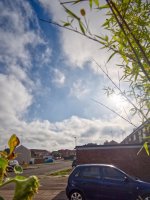
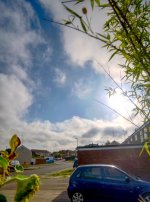
The wall was very bright, so I took the exposure value from the wall, then took the picture. That exposed for the highlights, resulting in the first image.

Many cameras have a spot meter function, measuring light levels from a small area of the frame, and that was what I used. There is also normally a button to lock exposure settings while it's held down, allowing you to recompose after metering.
I think I get it now, point at the upper bright wall and the meter tones it down a bit, hold that exposure and frame the shot.
Then lift the shadows and light over the image afterwards?
 
I think I get it now, point at the upper bright wall and the meter tones it down a bit, hold that exposure and frame the shot.
Then lift the shadows and light over the image afterwards?

Yes. It needs to be done carefully rather than just boosting shadows etc.
 
I think I get it now, point at the upper bright wall and the meter tones it down a bit, hold that exposure and frame the shot.
Then lift the shadows and light over the image afterwards?

I think this is something you're going to have to practice to get a feel for what you can get away with so the highlights are retained and the shadows don't have to pushed too far. If the DR is just too great to get a good balance you'll have to make the choice to let something go... or go HDR.
 
Yes. It needs to be done carefully rather than just boosting shadows etc.
Yeah I often brush in exposure rather than lifting shadows as it gives it a mor realistic appearance to my eyes.
 
I’ve recently bought a m4/3 system to run alongside my Nikon FF.

The biggest differences are in size and that the m4/3 is far more likely to be with me.

What m4/3 lacks for me at least is the shallow dof. No need to post your m4/3 bokeh shots as I can post mine too but your always two stops behind which makes it more difficult.
Sadly I have to agree with you about the shallow DOF. I have recently traded all of my Canon gear, including an R5 for Olympus kit. The reach I get with the new kit is fantastic and the weight saving is brilliant, I can shoot 800mm FF equivalent hand held all day. The micro 4/3 does have drawbacks and DOF is the major one in my view. On balance the Olympus kit gives me 90% of what I want at a fraction of the price and weight of FF. And just to add, in the last few years every camera I have had has been far more capable than me! modern technology is great. Whilst it seems that camera kit is expensive if you think back to the days of buying film and paying for processing the actual costs are quite reasonable.
 
I think I get it now, point at the upper bright wall and the meter tones it down a bit, hold that exposure and frame the shot.
Then lift the shadows and light over the image afterwards?
Yes. It needs to be done carefully rather than just boosting shadows etc.
Yeah I often brush in exposure rather than lifting shadows as it gives it a mor realistic appearance to my eyes.

You can take this to extremes as well, but you must shoot in RAW to get the best results

JkfJORsh.jpg


OiXC51kh.jpg


Scenes can be blended out of several images (HDR), but you have to be very careful here, as moving objects in the scene, including wind blowing branches/grass/etc can cause the auto HDR functions of post processing turn the image into mush! There are techniques to assist in blending manually parts of image exposures.

IMO the best technique is to shoot it right in camera, don't blow the highlights, though this requires some experiment as sometimes what apperas blown on the camera, may not be blown in the RAW file, this depends on teh metering beimng used and he quality of teh cameras exsposure algorithms, the problem with pushing blown highlights in camera is that you have no knowledge of when you've actually gone past teh point of no return.

Just keep practising.....
 
You can take this to extremes as well, but you must shoot in RAW to get the best results

JkfJORsh.jpg


OiXC51kh.jpg


Scenes can be blended out of several images (HDR), but you have to be very careful here, as moving objects in the scene, including wind blowing branches/grass/etc can cause the auto HDR functions of post processing turn the image into mush! There are techniques to assist in blending manually parts of image exposures.

IMO the best technique is to shoot it right in camera, don't blow the highlights, though this requires some experiment as sometimes what apperas blown on the camera, may not be blown in the RAW file, this depends on teh metering beimng used and he quality of teh cameras exsposure algorithms, the problem with pushing blown highlights in camera is that you have no knowledge of when you've actually gone past teh point of no return.

Just keep practising.....
Impressive, what was that shot with? Did you have to adjust the tint at all, I know sometimes when lifting images this much you can get a very magenta hue?
 
Impressive, what was that shot with? Did you have to adjust the tint at all, I know sometimes when lifting images this much you can get a very magenta hue?

Did you really need to ask?? GFX50S - so that gives me a bit of an advantage to start with ;) , but it does show what is possible and there many FF cameras out there with similar stated DR - though I find the GFX files very malleable in post (which is nice as it can rescue mistakes as well!) I have found that I need to bracket less with the GFX, as usually I can get what I want from a single image. I've not noticed any tints when lifting shadows with the GFX unless I have shot at high ISO eg12,800, when there definitely can be a magenta tint to the shadows.

I have shot M43, APS-C and FF as well (and still have APS-C and FF cameras), and it is amazing what can be rescued if the exposure is sorted out in camera. Bracketing can help (with the HDR provisos in my previous post).

For the OPs benefit, there are some fantastic examples of M43 images within the TP forums, so the camera equipment is very capable, as are virtually all cameras from the last 10-15 years - it really is a case of getting to know your equipment and how to deal with the limitations that it may have. That said the usual limitation is the part behind the viewfinder, and there is no treatment for that other than practice, practice and more practice.
 
Sadly I have to agree with you about the shallow DOF.

I have been seriously considering a large format outfit, and would probably try it if I didn't think it would kill spontaneity.
 
For the OPs benefit, there are some fantastic examples of M43 images within the TP forums, so the camera equipment is very capable, as are virtually all cameras from the last 10-15 years - it really is a case of getting to know your equipment and how to deal with the limitations that it may have. That said the usual limitation is the part behind the viewfinder, and there is no treatment for that other than practice, practice and more practice.

I agree with the sentiment but there are several buts...

There are technical limitations that make some pictures difficult or even impossible as one off shots without some the technical limitation being evident regardless of the experience or skill of the photographer or how well they know the kit and it's important that we accept that. You can see some lovely pictures on line but few people will post their average or poor shots so we need to keep in mind that what we see has been selected as good enough to post. Lastly some people just will not take some pictures. For example I've read many times that some people wont go beyond a particular ISO and it's also likely that some people wont take a picture if they think some technical limitation will lead to it not being to their standard, or they may possibly take the shot and delete it later.

A while back I watched a vid from a famous photographer and what he said was that if he thought the sky was going to blow he'd shoot in the opposite direction as you're judged by your photos. Well, that's one approach although quite obviously he'll end up with a different picture as the landscape doesn't rotate 180 when you do.

So there's all that. There are real technical limitations but there may be some workaround and although some pictures we see on line may inspire us to do better they may not be directly comparable to the shot we may be struggling to get.
 
Last edited:
Did you really need to ask?? GFX50S - so that gives me a bit of an advantage to start with ;) , but it does show what is possible and there many FF cameras out there with similar stated DR - though I find the GFX files very malleable in post (which is nice as it can rescue mistakes as well!) I have found that I need to bracket less with the GFX, as usually I can get what I want from a single image. I've not noticed any tints when lifting shadows with the GFX unless I have shot at high ISO eg12,800, when there definitely can be a magenta tint to the shadows.

I have shot M43, APS-C and FF as well (and still have APS-C and FF cameras), and it is amazing what can be rescued if the exposure is sorted out in camera. Bracketing can help (with the HDR provisos in my previous post).

For the OPs benefit, there are some fantastic examples of M43 images within the TP forums, so the camera equipment is very capable, as are virtually all cameras from the last 10-15 years - it really is a case of getting to know your equipment and how to deal with the limitations that it may have. That said the usual limitation is the part behind the viewfinder, and there is no treatment for that other than practice, practice and more practice.
I’d lost track of what camera(s) you have tbh, but that explains it ;) Yes, it does tend to be higher ISO that you get the magenta tint thinking about it (y)
 
You can take this to extremes as well, but you must shoot in RAW to get the best results

JkfJORsh.jpg


OiXC51kh.jpg


Scenes can be blended out of several images (HDR), but you have to be very careful here, as moving objects in the scene, including wind blowing branches/grass/etc can cause the auto HDR functions of post processing turn the image into mush! There are techniques to assist in blending manually parts of image exposures.

IMO the best technique is to shoot it right in camera, don't blow the highlights, though this requires some experiment as sometimes what apperas blown on the camera, may not be blown in the RAW file, this depends on teh metering beimng used and he quality of teh cameras exsposure algorithms, the problem with pushing blown highlights in camera is that you have no knowledge of when you've actually gone past teh point of no return.

Just keep practising.....
That's very impressive. I use a MFT Pana G80, and at the moment the only way I understand to avoid blown highlights is to tweak down the exposure compensation. While this gives me the right sky, I find that lifting shadows or brightness in edit works to a point but an image taken mid afternoon looks like it was taken when the light was fading, in many cases that seems to be the outcome.
 
That's very impressive. I use a MFT Pana G80, and at the moment the only way I understand to avoid blown highlights is to tweak down the exposure compensation. While this gives me the right sky, I find that lifting shadows or brightness in edit works to a point but an image taken mid afternoon looks like it was taken when the light was fading, in many cases that seems to be the outcome.

Are you working with the RAW file?

Can you actually push the exposure in post before applying shadows without blowing out the highlights, ie is file saved actually got highlights that are on the point of blowing?
 
Keith, this was taken with a GX80.

I exposed for the sky and got this...

gSpAPDQ.jpg


I then painted on +3 stops of exposure compensation with the brush and got this.

SRTIcL4.jpg


At 100% it looks like this.

rOqcNX6.jpg


Some more noise reduction could be applied if you weren't happy with it.

This was in reasonable light and higher ISO pictures may not be as good but at lower ISO's you can still get away with quite a push with MFT.
 
Last edited:
Are you working with the RAW file?

Can you actually push the exposure in post before applying shadows without blowing out the highlights, ie is file saved actually got highlights that are on the point of blowing?
Yes working with RAW. I tend to try and get the sky perfect in shot but that dulls the rest of the image a lot at times.
Maybe when the sky is blowing I should have a halfway compromise and leave a bit to sky to be fixed in post?
 
Keith, this was taken with a GX80.

I exposed for the sky and got this...

gSpAPDQ.jpg


I then painted on +3 stops of exposure compensation with the brush and got this.

SRTIcL4.jpg


At 100% it looks like this.

rOqcNX6.jpg


Some more noise reduction could be applied if you weren't happy with it.

This was in reasonable light and higher ISO pictures may not be as good but at lower ISO's you can still get away with quite a push with MFT.
I think I need more sophisticated editing software. I can't edit one part of the image on mine.
 
I think I need more sophisticated editing software. I can't edit one part of the image on mine.

Yes you do.

Do Panasonic have editing software that you can download free?
 
Maybe when the sky is blowing .....

Part of the takeaway from this is understanding what is, in fact, blown and that, with the correct treatment you might find information you though was blown. One way to do that is to understand the histogram, taken at face value, it is quite simple but understanding it will help a lot in interpreting issues with exposure and colour balance. I'm not certain but I suspect that it might appeal most to people with a technical bent, many get through life quite happily without really knowing what it is or represents, but - at least for me - it is fundamental when it comes to tuning the image.
 
Part of the takeaway from this is understanding what is, in fact, blown and that, with the correct treatment you might find information you though was blown. One way to do that is to understand the histogram, taken at face value, it is quite simple but understanding it will help a lot in interpreting issues with exposure and colour balance. I'm not certain but I suspect that it might appeal most to people with a technical bent, many get through life quite happily without really knowing what it is or represents, but - at least for me - it is fundamental when it comes to tuning the image.
Thanks Ham
 
That's a good point, I think so, will check it out.
Try it, but I bet you will wish you didn't bother :)
It is enough to put anyone off for life!

Affinity is powerful, easy, quick and cheap, and of course it does a whole lot more, including focus, exposure, astro stacking/merging panoramas etc. direct from opening.

RawTherapee is the best free one I have tried, and is quite good http://rawtherapee.com/ very easy to use, probably one of the best to get going on.
 
Part of the takeaway from this is understanding what is, in fact, blown and that, with the correct treatment you might find information you though was blown. One way to do that is to understand the histogram, taken at face value, it is quite simple but understanding it will help a lot in interpreting issues with exposure and colour balance. I'm not certain but I suspect that it might appeal most to people with a technical bent, many get through life quite happily without really knowing what it is or represents, but - at least for me - it is fundamental when it comes to tuning the image.

Thanks Ham
One thing to remember though is that the histogram on the camera shows you the jpeg histogram and not the raw. I'm not sure why camera manufacturers continue to do this (there must be a reason) but it's a bit annoying. It does mean though that if the camera histogram is showing that it's just starting to clip the chances are it's still recoverable in the raw file. Experience tells you how much clipping is recoverable.
 
Try it, but I bet you will wish you didn't bother :)
It is enough to put anyone off for life!

Affinity is powerful, easy, quick and cheap, and of course it does a whole lot more, including focus, exposure, astro stacking/merging panoramas etc. direct from opening.

RawTherapee is the best free one I have tried, and is quite good http://rawtherapee.com/ very easy to use, probably one of the best to get going on.
Yeah, I've never found a manufacturer's own software that's actually any good. You can actually get good results with the Nikon one but my god is it slow.
 
One thing to remember though is that the histogram on the camera shows you the jpeg histogram and not the raw. I'm not sure why camera manufacturers continue to do this (there must be a reason) but it's a bit annoying. It does mean though that if the camera histogram is showing that it's just starting to clip the chances are it's still recoverable in the raw file. Experience tells you how much clipping is recoverable.

Another thing to remember is that there are a lot of things to remember ;)

I started to describe using the histogram, then I realised that whatever I said was just a small, possibly confusing part of the context. I sometimes use the histogram in camera, I find the OM jpg conversion to be quite "good" and sometimes have the histogram showing after shot, if ICBA to look at it - I will do if I'm doing something serious that I want to get right - but mostly use it in post processing. I find the more useful setting in shooting is the highlight/lowlight indicators, but as you say experience is more useful in telling you if there's a real problem.
 
Sadly I have to agree with you about the shallow DOF. I have recently traded all of my Canon gear, including an R5 for Olympus kit. The reach I get with the new kit is fantastic and the weight saving is brilliant, I can shoot 800mm FF equivalent hand held all day. The micro 4/3 does have drawbacks and DOF is the major one in my view. On balance the Olympus kit gives me 90% of what I want at a fraction of the price and weight of FF. And just to add, in the last few years every camera I have had has been far more capable than me! modern technology is great. Whilst it seems that camera kit is expensive if you think back to the days of buying film and paying for processing the actual costs are quite reasonable.
Don’t be sad ;). It is a physical limitation of the camera having a sensor one quarter of the size of full frame. It will always perform 2 stops behind, period.

It’s a minor complaint especially as I bought the m4/3 kit not as a FF replacement but instead of a decent compact so in many respects for me at least it offers a shallower dof than most compacts. My previous comparison comments against full frame come from when you manage to take a great shot of sat a person but you wish for slightly more dof!
 
That's very impressive. I use a MFT Pana G80, and at the moment the only way I understand to avoid blown highlights is to tweak down the exposure compensation. While this gives me the right sky, I find that lifting shadows or brightness in edit works to a point but an image taken mid afternoon looks like it was taken when the light was fading, in many cases that seems to be the outcome.
For me shooting in the mid afternoon (on sunny days) is going to present extreme dynamic range and/or exposure problems that can challenge even an experienced photographer.

The answer is sometimes don’t try! Or change your technique. The light can be too extreme! Ever wonder why pro sports snappers use powerful flash in the middle of a sunny day? Very silly of them? No it’s to reduce contrast by raising the shadows.

I personally enjoy shooting at high sun but I don’t try to overpower the sun or try and balance everything out I change my shooting style and choose scenes that are a mix of extreme shadow and light without trying to balance them out, the below works well imo as an example.


One thing to think about when looking at DoF is that many people using FF seem to be happy with f2.8 or even f4 zooms and once you get to f2.8 with FF you can match the DoF with MFT... the only catch is that you have to use a f1.4 prime instead of a do it all f2.8 zoom.

After using a couple of variable aperture zooms on MFT the Panasonic 12-35mm f2.8 really impressed me and I still have that lens and when used wide open to f4 you get a very similar look you'd get from FF at f5.6/f8 which is where I'd be for many pictures anyway. With MFT I haven't bothered with f1.4 primes, f1.7 and f1.8 do for me but I did have a 25mm f0.95 too.
 
I did a quick test shooting with the sun in the frame and deep shadow in the foreground.
Then processed the middle exposure raw file that minimised the burn out round the sun, and also processed and HDR image from the 7 shots.

Ignoring any slight colour and contrast differences as I was just quickly going by eye to make them look roughly the same, the only major difference I can see is the higher noise in the shadows in the image from the raw file.

These are from the raw file
86rs.jpg
86rc.jpg


And these from the HDR
95y.jpg
95yc.jpg

From that, in future I will use HDR less and RAW more often when shadow detail is not so important, which to be honest would probably be most of the time.
 
For me shooting in the mid afternoon (on sunny days) is going to present extreme dynamic range and/or exposure problems that can challenge even an experienced photographer.

The answer is sometimes don’t try! Or change your technique. The light can be too extreme! Ever wonder why pro sports snappers use powerful flash in the middle of a sunny day? Very silly of them? No it’s to reduce contrast by raising the shadows.

I personally enjoy shooting at high sun but I don’t try to overpower the sun or try and balance everything out I change my shooting style and choose scenes that are a mix of extreme shadow and light without trying to balance them out, the below works well imo as an example.


You raise a good point in regards difficulty of shot, it's easy to get frustrated as a beginner, and not realise that you may be trying one of the hardest shots possible.
 
@Crotal Bell it’s almost a case of going with the flow and not against it. By selecting different shot types as above your working with the high contrast. By trying to ‘overcome’ it your going against the flow!
 
Last edited:
I did a quick test shooting with the sun in the frame and deep shadow in the foreground.
Then processed the middle exposure raw file that minimised the burn out round the sun, and also processed and HDR image from the 7 shots.

Ignoring any slight colour and contrast differences as I was just quickly going by eye to make them look roughly the same, the only major difference I can see is the higher noise in the shadows in the image from the raw file.

These are from the raw file
View attachment 365534
View attachment 365532


And these from the HDR
View attachment 365535
View attachment 365536

From that, in future I will use HDR less and RAW more often when shadow detail is not so important, which to be honest would probably be most of the time.
Seems the HDR punches in a lot of colour, I prefer the overall look of the RAW to be honest.
 
Seems the HDR punches in a lot of colour, I prefer the overall look of the RAW to be honest.
That depends on how you set it, as I mentioned, I wasn't being too fussy about colours, I just tried to get the sky roughly the same.
The purpose was to see how much I lost in the shadows, the colours you could make as you like them :)
 
That depends on how you set it, as I mentioned, I wasn't being too fussy about colours, I just tried to get the sky roughly the same.
The purpose was to see how much I lost in the shadows, the colours you could make as you like them :)
Everyone sees, perceives, or prefers colours differently. Me, I see colours in nature vibrantly and so process them as such. Others prefer muted colours.
 
You raise a good point in regards difficulty of shot, it's easy to get frustrated as a beginner, and not realise that you may be trying one of the hardest shots possible.
Light and composition are the most important aspects of photography. It's really important to realise how light affects the image, such as whether the light is behind you, in front of you, to the side of you etc. Also the quality of light is important, for example sometimes a room can seem quite bright to our eyes yet the luminance is actually low.

Then there's hues and temperatures, notice how the colour of a landscape looks different from a high midday sun compared to one close to sunset, also look how the light changes at different times of the year. The golden hour in autumn for example looks more spectacular to me than any other time of the year.

Not ideal examples as they're not the same composition but here's one taken in the morning with the sun behind vs one with the sun in front and heavy cloud (the sun rays aren't photoshopped, that lens created some pretty extreme sunbursts in the right settings). They're both single shot raws, the second was using a 3 stop grad filter for the sky and then the foreground exposure raised in post.

A9_02459 by Toby Gunnee, on Flickr

Owler Tor Sunset re-edit by Toby Gunnee, on Flickr


And another, first is mid morning sun to the right and the second is late evening sun from behind to the side

A9_02460 by Toby Gunnee, on Flickr

DSC_4179 by Toby Gunnee, on Flickr
 
Last edited:
Light and composition are the most important aspects of photography. It's really important to realise how light affects the image, such as whether the light is behind you, in front of you, to the side of you etc. Also the quality of light is important, for example sometimes a room can seem quite bright to our eyes yet the luminance is actually low.

Then there's hues and temperatures, notice how the colour of a landscape looks different from a high midday sun compared to one close to sunset, also look how the light changes at different times of the year. The golden hour in autumn for example looks more spectacular to me than any other time of the year.

Not ideal examples as they're not the same composition but here's one taken in the morning with the sun behind vs one with the sun in front and heavy cloud (the sun rays aren't photoshopped, that lens created some pretty extreme sunbursts in the right settings). They're both single shot raws, the second was using a 3 stop grad filter for the sky and then the foreground exposure raised in post.

A9_02459 by Toby Gunnee, on Flickr

Owler Tor Sunset re-edit by Toby Gunnee, on Flickr


And another, first is mid morning sun to the right and the second is late evening sun from behind to the side

A9_02460 by Toby Gunnee, on Flickr

DSC_4179 by Toby Gunnee, on Flickr
Very interesting, and very helpful. Thank you.
 
Thinking about software... if Keith doesn't like any of the free packages will Elements process raws?

If it does that could be a cheap way into processing. Loads of them on ebay.

In my early days I used Rawtherapee but it started to crash my pc so it got the boot.
 
Back
Top